Articles
Sort by
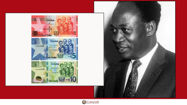
Ghana Honours Kwane Nkrumah, first Prime Minister and President of Ghana -Friday, 25 July 2025
Kwame Nkrumah stands as a towering figure in the annals of not only Ghanaian history but also in the broader narrative of African liberation. Born on 21st September 1909 in Nkroful, in the Gold Coast colony, Nkrumah emerged as a beacon of hope and a symbol of the struggle against colonial rule. His influence extended beyond the borders of Ghana, inspiring movements across the continent. Nkrumah's journey from a local schoolteacher to a key player in global politics underscores his resilience, intellect, and unyielding commitment to African unity. next...
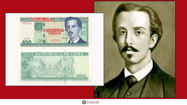
Cuba 200 Pesos Dedicated To Ignacio Agramonte (Former Cuban Revolutionary) -Wednesday, 23 July 2025
Ignacio Agramonte y Loynaz, a name cherished in Cuban history, stands as a symbol of bravery and dedication. Revered as a national hero, Agramonte played an instrumental role in Cuba's struggle for independence from Spanish colonial rule. Born into a well-to-do family, his life's journey is a testament to his unwavering commitment to his country's freedom and his profound impact on Cuban society. next...
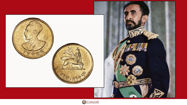
Ethiopia Cent Honours Former Emperor Haile Selassie -Tuesday, 22 July 2025
Haile Selassie, the last Emperor of Ethiopia, remains a vital figure in both African history and global diplomacy. His reign, which spanned from 1930 to 1974, was marked by efforts to modernise Ethiopia and assert its presence on the international stage. Known for his charismatic leadership and visionary outlook, Selassie became an iconic symbol of African resilience and unity. His legacy extends beyond his political achievements, influencing cultural and spiritual movements worldwide. next...
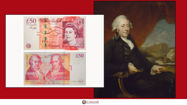
British £50 Honouring Matthew Boulton (former Scottish inventor and mechanical engineer) -Monday, 21 July 2025
Matthew Boulton stands as a pivotal figure in the annals of Britain’s Industrial Revolution. Renowned for his business acumen and innovative spirit, Boulton played a significant role in transforming manufacturing processes and industrial practices. His contributions not only propelled his enterprises to unprecedented success but also laid the groundwork for modern industrial practices. next...
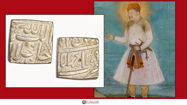
Mughal Empire Honouring Akhbar I (former Emperor) -Friday, 18 July 2025
Akbar I, also known as Akbar the Great, stands as one of the most remarkable and influential rulers in the history of the Mughal Empire. Reigning from 1556 to 1605, he transformed the Mughal dynasty from a regional power to a vast, multicultural empire that dominated the Indian subcontinent. next...
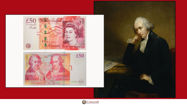
British £50 Honouring James Watt (former Scottish inventor and mechanical engineer) -Thursday, 17 July 2025
James Watt, a name synonymous with the advent of modern engineering, played an instrumental role in shaping the Industrial Revolution. His revolutionary developments in steam engine technology catalysed a period of unprecedented industrial growth. Watt's innovations not only transformed industries but also laid the groundwork for the mechanised world we inhabit today. Understanding his contributions provides insight into how one man's ingenuity can alter the course of history. next...
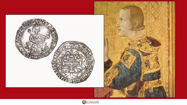
Italian States, Naples, Dedicated to Robert of Anjou (former politician) -Wednesday, 16 July 2025
Robert of Anjou, also known as Robert the Wise, was a pivotal figure in the tapestry of medieval European history. As a monarch who ruled over the Kingdom of Naples from 1309 until his death in 1343, his reign was marked by significant political manoeuvres, cultural patronage, and active participation in the complex web of medieval European politics. His influence extended beyond his immediate dominions, affecting the broader socio-political landscape of the continent. next...
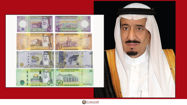
Saudi Arabia Ryals Dedicated to King Salman bin Abdulaziz (Reigning Monarch) -Tuesday, 15 July 2025
King Salman bin Abdulaziz, the revered monarch of Saudi Arabia, has been a formidable force in the transformation of the nation. As the seventh King of Saudi Arabia, he ascended to the throne in January 2015, bringing with him a wealth of experience and a forward-thinking mindset. His leadership has been marked by significant reforms aimed at modernising the kingdom and positioning it as a key player on the global stage. next...
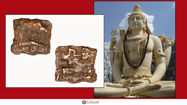
Ashoka Indian Copper Honouring the God Shiva -Monday, 14 July 2025
Shiva, often referred to as "The Destroyer", forms a critical part of the Hindu trinity, alongside Brahma and Vishnu. Revered as a supreme being within the Shaivism tradition, Shiva embodies complex roles that encompass creation, protection, and transformation. As a deity with multifaceted attributes, he is worshipped not only for his power to destroy evil but also for his capacity to bring about renewal and regeneration. next...
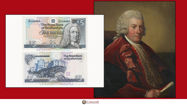
Royal Bank Scotland £5 Dedicated to Lord Ilay (first Governor of the Bank of Scotland) -Friday, 11 July 2025
Lord Ilay, a prominent figure in Scottish history, played an essential role in shaping the country's noble heritage. Born Archibald Campbell, he was the 3rd Duke of Argyll and is revered for his contributions to the political and cultural fabric of Scotland during the 18th century. His influence extended beyond the borders of Scotland, leaving an indelible mark on the British Isles. next...
Get in touch icon icon

- icon
45 Great Russell St, London WC1B 3JL
- icon
