Articles
Sort by
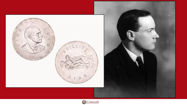
Irish Shilling Honouring Padraig (Patrick) Pearse (a former Irish freedom fighter) -Thursday, 10 July 2025
Padraig Pearse stands as a monumental figure in Irish history, celebrated as one of the principal leaders of the 1916 Easter Rising. His commitment to Ireland's independence from British rule was evident in every aspect of his life, from his involvement in the Gaelic Revival to his pivotal role in the revolutionary uprising. Pearse's vision for Ireland was not merely political; it was deeply cultural and educational, aiming to revive the nation's spirit and identity. next...
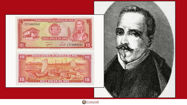
Peru 10 Soles Honouring Garcilaso Inca de la Vega (a former chronicler) -Wednesday, 09 July 2025
Garcilaso Inca de la Vega, a name that resonates deeply within the annals of literary history, was a seminal figure who managed to bridge two distinct cultures through his profound works. Born in 1539 in Cuzco, Peru, he was uniquely positioned at the intersection of two worlds: the indigenous Incan heritage and the Spanish colonial power. This duality not only influenced his personal identity but also significantly informed his literary endeavours, allowing him to craft a voice that was both distinct and resonant across cultural divides. next...
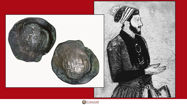
Billon Trachy Dedicated to Firuz Shah Tughluq (a former Sultan of Delhi) -Tuesday, 08 July 2025
Firuz Shah Tughlaq, a prominent figure in Indian history, ruled the Delhi Sultanate from 1351 to 1388. His reign is often marked as a period of significant transformation within the Indian subcontinent. Ascending to the throne after the death of his cousin Muhammad bin Tughlaq, Firuz Shah's leadership was characterised by a unique blend of administrative reforms, economic strategies, and cultural patronage. His legacy continues to be a subject of study for historians who strive to understand the complexities of medieval Indian governance and society. next...
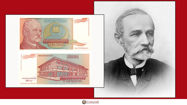
Yugoslavian Dinar dedicated to Jovan Jovanovic Zmaj (Former Poet) -Monday, 07 July 2025
Jovan Jovanovic Zmaj, often hailed as a cornerstone of Serbian literature, remains an enduring figure whose contributions have shaped cultural and literary landscapes. Known for his profound poetry, Jovanovic's work transcends mere artistic expression, delving into the essence of human experience and national identity. His influence is not confined to the past; rather, it continues to resonate within modern Serbian culture and beyond. next...
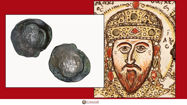
Aspron Trachy Honours Isaac II Angelos (a former Byzantine Emperor) -Friday, 04 July 2025
Isaac II Angelos, an influential figure in Byzantine history, reigned during a tumultuous period marked by internal strife and external threats. His era was characterised by the declining power of the Byzantine Empire, as it struggled to maintain its territories against the growing might of neighbouring powers. The late 12th century was a time of considerable change and challenge within the empire, setting the stage for Isaac's rise and eventual fall. next...
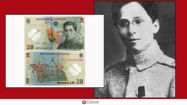
Romanian Lei Honouring Ecaterinei Teodoroui (a former female soldier) -Thursday, 03 July 2025
Ecaterina Teodoroiu (born Cătălina Toderoiu) was a Romanian war hero who distinguished herself during World War I. Born on January 14, 1894, in Vădeni, Kingdom of Romania, she would become known as "The Hero from Jiu" and even the "Joan of Arc of Romania." next...
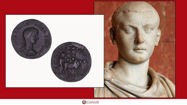
Roman Coins Dedicated To Gordian III (Former Emperor) -Wednesday, 02 July 2025
The Roman Empire, a beacon of power and civilisation, experienced tumultuous periods throughout its existence. One such era was the Crisis of the Third Century, marked by political instability, economic turmoil, and external threats. Within this context, Gordian III emerged as a significant figure. His reign, albeit short-lived, was set against the backdrop of a faltering empire struggling to maintain its dominance. next...
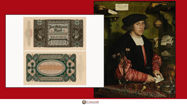
German 2 Million Marks Banknote Dedicated to Georg Giese (Former Merchant) -Monday, 30 June 2025
Georg Giese, a prominent figure from the Hanseatic League era, has left an indelible mark on the world of art. Born in 1497 in Danzig, now Gdańsk, Poland, Giese was a merchant who became widely recognised due to his portrayal by the renowned German painter Hans Holbein the Younger. His significance in art is largely attributed to this iconic painting, which not only captures his likeness but also serves as a window into the world of 16th-century merchants. next...
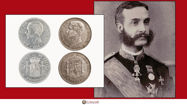
Spanish Pesetas Honouring Alfonso XII (Former King of Spain) -Friday, 27 June 2025
Alfonso XII, often overshadowed by more flamboyant rulers, played a pivotal role in shaping modern Spain. His reign, although brief, was marked by significant political and social transformations that have had enduring effects. Despite being dubbed the "Forgotten Monarch," Alfonso XII's contributions to Spain's development deserve recognition and appreciation. next...
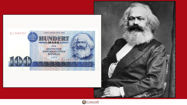
East Germany One Hundred Marks dedicated to Karl Marx -Thursday, 26 June 2025
Karl Marx, a profound thinker and revolutionary, is best known for his critical analysis of capitalism and his advocacy for socialism. Born in 1818 in Trier, Prussia, Marx's intellectual journey led him to develop a radical critique of the socio-economic systems of his time. His works, especially "The Communist Manifesto" and "Das Kapital," have had an enduring impact on political thought and practice worldwide. Marx's philosophy sought to unveil the underlying dynamics of capitalism, highlighting the struggles between different social classes. next...
Get in touch icon icon

- icon
45 Great Russell St, London WC1B 3JL
- icon
