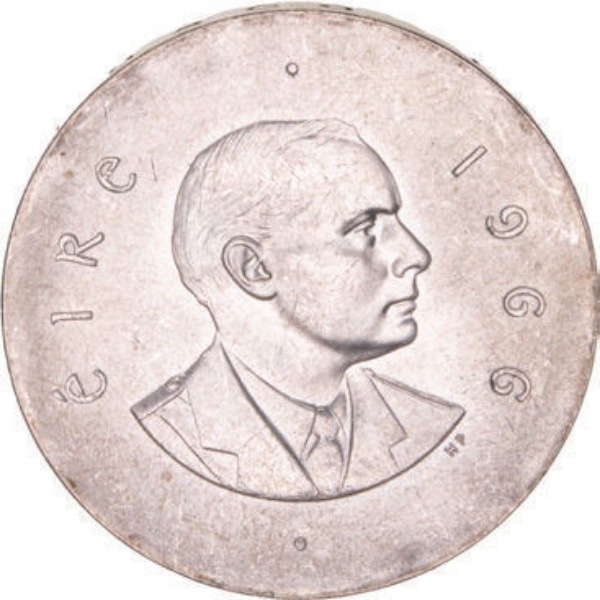
 Pearse (a former Irish freedom fighter) - FIR5304.jpg)
Picture of Sources Padraig (Patrick) Pearse: Wikipedia
Introduction to Padraig Pearse: A Revolutionary Figure
Padraig Pearse stands as a monumental figure in Irish history, celebrated as one of the principal leaders of the 1916 Easter Rising. His commitment to Ireland's independence from British rule was evident in every aspect of his life, from his involvement in the Gaelic Revival to his pivotal role in the revolutionary uprising. Pearse's vision for Ireland was not merely political; it was deeply cultural and educational, aiming to revive the nation's spirit and identity.
Born in 1879 in Dublin, Pearse emerged in a period of significant socio-political change. The late 19th and early 20th centuries were marked by a resurgence in Irish nationalism, and Pearse was at the forefront of this movement. His leadership was characterised by a profound belief in the power of education and language to transform society, making him a unique leader whose influence extended beyond the battlefield.
His legacy is complex, reflecting both his ideological fervour and the contentious nature of revolutionary action. While some celebrate him as a martyr for Irish freedom, others critique his methods and the consequences of his actions. Nonetheless, Pearse's contributions to Irish nationalism remain a critical part of the country's historical narrative.
Early Life and Education of Padraig Pearse
Padraig Pearse was born into a family with a strong appreciation for the arts and culture. His father, James Pearse, was an English sculptor, while his mother, Margaret, hailed from a traditional Irish-speaking region. This bilingual environment fostered Pearse's early interest in the Irish language, which would later become a cornerstone of his revolutionary ideology.
Pearse's educational journey began at the Christian Brothers School in Dublin, where he excelled academically. His passion for the Irish language led him to enrol at University College Dublin, where he studied law. However, it was his involvement with the Gaelic League, an organisation dedicated to the preservation and promotion of Irish culture, that truly defined his early adult life. Here, Pearse found a community that shared his zeal for cultural nationalism.
It was during this time that Pearse began to articulate his vision for an independent Ireland, rooted in cultural renaissance. He viewed education as a tool for liberation, believing that a national revival could only be achieved through the empowerment of the Irish people. This philosophy would later inform his establishment of St. Enda's School, an innovative educational institution that combined both academic and cultural instruction.
Pearse's Role in the Gaelic Revival
The Gaelic Revival was a cultural movement aimed at preserving and promoting the Irish language and heritage, and Padraig Pearse was one of its most passionate advocates. Through his work with the Gaelic League, Pearse became a leading figure in the revival, using his oratory and writing skills to inspire others to embrace their cultural roots.
Pearse's dedication to the Gaelic Revival was not limited to linguistic pursuits; he also sought to reconnect the Irish people with their historical and mythological past. He believed that a strong national identity was essential for political independence and worked tirelessly to promote Irish folklore, literature, and traditions. His efforts were instrumental in rekindling a sense of pride among the Irish, contributing significantly to the cultural landscape of the time.
One of Pearse's most enduring contributions to the Gaelic Revival was his founding of St. Enda's School in 1908. The school was unique for its emphasis on bilingual education and its incorporation of Irish history and culture into the curriculum. Pearse's educational philosophy was revolutionary, as it sought to produce not just scholars, but informed citizens who could contribute to the nation's future.
The 1916 Easter Rising: Pearse's Leadership and Vision
The 1916 Easter Rising was a seminal event in Irish history, marking the beginning of the end for British rule in Ireland. Padraig Pearse, as one of the key leaders of the uprising, played a pivotal role in its planning and execution. His vision for an independent Ireland was the driving force behind the rebellion, which, despite its immediate failure, set the stage for the eventual establishment of the Irish Republic.
Pearse's leadership during the Easter Rising was characterised by his unwavering commitment to the cause. He was instrumental in drafting the Proclamation of the Irish Republic, a document that declared Ireland's independence and outlined the principles of the new nation. This proclamation was not only a political statement but also a reflection of Pearse's ideological beliefs, emphasising equality and freedom for all citizens.
Despite the rebellion's military failure, Pearse's actions during the Easter Rising had a profound impact on the Irish psyche. His execution, along with that of his fellow leaders, galvanised public opinion and transformed the uprising into a symbol of martyrdom and sacrifice. Pearse's legacy as a leader of the Easter Rising continues to resonate in Ireland, serving as a reminder of the enduring struggle for national self-determination.
The Ideology of Padraig Pearse: Nationalism and Education
Padraig Pearse's ideology was a unique blend of nationalism and education, rooted in the belief that cultural revival was essential for political liberation. He viewed the Irish language and heritage as the foundation of national identity and argued that education was the key to empowering the Irish people to reclaim their sovereignty.
Pearse's educational philosophy was revolutionary for its time, advocating for a system that nurtured both the intellect and the spirit. He believed that true education should inspire critical thinking, creativity, and a sense of civic responsibility. These principles were embodied in St. Enda's School, which he founded to provide an alternative to the British-controlled education system.
At the heart of Pearse's ideology was a deep commitment to social justice and equality. He envisioned an Ireland where all citizens, regardless of their background, could participate in the nation's cultural and political life. This vision was reflected in his writings and speeches, which continue to inspire those seeking to understand the complex relationship between nationalism and education in Ireland.
Pearse's Writings and Their Impact on Irish Identity
Padraig Pearse was not only a political leader but also a prolific writer whose works have had a lasting impact on Irish identity. His essays, poems, and speeches articulated a vision of Ireland as a nation rich in culture and history, deserving of independence. Through his writings, Pearse sought to inspire a sense of national pride among the Irish people.
One of Pearse's most famous works, "The Murder Machine," critiques the British education system in Ireland, arguing that it stifled creativity and perpetuated colonial control. In this essay, Pearse calls for an education system that fosters individuality and cultural awareness, ideas that continue to resonate in contemporary educational debates.
Pearse's poetry also reflects his deep connection to the Irish landscape and his longing for freedom. His poems often draw on Irish mythology and history, using vivid imagery to evoke a sense of national identity. These literary contributions have cemented Pearse's place in the Irish literary canon, influencing generations of writers and thinkers.
The Legacy of Padraig Pearse: Influence on Future Generations
The legacy of Padraig Pearse extends far beyond his role in the 1916 Easter Rising. His vision for an independent Ireland, rooted in cultural revival and education, has inspired countless individuals and movements in the years since his death. Pearse's ideas have shaped the discourse on nationalism and identity in Ireland, influencing the nation's political and cultural development.
Pearse's commitment to education as a tool for empowerment has left a lasting impact on the Irish education system. His advocacy for bilingualism and cultural awareness has been reflected in the continued emphasis on the Irish language and heritage in schools across the country. The principles he championed have also informed broader discussions on education reform and curriculum development.
Moreover, Pearse's legacy is evident in the ongoing struggle for social justice and equality in Ireland. His vision of a fair and inclusive society continues to inspire those working towards positive change, reminding them of the power of education and culture in shaping a nation's future.
Commemorations and Memorials Dedicated to Pearse
Padraig Pearse's contributions to Irish history have been commemorated through various memorials and events, ensuring that his legacy is not forgotten. These commemorations serve as a testament to his enduring influence on the nation's cultural and political landscape.
One of the most notable memorials dedicated to Pearse is the Pearse Museum, located at St. Enda's School in Dublin. The museum celebrates Pearse's life and work, offering visitors a glimpse into his educational philosophy and revolutionary ideals. It also hosts exhibitions and events that explore the broader context of the Irish Revolution and the Gaelic Revival.
In addition to physical memorials, Pearse's legacy is honoured through annual commemorations of the Easter Rising. These events, held across Ireland, pay tribute to the leaders of the uprising and highlight the ongoing relevance of their vision for an independent Ireland. Through these commemorations, Pearse's ideals continue to inspire new generations to engage with their history and heritage.
Critiques of Pearse's Ideals and Actions
While Padraig Pearse is celebrated as a hero by many, his ideals and actions have also been the subject of critique. Some historians argue that Pearse's romanticised view of martyrdom and sacrifice contributed to the violence of the Easter Rising, resulting in unnecessary loss of life. They contend that his vision for Ireland was idealistic and failed to consider the complexities of political change.
Critics also question Pearse's emphasis on cultural nationalism, arguing that it may have inadvertently excluded those who did not conform to his vision of Irish identity. By focusing on the revival of the Irish language and traditions, Pearse's ideology may have marginalised individuals from diverse backgrounds who were equally committed to the cause of independence.
Despite these critiques, Pearse's vision and dedication to the Irish cause cannot be dismissed. His contributions to the cultural and political landscape of Ireland continue to be studied and debated, reflecting the complexity of his legacy. As Ireland evolves, the discourse surrounding Pearse's ideals serves as a reminder of the ongoing struggle to balance tradition and progress in shaping national identity.
The Enduring Significance of Padraig Pearse in Irish History
Padraig Pearse remains a towering figure in Irish history, celebrated for his role in the 1916 Easter Rising and his contributions to the Gaelic Revival. His vision for an independent Ireland, rooted in cultural and educational transformation, has left an indelible mark on the nation's identity.
Through his leadership, writings, and educational initiatives, Pearse inspired generations to embrace their heritage and advocate for social justice. His legacy continues to influence discussions on nationalism, identity, and education in Ireland, highlighting the enduring relevance of his ideals.
As Ireland continues to navigate its complex history and future, the story of Padraig Pearse serves as both an inspiration and a cautionary tale. His life and work remind us of the power of vision and dedication in shaping a nation's destiny. For those interested in learning more about Pearse and his impact, visiting the Pearse Museum or participating in Easter Rising commemorations offers a unique opportunity to engage with this pivotal period in Irish history.