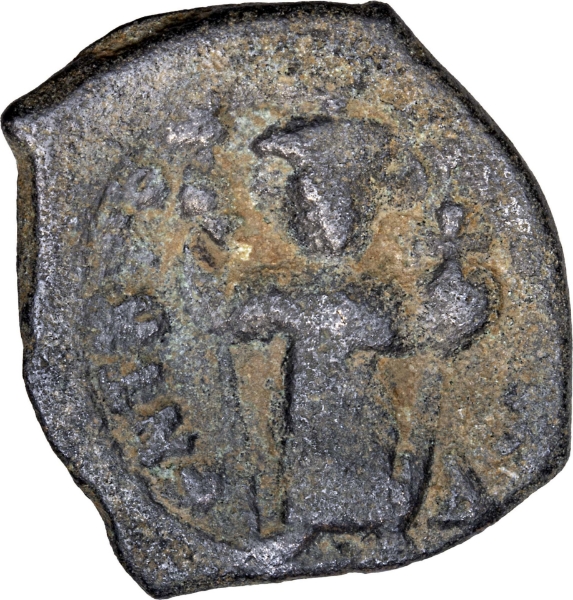
 - ABC0046.jpg)
Picture of Constans II: Wikipedia
Introduction to Constans II
Constans II, also known as Constantine the Bearded, was a notable Byzantine Emperor whose reign spanned from 641 to 668 AD. Ascending to the throne during a period of great turbulence, Constans II inherited an empire beset by both internal strife and external threats. His rule marked a significant era in Byzantine history, characterised by military challenges, religious discord, and administrative reforms. Despite the controversies surrounding his reign, Constans II left an indelible mark on the Byzantine Empire, shaping its future trajectory.
Born to Emperor Constantine III and Gregoria, Constans II was thrust into a position of power at a young age following his father's untimely death. The early years of his reign were dominated by regency due to his minority, with influential figures like the Senate and the Patriarch of Constantinople playing crucial roles in governance. This period of regency was marked by political manoeuvring and power struggles, setting the stage for Constans II's eventual consolidation of authority.
As Constans II matured, he gradually asserted his dominance, navigating the complex political landscape of the Byzantine Empire. His leadership was characterised by a pragmatic approach to governance, balancing traditional Byzantine policies with innovative strategies to address the empire's pressing challenges. This introduction sets the stage for a deeper exploration of his reign, shedding light on his achievements and the enduring legacy he left behind.
The Historical Context of Constans II's Reign
The historical context of Constans II’s reign is critical to understanding the challenges and opportunities he faced. The Byzantine Empire, during this period, was under constant threat from external forces, including the Arab Caliphate, which had recently gained significant territories from the Byzantines. This external pressure was compounded by internal rifts, particularly religious disputes that threatened the unity of the empire.
The 7th century was a transformative period for the Byzantine Empire, marked by significant territorial losses, particularly in the Levant and North Africa. The Arab expansion posed a formidable challenge, requiring strategic military responses and diplomatic efforts. Constans II had to navigate this geopolitical landscape, seeking to protect and consolidate what remained of Byzantine territories while attempting to reclaim lost lands.
Internally, the Byzantine Empire was also grappling with religious divisions, notably the Monothelite controversy, which pitted different Christian factions against each other. These theological disputes not only weakened the empire's cohesion but also influenced its relationships with neighbouring states and the Papacy in Rome. Constans II's reign was thus a balancing act, managing external threats while addressing internal discord to maintain the stability and integrity of the Byzantine Empire.
Key Achievements of Constans II
Constans II's reign is marked by several key achievements that underscore his capabilities as a ruler. One of his most significant accomplishments was the administrative restructuring of the Byzantine Empire, aimed at enhancing governance and military efficiency. He initiated reforms that decentralised power, granting greater autonomy to local governors, which improved the empire's ability to respond to regional challenges and threats.
In addition to administrative reforms, Constans II undertook efforts to strengthen the empire's military apparatus. Recognising the persistent threat from the Arab Caliphate, he invested in the navy, ensuring the protection of Byzantine territories in the Mediterranean. This strategic focus on naval power was crucial in maintaining the empire’s influence across the sea and safeguarding its maritime trade routes.
Moreover, Constans II made substantial contributions to the cultural and religious life of the Byzantine Empire. Despite the ongoing religious controversies, he was committed to fostering a sense of unity and identity within the empire. His efforts in promoting Byzantine art and architecture, as well as his support for theological scholarship, played a vital role in preserving and enhancing the cultural heritage of Byzantium.
The Military Campaigns of Constans II
The military campaigns of Constans II were pivotal in defining his reign and his legacy. Faced with the formidable expansion of the Arab Caliphate, Constans II adopted a defensive posture to safeguard Byzantine territories. His campaigns in the eastern provinces were marked by strategic retreats and fortifications, aiming to consolidate Byzantine control over key regions while minimising losses.
One of the notable military endeavours of Constans II was his campaign in Italy, where he sought to reassert Byzantine influence in the region. Although initially successful in capturing key cities, his Italian campaign faced challenges due to logistical difficulties and resistance from local forces. Despite these setbacks, the campaign underscored Constans II's ambition to maintain the Byzantine presence in the West and counterbalance the growing power of the Lombards.
Constans II's military strategies also involved strengthening the empire's naval capabilities. Recognising the importance of sea power, he expanded the Byzantine fleet, enhancing its capacity to defend against Arab incursions and protect maritime routes. This naval buildup was instrumental in maintaining Byzantine dominance in the Mediterranean, ensuring the security and prosperity of the empire's coastal regions.
Religious Policies and Their Impact
Religious policies during the reign of Constans II were significant in shaping both the internal and external dynamics of the Byzantine Empire. The Monothelite controversy, a theological dispute regarding the nature of Christ, was a central issue that Constans II had to address. His policies aimed at reconciling conflicting factions within the empire, though they were met with mixed success.
To mitigate religious tensions, Constans II issued the Typos, an edict that sought to silence the debate over Monothelitism by prohibiting discussions on the matter. While this policy was intended to restore unity, it faced opposition from the Papacy and certain segments of the clergy, who viewed it as an infringement on doctrinal integrity. The Typos ultimately highlighted the challenges of navigating religious discord in an empire deeply rooted in theological tradition.
Despite the controversies surrounding his religious policies, Constans II's efforts to promote ecclesiastical harmony had lasting impacts on the Byzantine Empire. His reign set the stage for subsequent theological developments and influenced the relationship between the Byzantine Church and the broader Christian world. These policies, while contentious, underscored Constans II's commitment to preserving the empire's religious and cultural heritage in the face of divisive challenges.
The Administrative Reforms of Constans II
The administrative reforms of Constans II were instrumental in reshaping the governance structure of the Byzantine Empire. Faced with the need to improve bureaucratic efficiency and regional governance, Constans II implemented a series of changes that decentralised authority and enhanced local administration.
One of the significant reforms was the creation of the themata system, which reorganised the empire into military districts governed by strategoi. This system allowed for more effective military mobilisation and resource allocation, enabling the empire to respond swiftly to external threats. By delegating power to regional commanders, Constans II ensured that the empire could maintain control over its vast territories despite limited central resources.
In addition to military restructuring, Constans II focused on economic and fiscal reforms to stabilise the empire's finances. He implemented measures to streamline tax collection and improve revenue generation, addressing the economic challenges posed by ongoing military conflicts and territorial losses. These reforms not only bolstered the empire's fiscal health but also laid the groundwork for future economic stability and growth.
The Legacy of Constans II in the Byzantine Empire
The legacy of Constans II in the Byzantine Empire is a complex tapestry of military, religious, and administrative achievements. His reign, though fraught with challenges, marked a turning point in Byzantine history, characterised by resilience and adaptation in the face of adversity. The reforms and policies he implemented had far-reaching effects, influencing the empire's trajectory for generations.
Constans II's efforts to strengthen the Byzantine military and navy were crucial in maintaining the empire's territorial integrity and influence. His strategic focus on naval power ensured that the Byzantine Empire remained a formidable force in the Mediterranean, safeguarding its trade routes and coastal regions. These military achievements underscored his commitment to defending the empire against external threats and preserving its sovereignty.
Beyond his military and administrative contributions, Constans II's cultural and religious initiatives played a vital role in shaping the Byzantine identity. His support for art, architecture, and theological scholarship enriched the empire's cultural heritage, leaving a lasting impact on Byzantine society. Despite the controversies surrounding his religious policies, Constans II's reign laid the foundation for future theological developments and ecclesiastical relations.
Historical Interpretations and Controversies
Historical interpretations of Constans II's reign are diverse, reflecting the complexities and contradictions of his legacy. While some historians commend his administrative and military achievements, others criticise his religious policies and political manoeuvres. These differing perspectives highlight the multifaceted nature of Constans II's rule and the challenges he faced in navigating the Byzantine political landscape.
One of the primary controversies of Constans II's reign is his handling of the Monothelite controversy and the issuance of the Typos. Critics argue that his attempts to silence theological debates were heavy-handed and ultimately counterproductive, exacerbating religious tensions rather than resolving them. This aspect of his reign has been a focal point for historians examining the interplay between politics and religion in the Byzantine Empire.
Despite these controversies, Constans II's reign is often viewed as a period of resilience and adaptation. His ability to implement significant reforms and maintain the empire's territorial integrity in the face of external threats is a testament to his leadership skills. Historical interpretations of his reign continue to evolve, reflecting ongoing scholarly debates about the complexities of Byzantine history and the enduring impact of Constans II's rule.
The Influence of Constans II on Successors
The influence of Constans II on his successors is evident in the policies and strategies adopted by subsequent Byzantine emperors. His administrative reforms, particularly the themata system, became a cornerstone of Byzantine governance, providing a framework for military and bureaucratic organisation that endured for centuries. This legacy of decentralised authority and regional empowerment influenced the empire's ability to respond to challenges and maintain stability.
Constans II's focus on naval power and military preparedness also set a precedent for his successors, who continued to prioritise the defence of Byzantine territories and the protection of maritime interests. His strategic vision in enhancing the empire's naval capabilities ensured that the Byzantine Empire remained a dominant force in the Mediterranean, shaping the geopolitical landscape for generations.
Moreover, Constans II's cultural and religious policies left a lasting imprint on the Byzantine Empire's identity. His support for theological scholarship and artistic expression influenced the cultural development of Byzantium, fostering a rich tradition of intellectual and artistic achievement. While his religious policies were contentious, they highlighted the importance of ecclesiastical diplomacy and theological debate in the empire's political and cultural life.
Reflecting on the Legacy of Constans II
Reflecting on the legacy of Constans II, it is clear that his reign was a pivotal period in Byzantine history, marked by significant challenges and transformative achievements. Despite the controversies and criticisms, Constans II's leadership was characterised by resilience, strategic vision, and a commitment to preserving the Byzantine Empire's integrity and cultural heritage.
His administrative and military reforms laid the groundwork for future stability and growth, ensuring that the Byzantine Empire remained a formidable power in the Mediterranean. The cultural and religious initiatives he supported enriched the empire's identity, fostering a legacy of artistic and intellectual achievement that continues to be celebrated.
As we explore the reign of Constans II, it is essential to recognise the complexities and contradictions that define his legacy. Through a nuanced understanding of his achievements and challenges, we gain valuable insights into the enduring impact of his rule on the Byzantine Empire and its lasting influence on history.