
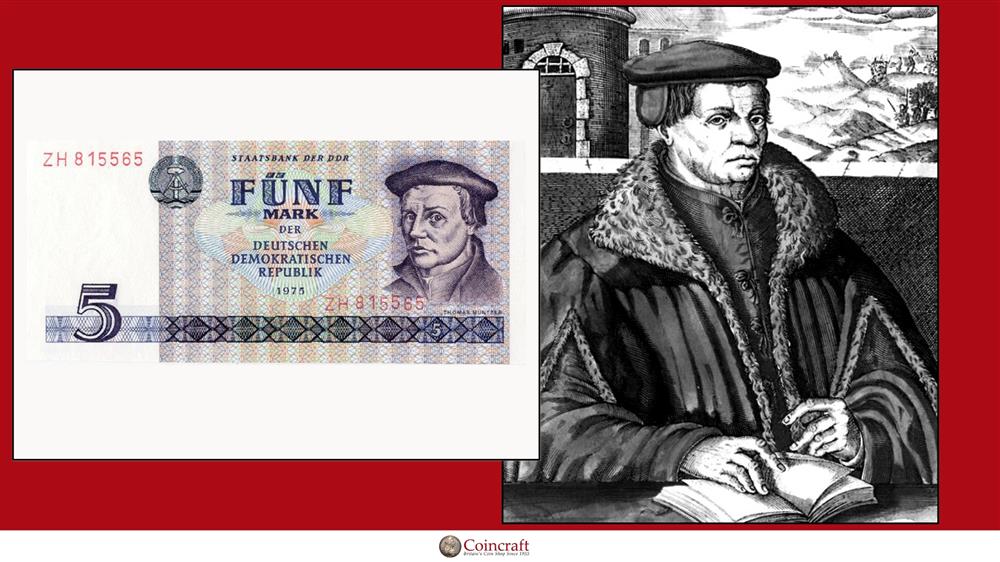
Picture Source of Thomas Muntzer: Wikipedia
Introduction to Thomas Müntzer
Thomas Müntzer remains a pivotal yet complex figure in theological and revolutionary history. Known for his radical ideas and fervent opposition to established religious norms, he played a significant role in shaping the socio-political landscape of the early 16th century. Born around 1489 in what is now central Germany, Müntzer’s life spanned a period of great change and turmoil, marked by the Reformation and the Peasants' War.
Müntzer was an ardent critic of the Catholic Church and later, Martin Luther, whose reforms he deemed insufficient. His theological insights were deeply intertwined with his vision for social justice, which made him both a revered and reviled figure. His ideas were considered radical at the time, but they left an indelible mark on religious and social thought.
Understanding Müntzer requires an exploration of his theological beliefs, his involvement in social upheavals, and his enduring influence on both religious doctrines and revolutionary movements. This article delves into these facets of Müntzer’s life, unearthing the legacy of a man whose thoughts and actions continue to resonate in modern theology and social activism.
Historical Context of Müntzer's Life
The late 15th and early 16th centuries were periods of significant upheaval in Europe, marked by religious reformations, political strife, and social unrest. Born into this era, Müntzer witnessed the decline of feudalism and the rise of new economic and social orders. The Catholic Church, which wielded immense power, was increasingly criticised for its corruption and distance from spiritual authenticity.
Amidst this turbulent backdrop, Martin Luther’s 1517 Ninety-Five Theses challenged the Church's practices and ignited the Protestant Reformation. However, while Luther sought to reform the Church from within, Müntzer envisioned a more radical transformation that not only addressed religious but also societal inequalities. His calls for change were not solely theological but extended to the economic and political realms as well.
Müntzer’s life was deeply intertwined with the socio-political changes of his time. He engaged with both religious and secular authorities, often finding himself at odds with both. His revolutionary ideas were influenced by the widespread discontent among the peasantry, who faced oppressive taxation and feudal exploitation. This context shaped Müntzer’s belief in the need for a divine intervention to establish a just society.
Müntzer's Theological Beliefs
Thomas Müntzer’s theological beliefs were radical, challenging the established doctrines of his time. At the core of his theology was the belief in the direct and personal revelation of God to individuals, bypassing the institutional Church. This emphasis on personal spirituality was a stark departure from the Catholic Church's hierarchical structure and even from Luther’s reformative ideas.
Müntzer argued that the Holy Spirit could speak directly to believers, offering them divine guidance without the need for clerical mediation. This belief empowered the common people, suggesting that they too could interpret God’s will, thus undermining the authority of the Church hierarchy. Müntzer’s vision of a ‘priesthood of all believers’ was revolutionary and posed a direct threat to established religious authorities.
Additionally, Müntzer’s theology was deeply intertwined with his socio-political beliefs. He saw the coming of God’s Kingdom as an imminent reality, one that required active participation from believers to bring about. His sermons and writings often called for a spiritual awakening that would lead to a radical transformation of society, aligning spiritual renewal with social justice.
Müntzer and the Peasants' War
Thomas Müntzer’s involvement in the Peasants' War of 1524-1525 is one of the most notable aspects of his life. This conflict arose from widespread discontent among the peasantry, who were burdened by high taxes, feudal duties, and oppressive social structures. Müntzer became a key figure in this uprising, lending his voice and theological justification to the peasants' cause.
Müntzer believed that the Peasants' War was a manifestation of God’s will, a divine opportunity to overthrow the unjust ruling classes and establish a society based on equality and justice. His advocacy for the peasants was not merely ideological but also practical, as he actively participated in their assemblies and encouraged them to fight for their rights. His role in the war symbolised the merging of his revolutionary theology with tangible action.
However, the Peasants' War ended in tragedy, with the rebellion brutally suppressed by the combined forces of the nobility and the emerging Protestant princes. Müntzer was captured, tortured, and executed in 1525. Despite this, his involvement in the Peasants' War cemented his legacy as a revolutionary thinker who dared to challenge the status quo, even at the cost of his life.
Müntzer's Influence on Revolutionary Thought
Thomas Müntzer’s ideas and actions have had a lasting impact on revolutionary thought, inspiring both religious and secular movements throughout history. His belief in the necessity of radical change to achieve social justice laid the groundwork for future revolutionary ideologies. Müntzer’s vision of a society based on equality and divine justice resonated with later movements that sought to challenge oppressive systems.
Müntzer’s influence can be traced to various social and political movements that emerged in subsequent centuries. His emphasis on direct action and the empowerment of the common people found echoes in the democratic and labour movements of the 19th and 20th centuries. The idea that ordinary individuals could drive significant societal change was a powerful legacy of Müntzer’s thought.
Moreover, Müntzer’s revolutionary theology has inspired liberation theology movements in the modern era. These movements, particularly in Latin America, have drawn on his ideas to advocate for social justice and to challenge systems of oppression. Müntzer’s legacy as a thinker who combined religious fervour with a commitment to social change continues to influence those who seek to align their faith with activism.
The Legacy of Thomas Müntzer in Modern Theology
Müntzer’s theological contributions have been revisited and reinterpreted in modern theological discourse. His emphasis on personal revelation and spiritual empowerment has found resonance in contemporary movements that advocate for a more inclusive and participatory form of faith. Müntzer’s ideas challenge traditional hierarchies and encourage believers to seek a direct, personal relationship with the divine.
In modern theology, Müntzer’s ideas are often discussed in the context of liberation theology, which seeks to address issues of social justice and human rights within a religious framework. His belief in the transformative power of faith continues to inspire theologians who view religion as a force for social change. Müntzer’s legacy is evident in the ongoing dialogues about the role of faith in addressing social inequities.
Furthermore, Müntzer’s critiques of institutional religion remain relevant as discussions about the role of the Church and its relationship with society continue to evolve. His call for a more authentic and engaged spirituality challenges contemporary believers to consider how their faith can contribute to a more just and equitable world. Müntzer’s legacy in modern theology is a testament to the enduring power of his ideas.
Key Writings and Works of Thomas Müntzer
Thomas Müntzer’s writings provide valuable insights into his theological and revolutionary thought. Although not as prolific a writer as some of his contemporaries, Müntzer’s surviving works are a testament to his intellectual depth and visionary ideas. His writings reflect his commitment to both spiritual renewal and social transformation.
One of Müntzer’s most significant works is his "Prague Manifesto," a document that outlines his theological and social vision. In it, Müntzer articulates his belief in the need for a radical reformation that encompasses both religious and societal dimensions. His call for a spiritual awakening that leads to societal renewal is a recurring theme in his writings.
Additionally, Müntzer’s sermons and letters offer a glimpse into his passionate advocacy for social justice and his critique of religious authorities. His "Sermon to the Princes" is particularly notable for its bold challenge to the ruling classes and its call for a more equitable society. Müntzer’s writings continue to be studied for their theological insights and their revolutionary spirit.
Müntzer's Relationship with Martin Luther
The relationship between Thomas Müntzer and Martin Luther is a complex and often contentious aspect of Reformation history. Initially, Müntzer was a supporter of Luther’s reforms, sharing his criticism of the Catholic Church’s practices. However, as Luther’s movement gained momentum, Müntzer became increasingly critical of what he perceived as Luther’s compromises with secular authorities.
Müntzer believed that Luther’s reforms did not go far enough in addressing the root causes of social and religious injustices. He accused Luther of abandoning the radical potential of the Reformation in favour of a more conservative approach that preserved existing power structures. This ideological rift led to a public and often bitter dispute between the two reformers.
Despite their differences, both Müntzer and Luther played crucial roles in the Reformation, albeit with differing visions for its outcome. Müntzer’s radicalism and Luther’s more gradual reforms represent two sides of the same transformative coin. Their relationship highlights the diversity of thought within the Reformation and the different paths it could have taken.
Müntzer's Impact on Social Movements
Thomas Müntzer’s legacy extends far beyond his lifetime, influencing a myriad of social movements that seek justice and equality. His revolutionary ideas have provided a framework for understanding the intersection of faith and activism, inspiring those who strive for societal transformation. Müntzer’s impact can be seen in movements that challenge economic disparity, social injustice, and political oppression.
Throughout history, Müntzer’s vision has resonated with those who advocate for the rights of the oppressed and marginalised. His belief in the power of collective action and his call for a just society continue to inspire modern activists. Müntzer’s legacy is evident in the ongoing struggles for human rights and social justice across the globe.
In recent times, Müntzer’s ideas have been revisited by movements that seek to address systemic inequalities. His call for a society guided by principles of justice and equality remains as relevant today as it was in the 16th century. Müntzer’s impact on social movements underscores the enduring power of his revolutionary thought.
Reflecting on Müntzer's Enduring Legacy
Thomas Müntzer’s life and ideas offer a profound exploration of the intersection between faith, justice, and societal change. His radical theology and commitment to social transformation have left an indelible mark on both religious and revolutionary thought. Müntzer’s vision of a society based on divine justice continues to inspire those who seek to align their faith with activism.
Reflecting on Müntzer’s enduring legacy invites contemporary readers to consider the relevance of his ideas in today’s world. His call for a more just and equitable society challenges individuals and communities to engage with issues of social justice and to question established norms. Müntzer’s life and work remind us of the potential for faith to be a force for transformative change.
As we explore Müntzer’s legacy, we are reminded of the power of individual conviction and the impact it can have on the world. His ideas continue to resonate with those who strive for a more just and inclusive society. In celebrating Müntzer’s legacy, we are encouraged to reflect on how we can contribute to a world guided by principles of justice and equality.