Honouring Banknotes
Celebrating the legends, landscapes, and landmarks that grace our banknotes! Each note tells a story of our rich history and breathtaking beauty – from iconic figures who shaped a nation to the stunning scenery that takes our breath away.
Sort by
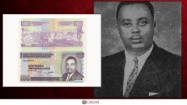
Burundi Francs Prince Louis Rwagasore (1932 - 1961) -Thursday, 18 June 2026
If you examine the obverse of the modern Burundi 100 Francs banknote, you are greeted by the calm, dignified portrait of a man in a sharp suit and tie. To a casual observer, he might look like a standard mid-century politician. But this is Prince Louis Rwagasore, the crown prince of Burundi, a fierce anti-colonial revolutionary, and the founding father of his nation. next...
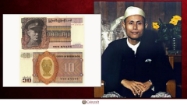
Burma Kyats Honouring Aun Sang (1915 -1947) -Wednesday, 17 June 2026
In the turbulent history of 20th-century Southeast Asia, few figures loom as large or cast as enduring a shadow as General Aung San. Revered affectionately as Bogyoke (Major General) by the people of Myanmar (formerly Burma), Aung San is widely considered the undisputed "Father of the Nation" [1]. In a tragically brief life that ended at the age of 32, he transitioned from a radical student activist to a revolutionary military commander, and finally to a brilliant statesman who successfully negotiated his country's freedom from British colonial rule [2]. next...
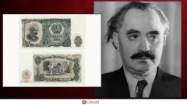
Bulgarian leva Honouring Georgi Dimitrov Mihaylov (1882 - 1949) -Tuesday, 16 June 2026
Georgi Dimitrov Mihaylov (June 18, 1882 – July 2, 1949) was one of the most influential and polarizing figures of the 20th-century international communist movement. To some, he was a courageous anti-fascist hero who famously humiliated Hermann Göring on the world stage; to others, he was a ruthless Stalinist dictator who orchestrated the brutal Sovietization of post-World War II Bulgaria [1, 2]. As the General Secretary of the Communist International (Comintern) and the first communist leader of the People’s Republic of Bulgaria, Dimitrov’s political career reflected the turbulent shifts of European geopolitics from the collapse of empires to the freezing point of the Cold War. next...
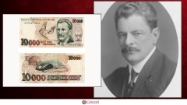
Brazil Cruzeiro Featuring Vital Brazil Mineiro da Campanha (1865 - 1950) -Monday, 15 June 2026
At the turn of the 20th century, the expansion of agriculture in Brazil faced a silent, deadly, and widespread enemy: venomous snakes. As coffee plantations pushed further into the untamed interiors of São Paulo, thousands of rural workers fell victim to snakebites, with mortality rates reaching devastating highs [1]. The medical world had few answers, often relying on ineffective folk remedies or fundamentally flawed scientific assumptions [2]. It was against this perilous backdrop that a Brazilian physician and biomedical scientist named Vital Brazil Mineiro da Campanha emerged. Through his relentless dedication to public health and immunology, Vital Brazil would revolutionize the global treatment of envenomation, proving the principle of antivenom specificity and saving countless lives worldwide [3]. next...
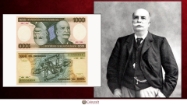
Brazil Cruzeiro Featuring José Maria da Silva Paranhos Júnior (1845 - 1912) -Thursday, 11 June 2026
José Maria da Silva Paranhos Júnior, best known to history as the Baron of Rio Branco (Barão do Rio Branco), remains one of the most revered statesmen in South American history. As Brazil's Minister of Foreign Affairs from 1902 until his death in 1912, Rio Branco accomplished a feat almost unique in modern geopolitics: he peacefully resolved long-standing, volatile border disputes with all of Brazil's neighbors, securing approximately 900,000 square kilometers of territory—roughly 10% of Brazil’s modern landmass—without resorting to military conflict [1]. next...
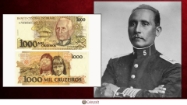
Brazil Cruzeiro Honouring Cândido Rondon (1865 - 1958) -Friday, 12 June 2026
Few figures in South South American history command the dual legacy of national builder and humanitarian pioneer quite like Marshal Cândido Mariano da Silva Rondon (1865–1958). An explorer, military engineer, and champion of Indigenous rights, Rondon mapped thousands of square miles of uncharted Amazonian wilderness, laid the communication lines that stitched a fractured young republic together, and revolutionized state interactions with uncontacted tribal societies. Guided by a strict ethical code—most famously encapsulated in his command to his soldiers: "Die if need be, never kill"—Rondon sought to reconcile the expansion of the modern nation-state with the preservation and dignity of its native peoples. next...
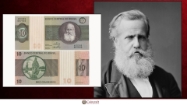
Brazil Cruzeiro Featuring Pedro II of Brazil -Wednesday, 10 June 2026
Dom Pedro II, born Pedro de Alcântara, was the second and last monarch of the Empire of Brazil. Ruling for over 58 years (1831–1889), his reign brought stability, cultural growth, and international respect to a nation previously fractured by political turmoil [1]. Often called "The Magnanimous," Pedro II is remembered as a highly intellectual ruler who prioritized education, science, and the modernization of Brazil. Despite his deep personal popularity, his commitment to peaceful evolution eventually paved the way for a bloodless military coup that ended the Brazilian monarchy, leaving behind a lasting legacy of progressive leadership and civic duty [2]. next...
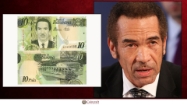
Botswana Pula Honouring Seretse Khama Ian Khama -Tuesday, 09 June 2026
Seretse Khama Ian Khama is a prominent Motswana politician and former military officer who served as the fourth President of the Republic of Botswana from April 1, 2008, to April 1, 2018 [1][3]. As a leader whose life stands at the intersection of royal heritage and national service, his tenure and post-presidency have been characterized by strong stances on democratic governance, conservation, and highly publicized political rifts [2][5]. next...
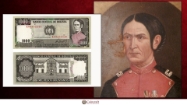
Bolivian Pesos Featuring Juana Azurduy de Padilla (1780–1862). -Monday, 08 June 2026
Often overshadowed by figures like Simón Bolívar and José de San Martín, Juana Azurduy de Padilla stands as one of the most formidable and uncompromising military leaders of the South American Wars of Independence. A woman of mestizo heritage, she defied the strict patriarchal norms of the 19th-century Spanish colonial empire to lead armies, organize guerrilla factions, and fight on the front lines for the liberation of Alto Perú (modern-day Bolivia) and the United Provinces of the Río de la Plata (modern-day Argentina). next...
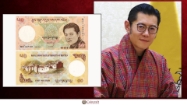
Bhutan Featuring Jigme Khesar Namgyel Wangchuck (The King) -Friday, 05 June 2026
In the heart of the Himalayas lies the Kingdom of Bhutan, a nation famous for measuring its success not by pure economic output, but by Gross National Happiness. At the helm of this unique modern state is Jigme Khesar Namgyel Wangchuck, the fifth Druk Gyalpo (Dragon King). next...
Get in touch icon icon

- icon
45 Great Russell St, London WC1B 3JL
- icon
