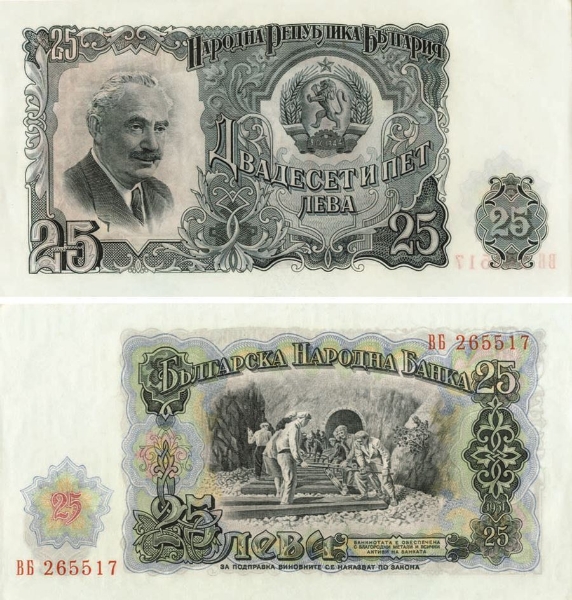
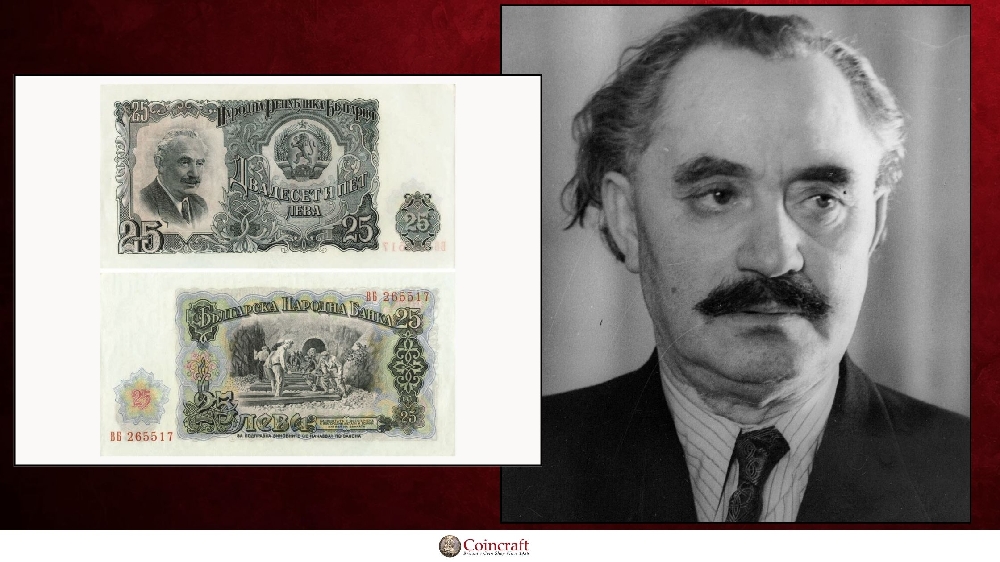
Picture Source of Georgi Dimitrov Mihaylov: Wikipedia
The Lion of Leipzig: The Life, Rise, and Legacy of Georgi Dimitrov Mihaylov
Georgi Dimitrov Mihaylov (June 18, 1882 – July 2, 1949) was one of the most influential and polarizing figures of the 20th-century international communist movement. To some, he was a courageous anti-fascist hero who famously humiliated Hermann Göring on the world stage; to others, he was a ruthless Stalinist dictator who orchestrated the brutal Sovietization of post-World War II Bulgaria [1, 2]. As the General Secretary of the Communist International (Comintern) and the first communist leader of the People’s Republic of Bulgaria, Dimitrov’s political career reflected the turbulent shifts of European geopolitics from the collapse of empires to the freezing point of the Cold War.
Key Facts
Feature | Details |
|---|---|
Full Name | Georgi Dimitrov Mihaylov (Георги Димитров Михайлов) |
Date of Birth | June 18, 1882 |
Place of Birth | Kovachevtsi, Principality of Bulgaria [1] |
Date of Death | July 2, 1949 (aged 67) |
Place of Death | Barvikha, Russian SFSR, Soviet Union [1] |
Key Positions Held | General Secretary of the Comintern (1935–1943); Prime Minister of Bulgaria (1946–1949) [1, 2] |
Famous For | Defending himself in the 1933 Leipzig Trial (Reichstag Fire Trial) [1, 3] |
Political Alliance | Bulgarian Communist Party, Communist Party of the Soviet Union |
Key Takeaways
Anti-Fascist Icon: Dimitrov's brilliant, self-guided defense at the Leipzig Trial in 1933 humiliated Nazi leadership on a global stage and proved that the regime could be intellectually defeated [3].
Architect of the Popular Front: He shifted global communist policy toward coalition-building with non-communists, a strategic pivot that helped organize anti-fascist resistance movements across Europe [1, 3].
Stalinist Builder of Modern Bulgaria: Upon his return to Bulgaria, he used totalitarian methods, political purges, and state terror to destroy democratic opposition and construct a Soviet satellite state [2].
The Balkan Federation Vision: Dimitrov sought to transcend traditional Balkan nationalism by forming a multinational socialist federation, an ambition that ultimately died due to the geopolitical realities of the Cold War and Stalin’s dominance [2].
Early Life and Revolutionary Beginnings
Georgi Dimitrov was born in the western Bulgarian village of Kovachevtsi to working-class refugee parents fleeing Ottoman rule in Macedonia [2]. His mother, a devout Protestant, initially hoped her eldest son would become a pastor [2]. However, the harsh economic realities of the era forced Dimitrov to drop out of school at the age of 12 to apprentice as a typesetter in a Sofia printing house [1, 2].
It was within the printing shops that Dimitrov discovered Marxist literature and became deeply involved in the labor movement. By the age of 18, he was elected secretary of the Sofia branch of the printers' union [2]. In 1902, he joined the Bulgarian Social Democratic Workers’ Party. When the party split in 1903 into the moderate "Broad" socialists and the radical, Marxist-Leninist "Narrow" socialists led by Dimitar Blagoev, Dimitrov threw his support behind the latter [2].
Dimitrov proved to be a highly charismatic organizer, orchestrating major industrial actions, including a prominent miners' strike in Pernik [2]. In 1913, at just 31 years old, he was elected to the Bulgarian Parliament, becoming the youngest Member of Parliament in the country’s history [2]. As an MP during World War I, Dimitrov vocally opposed Bulgaria's alignment with the Central Powers, campaigning against war credits. This anti-war activism led to his brief imprisonment for sedition in 1918 [1, 2].
Following the war, in 1919, Dimitrov helped reorganize the "Narrow" socialists into the Bulgarian Communist Party (BCP), aligning it directly with Lenin’s Bolshevik movement and the Comintern [1, 3].
The September Uprising of 1923 and Exile
In June 1923, a right-wing military coup overthrew the populist, agrarian government of Prime Minister Aleksandar Stamboliyski [3]. Under intense pressure from Moscow to act, the BCP—led by Dimitrov and Vasil Kolarov—launched the September Uprising of 1923 in an attempt to seize power [1, 3].
The rebellion was poorly coordinated and met with overwhelming military force by the new regime of Aleksandar Tsankov [1, 3]. The coup leaders crushed the uprising, unleashing a wave of violent state terror against the left. Dimitrov and Kolarov fled across the border into Yugoslavia [3]. Tried in absentia, Dimitrov was sentenced to death [1, 3].
For the next decade, Dimitrov lived as a clandestine operative for the Comintern, operating under various aliases across the Soviet Union, Austria, and Germany [1, 3]. By 1929, he had risen to become the head of the Comintern's Central European section, based in Berlin [1].
The Leipzig Trial (1933): A Battle of Ideology
On February 27, 1933, the German Reichstag building in Berlin was set on fire. The newly appointed Chancellor, Adolf Hitler, used the event as a pretext to suspend civil liberties and arrest thousands of political opponents [1]. On March 9, 1933, the Gestapo arrested Dimitrov along with two other Bulgarian communists, accusing them of conspiring with Marinus van der Lubbe to orchestrate the arson [1, 3].
The subsequent Leipzig Trial (September–December 1933) was intended by the Nazi leadership to be a public, televised demonstration of the "communist menace" [3]. However, the Nazis severely underestimated Dimitrov.
Refusing court-appointed counsel, Dimitrov chose to defend himself [1, 3]. He spent his time in detention studying German law and mastering the German language [2]. During the trial, Dimitrov transformed from the accused into the accuser. He delivered blistering cross-examinations of Nazi leaders, most notably Hermann Göring, then Minister of the Interior for Prussia.
When Göring attempted to intimidate him, Dimitrov calmly dismantled the prosecution's flimsy evidence, famously prompting Göring to lose his temper and scream, "Out of here, you scoundrel!" [3]
Dimitrov’s moral courage and razor-sharp intellect captured international headlines. Despite the court's bias, the lack of evidence forced his acquittal [1]. The trial established Dimitrov as an international anti-fascist celebrity and a symbol of resistance [3, 4].
At the Helm of the Comintern and the "Popular Front"
Following his acquittal, the Soviet Union granted Dimitrov citizenship, and a special plane flew him to Moscow [1, 2]. Recognizing his global popularity, Joseph Stalin appointed Dimitrov General Secretary of the Executive Committee of the Comintern in 1935 [1, 2].
At the 7th Comintern Congress in 1935, Dimitrov delivered a seminal address that reshaped communist strategy globally. He officially introduced the Popular Front policy [1, 3]. Moving away from the previous sectarian "class against class" approach (which had labeled social democrats as "social fascists"), Dimitrov argued that communists must build broad coalitions with social democrats, liberals, and any anti-fascist forces to stop the spread of Nazism and Fascism [1, 3].
Dimitrov remained the head of the Comintern throughout World War II until Stalin dissolved the organization in 1943 to ease tensions with the Western Allies [1, 2].
The Sovietization of Bulgaria (1946–1949)
In September 1944, as the Soviet Red Army advanced into Europe, a communist-led coalition known as the Fatherland Front seized power in Bulgaria. In November 1945, after 22 years in exile, Dimitrov clandestinely returned to his homeland [4].
By November 1946, Dimitrov was appointed Prime Minister of Bulgaria [1, 2]. He immediately embarked on a systematic campaign to transform the country into a classic Stalinist state [2]:
Suppression of Opposition: He dismantled all non-communist political entities. Most notably, he orchestrated the show trial and execution of Nikola Petkov, the leader of the Agrarian National Union, in 1947 [2].
Collectivization and Nationalization: Dimitrov’s government nationalized private industries, banks, and forcibly collectivized agricultural lands [4].
The 1947 Constitution: Known as the "Dimitrov Constitution," this document cemented the leading role of the Communist Party and restructured the nation along Soviet lines [4].
The Balkan Federation and the Tito-Stalin Split
During his premiership, Dimitrov championed the ambitious concept of a Balkan Communist Federation [2]. He envisioned a massive socialist union uniting Bulgaria, Yugoslavia, Albania, and potentially Greece [2]. He worked closely with Yugoslav leader Josip Broz Tito to lay the groundwork, even signing the Bled Agreement in 1947, which planned for the unification of Bulgarian and Yugoslav Macedonia [2].
However, the plan collapsed in 1948 with the dramatic Tito-Stalin Split [2]. Stalin fiercely opposed any regional power bloc he could not directly control. Obedient to Moscow, Dimitrov was forced to publicly abandon his federation plans and condemn his former ally, Tito [2].
Death and Post-Mortem Deification
In early 1949, suffering from failing health and failing liver function, Dimitrov traveled to the Soviet Union for medical treatment [2]. On July 2, 1949, he died at the Borovikha Sanatorium near Moscow [1, 2]. Rumors persisted for decades that Stalin had ordered him poisoned due to his independent foreign policy overtures regarding the Balkan Federation, though this was never officially proven [2, 3].
Upon his death, Dimitrov was deified in communist Bulgaria. Within just 138 hours, an imposing white marble mausoleum was constructed in the center of Sofia [2]. His body was embalmed and placed on public display, mirroring Lenin’s tomb in Moscow [2]. The city of Pernik was renamed Dimitrovo (reverted in 1962), and the city of Dimitrovgrad was founded in his honor.
Following the collapse of communism in Bulgaria, Dimitrov's body was quietly removed from the mausoleum and buried in Sofia's Central Cemetery in 1990 [2]. In August 1999, after several attempts, the Bulgarian government demolished the vacant concrete mausoleum, closing a major chapter on the nation's totalitarian past [2].
Frequently Asked Questions (FAQs)
1. Why is Georgi Dimitrov called the "Lion of Leipzig"?
The nickname "Lion of Leipzig" was coined by the international press during the 1933 Reichstag Fire trial. It referred to his fierce, courageous, and uncompromising defense in the face of Nazi prosecutors, particularly his public clashes with Hermann Göring [2, 3].
2. Did Georgi Dimitrov actually set the Reichstag on fire?
No. Historical consensus confirms that Dimitrov and his fellow Bulgarian communists had nothing to do with the Reichstag Fire. While the Dutch communist Marinus van der Lubbe was caught at the scene, the trial failed to link him to Dimitrov or any wider international communist conspiracy [1, 3].
3. What was the "Dimitrov Constitution"?
Adopted in December 1947, the Dimitrov Constitution was the supreme law of the People's Republic of Bulgaria. Modeled closely after the 1936 Soviet Constitution, it abolished the monarchy, nationalized the economy, and established a single-party state controlled by the Bulgarian Communist Party [4].
4. What happened to his mausoleum?
The Georgi Dimitrov Mausoleum in Sofia was built immediately after his death in 1949. In 1990, after the fall of communism, his embalmed body was removed and cremated. After years of public debate, the democratic government demolished the physical structure in August 1999 [2].
References
[1] Britannica, The Editors of Encyclopaedia. "Georgi Mikhailovich Dimitrov." Encyclopaedia Britannica. https://www.britannica.com/biography/Georgi-Mikhailovich-Dimitrov
[2] Vagabond Magazine. "Who Was Georgi Dimitrov?" Vagabond Magazine Archive. https://www.vagabond.bg/who-was-georgi-dimitrov-1135
[3] Stankova, Marietta. Georgi Dimitrov: A Biography. Bloomsbury Academic, 2010. https://www.bloomsbury.com/uk/georgi-dimitrov-9781350656987/
[4] Bulgarian Telegraph Agency (BTA). "November 4, 1945: Communist Leader Georgi Dimitrov Returns to Bulgaria." BTA Archives. https://www.bta.bg/en/news/archives/1001590