 - WBR0556.jpg)
Picture Source of José Maria da Silva Paranhos Júnior (1845 - 1912): Wikipedia
The Architect of Peace: José Maria da Silva Paranhos Júnior, the Baron of Rio Branco
José Maria da Silva Paranhos Júnior, best known to history as the Baron of Rio Branco (Barão do Rio Branco), remains one of the most revered statesmen in South American history. As Brazil's Minister of Foreign Affairs from 1902 until his death in 1912, Rio Branco accomplished a feat almost unique in modern geopolitics: he peacefully resolved long-standing, volatile border disputes with all of Brazil's neighbors, securing approximately 900,000 square kilometers of territory—roughly 10% of Brazil’s modern landmass—without resorting to military conflict [1].
His work defined the physical boundaries of the Brazilian Republic, professionalized its diplomatic corps (Itamaraty), and established a national reputation for peaceful arbitration and international law. Today, he is widely regarded as the "Patron of Brazilian Diplomacy" [1, 3].
Key Takeaways
The Father of Modern Brazilian Borders: Through masterclass diplomacy, historical research, and geographical analysis, Rio Branco consolidated Brazil's vast frontiers, eliminating structural threats of war on the South American continent [1].
Precursor to Public Diplomacy: Long before "soft power" was a coined academic term, Rio Branco understood that international prestige, cultural presentation, and a clean, modernized nation were key levers of foreign policy [3].
The Power of Rigorous Research: Rio Branco's primary weapons in territorial disputes were historical maps, colonial treaties, and archival documents. His intellectual rigor routinely overwhelmed his diplomatic counterparts [1, 5].
An Institutional Legacy: He reshaped Itamaraty (the Brazilian Ministry of Foreign Affairs) from a provincial office into a highly professional, merit-based diplomatic institution that remains respected globally to this day [3].
Pragmatism Over Partisanship: Though a staunch monarchist during the Brazilian Empire, he successfully transitioned to serve the First Brazilian Republic, demonstrating that patriotism and institutional duty transcended personal political leanings [1].
Key Facts
Feature / Milestone | Detail |
|---|---|
Full Name | José Maria da Silva Paranhos Júnior |
Noble Title | Baron of Rio Branco (Barão do Rio Branco) |
Date of Birth | April 20, 1845 (Rio de Janeiro, Empire of Brazil) [1] |
Date of Death | February 10, 1912 (aged 66; Rio de Janeiro, Republic of Brazil) [1] |
Key Role | Minister of Foreign Affairs (1902–1912) |
Predecessor (Father) | José Maria da Silva Paranhos Sr. (Viscount of Rio Branco) [1] |
Major Treaties Negotiated | Treaty of Petrópolis (1903), Treaty of Rio de Janeiro (1909) [1, 2] |
Major Border Arbitrations | Palmas/Misiones (1895), Amapá (1900) [1] |
Territory Secured | approx 900,000 square kilometers (roughly 10% of modern Brazil) [1] |
Diplomatic Philosophy | Peaceful arbitration, international law, Pan-Americanism [1, 5] |
Accolades | Nominated for the Nobel Peace Prize (1911) [5] |
                                  🇧🇷 BRAZIL (Post-Treaties)
                            .---------------------------------.
                           /  [Amapá Dispute, 1900]            \
                          |   Successfully countered France     |
                          |   to secure northern borders.       |
                          |                                     |
                          |   [Acre Territory, 1903]            |
                          |   Negotiated with Bolivia;          |
                          |   prevented regional war.           |
                          |                                     |
                          |   [Palmas/Misiones, 1895]           |
                          |   Arbitrated with Argentina;        |
                          |   secured southern plains.          |
                           \                                   /
                            '---------------------------------'
Early Life and Intellectual Foundation
José Maria da Silva Paranhos Júnior was born into a highly politically active family. His father, the Viscount of Rio Branco, was a towering Conservative politician and diplomat during the reign of Emperor Dom Pedro II. The elder Paranhos served as Prime Minister and was famous for drafting the Law of Free Birth (Lei do Ventre Livre) in 1871, which began the gradual abolition of slavery in Brazil [1, 4].
Growing up in this environment, Paranhos Júnior developed an early passion for letters, geography, and history. He studied law in São Paulo and Recife, graduating in 1866 [1]. Instead of immediately entering politics, he spent his twenties writing historical biographies, teaching geography and history at the prestigious Colégio Pedro II, and acting as a journalist [1].
This deep academic grounding in chorography (regional geography) and colonial history would later prove to be his greatest geopolitical weapon. He did not simply rely on political influence; he acquired an unmatched expertise in colonial archives, old maps, and the historical movements of explorers in South America [1, 3].
Diplomatic Ascension and the Imperial Fall
In 1876, Paranhos Júnior was appointed Brazilian Consul General in Liverpool, England [1]. He lived in Europe for over two decades, which gave him a panoramic view of the global balance of power, the rise of European empires, and the growing economic dominance of the United States.
It was during this European tenure, in 1888, that he was granted the title of Baron of Rio Branco by Emperor Dom Pedro II. Only a year later, in 1889, a military coup overthrew the Brazilian monarchy, declaring the First Brazilian Republic [1].
While many imperial elites were ostracized or chose exile, the new republican government recognized that the country desperately needed seasoned minds to represent its interests abroad. Rio Branco, despite his lifelong monarchism, put nation before regime. He continued to use his title "Baron of Rio Branco" throughout his republican career—a rare exception tolerated by the republic because of his towering prestige and deep patriotism [1].
Slaying Giants: The Great Border Arbitrations
Before becoming the Minister of Foreign Affairs, Rio Branco achieved two legendary victories in international arbitration that cemented his status as a diplomatic master.
1. The Palmas/Misiones Dispute (1895)
For decades, Brazil and Argentina disputed a territory of roughly $30,000\text{ km}^2$ in the southern Palmas region (Misiones) [1]. Both sides agreed to submit the dispute to the President of the United States, Grover Cleveland, for binding arbitration [1].
While Argentina presented abstract legal arguments, Rio Branco presented President Cleveland with a massive, meticulously organized dossier of colonial treaties (such as the 1750 Treaty of Madrid), astronomical calculations, and historical maps showing that Portuguese and Brazilian settlers had occupied and managed the rivers in question for centuries.
On February 5, 1895, President Cleveland ruled entirely in favor of Brazil, granting the country nearly the entire disputed territory.
2. The Amapá Question (1900)
In the north, Brazil shared an undefined border with French Guiana. France claimed a vast, resource-rich territory reaching all the way to the Araguari River (modern-day Amapá) [1]. Tensions escalated when gold was discovered, leading to armed skirmishes between French military forces and Brazilian settlers.
The two nations turned to the Swiss Federal Council for arbitration [1]. Rio Branco once again took charge of the Brazilian case. He compiled a masterwork of historical geography, proving that the river "Vincent Pinzón" mentioned in the 1713 Treaty of Utrecht was indeed the Oyapock River, thus placing the disputed $260,000\text{ km}^2$ of territory firmly inside Brazilian borders.
In December 1900, Switzerland ruled overwhelmingly in Brazil's favor. Overnight, the Baron was hailed as a national hero.
The Ministry of Foreign Affairs and the Acquisition of Acre (1902–1912)
In December 1902, President Rodrigues Alves appointed the Baron of Rio Branco as Brazil's Minister of Foreign Affairs [1]. He would hold this post until his death in 1912, serving under four consecutive presidents (Rodrigues Alves, Afonso Pena, Nilo Peçanha, and Hermes da Fonseca)—an unprecedented feat of political longevity and national consensus in Brazilian history [1].
His most urgent challenge was the Acre War (1899–1903) [1, 2].
   ┌────────────────────────────────────────────────────────┐
   │                  THE ACRE CRISIS (1903)                │
   ├────────────────────────────────────────────────────────┤
   │  1. Brazilian rubber tappers migrate into Bolivian Acre│
   │  2. Bolivia leases Acre to an Anglo-American syndicate │
   │  3. Armed revolt led by Plácido de Castro              │
   │  4. Rio Branco intervenes to prevent continental war   │
   │  5. Treaty of Petrópolis signs Acre to Brazil          │
   └────────────────────────────────────────────────────────┘
Historically belonging to Bolivia, the remote jungle region of Acre had been flooded by tens of thousands of Brazilian rubber tappers (seringueiros) fleeing droughts in northeastern Brazil during the rubber boom [1.2.2]. Seeking to assert control, Bolivia leased the territory to an Anglo-American syndicate with administrative and police powers [1.2.2, 1.2.3].
Sensing a threat to regional sovereignty and the safety of the Brazilian settlers, a local militia led by José Plácido de Castro revolted and declared the independent Republic of Acre [1.2.3, 1.2.5].
A continental war between Brazil and Bolivia seemed imminent. Rio Branco stepped in with a brilliant combination of military posturing, financial incentives, and territorial adjustments:
The Treaty of Petrópolis (November 17, 1903): Rio Branco negotiated a peaceful settlement. Bolivia ceded Acre (approx. $191,000\text{ km}^2$) to Brazil [1.2.1, 1.2.2].
The Compensation Package: In return, Brazil paid Bolivia £2 million sterling (a massive sum at the time), ceded a small strip of land near the Abunã and Madeira rivers to grant Bolivia access to the Atlantic river network, and agreed to construct the Madeira-Mamoré Railroad to allow Bolivian goods to bypass treacherous rapids [1.2.2, 1.2.3].
The Peruvian Front: Rio Branco also settled overlapping Peruvian claims in the region through the Treaty of Rio de Janeiro (1909), securing a permanent northern border [1.2.5].
The Rio Branco Doctrine: Diplomatic Philosophy
The Baron's success was not accidental; it was guided by a coherent diplomatic philosophy that defined Brazilian foreign policy for the next century, often referred to as the Rio Branco Doctrine:
Peaceful Arbitration over Might: Rio Branco believed that international disputes should be solved through legal arbitration, treaties, and mutual concessions rather than warfare [1]. This earned Brazil a reputation as a stable, peace-loving nation [1].
Uti Possidetis: He relied heavily on the Roman law principle of uti possidetis, ita possideatis ("as you possess, so may you possess") [1.2.2]. He argued that borders should match actual occupation, demographics, and historical administrative presence, rather than arbitrary lines drawn on distant European maps.
The Pivot to Pan-Americanism: Rio Branco shifted Brazil’s diplomatic focus away from traditional European powers toward the Americas, especially the United States [1.1.5]. Along with his close ally Joaquim Nabuco (Brazil's first ambassador to Washington), Rio Branco fostered a strong economic and political partnership with the U.S., balancing European influence in South America [1.1.4].
Public Diplomacy & Image: Rio Branco recognized that a country's prestige was a tangible asset [3]. He professionalized the diplomatic corps, modernized the headquarters at Itamaraty Palace, and actively promoted a positive, "civilized" image of Brazil in global media [3].
Death and Unifying Legacy
On February 10, 1912, the Baron of Rio Branco passed away from kidney failure in Rio de Janeiro [1]. His death triggered an unprecedented national mourning. The Carnival celebrations of 1912 were officially postponed by a week out of respect for the statesman—a tribute virtually unheard of in Brazil.
His legacy endures in several profound ways:
The Capital of Acre: The capital city of the state of Acre was named Rio Branco in his honor [1.2.1].
The Rio Branco Institute: Founded in 1945, Brazil’s prestigious diplomatic academy, which trains all Brazilian diplomats, bears his name.
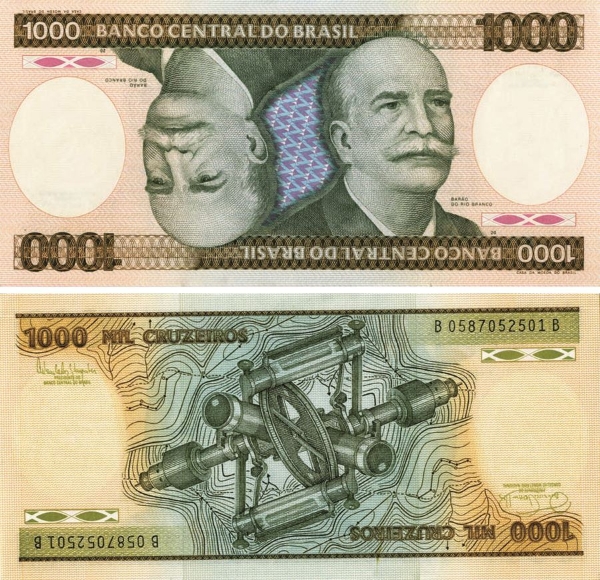
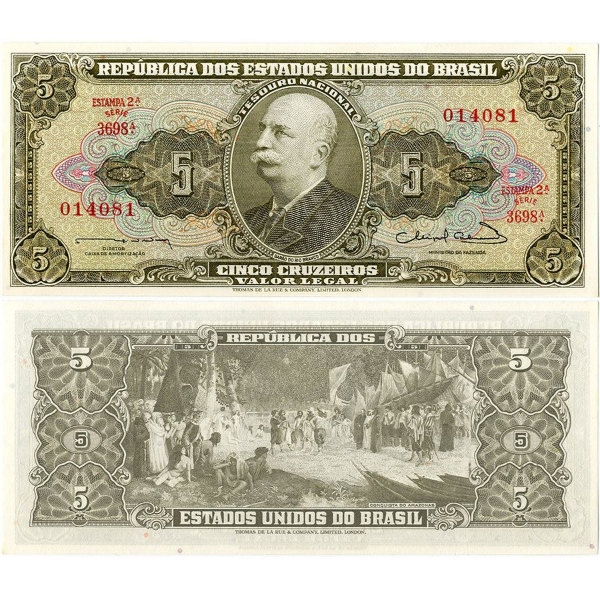
The Currency: The Baron's likeness has graced numerous Brazilian banknotes and coins throughout the 20th and 21st centuries.
Frequently Asked Questions (FAQs)
Was the Baron of Rio Branco a monarchist or a republican?
Rio Branco was a lifelong, convinced monarchist [1]. He deeply respected Emperor Dom Pedro II and his father's legacy under the empire. However, he was first and foremost a patriot. When the republic was established in 1889, he chose to serve the new government to protect Brazil's territorial integrity and international prestige [1].
Did Brazil use military force to acquire Acre?
While there was local armed conflict between Brazilian rubber tappers (led by Plácido de Castro) and Bolivian forces, the Brazilian national military did not engage in full-scale war [1.2.2, 1.2.3]. Rio Branco used the threat of military deployment to bring Bolivia to the negotiating table, but ultimately settled the conflict peacefully through the Treaty of Petrópolis via financial compensation and infrastructure commitments [1.2.1, 1.2.2].
Why did he keep the title of "Baron" after Brazil became a republic?
The First Brazilian Republic abolished all titles of nobility. However, because of Rio Branco's immense popularity, his unmatched diplomatic victories (such as the Palmas and Amapá arbitrations), and his service to the nation, the government made an unwritten exception, allowing him to sign his name as "Barão do Rio Branco" [1].
How much territory did Rio Branco add to Brazil?
Through his arbitrations and treaties, he secured approximately $900,000\text{ km}^2$ of territory [1]. To put this in perspective, this is a landmass larger than the entire country of France or the state of Texas, all acquired without launching a single military invasion [1].
References
Wikipedia Contributors. "José Paranhos, Baron of Rio Branco." Wikipedia, The Free Encyclopedia. https://en.wikipedia.org/wiki/José_Paranhos,_Baron_of_Rio_Branco
Encyclopedia.com. "Petrópolis, Treaty of (1903)." Encyclopedia of Latin American History and Culture. https://www.encyclopedia.com/humanities/encyclopedias-almanacs-transcripts-and-maps/petropolis-treaty-1903
King's College London. "Rio Branco and the origins of Brazil's status anxiety." KCL Feature Article. https://www.kcl.ac.uk/rio-branco-and-the-origins-of-brazils-status-anxiety
Britannica, The Editors of Encyclopaedia. "José Maria da Silva Paranhos, barão do Rio Branco." Encyclopedia Britannica. https://www.britannica.com/biography/Jose-Maria-da-Silva-Paranhos-barao-do-Rio-Branco
Nobel Prize Outreach. "Nomination Archive: Baron José Maria da Silva Rio Branco (Paranhos Jr)." NobelPrize.org. https://www.nobelprize.org/nomination/archive/show.php?id=7380