Articles
Sort by

Zloty Coin Honouring Nicolaus Copernicus -Friday, 07 March 2025
Nicolaus Copernicus, a Polish mathematician and astronomer, is best known for his revolutionary ideas regarding the structure of the solar system. Born on February 19, 1473, in Toruń, Poland, he lived during a time when the prevailing belief was that the Earth was the centre of the universe—a view known as the geocentric model. Copernicus's work laid the groundwork for modern astronomy, fundamentally changing the way humanity perceives the universe. next...
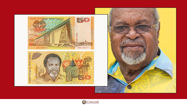
Papua New Guinea 50 Kina Banknote Honouring Michael Somare -Monday, 10 March 2025
Sir Michael Somare, affectionately known as the "Grand Chief," was a towering figure in Papua New Guinea's history. Born on April 9, 1936, in Rabaul, East New Britain Province, Somare would go on to become the architect of his country's independence and its longest-serving prime minister. next...
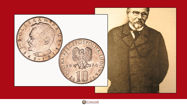
A Polish 10 Zloty dedicated to Alexander Glovacki aka Boleslaw Prus -Thursday, 06 March 2025
Boleslaw Prus, born as Aleksander Głowacki in 1847, stands as a monumental figure in Polish literature. His life spanned a transformative period in Polish history, witnessing the decline of the Polish-Lithuanian Commonwealth and the subsequent partitions that fragmented the nation into territories controlled by neighboring empires. next...
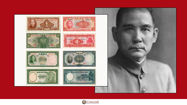
Banknote Yuan's Dedicated to Sun Yat-sen -Saturday, 08 March 2025
Sun Yat-sen, known as the "Father of Modern China," was a pivotal figure in the nation's transition from imperial rule to a republican government. Born on November 12, 1866, in Guangdong province, he was a leader whose vision for China extended beyond mere political reform. His life was dedicated to the unification and modernisation of China, which he believed was essential for the country's survival and growth. next...
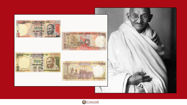
Banknote Rupees dedicated to Mahatma Gandhi -Wednesday, 05 March 2025
Mahatma Gandhi, widely recognised as a transformative figure in the pursuit of peace and social justice, was born on 2nd October 1869 in Porbandar, India. His early years were marked by a rich cultural heritage and a keen sense of morality instilled by his family. Growing up in a relatively privileged environment, he was exposed to various religious and social ideologies that would later influence his philosophy. The principles of truth and non-violence became the cornerstones of his belief system, shaping the revolutionary he would later become. next...

Shine Bright Like a Krugerrand! Unveiling the South African Treasures Dedicated to Paul Kruger -Tuesday, 04 March 2025
Paul Kruger, a prominent figure in South African history, was born on October 10, 1825, in the Cape Colony. He rose to become a significant political leader and the President of the South African Republic, commonly known as the Transvaal. Kruger’s life was marked by the tumultuous political landscape of the 19th century, characterized by conflicts between the British Empire and the Boer settlers. He became a symbol of Afrikaner nationalism and played a pivotal role in the struggle for independence from British rule. next...
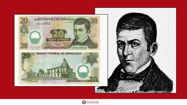
A Honduras 20 Lempiras dedicated to Dionisio de Herrera -Friday, 28 February 2025
José Dionisio de la Trinidad de Herrera y Díaz del Valle, a prominent figure in Central American history, was born on October 9, 1781, in Choluteca, Honduras. His early life was marked by the tumultuous period of Spanish colonial rule in Central America, which would later shape his political ideologies and aspirations for the region. next...
Get in touch icon icon

- icon
45 Great Russell St, London WC1B 3JL
- icon
