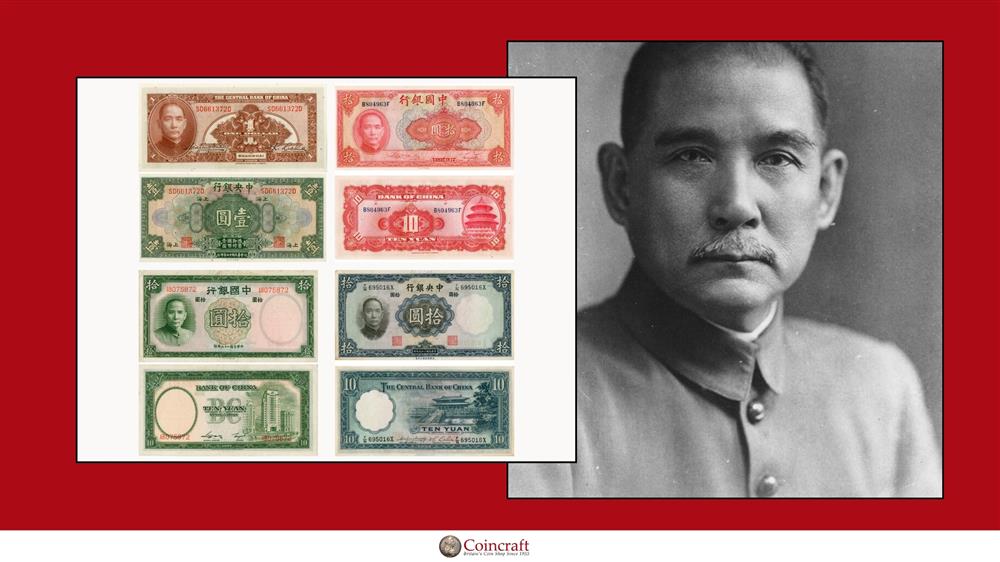
Picture Source of Sun Yat-sen: Wikipedia
Who Was Sun Yat-sen? A Brief Introduction
Sun Yat-sen, known as the "Father of Modern China," was a pivotal figure in the nation's transition from imperial rule to a republican government. Born on November 12, 1866, in Guangdong province, he was a leader whose vision for China extended beyond mere political reform. His life was dedicated to the unification and modernisation of China, which he believed was essential for the country's survival and growth.
Sun's early exposure to Western education played a crucial role in shaping his political ideology. He spent time in Hawaii and later in Hong Kong, where he was influenced by Western democratic principles and revolutionary ideas. This blend of Eastern and Western thought allowed him to formulate a vision that was unique and transformative for his country.
Throughout his life, Sun Yat-sen advocated for the welfare of the Chinese people, seeking a government that represented their interests. His dedication to social justice and economic reform laid the foundation for his enduring legacy, which continues to resonate in contemporary Chinese society.
The Early Years: Shaping a Revolutionary Mind
Sun Yat-sen's formative years were marked by significant events that would shape his revolutionary mindset. The fall of the Qing Dynasty was already a topic of discussion among intellectuals, and Sun was drawn into the world of political activism at a young age. His early education, particularly in Western medicine, equipped him with the skills to understand the importance of health and education in nation-building.
In 1894, Sun founded his first political organisation, the "Revive China Society," aimed at promoting revolutionary ideas and aspirations among the Chinese diaspora. This marked the beginning of his journey as a revolutionary leader. He worked tirelessly to gather support for his cause, often facing significant challenges and setbacks. His commitment to the revolutionary cause would later become a defining characteristic of his legacy.
Despite numerous failures and challenges, Sun's early experiences taught him the necessity of perseverance and adaptability. He learned to navigate the complex political landscape of China and build alliances with various factions, which would prove essential in the later stages of his revolutionary pursuits.
Sun Yat-sen's Three Principles of the People
Central to Sun Yat-sen's ideology were his "Three Principles of the People," which served as the foundation for his vision of a modern China. These principles—Nationalism, Democracy, and the People's Livelihood—highlighted Sun's intention to create a government that prioritised the welfare of its citizens.
Nationalism: Sun's vision of nationalism was rooted in the belief that the Chinese people needed to unite against foreign influence and internal strife. He sought to foster a sense of national identity among the population, encouraging them to take pride in their heritage and work together for a common purpose.
Democracy: Sun Yat-sen believed that China should adopt democratic principles to ensure that the government was accountable to its people. He advocated for a political system that allowed for popular participation, encouraging citizens to engage in governance and contribute to decision-making processes.
People's Livelihood: This principle emphasized the importance of economic reform and social welfare. Sun envisioned a society where the resources of the nation were distributed equitably, ensuring that all citizens had access to basic necessities such as food, education, and healthcare.
These principles not only served as a guiding framework for Sun's revolutionary activities but also resonated with the aspirations of the Chinese populace, laying the groundwork for future political movements.
The Xinhai Revolution: Overthrowing the Qing Dynasty
The Xinhai Revolution of 1911 marked a significant turning point in Chinese history, leading to the downfall of the Qing Dynasty and the establishment of the Republic of China. Sun Yat-sen's role in this revolution was both pivotal and symbolic, as he became the face of the movement advocating for change.
Initially, Sun was not present in China during the revolution, as he was in the United States, rallying support among overseas Chinese communities. However, his ideas had already permeated the revolutionary movement, inspiring many to take up arms against the Qing. The revolution began with an uprising in Wuchang, and it quickly gained momentum as various provinces declared their independence.
Sun's return to China was met with enthusiasm, and he was elected as the provisional president of the new republic. Although his presidency was short-lived, it signified a monumental shift in governance and set the stage for future political developments in China. The Xinhai Revolution demonstrated the power of collective action and the impact of Sun's revolutionary vision on the Chinese populace.
Founding the Republic of China: Sun's Vision Realised
The establishment of the Republic of China in 1912 was a significant achievement for Sun Yat-sen and his followers. This new political entity marked the end of over two thousand years of imperial rule, symbolising a new era of governance based on modern principles. Sun's vision for a republic was one where the power resided with the people, and he sought to implement policies that reflected this belief.
Sun's initial presidency was characterised by his attempts to unify the fragmented political landscape of China. He faced immense challenges, including regional warlords and political factions that resisted his authority. Despite these obstacles, Sun remained committed to his vision of a modern China and worked tirelessly to promote his ideals.
In this period, Sun also sought international support for his republic, recognising that China needed to gain legitimacy on the global stage. His efforts to foster diplomatic relations and seek foreign investment were crucial in establishing the Republic of China as a legitimate state. However, internal divisions and external pressures continued to challenge Sun's vision.
Sun Yat-sen's Impact on Chinese Nationalism
Sun Yat-sen's influence on Chinese nationalism cannot be overstated. He inspired a generation of young intellectuals and revolutionaries who looked to his principles as a blueprint for national rejuvenation. His emphasis on national unity and self-determination resonated with those who sought to liberate China from foreign domination and internal strife.
The concept of nationalism that Sun promoted was multifaceted. It encompassed not only the political aspiration for independence but also a cultural renaissance that encouraged pride in Chinese heritage and traditions. This cultural aspect of nationalism became particularly important in the face of Western imperialism, as it provided a unifying narrative for a country that had been historically fragmented.
In the years following the establishment of the Republic of China, Sun's ideas continued to evolve, influencing various political movements and ideologies. His vision inspired the May Fourth Movement in 1919, which sought to promote social and political reform, and laid the groundwork for the rise of the Chinese Communist Party. Sun's legacy as a nationalist leader remains a significant aspect of his impact on modern China.
Modernisation and Development: Sun's Economic Theories
Sun Yat-sen was not only a political leader but also an economic thinker who recognised the importance of modernisation for China's prosperity. His economic theories were encapsulated in his vision for the "People's Livelihood," which aimed to address the socio-economic challenges facing the nation.
One of Sun's key proposals was the establishment of state-owned enterprises to manage critical industries, such as railways, mining, and agriculture. He believed that government involvement in the economy was necessary to prevent exploitation by foreign powers and ensure that the wealth generated benefitted the Chinese people. This idea laid the groundwork for future economic policies in China, including those implemented during the socialist period.
Sun also advocated for land reforms to address the disparities in land ownership that plagued rural communities. He believed that equitable access to land was essential for improving the livelihoods of the peasantry and fostering economic development. His vision included not only agricultural reforms but also investments in infrastructure, education, and healthcare to create a more equitable society.
Despite the challenges of implementing his economic theories during his lifetime, Sun's ideas laid the foundation for future economic policies in China. His emphasis on modernisation, state intervention, and social welfare continues to be relevant in discussions about economic development today.
The Legacy of Sun Yat-sen in Contemporary China
Sun Yat-sen's legacy endures in contemporary China, where he is revered as a national hero and a symbol of the struggle for independence and modernisation. His contributions to the founding of the Republic of China and his vision for a sovereign, prosperous nation resonate with current Chinese values and aspirations.
The principles he advocated—Nationalism, Democracy, and the People's Livelihood—remain central to the Chinese political discourse. While the political landscape has evolved significantly since his time, Sun's vision continues to inform discussions about governance, social justice, and national identity. His emphasis on the importance of unity and national pride is echoed in contemporary efforts to strengthen China's position on the global stage.
Numerous memorials and institutions honour Sun Yat-sen's legacy, including the Sun Yat-sen Memorial Hall in Guangzhou and various universities that bear his name. These sites serve as reminders of his contributions and the ideals he championed, ensuring that future generations continue to learn from his vision.
Sun Yat-sen's Influence Beyond China's Borders
Sun Yat-sen's influence transcended the borders of China, impacting various movements and leaders across Asia. His ideas inspired anti-colonial movements in countries like Vietnam, Korea, and the Philippines, where leaders sought to emulate his vision of nationalism and self-determination. Sun's emphasis on the importance of unity against foreign domination resonated with many who faced similar struggles.
In addition to his political influence, Sun's thoughts on economic development and social welfare have been studied and adapted by various political leaders and governments worldwide. His belief in the role of the state in ensuring economic prosperity and social justice has found resonance in different contexts, influencing policy discussions in various countries.
Moreover, Sun Yat-sen's vision has been incorporated into the narratives of various political ideologies, including socialism and nationalism. His legacy continues to inspire contemporary leaders who seek to balance economic development with social equity, demonstrating the enduring relevance of his ideas beyond China's borders.
Controversies and Criticisms: A Balanced View
While Sun Yat-sen is widely celebrated for his contributions to modern China, his legacy is not without controversies and criticisms. Some argue that his political strategies were often inconsistent and that his vision was not fully realised during his lifetime. The challenges he faced in unifying the country and establishing a stable government led some to question the effectiveness of his leadership.
Additionally, the differing interpretations of his principles have led to ideological divisions among various political factions in China. While some embrace his vision of democracy and nationalism, others have appropriated his ideas for their agendas, leading to debates about his true legacy.
It is essential to view Sun Yat-sen's contributions within the context of his time, recognising the immense challenges he faced in a rapidly changing world. Despite the controversies, his ideals continue to inspire discussions about governance and national identity in contemporary China.
Commemorating Sun Yat-sen: Memorials and Museums
Sun Yat-sen's legacy is commemorated in numerous memorials, museums, and institutions across China and beyond. These sites serve as a tribute to his contributions and provide a space for reflection on the ideals he championed. The Sun Yat-sen Memorial Hall in Guangzhou is one of the most significant, featuring exhibitions that document his life and achievements.
In addition to memorials, various universities and institutions have been established in his honour, promoting education and research in fields related to his vision of modernisation and development. These institutions play a crucial role in preserving Sun's ideals and ensuring that future generations continue to learn from his legacy.
Commemorative events, such as lectures and cultural performances, are held annually to celebrate Sun Yat-sen's contributions. These activities not only honour his memory but also foster discussions about the relevance of his ideas in contemporary society.