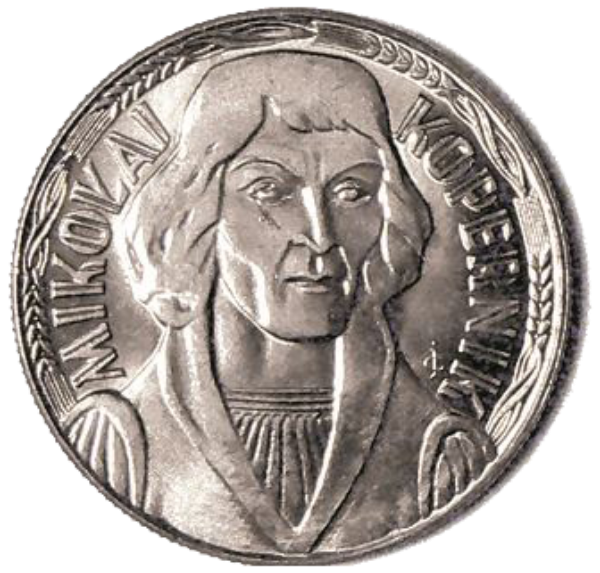
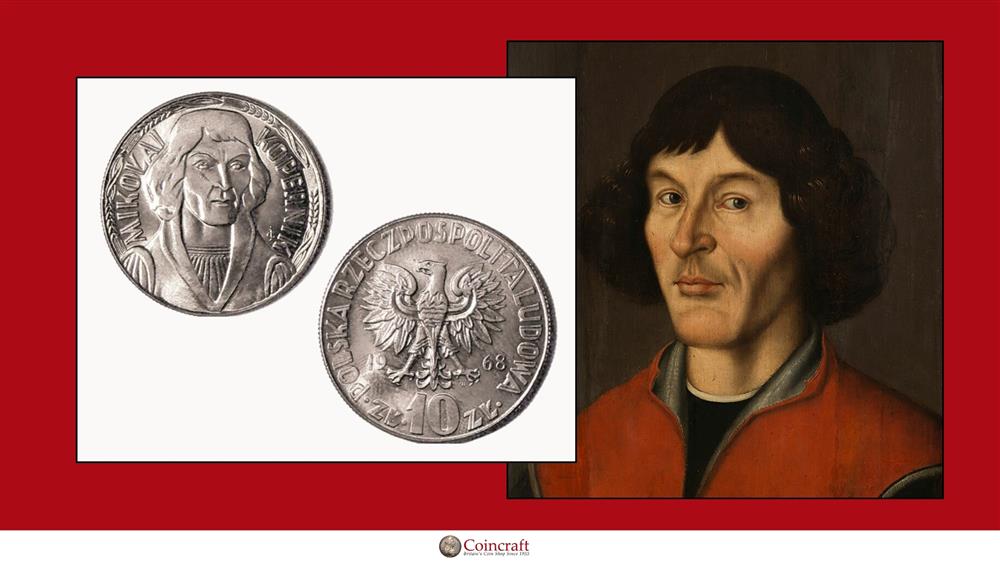
Picture Source of Nicolaus Copernicus: Wikipedia
Who Was Nicolaus Copernicus?
Nicolaus Copernicus, a Polish mathematician and astronomer, is best known for his revolutionary ideas regarding the structure of the solar system. Born on February 19, 1473, in Toruń, Poland, he lived during a time when the prevailing belief was that the Earth was the centre of the universe—a view known as the geocentric model. Copernicus's work laid the groundwork for modern astronomy, fundamentally changing the way humanity perceives the universe.
Despite being a prominent figure in the scientific community, Copernicus was relatively modest about his accomplishments. His theories were not widely accepted during his lifetime, and he published his seminal work, "De revolutionibus orbium coelestium," only shortly before his death in 1543. This publication marked a significant turning point in the history of science, sparking debates that would continue for centuries.
In understanding Copernicus's contributions, it is essential to appreciate the context in which he worked. His ideas challenged not only the scientific understanding of the day but also the philosophical and theological perspectives held by society. This article delves deeper into his life, the historical context, and the profound impact of his work on modern astronomy.
The Historical Context of Copernicus's Time
The Renaissance, a period of renewed interest in art, science, and philosophy, significantly influenced Copernicus's thinking. During this time, Europe witnessed a revival of classical knowledge and an increasing curiosity about the natural world. Scholars began to question traditional beliefs, leading to the eventual decline of the medieval worldview that had dominated for centuries.
Copernicus's ideas emerged amidst the backdrop of the Ptolemaic system, which positioned the Earth at the centre of the universe. This model not only influenced astronomical observations but also aligned with the theological beliefs of the time. Any deviation from this model posed a challenge to the Church's authority and its interpretation of Scripture. As such, Copernicus's heliocentric theory was not merely a scientific proposition; it was a radical departure from widely accepted doctrines.
Moreover, Copernicus lived during a time when advancements in mathematics and observational techniques were beginning to take shape. The invention of the printing press facilitated the spread of new ideas, enabling Copernicus's writings to reach a broader audience than might have been possible in previous eras. This technological innovation played a crucial role in the dissemination of his revolutionary concepts, laying the groundwork for future scientific progress.
Copernicus's Early Life and Education
Nicolaus Copernicus was the son of a wealthy merchant, which afforded him the opportunity for a quality education. He studied at the University of Cracow, where he was exposed to a wide array of subjects, including mathematics, astronomy, and philosophy. His studies laid a solid foundation for his later work, allowing him to develop a critical mindset essential for scientific inquiry.
After completing his studies in Poland, Copernicus travelled to Italy to further his education at the University of Bologna. Here, he had the chance to engage with contemporary thinkers and access advanced astronomical observations. His time in Italy was pivotal, as it exposed him to new ideas that would shape his understanding of the cosmos. He studied under the renowned astronomer Domenico Maria Novara, who mentored him in the intricacies of celestial mechanics.
Throughout his life, Copernicus maintained a wide-ranging interest in various fields, including medicine and economics. He served as a canon in the Warmian chapter of the Catholic Church, which provided him with financial stability and the freedom to pursue his scientific interests. This position allowed him to dedicate time to his astronomical research, ultimately leading to the formulation of his groundbreaking theories.
The Copernican Revolution: Challenging the Geocentric Model
The Copernican Revolution refers to the paradigm shift initiated by Copernicus's heliocentric theory, which posited that the Sun, not the Earth, was at the centre of the solar system. This radical idea challenged centuries of adherence to the geocentric model, which had been upheld by astronomers such as Claudius Ptolemy. Copernicus's heliocentric model was not merely an alternative perspective; it fundamentally altered the understanding of humanity's place in the universe.
One of the key elements of the Copernican Revolution was the introduction of a new framework for understanding celestial motions. Prior to his work, the Ptolemaic system relied heavily on complex epicycles to explain the apparent retrograde motion of planets. Copernicus simplified this explanation by proposing that the Earth rotates on its axis and revolves around the Sun. This provided a more coherent and elegant explanation of observed celestial phenomena.
However, the acceptance of Copernicus's ideas did not occur overnight. The scientific community was deeply entrenched in the Ptolemaic system, and Copernicus faced significant resistance. His theories challenged not only scientific dogma but also the theological beliefs that supported the geocentric model. As a result, many scholars were reluctant to embrace his revolutionary ideas, leading to ongoing debates and controversies that would shape the course of scientific inquiry for generations.
Key Contributions of Copernicus to Astronomy
Nicolaus Copernicus made several key contributions to the field of astronomy that continue to resonate today. His heliocentric model was groundbreaking, as it provided a more accurate representation of the solar system. By placing the Sun at the centre, he significantly improved the understanding of planetary motions, paving the way for future astronomers to build upon his work.
Another vital contribution was Copernicus's use of mathematics to describe celestial movements. He meticulously calculated the relative distances of the planets from the Sun, providing a framework that future astronomers would use to refine their observations. His mathematical approach represented a shift towards a more quantitative understanding of astronomy, laying the groundwork for the scientific method.
Furthermore, Copernicus's theories inspired subsequent astronomers, including Johannes Kepler and Galileo Galilei. Kepler expanded upon Copernicus's ideas, developing the laws of planetary motion that described the elliptical orbits of planets. Galileo, equipped with the newly invented telescope, provided empirical evidence that supported the heliocentric model. Together, these advancements marked a significant departure from traditional astronomical thought and established the foundation for modern science.
The Heliocentric Theory: Explaining the Solar System
Copernicus's heliocentric theory proposed a solar system where the Earth and other planets revolve around the Sun. This marked a significant departure from the geocentric model, where the Earth was believed to be stationary and at the centre of the universe. In his model, the Earth not only rotated on its axis but also moved in a circular orbit around the Sun, providing a more coherent explanation for the observed motions of celestial bodies.
The simplicity of the heliocentric model allowed for a clearer understanding of the relationships between the planets. For instance, Copernicus explained the apparent retrograde motion of planets as an optical illusion caused by the relative motion of Earth and other planets in their respective orbits. This explanation eliminated the need for complicated epicycles and provided a more straightforward interpretation of celestial phenomena.
Moreover, Copernicus's model laid the groundwork for future explorations of the universe. His ideas prompted astronomers to seek a more profound understanding of the cosmos, ultimately leading to the development of Newtonian physics and the formulation of the laws of motion and gravitation. The heliocentric theory was not just a scientific advancement; it represented a significant shift in humanity's understanding of the universe and its place within it.
Copernicus's Magnum Opus: "De revolutionibus orbium coelestium"
"De revolutionibus orbium coelestium," translated as "On the Revolutions of the Celestial Spheres," is Copernicus's most significant work. Published in 1543, this book encapsulated his heliocentric theory and presented a comprehensive overview of his astronomical observations and calculations. The publication marked a turning point in the history of science, as it provided a systematic argument for the heliocentric model.
In this magnum opus, Copernicus detailed the mechanics of the solar system, outlining the movements of the Sun, Moon, and planets. He meticulously calculated the distances of the planets from the Sun and described their relative speeds, offering a more precise understanding of celestial dynamics. The book was groundbreaking in its approach, employing mathematical reasoning to support Copernicus's claims.
Despite its revolutionary content, "De revolutionibus" faced significant scrutiny and resistance from both the scientific community and the Church. The ideas presented in the book challenged long-held beliefs, leading to debates that would persist for centuries. Nonetheless, it remains a cornerstone of modern astronomy and a testament to Copernicus's enduring influence on the field.
The Impact of Copernicus's Work on Scientific Thought
The impact of Nicolaus Copernicus's work on scientific thought cannot be overstated. His heliocentric theory represented a radical shift in the understanding of the cosmos, prompting a reevaluation of humanity's place in the universe. This paradigm shift laid the groundwork for the Scientific Revolution, which fundamentally transformed the way knowledge was acquired and understood.
Copernicus's ideas inspired a generation of astronomers and scientists to challenge established doctrines and pursue empirical observations. His work encouraged critical thinking, leading to the development of the scientific method—a systematic approach to inquiry that relies on experimentation and evidence. This shift towards empirical investigation marked a significant departure from the reliance on ancient texts and philosophical reasoning.
Furthermore, Copernicus's contributions ignited a series of debates and discussions that would shape the course of scientific progress. His theories were not only influential in astronomy but also had profound implications for philosophy, theology, and the broader understanding of the natural world. The questions raised by his ideas continue to resonate in contemporary scientific discourse, underscoring the enduring legacy of his work.
Copernicus's Legacy in Modern Astronomy
The legacy of Nicolaus Copernicus is firmly embedded in the fabric of modern astronomy. His heliocentric model laid the foundation for subsequent advancements, shaping the way astronomers approach the study of celestial phenomena. The transition from a geocentric to a heliocentric perspective marked a pivotal moment in the history of science, influencing generations of thinkers.
Copernicus's ideas were further developed by astronomers such as Johannes Kepler, who formulated the laws of planetary motion, and Isaac Newton, who established the laws of gravitation. These advancements built upon the groundwork laid by Copernicus, leading to a more profound understanding of the universe. The principles he introduced continue to inform astronomical research and exploration today.
Moreover, Copernicus's work serves as a reminder of the importance of challenging established beliefs and embracing new ideas. His courage to question the status quo has inspired countless scientists and thinkers to pursue knowledge and explore the unknown. The spirit of inquiry that Copernicus embodied continues to drive scientific progress, making him a timeless figure in the history of science.
Controversies and Criticisms Surrounding Copernicus's Theories
Despite the revolutionary nature of Copernicus's theories, they were not without controversy and criticism. The heliocentric model faced significant opposition from both the scientific community and religious authorities. Many scholars were entrenched in the Ptolemaic system, and the implications of Copernicus's ideas raised unsettling questions about the nature of the universe and humanity's place within it.
One of the primary criticisms of Copernicus's heliocentric theory was the lack of empirical evidence to support his claims. While Copernicus provided mathematical calculations and observations, many contemporaries demanded direct observational proof. The limitations of the observational tools available at the time made it challenging to provide definitive evidence for his theories, leading to skepticism among some scholars.
Additionally, the heliocentric model posed significant theological challenges. The Church, which had long supported the geocentric view, viewed Copernicus's ideas as a direct threat to its authority. The implications of a moving Earth contradicted established interpretations of Scripture, leading to tensions between science and religion that would persist long after Copernicus's death. The controversies surrounding his work foreshadowed later conflicts, such as those experienced by Galileo Galilei.
Copernicus's Other Scientific and Intellectual Pursuits
In addition to his groundbreaking work in astronomy, Nicolaus Copernicus engaged in various scientific and intellectual pursuits throughout his life. He was not solely an astronomer; his interests spanned multiple disciplines, including mathematics, economics, and medicine. This diverse background enriched his understanding of the world and informed his scientific inquiries.
Copernicus's knowledge of mathematics was crucial to his astronomical work. He employed mathematical principles to develop his heliocentric model, making precise calculations regarding the positions and motions of celestial bodies. His mathematical approach set a precedent for future astronomers, emphasizing the importance of quantitative analysis in the study of the universe.
Moreover, Copernicus's role as a canon in the Catholic Church allowed him to engage with various social and economic issues of his time. He applied his analytical skills to address practical problems, such as land management and financial matters. This multifaceted approach to knowledge exemplifies the Renaissance ideal of the polymath—an individual proficient in diverse fields and capable of synthesising knowledge across disciplines.
Commemorating Copernicus: His Influence on Modern Science
Nicolaus Copernicus's influence on modern science is celebrated and commemorated in many ways. His groundbreaking ideas and contributions to astronomy have been recognised through numerous memorials, institutions, and academic initiatives. The legacy of his work serves as a testament to the importance of scientific inquiry and the courage to challenge established beliefs.
One notable way in which Copernicus is commemorated is through the International Astronomical Union (IAU), which named a lunar crater after him. The "Copernicus" crater serves as a reminder of his contributions to our understanding of the cosmos. Additionally, various institutions and observatories worldwide honour his legacy by promoting research in astronomy and related fields.
Moreover, Copernicus's work continues to inspire educational initiatives aimed at fostering scientific literacy and critical thinking. His life story serves as an example of the power of curiosity and intellect in driving scientific progress. By promoting awareness of his contributions, educators and scientists alike encourage future generations to explore the wonders of the universe and embrace the spirit of inquiry that defined Copernicus's life.