 - 157800.jpg)
Picture Source of Domitian: Wikipedia
The Misunderstood Autocrat: The True Story of Emperor Domitian (81–96 AD)
To understand Titus Flavius Domitianus—known to history as Emperor Domitian—one must first understand what it meant to be the secondary son in a family of conquerors. While his father, Vespasian, seized the Roman Empire and his older brother, Titus, earned immense glory commanding legions in the East, Domitian was left behind in the capital. He was the imperial spare, navigating the dangerous politics of Rome while constantly being reminded of his lesser status within the newly established Flavian dynasty.
For centuries, history remembered Domitian as a bloodthirsty tyrant, a paranoid megalomaniac who demanded to be called Dominus et Deus ("Master and God") and who spent his days agonizingly torturing insects just for fun. But here's the fascinating thing about history: it's almost always written by the victors. In Domitian's case, it was written by the Roman Senate—a group of wealthy elites who absolutely despised him. Today, modern historians are taking a second look at the last Flavian emperor, painting a picture not of a raving madman, but of a remarkably efficient, if somewhat ruthless, micromanager who stabilized an empire.(1)
Grab a cup of coffee, and let's peel back the layers of ancient propaganda to discover the real Domitian.
Key Takeaways
The Ultimate Micromanager: Domitian was a highly effective administrator who restored Rome's economy and heavily regulated public morality.
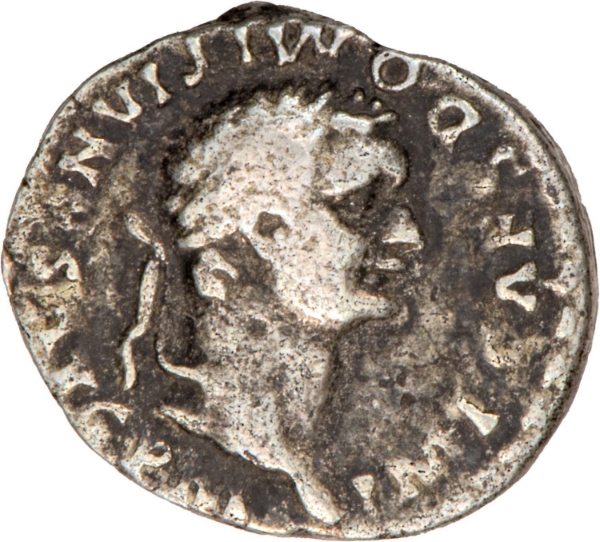
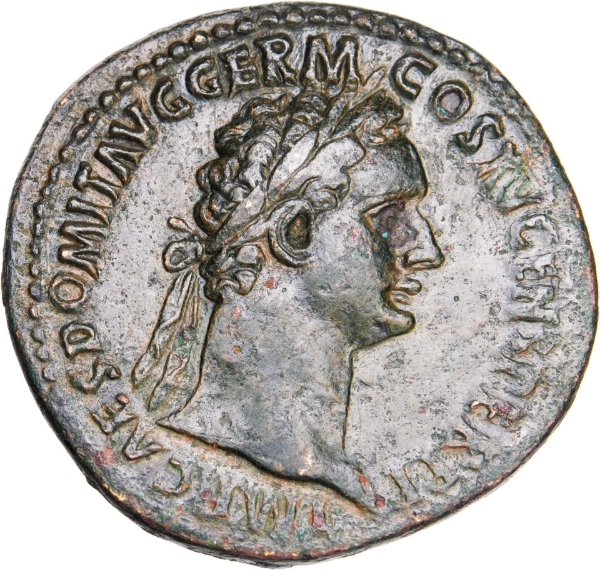
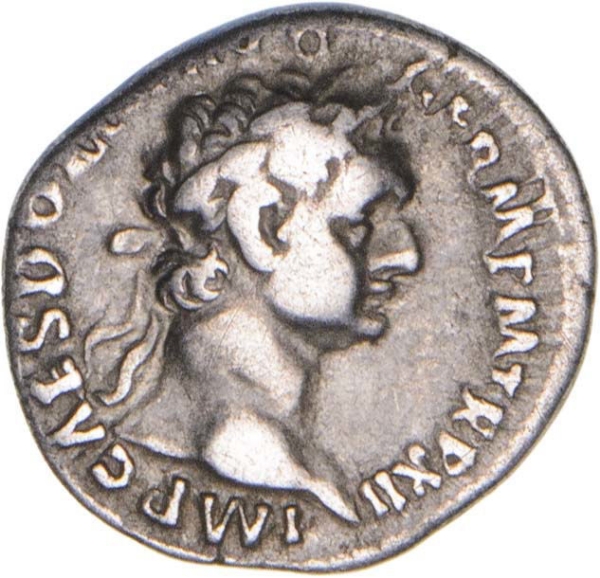
A Friend to the Coin Purse: He successfully revalued Roman currency, increasing the silver purity of the denarius—a massive win for the everyday Roman economy.
The Senate's Worst Nightmare: His fatal flaw was ignoring the traditional "polite fiction" that the Senate held power. He ruled as an absolute autocrat, which led to his assassination.
Master Builder: He dramatically reshaped the skyline of Rome, finishing the Colosseum and building magnificent palaces and stadiums whose footprints still shape modern Rome.
Growing Up in the Shadows: Domitian's Early Life
Born in 51 AD, Domitian's early life was anything but stable. While his father, Vespasian, and his older brother, Titus, were off in the eastern provinces commanding legions and making names for themselves, young Domitian was left behind in Rome.
During the infamous "Year of the Four Emperors" in 69 AD—a massive civil war that erupted after Nero's death—Domitian was actually trapped in the city while his family's rivals held power. He famously had to disguise himself as an altar boy worshipping the Egyptian goddess Isis just to sneak out of the burning Capitol alive!(2)
When the dust settled and his father Vespasian was crowned Emperor, inaugurating the Flavian Dynasty, you'd think Domitian would finally get his time to shine. Not quite. Vespasian made it abundantly clear that Titus was the heir apparent. Domitian was given flashy titles but zero actual power or military command. He was the understudy, waiting in the wings of the greatest stage on Earth.
Stepping into the Purple
Everything changed in 81 AD. Titus, who had only ruled for two years, died suddenly of a fever. Almost before his brother's body was cold, Domitian rushed to the Praetorian Guard camp and had himself declared Emperor. He was 29 years old, lacked military experience, and had a massive chip on his shoulder.
But if the Roman Senate expected a pushover, they were wildly mistaken. From day one, Domitian made his ruling philosophy clear: he was the boss. Unlike his father and brother, who played along with the illusion that Rome was still a Republic governed by the Senate, Domitian stripped away the masquerade. He essentially treated the senators like junior employees rather than partners in government.(3) You can imagine how well that went down with Rome's oldest and proudest families.
The CEO Emperor: Economy and Coinage
Here is where Domitian really shines, and it's something any coin enthusiast or economic historian will love. Domitian was a financial genius, or at least a highly dedicated ledger-checker.
When he took power, the Roman economy was still reeling from the massive fires and plagues of Titus's reign, not to mention the general inflation of the previous decades. Domitian decided to tackle this head-on. In a surprisingly bold move, he revalued the Roman currency. He increased the silver purity of the denarius by an impressive 12%.(4)
While the purity eventually dipped slightly later in his reign due to military expenses, the currency under Domitian remained stronger and more stable than it had been under Vespasian or Titus. He was meticulous about tax collection, cracking down heavily on corruption among tax farmers in the provinces. To the everyday Roman citizen, this meant stable prices and a reliable economy. To the corrupt governors he punished? It meant he was a tyrant.
The Master Builder of Rome
If you've ever visited Rome and marveled at its ancient ruins, you have Domitian to thank for a lot of it. Because he couldn't boast of massive military conquests like his brother, Domitian turned to architecture to cement his legacy.
He didn't just build; he built grandly. He completed the Colosseum (which his father had started), adding the upper tier and the complex underground network of tunnels (hypogeum) used to stage spectacular animal hunts and gladiator battles.
He also constructed a massive, opulent palace on the Palatine Hill—the Domus Augustana—which would serve as the official residence for Roman emperors for the next three centuries. But perhaps his most enduring, yet hidden, legacy is the Stadium of Domitian. Today, if you visit the stunning Piazza Navona in Rome, you are actually walking on the exact footprint of Domitian's ancient racetrack!(1)
Paranoia, Treason, and the Senate
So, if he was such a good administrator, why does history hate him? It all comes down to his profound lack of people skills, combined with a growing sense of paranoia.
Domitian demanded absolute loyalty. He named himself Censor Perpetuus (Censor for Life), giving himself the power to dictate public morality and kick anyone he didn't like out of the Senate. He insisted on being addressed with the titles usually reserved for gods, and he had a terrifying habit of inviting senators to dinner parties draped entirely in black, complete with tombstones bearing the guests' names as party favors. (Talk about a toxic work environment!)(2)
As his reign dragged on, his fear of assassination grew—and it became a self-fulfilling prophecy. Following a failed military rebellion in Germany in 89 AD, Domitian’s paranoia shifted into overdrive. He launched a wave of treason trials, executing or exiling dozens of senators, philosophers, and even members of his own extended family. The historian Tacitus, who lived through these years, described it as a time of suffocating terror where "our lips were sealed."^5
The Bloody End
You can only terrorize your inner circle for so long before they decide to push back. By 96 AD, a conspiracy was brewing, and it wasn't the Senate who planned it; it was Domitian's own household staff, supposedly with the quiet blessing of his wife, Domitia Longina.
On September 18, 96 AD, a court official named Stephanus approached the Emperor claiming to have a list of conspirators. As Domitian read the fake document, Stephanus pulled a dagger hidden in his bandages and struck. After a fierce, bloody struggle in his bedroom, the 44-year-old Emperor was dead.(3)
The aftermath was swift. The Senate was overjoyed. They immediately issued a damnatio memoriae—a damning of his memory. Domitian's statues were smashed, his name was chiseled off public monuments, and his coins were melted down. They quickly installed an elderly, safe senator named Nerva as Emperor, ending the Flavian dynasty forever.
The Modern Verdict
For nearly two millennia, the Senate's vicious smear campaign worked. Domitian was remembered alongside Caligula and Nero as one of Rome's great monsters.
But history is rarely that black and white. Today, we can see Domitian for what he truly was: a complex, deeply insecure man who happened to be a brilliant, forward-thinking administrator. He stabilized Rome's borders, secured its finances, and built structures that still take our breath away. He was a terrible boss to the elite, but a surprisingly decent emperor for the everyday Roman.
Next time you look at a crisp, well-struck Roman denarius from the late 1st century, remember the anxious, micromanager Emperor who made it happen.
Frequently Asked Questions (FAQs)
Why did history view Domitian as a tyrant for so long? History is usually written by the literate elite. In ancient Rome, that meant the Senate. Because Domitian stripped the Senate of its power, humiliated its members, and executed many of them, senatorial historians like Tacitus, Suetonius, and Pliny the Younger wrote heavily biased accounts painting him as an unhinged monster.
What was Domitian's greatest architectural achievement? While he completed the Colosseum and built the magnificent Palace of Domitian, his most culturally significant build was the Stadium of Domitian. Dedicated to Greek-style athletics rather than gladiatorial combat, its exact shape is still perfectly preserved today as the famous Piazza Navona in Rome.
What is a damnatio memoriae? It is a Latin term meaning "condemnation of memory." After Domitian was assassinated, the Roman Senate decreed that his statues be destroyed, his name erased from inscriptions, and his legacy officially scrubbed from the state's historical records as a mark of ultimate disgrace.
References
Jones, B. W. (1992) The Emperor Domitian. London: Routledge. Available at: Google Books
Suetonius (121 AD) The Lives of the Twelve Caesars. Translated by J. C. Rolfe (1914). Loeb Classical Library. Available at: LacusCurtius
Southern, P. (1997) Domitian: Tragic Tyrant. London: Routledge. Available at: Google Books
Syme, R. (1930) 'The Imperial Finances under Domitian, Nerva and Trajan', The Journal of Roman Studies, 20, pp. 55-70.
Tacitus (98 AD) Agricola. Translated by A. J. Church and W. J. Brodribb (1876). Available at: MIT Internet Classics Archive