 - ACA2014.png)
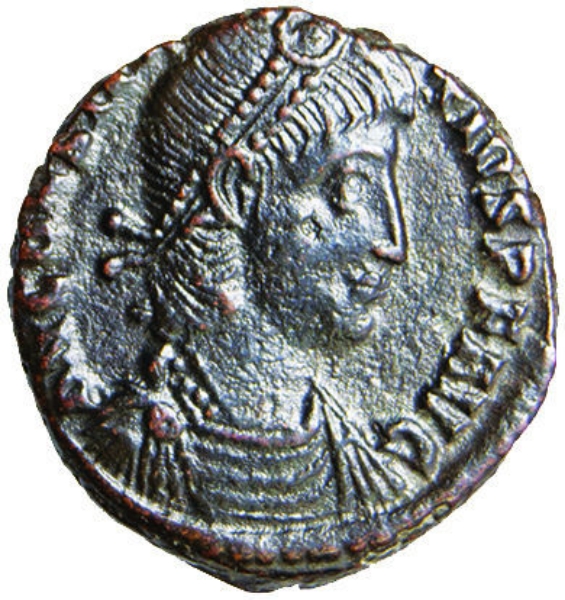
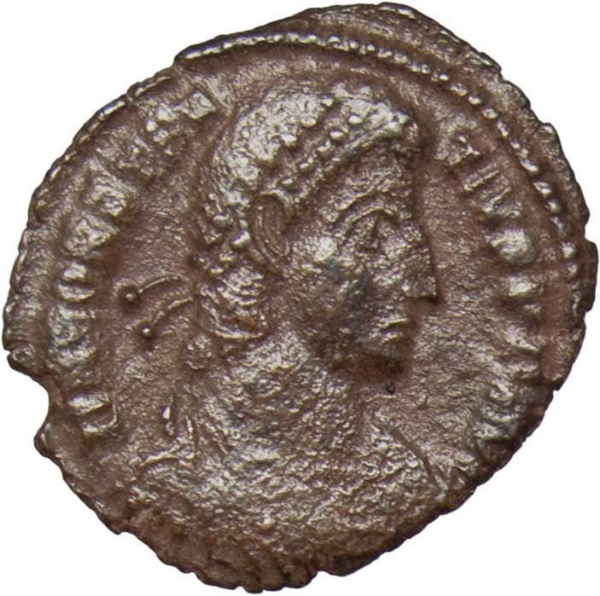
Picture Source of Constantius II (337 – 361): Wikipedia
Constantius II: The Iron-Fisted Survivor of the Roman Empire
Introduction
Imagine stepping into the shoes of the most powerful man in the world, only to realize that your biggest threats aren't foreign armies, but your own family members. That was the reality for Flavius Julius Constantius, better known to history as Constantius II. Born in 317 CE to Constantine the Great and Fausta, Constantius ruled a fractured Roman Empire from 337 to 361 CE.
While his father gets most of the historical limelight, Constantius II was actually the longest-reigning of Constantine’s sons. He was a survivor in every sense of the word—navigating brutal civil wars, religious controversies, and relentless border threats. If you want to understand the turbulent transition of the late Roman Empire, you have to look at Constantius II. So, let's dive into the life of the emperor who did whatever it took to keep the Roman world—and his own head—intact.
Key Takeaways
A Brutal Beginning: Constantius secured his throne immediately after his father's death by orchestrating (or at least allowing) a massive purge of his male relatives.
The Sole Survivor: Though he initially split the empire with his two brothers, he eventually outlived them both, becoming the sole ruler of the Roman world in 353 CE.
A Devout Arian: Constantius II was a strict follower of Arian Christianity and actively pushed laws against paganism while shaping the religious landscape of his new capital, Constantinople.
Military Defender: He spent almost his entire reign on the move, fighting off the Persian King Shāpūr II in the East and crushing devastating internal rebellions in the West.
Early Life and the Bloodbath of 337
Growing up as the son of Constantine the Great meant a life of incredible privilege but also intense scrutiny. Constantius was appointed Caesar (junior emperor) when he was just seven years old. But the real story begins when his father died in May 337 CE.
Instead of a peaceful transition of power, a horrific slaughter unfolded. The Roman troops murdered almost every male relative of Constantine the Great, effectively wiping out an entire branch of the imperial family. The historian Eutropius tactfully wrote that Constantius "permitted but not ordered" the killings, but later figures—including his surviving cousin Julian—directly accused Constantius of orchestrating the bloodbath to eliminate rivals[1].
When the dust settled, the empire was carved up between Constantius and his two brothers, Constans and Constantine II. Constantius claimed the wealthy, prestigious Eastern provinces, setting up his base in Constantinople[2].
The East, the Persians, and the Usurpers
Constantius didn't get much time to enjoy his throne. For over a decade, he was locked in a grueling, bloody, and largely inconclusive war with the Persian King Shāpūr II along the eastern frontier[1].
Meanwhile, things in the West were falling apart. In 340 CE, his eldest brother Constantine II was killed trying to invade Italy. Ten years later, his other brother, Constans, was overthrown and murdered by a usurper named Magnentius. Suddenly, Constantius wasn't just defending the East; he had to march West to avenge his brother and take back half the Roman world[1].
He met Magnentius in 351 CE at the Battle of Mursa (in modern-day Croatia). This battle was an absolute bloodbath—often cited as the deadliest Roman battle of the entire century. Constantius’s heavy cavalry eventually won the day, but the massive loss of Roman soldiers on both sides permanently crippled the empire's military strength[3].
Sole Emperor: Paranoia and Power
By 353 CE, Constantius had defeated Magnentius and was the sole ruler of the Roman Empire. But as the old saying goes, heavy is the head that wears the crown.
Realizing the empire was too vast for one man to defend, Constantius appointed his cousin Gallus (one of the only relatives who survived the purges of 337) to help rule the East. Unfortunately, Gallus turned out to be a cruel and paranoid tyrant. Constantius, who was pretty paranoid himself, had Gallus recalled and executed in 354 CE[1].
Historian Ammianus Marcellinus heavily criticized Constantius for this deep-seated paranoia, noting that the emperor was overly susceptible to court gossip and created a culture of fear in Rome[2]. Still, from Constantius's perspective, trusting the wrong person usually meant death. He later promoted his last surviving male relative, Julian, to help rule the West—a decision that would come back to haunt him.
The Arian Emperor and the Rise of Constantinople
You can't talk about Constantius II without talking about religion. While his father legalized Christianity, Constantius was the one who firmly embedded it into the state's fabric. He was an ardent supporter of Arianism, a sect of Christianity that believed Jesus Christ was a created being and not completely co-equal with God the Father[1].
Constantius used his power to push for religious unity under Arianism, frequently exiling orthodox bishops and passing laws to restrict pagan sacrifices. He even removed the ancient Altar of Victory from the Roman Senate house, declaring that no Christian should work in the shadow of pagan idols[2].
Beyond religion, he poured massive resources into Constantinople. He expanded its water supply, built granaries, constructed a spectacular library, and heavily remodeled the Church of the Holy Apostles[2]. Under Constantius, Constantinople truly became the undisputed center of the Roman world.
The Final March and Legacy
Constantius II was a hard-working, relentless emperor who spent almost his entire life in military camps protecting Rome's borders. But his reign ended much like it began: with family betrayal.
In 360 CE, his cousin Julian (who was successfully managing Gaul) was declared Augustus by his own troops. Constantius, furious but distracted by the Persians in the East, refused to recognize Julian's claim. A massive civil war seemed inevitable. Constantius packed up his army and began the long march West to deal with Julian[1].
However, the battle never happened. On November 3, 361 CE, Constantius fell ill and died near Tarsus (in modern Turkey) at the age of 44. On his deathbed, ever the pragmatist, he supposedly recognized Julian as his legitimate successor to prevent the empire from tearing itself apart[1].
Constantius II isn't remembered as fondly as his father, but his sheer survival skills kept the Roman Empire together during one of its most vulnerable eras. He was ruthless, paranoid, and fiercely devout—exactly the kind of emperor the 4th century demanded.
Frequently Asked Questions (FAQs)
Why did Constantius II kill his own family? When his father, Constantine the Great, died in 337 CE, there was no clear line of succession. To prevent rival claimants from starting civil wars, Constantius II is widely believed to have orchestrated or allowed the military to murder his uncles and cousins, ensuring only he and his two brothers inherited the empire.
What was Constantius II's religion? He was a very devout Christian, specifically a follower of Arianism. He spent much of his reign trying to unify the Christian church under Arian doctrines, which often put him at odds with the orthodox (Nicene) Christians of his time.
How did Constantius II die? He did not die in battle or by assassination, which was rare for Roman emperors of his time. Instead, he fell ill with a fever and died of natural causes in 361 CE while marching to confront a rebellion led by his cousin, Julian.
References
Britannica, T. Editors of Encyclopaedia (2026) Constantius II. Encyclopedia Britannica. Available at: https://www.britannica.com/biography/Constantius-II (Accessed: 8 April 2026).
Morley, C. (2012) Constantius II. World History Encyclopedia. Available at: https://www.worldhistory.org/Constantius_II/ (Accessed: 8 April 2026).
Britannica, T. Editors of Encyclopaedia (2026) Battle of Mursa. Encyclopedia Britannica. Available at: https://www.britannica.com/event/Battle-of-Mursa (Accessed: 8 April 2026).