.jpg)
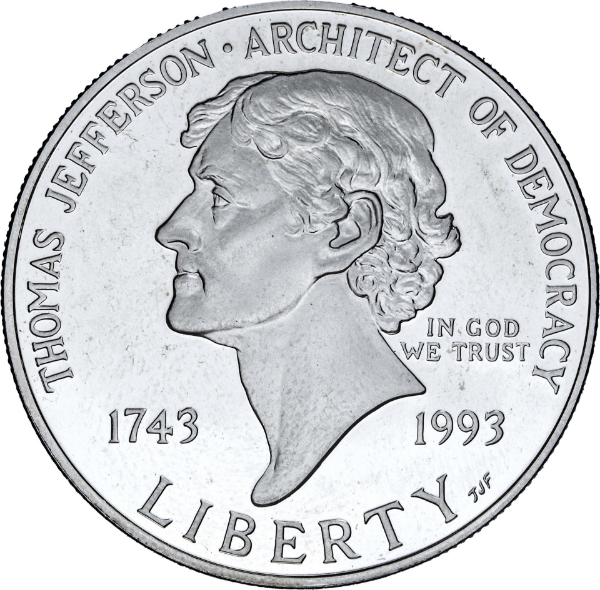
Picture Source of Thomas Jefferson: Wikipedia
The Life and Legacy of Thomas Jefferson
Thomas Jefferson, a pivotal figure in American history, is best known for his role as the principal author of the Declaration of Independence and as the third President of the United States. His life was marked by significant achievements and complex contradictions, particularly regarding his views on liberty and slavery. This article delves into Jefferson's early life, political career, presidency, and enduring legacy, providing a comprehensive overview of his contributions to the United States.
Early Life and Education
Born on April 13, 1743, in Albemarle County, Virginia, Thomas Jefferson was the third of ten children in a prominent planter family. His father, Peter Jefferson, was a successful landowner and surveyor, while his mother, Jane Randolph, hailed from one of Virginia's most distinguished families. Following his father's death when Jefferson was just fourteen, he inherited a substantial estate, which included enslaved individuals, marking the beginning of his complex relationship with slavery.
Jefferson's education began at home, where he was taught various subjects, including mathematics, history, and languages. In 1760, he enrolled at the College of William & Mary, where he studied law under the esteemed George Wythe. By 1767, he had begun practising law and quickly established himself as a prominent figure in Virginia's political landscape.
Political Awakening
Jefferson's political career took off in 1769 when he was elected to the Virginia House of Burgesses. His early involvement in politics coincided with rising tensions between the American colonies and Great Britain. In 1774, he published A Summary View of the Rights of British America, which articulated the colonies' grievances against British rule. This work laid the groundwork for his later contributions to the American Revolution.
The Declaration of Independence
One of Jefferson's most significant achievements came in 1776 when he was appointed to the Continental Congress. As a delegate, he was tasked with drafting a document that would declare the colonies' independence from British rule. Drawing inspiration from Enlightenment thinkers such as John Locke and Montesquieu, Jefferson penned the Declaration of Independence, which famously proclaimed that "all men are created equal" and endowed with "unalienable Rights."
The Declaration, adopted on July 4, 1776, not only marked the birth of a new nation but also established Jefferson as a leading voice for liberty and democracy. However, it is essential to acknowledge the contradictions in Jefferson's life; despite advocating for freedom, he owned over 600 enslaved individuals throughout his lifetime.
The Revolutionary War
Following the adoption of the Declaration, Jefferson continued to serve in various political roles, including as the Governor of Virginia from 1779 to 1781. During this time, he faced numerous challenges, including British invasions and the need to revise state laws. His commitment to the principles of liberty and governance was evident in his efforts to draft Virginia's state constitution and promote religious freedom through the Statute for Religious Freedom in 1786.
Jefferson's Presidency
In 1801, Jefferson was inaugurated as the third President of the United States. His presidency was marked by significant achievements, including the Louisiana Purchase in 1803, which doubled the size of the nation and opened vast territories for exploration and settlement. This acquisition was a testament to Jefferson's vision for an expanding America, although it also raised questions about the future of slavery in these new territories.
Domestic Policies
Jefferson's domestic policies focused on reducing the national debt and limiting the federal government's power. He believed in a strict interpretation of the Constitution and sought to minimise federal intervention in the lives of citizens. His administration also faced challenges, such as the Embargo Act of 1807, which aimed to maintain American neutrality during the Napoleonic Wars but ultimately harmed the U.S. economy.
Jefferson's Complex Legacy
Thomas Jefferson's legacy is a tapestry of remarkable achievements and profound contradictions. While he championed the ideals of liberty and democracy, his ownership of enslaved individuals and his views on race complicate his legacy. Jefferson's writings, particularly in Notes on the State of Virginia, reveal his belief in the gradual emancipation of enslaved people, yet he also expressed racist views that reflected the prevailing attitudes of his time.
The University of Virginia
In his later years, Jefferson focused on education and founded the University of Virginia in 1819. He envisioned the university as a place of enlightenment and knowledge, reflecting his belief in the importance of education for a democratic society. Jefferson's architectural designs for the university's buildings showcased his commitment to aesthetics and functionality, further solidifying his legacy as a thinker and innovator.