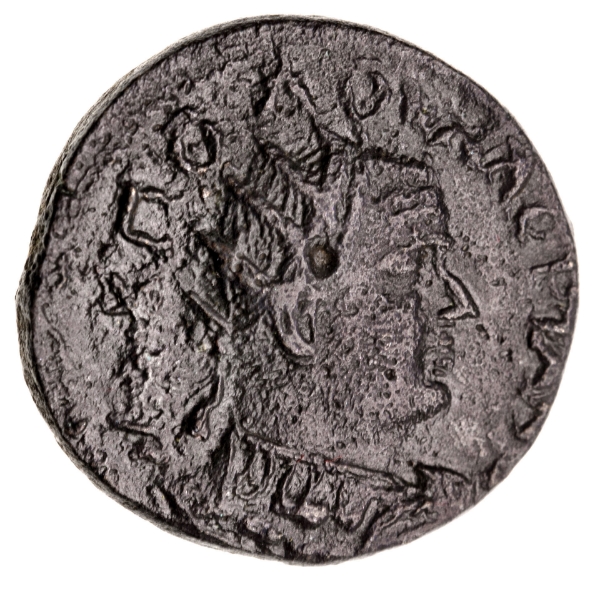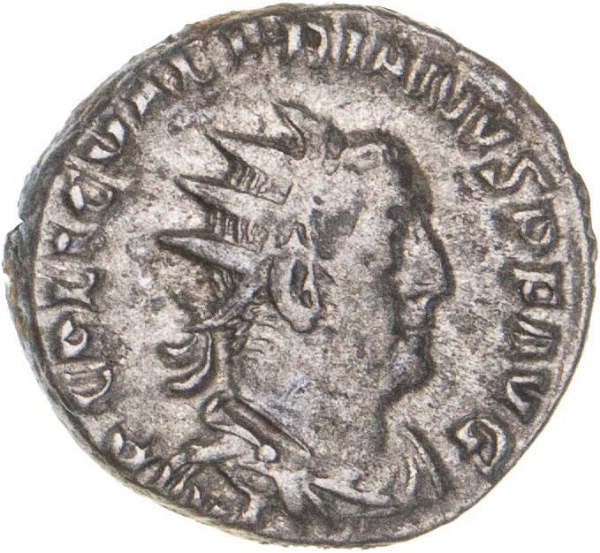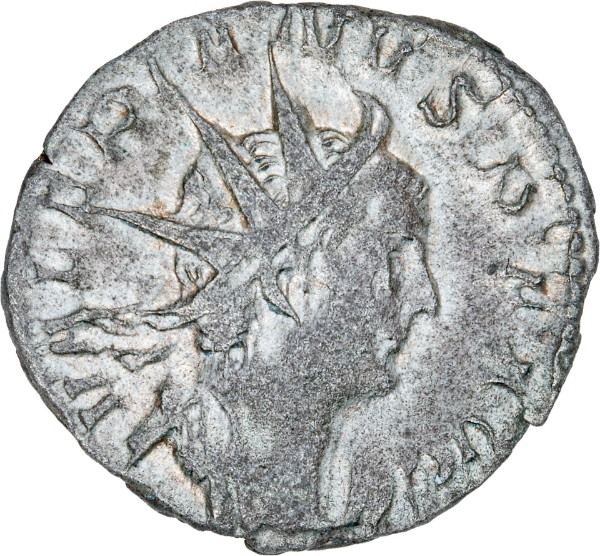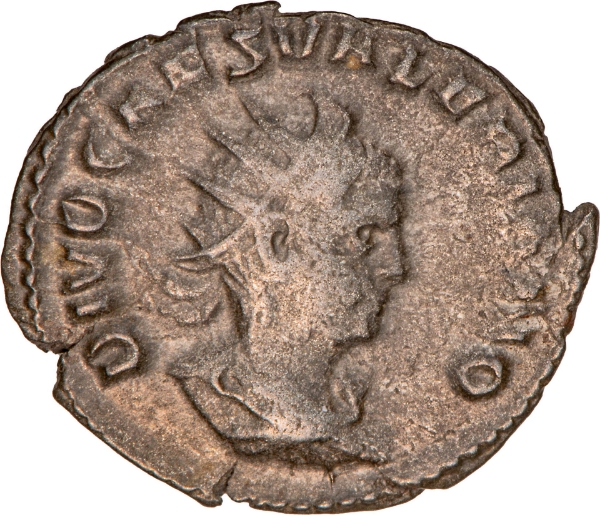
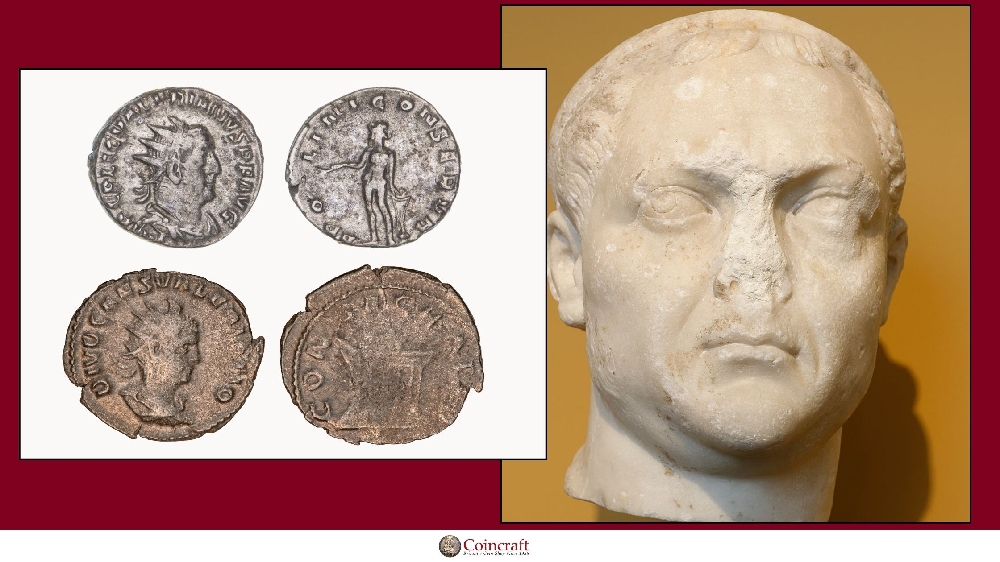
Picture Source of Valerian: Wikipedia
The Emperor Who Became a Footstool? The Wild Story of Valerian
If you think you’re having a bad day at the office, spare a thought for Publius Licinius Valerianus. You might know him as Emperor Valerian, the man who ruled Rome during one of its messiest periods and achieved a distinction no ruler ever wanted: he was the first Roman emperor to be captured alive by a foreign enemy.
But was he really turned into a human mounting block for a Persian king? Or is that just ancient fake news? Let’s dive into the dramatic, tragic, and slightly terrifying life of Valerian.
Key Takeaways
A First in History: Valerian was the first Roman Emperor to be captured alive by a foreign enemy (the Sassanid Persians) and die in captivity.
The Power Couple: He established a unique joint-rule system with his son, Gallienus, splitting the empire into East and West to manage the chaos.
The Persecutor: Valerian issued two severe edicts (257 and 258 AD) targeting Christians, leading to the execution of famous figures like St. Lawrence and Pope Sixtus II.
Mystery Death: While Christian writers claim he was flayed and used as a footstool, modern historians suggest his treatment may have been more humane, though still humiliating.
Crisis Manager: He ruled during the "Crisis of the Third Century," a time of plague, economic collapse, and constant invasion.
The Man Before the Crown
Valerian wasn't some upstart rebel general; he was the real deal—a blue-blooded Roman aristocrat. Born around 200 AD into a noble senatorial family, he had a shiny résumé long before he sat on the throne. He served as a consul and was even offered the prestigious role of Censor (which he politely declined, probably sensing it was a trap).
When the Empire started crumbling in the mid-3rd century, stability was as rare as a quiet day in the Colosseum. After a chaotic game of musical chairs involving the deaths of Emperors Trebonianus Gallus and Aemilianus, the troops hailed Valerian as emperor in 253 AD. The Senate, relieved to have "one of their own" in charge, quickly ratified him.
A Father-Son Dynamic Duo
Valerian was smart enough to know that one man couldn’t fix the Roman dumpster fire alone. The Empire was being attacked from the Rhine in the West and the Persians in the East. His solution? He immediately appointed his son, Gallienus, as co-emperor.
This wasn't just a "bring your kid to work" day. It was a strategic division of labor. Gallienus took the West to fight off Germanic tribes, while Valerian headed East to deal with the Sassanid Empire. It was a bold move that actually stabilized things... for a little while.
The Christian Question
Here is where Valerian’s legacy gets dark. For the first few years, he left the Christians alone. But by 257 AD, the Empire was reeling from plague and earthquakes. Valerian’s advisors convinced him that the gods were angry because the Christians weren't paying their dues.
He launched a two-phase persecution:
257 AD: Ordered Christian clergy to sacrifice to Roman gods or face banishment.
258 AD: Escalated to the death penalty for clergy who refused, and property confiscation for wealthy Christians. This wave claimed famous martyrs like St. Lawrence (who famously joked "I'm done on this side, turn me over" while being roasted) and Pope Sixtus II^1^.
The Unthinkable: Capture at Edessa
In 260 AD, the sky fell. Valerian marched his army to Edessa (modern-day Turkey) to face Shapur I, the "King of Kings" of the Sassanid Empire. But Valerian’s army was decimated by plague before the fighting even started.
Desperate, Valerian tried to negotiate peace. Shapur agreed to a meeting but then pulled a fast one—he seized Valerian and his generals as prisoners. For the first time in a millennium of Roman history, the Emperor was a hostage^2^.
Footstool or Fable?
So, what happened to him? This is where history gets a bit murky (and gross).
The Christian Version: Early Christian writers, specifically Lactantius, viewed Valerian’s capture as divine punishment for his persecutions. They wrote that Shapur used the former Emperor as a human footstool to mount his horse. When Valerian finally died of shame and exhaustion, they claim Shapur had him flayed (skinned), dyed his skin red, and stuffed it with straw to hang in a temple as a trophy^3^.
The Modern/Persian Version: Modern historians are skeptical of the "footstool" story. It reads a lot like a morality tale. Sassanid sources and some modern scholars suggest Valerian might have been treated reasonably well. He and his captured soldiers were likely used as skilled labor to build the massive Band-e Kaisar (Caesar's Dam) in Iran, which still stands today^4^.
He likely lived out his days in the city of Bishapur, never to see Rome again.
FAQs
Q: Did Rome try to rescue Valerian? A: Surprisingly, no. His son, Gallienus, did not launch a rescue mission. Historians debate why—some say he didn't have the military strength to invade Persia, while others suggest he was relieved to be the sole ruler without his father looking over his shoulder.
Q: How long was Valerian emperor? A: He reigned for seven years, from 253 to 260 AD. While it ended terribly, seven years was actually a pretty long run for the Crisis of the Third Century!
Q: Is the "dyed skin" story true? A: We can't be 100% sure, but most historians think it's an exaggeration by enemies of Valerian. However, the Sassanids did enjoy humiliating Roman captives, so a grim fate isn't entirely out of the question.
Inline Citations
This specific targeting of high-ranking clergy and the subsequent martyrdoms is detailed in Eusebius's ecclesiastical history.
The capture at Edessa is a pivotal moment recorded in both Roman and Persian sources, marking a nadir in Roman prestige.
Lactantius is the primary source for the "flaying" narrative, often cited to illustrate the "wrath of God" upon persecutors.
Archaeological evidence, specifically the Roman-style engineering of the dam at Shushtar, supports the theory that the prisoners were used for construction.
References
British Museum (n.d.) Valerian. Available at: https://www.britishmuseum.org/collection/term/BIOG140745 (Accessed: 20 January 2026).
Eusebius (1926) The Ecclesiastical History, Vol. II. Translated by J.E.L. Oulton. Cambridge: Harvard University Press.
Lactantius (1954) On the Deaths of the Persecutors. Translated by M.F. McDonald. Washington D.C.: Catholic University of America Press.
Potter, D.S. (2004) The Roman Empire at Bay, AD 180–395. London: Routledge.
Weidner, S. (2020) 'The Rock Reliefs of Shapur I', Ancient History Encyclopedia. Available at: https://www.worldhistory.org (Accessed: 20 January 2026).