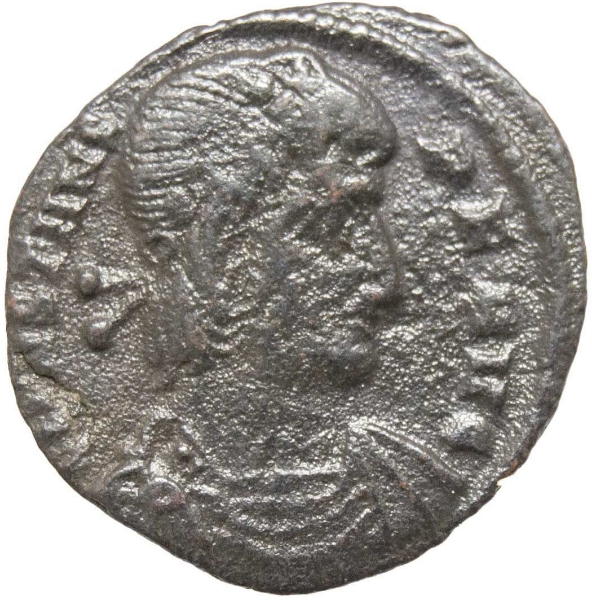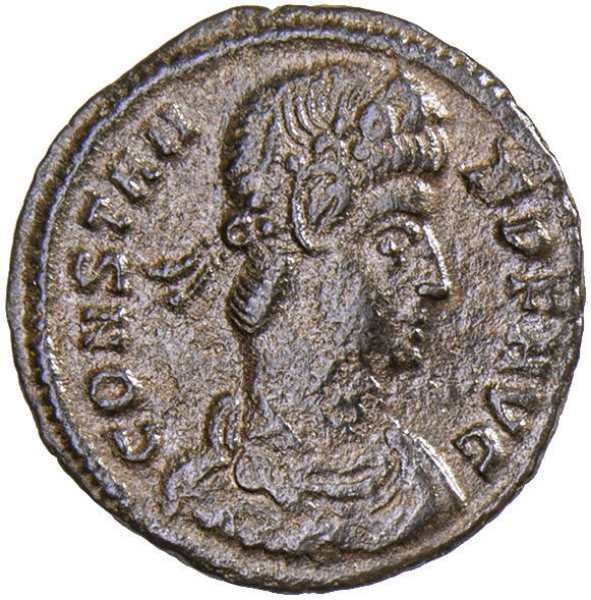
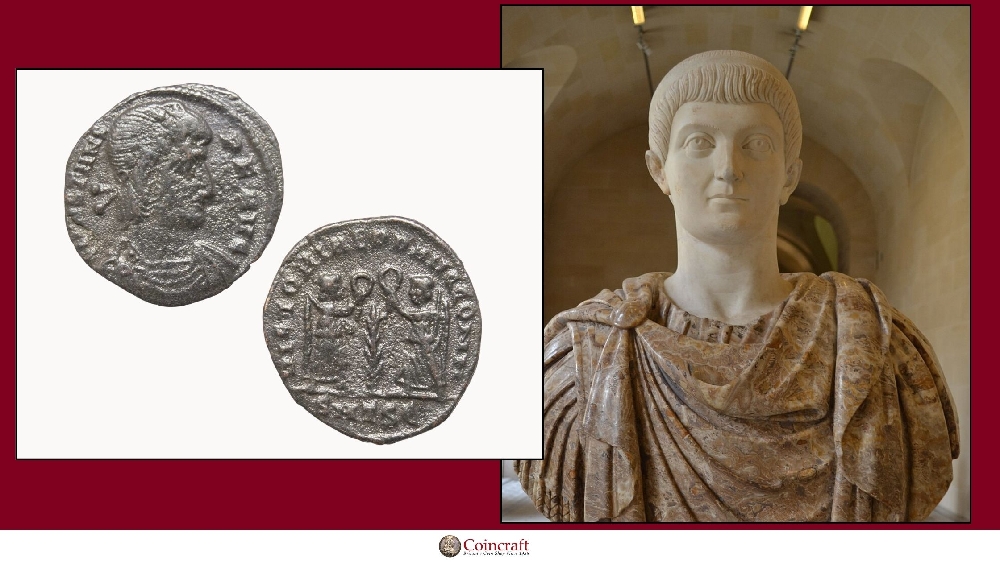
Picture Source of Constans: Wikipedia
The Life and Times of Constans: Rome's Tragic Young Emperor
What happens when you hand a teenager a third of the Roman Empire and pit him against his own power-hungry brothers? You get the wild, dramatic, and ultimately tragic life of Constans (Flavius Julius Constans). Far from being a mere footnote in the shadow of his legendary father, Constantine the Great, Constans carved out a reputation as a relentless warrior, a fiercely passionate religious crusader, and a ruler tangled in shocking scandals.
Let's dive into the fascinating, chaotic, and ultimately tragic story of Emperor Constans!
Key Takeaways
A Royal Inheritance: Constans was the youngest son of Constantine the Great, inheriting the central portion of the Roman Empire in 337 AD at just 17 years old.
Sibling Supremacy: He gained total control of the Western Roman Empire by defeating his ambitious older brother, Constantine II, in a bitter civil war in 340 AD.
The British Expedition: He holds the unique title of being the last legitimate Roman emperor to ever set foot in Britain, crossing the dangerous winter seas in 343 AD.
A Tragic Downfall: Despite military successes, his lavish lifestyle and strict policies alienated his army, leading to his overthrow and assassination by a usurping general in 350 AD.
Growing Up in the Shadow of Greatness
Born around 320 or 323 AD, Flavius Julius Constans grew up in the ultimate lap of luxury, but he carried an immense weight on his young shoulders(1). He was the youngest son of Constantine the Great (yes, that Constantine, the visionary leader who legalized Christianity) and his wife, Fausta.
Raised in the glittering new capital of Constantinople, Constans was educated by some of the brightest minds of the era. He was taught Latin by famous poets and groomed for leadership from the time he could walk. On Christmas Day in 333 AD, a young Constans was elevated to the prestigious rank of Caesar by his father(2). Essentially, he was put into the family business of ruling the world before he even hit his teenage growth spurt! But nothing could truly prepare him for the chaos that would follow his legendary father's death.
The Ultimate Sibling Rivalry
When Constantine the Great passed away in 337 AD, he didn't leave the empire to just one heir. Hoping to prevent a civil war (spoiler alert: it absolutely didn't work), he divided the vast Roman world among his three sons and a few other relatives. Constans, at merely 17 years old, was given a massive chunk of real estate: Italy, North Africa, and the Illyrian provinces (which make up the modern-day Balkans)(2).
Peace, however, was never really on the menu. His eldest brother, Constantine II, who ruled the westernmost provinces of Gaul, Spain, and Britain, looked at young Constans and saw an easy target. Treating Constans more like an annoying subordinate than an equal emperor, Constantine II decided he wanted the wealthy Italian peninsula for himself.
In 340 AD, the older brother marched his army across the Alps, fully expecting a quick, bullying victory. But Constans wasn't about to roll over. He sent his elite troops to meet his brother at Aquileia in northern Italy. In a chaotic, muddy battle, Constantine II was ambushed, thrown from his horse into a river, and killed(3). Just like that, at around 20 years old, Constans found himself the undisputed ruler of the entire Western Roman Empire.
The Emperor's Report Card: Defending the Borders
Constans wasn't just a kid who got lucky in a family feud; he proved to be surprisingly energetic and capable on the battlefield. He spent the next decade constantly on the move, fiercely defending his empire's fragile borders. He successfully beat back the Sarmatian tribes along the Danube River and fought grueling, muddy campaigns against the Franks along the Rhine, eventually securing a highly favorable peace treaty.
But perhaps the most fascinating chapter of his military career was his sudden, totally unannounced trip to Roman Britain in the winter of 343 AD(4). Crossing the English Channel in the dead of winter was considered incredibly dangerous and highly unusual for ancient seafaring. While historians still fiercely debate exactly why he went—some say it was to repel barbarian invaders like the Picts and Scots, while others suggest he was reforming the local military or even stamping out corruption—the trip cemented his place in history. He became the very last legitimate Roman emperor to ever visit the island!
Faith, Feuds, and a Flashy Lifestyle
If you really wanted to understand Constans, you had to look at his faith. He was a deeply zealous, baptized Christian who strictly adhered to the orthodox Nicene Creed (the mainstream Christian beliefs established at the Council of Nicaea)(5). This put him at fierce odds with his other surviving brother, Constantius II, who ruled the Eastern Empire and supported a rival, controversial Christian faction known as Arianism.
The two brothers bickered constantly over church politics. At one point, Constans even threatened to wage a full-scale war against his own brother if Constantius didn't reinstate certain exiled orthodox bishops! Constans also had zero tolerance for the old Roman gods, issuing strict laws banning pagan sacrifices and shutting down ancient temples (5).
However, behind closed palace doors, Constans was a bundle of massive contradictions. Despite his strict religious edicts, ancient gossips and historians loved to dish about his extravagant lifestyle. He was famously greedy, allegedly selling off powerful government offices to the highest bidder just to fund his luxurious tastes.
Furthermore, he was constantly dogged by rumors regarding his personal life. Constans never married, and several ancient writers claimed he surrounded himself with handsome young barbarian hostages, indulging in scandalous behavior that deeply offended traditional Roman sensibilities. While some modern historians view these stories as hostile propaganda designed to smear him, there’s no denying that his extravagant habits, heavy taxation, and harsh rule began to seriously alienate the very people keeping him in power: the army and the aristocracy.
The Tragic End: A Hunting Trip Gone Wrong
By 350 AD, the goodwill Constans had earned through his early military victories had completely evaporated. His troops were exhausted by his strict discipline and deeply resentful of his rumored decadence and corrupt officials. This deep dissatisfaction created the perfect opening for a usurper to step into the spotlight.
In January 350 AD, a half-barbarian general named Magnentius decided he'd had enough. During a lavish banquet in the city of Autun (in modern-day France), Magnentius suddenly declared himself the new emperor, and the disgruntled army eagerly backed him(6).
Where was Constans while his entire empire was being stolen out from under him? He was off on a hunting trip, blissfully unaware of the mutiny! When the horrifying news finally reached him, he realized he had absolutely no military support left. He fled frantically toward Spain, hoping to find a safe haven or rally loyalists.
But Magnentius's assassins were hot on his trail. They cornered the 27-year-old emperor in a fortress town called Helena (modern Elne, near the Pyrenees mountains). Seeking sanctuary, Constans desperately hid inside a temple, but his pursuers dragged him out and assassinated him on the spot(6).
It was a swift, brutal end for an emperor who had started with so much promise. His death plunged the Roman Empire into yet another devastating civil war, leaving behind a complicated legacy of military triumph, religious fervor, and ultimate tragedy.
FAQs
Q: Was Constans a good emperor? A: He has a very mixed legacy! On one hand, he was a highly effective military leader who secured the Western Empire's borders and kept barbarian invasions at bay during a turbulent time. On the other hand, his reported greed, sale of public offices, and alienation of his own army ultimately led to his tragic downfall.
Q: Why is his trip to Britain so famous? A: Constans crossed the English Channel to Britain during the treacherous winter months of 343 AD, a highly dangerous move that shocked his contemporaries. He is remembered in history as the last legitimate, reigning Roman Emperor to ever set foot on the island.
Q: How did Constans die? A: He was assassinated in 350 AD. After his general, Magnentius, declared himself emperor, Constans fled towards Spain. He was cornered and killed by Magnentius's men after trying to seek sanctuary in a temple in the Pyrenees.
References
Britannica, T. Editors of Encyclopaedia (2026) Constans I, Encyclopedia Britannica. Available at: https://www.britannica.com/biography/Constans-I (Accessed: 20 March 2026).
Encyclopedia.com (n.d.) Constans I, Roman Emperor. Available at: https://www.encyclopedia.com/religion/encyclopedias-almanacs-transcripts-and-maps/constans-i-roman-emperor (Accessed: 20 March 2026).
Wikipedia (2024) Constans. Available at: https://en.wikipedia.org/wiki/Constans (Accessed: 20 March 2026).
Imperium Romanum (n.d.) Constans. Available at: https://imperiumromanum.pl/en/biographies/constans/ (Accessed: 20 March 2026).
Occult Encyclopedia (2022) Religious policies of Constantius II. Available at: https://www.occult.live/index.php/Religious_policies_of_Constantius_II (Accessed: 20 March 2026).
Wikipedia (2024) Magnentius. Available at: https://en.wikipedia.org/wiki/Magnentius (Accessed: 20 March 2026).