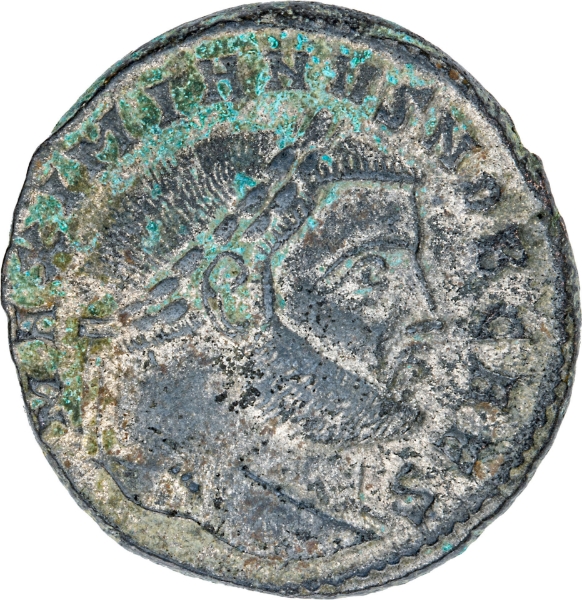
 - AWB1008 - AWB1016.jpg)
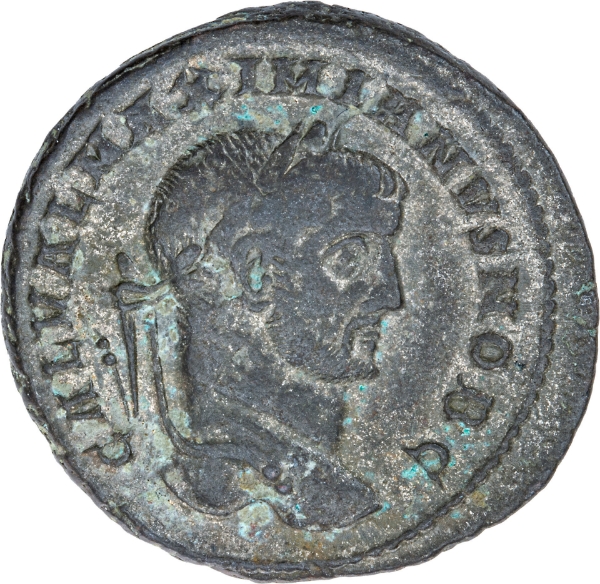
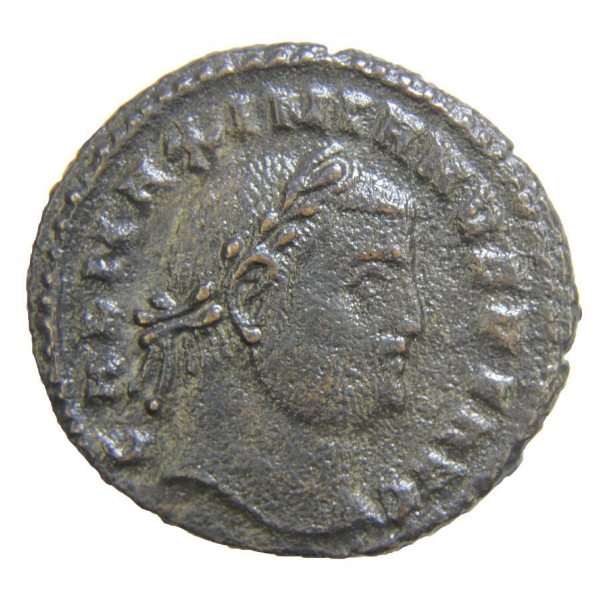
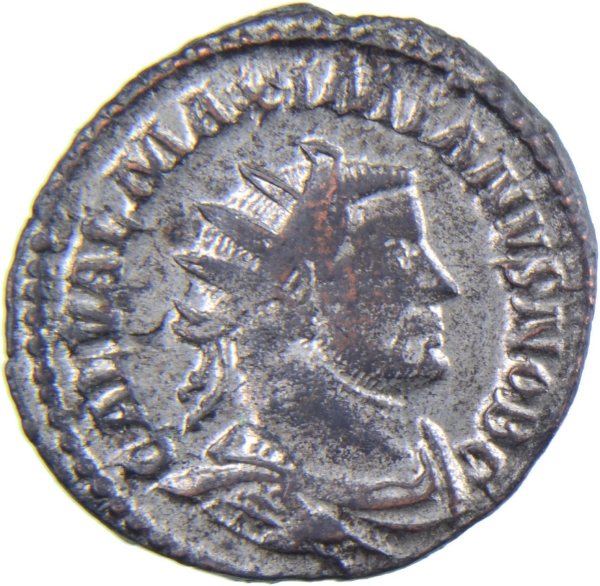
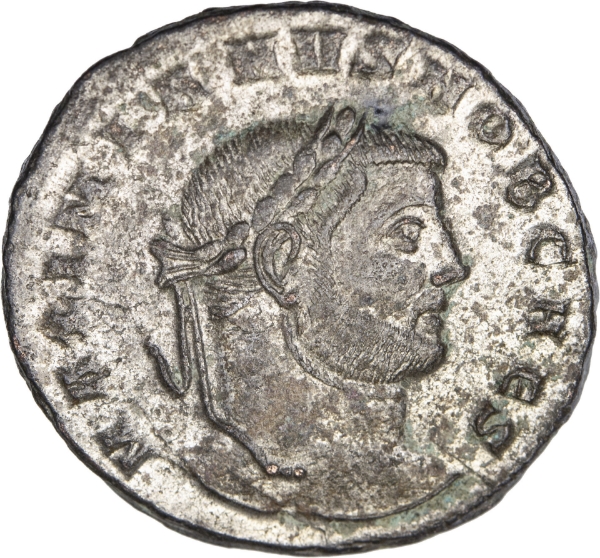
Picture Source of Galerius Valerius Maximianus (305 - 311AD): Wikipedia
The Shepherd Who Ruled Rome: The Life of Galerius (r. 305–311 AD)
The popular image of a Roman Emperor is often one of hereditary grandeur—marble halls, silken robes, and an unbroken line of noble ancestors. But the reality of the third and fourth centuries was far grittier. The story of Galerius Valerius Maximianus is a raw "rags to riches" epic; a journey from the lonely pastures of Thrace to the pinnacle of imperial power, written not in ink, but in the blood of the Tetrarchy and the smoke of the Great Persecution.
Galerius wasn't born into power; he took it. He was a soldier’s soldier, a man of iron will who navigated the most complex political experiment in Roman history: Diocletian’s Tetrarchy. While he is often remembered by history as the "bad guy" who instigated the persecution of Christians, his life was a whirlwind of massive military victories, architectural ambition, and a desperate struggle to maintain a crumbling system of shared power.
Key Takeaways
Humble Beginnings: Galerius rose from being a Thracian shepherd to the highest office in the Roman Empire through pure military merit.
Military Might: His most significant achievement was the crushing defeat of the Sassanid Persians in 298 AD, which secured Rome’s eastern borders for generations.
The Architect of Persecution: He is widely considered the primary driver behind Diocletian's "Great Persecution" of Christians, though he eventually issued the Edict of Serdica on his deathbed, granting them tolerance.
Defender of the Tetrarchy: After Diocletian’s retirement, Galerius became the senior Augustus, struggling (and ultimately failing) to prevent the system of four rulers from collapsing into civil war.
From the Pastures to the Palaces
Born around 250 AD near Serdica (modern-day Sofia, Bulgaria), Galerius’s early life was as far from the Roman Senate as one could get. His father was a peasant, and his mother, Romula, was a woman of Dacian origin who had fled her homeland during the Gothic invasions¹. Ancient sources—often biased by their later Christian leanings—mockingly referred to him by his nickname "Armentarius," which literally means "the herder of cattle²."
But the mid-to-late 3rd century was an era where the sword mattered more than the scroll. Galerius joined the Roman army and quickly proved himself during the reigns of Emperors Aurelian and Probus. He was the quintessential "Illyrian Emperor" in the making: tough, disciplined, and fiercely loyal to the military machine that had saved Rome from the "Crisis of the Third Century³."
His big break came in 293 AD. The Emperor Diocletian had realized the Empire was too vast for one man to rule. He created the Tetrarchy, dividing the Roman world into four parts with two senior emperors (Augusti) and two junior emperors (Caesares). Diocletian chose Galerius to be his Caesar in the East, even going so far as to have Galerius divorce his wife to marry Diocletian’s daughter, Valeria⁴.
The Persian Lion: The Victory at Satala
The most defining moment of Galerius’s career wasn't a political decree, but a battle. In 296 AD, the Sassanid King Narseh invaded Roman territory. Galerius’s first encounter with the Persians ended in a humiliating defeat near Carrhae. Legend says Diocletian was so furious that he made Galerius, dressed in his imperial purple, run for a mile alongside the Emperor’s chariot as a public penance⁵.
Shame is a powerful motivator. Galerius spent the next year raising a new army of Illyrian and Gothic veterans. In 298 AD, he outmaneuvered Narseh in the mountains of Armenia. In a daring night raid at the Battle of Satala, Galerius decimated the Persian forces. He captured Narseh’s entire harem, his treasury, and even his children⁶.
This victory was one of the most lopsided in Roman history. The resulting Treaty of Nisibis extended Roman influence deep into Mesopotamia and secured a peace that lasted for forty years. If you visit Thessaloniki today, you can still see the Arch of Galerius, a massive monument covered in reliefs celebrating this specific campaign⁷.
The Great Persecution: A Dark Legacy
It is impossible to discuss Galerius without addressing the "Great Persecution" that began in 303 AD. While Diocletian was the senior Emperor, contemporary Christian writers like Lactantius argued that Galerius was the true "beast" behind the scenes⁸.
Galerius was a staunch traditionalist. He believed that the Roman Empire’s strength was tied to the favor of the old gods. He saw the growing Christian movement as a "state within a state" that refused to honor the imperial cult and undermined military discipline⁹. He reportedly pressured a hesitant Diocletian to issue the edicts that led to the burning of churches, the destruction of scriptures, and the execution of those who refused to sacrifice to the Roman gods¹⁰.
While modern historians debate exactly how much of this was Galerius’s doing versus Diocletian’s own policy, there is no doubt that Galerius enforced the decrees with a terrifying efficiency in the Eastern provinces¹¹.
The Burden of the Senior Augustus
When Diocletian and his co-emperor Maximian took the unprecedented step of retiring in 305 AD, Galerius became the senior Augustus of the East. This was the peak of his power, but also the beginning of his greatest headache.
The Tetrarchy relied on the four rulers being willing to work together. But as soon as the "Father of the Tetrarchy" (Diocletian) left the stage, the sons of the rulers—specifically Constantine and Maxentius—became restless¹². They didn't want to be junior partners; they wanted the throne.
Galerius spent the next six years trying to keep the peace through a series of conferences, most notably at Carnuntum in 308 AD, where he even brought Diocletian out of retirement to help mediate¹³. But the genie was out of the bottle. Civil wars began to spark, and Galerius’s health began to fail him just as the empire he loved started to fracture.
A Gruesome End and a Deathbed Change of Heart
In 310 AD, Galerius was struck by a horrific and agonizing illness. Lactantius describes it in graphic detail (likely with some religious satisfaction), claiming the Emperor’s body was "eaten by worms" and emitted a stench so foul that his doctors were sickened¹⁴. Modern medical historians suggest it may have been a form of Fournier gangrene or aggressive bowel cancer¹⁵.
In his final days, perhaps fearing the Christian God he had spent years fighting, Galerius made a shocking move. From his deathbed in Serdica, he issued the Edict of Toleration (311 AD). This document officially ended the persecution of Christians, allowing them to rebuild their churches and "hold their assemblies," provided they prayed to their God for the "safety of the State¹⁶."
Galerius died just days later in May 311 AD. He was buried in his massive palace complex at Felix Romuliana (modern Gamzigrad, Serbia), which he had named after his mother, Romula¹⁷. Today, it is a UNESCO World Heritage site, a silent reminder of the shepherd who became a King of Kings.
FAQs
Q: Was Galerius really as cruel as the Christian sources say? A: History is written by the survivors. Most of what we know about Galerius's personality comes from Christian authors like Lactantius, who viewed him as a villain. While he was certainly a harsh military disciplinarian and a persecutor, he was also a highly capable administrator and a brilliant general who genuinely cared about the stability of the Empire.
Q: What is the Arch of Galerius? A: It is a triumphal arch in Thessaloniki, Greece. It was built in 298-299 AD to celebrate his victory over the Sassanid Persians. It remains one of the city's most famous landmarks and features intricate carvings of Roman soldiers, Persian captives, and the Emperor himself.
Q: Did Galerius want to be the sole Emperor? A: Not necessarily. Evidence suggests he was a firm believer in Diocletian's Tetrarchy system. His efforts at the Conference of Carnuntum show he tried to maintain the "rule by four," even when it would have been easier to seize total power.
References
Barnes, T.D. (1981). The New Empire of Diocletian and Constantine. Harvard University Press.
Lactantius. De Mortibus Persecutorum (Of the Manner in Which the Persecutors Died). Translated by William Fletcher. Link
Southern, P. (2001). The Roman Empire from Severus to Constantine. Routledge. Link
Williams, S. (1985). Diocletian and the Roman Recovery. B.T. Batsford Ltd.
Eutropius. Breviarium Historiae Romanae, Book IX.
Dignas, B., & Winter, E. (2007). Rome and Persia in Late Antiquity: Neighbours and Rivals. Cambridge University Press. Link
Pounder, R. L. (1983). The Arch of Galerius and the Palace Group at Thessaloniki. Journal of Field Archaeology.
Digeser, E. D. (2000). The Making of a Christian Empire: Lactantius and Rome. Cornell University Press.
Drake, H. A. (2000). Constantine and the Bishops: The Politics of Intolerance. Johns Hopkins University Press.
Eusebius. Historia Ecclesiastica (Church History), Book VIII. Link
Potter, D. S. (2004). The Roman Empire at Bay, AD 180–395. Routledge.
Odahl, C. M. (2004). Constantine and the Christian Empire. Routledge.
Zosimus. Historia Nova, Book II.
Lactantius. De Mortibus Persecutorum, Chapter 33.
Sarris, P. (2011). Empires of Faith: The Fall of Rome to the Rise of Islam. Oxford University Press.
Galerius. Edict of Toleration at Serdica, 311 AD. (Text preserved in Lactantius and Eusebius).
UNESCO. Gamzigrad-Romuliana, Palace of Galerius. Link