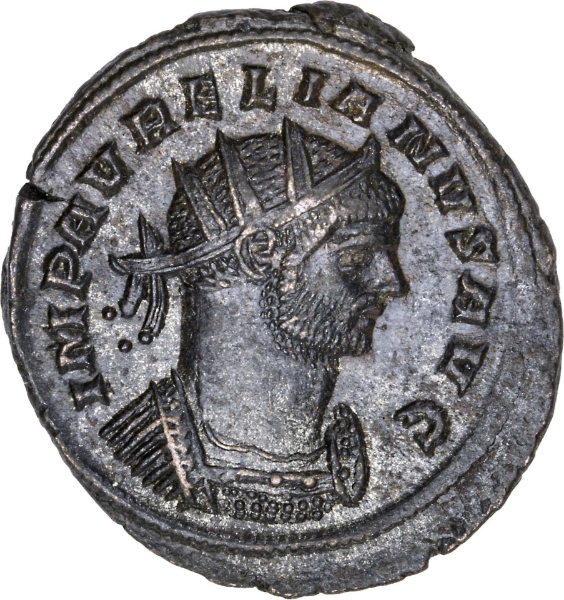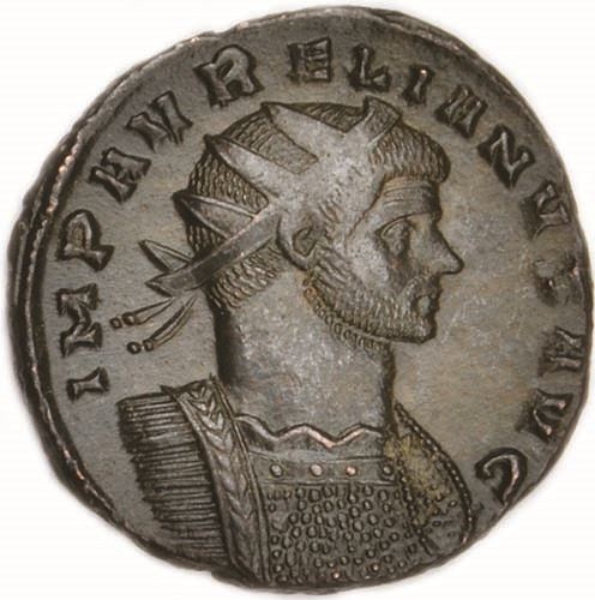
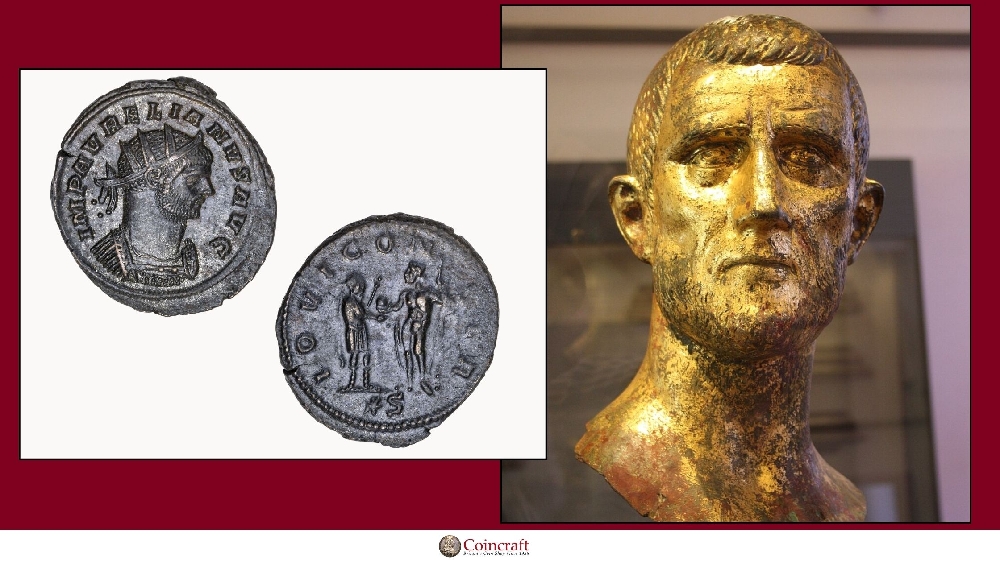
Picture Source of Aurelian: Wikipedia
Aurelian: The Iron-Fisted Saviour Who Glued the Roman Empire Back Together
The Roman Empire in the late 3rd century AD was not merely in decline; it was on the precipice of total annihilation. Decades of civil war, economic ruin, and relentless barbarian incursions had brought Western civilization to the brink of collapse. It was into this catastrophic environment that Emperor Aurelian ascended to power, tasked with the monumental burden of saving a fractured world.
While big names like Julius Caesar, Augustus, and Marcus Aurelius get all the Hollywood movies and history book covers, Aurelian is arguably the man who kept the Roman story going. Without him, the Roman Empire might have fractured permanently centuries before its actual fall. So, let’s grab a cup of coffee, travel back to the 270s AD, and dive into the incredible, action-packed life of the man history proudly remembers as the Restitutor Orbis—the Restorer of the World.
Key Takeaways
He Reunited a Shattered Empire: In just five years (270–275 AD), Aurelian defeated multiple barbarian invasions and reconquered breakaway Roman territories in both the East and the West.
The Master Builder: He constructed the massive "Aurelian Walls" around Rome, large sections of which still stand beautifully intact today.
Champion of the Sun God: Aurelian formalized the worship of Sol Invictus (the Unconquered Sun), laying early religious groundwork that later influenced the empire's shift toward a unified, monotheistic faith.
A Tragic End: Despite his unparalleled successes, he was betrayed and assassinated by his own men over a forged hit-list.
From Farm Boy to Military Mastermind
Picture the year 214 AD. Our guy, Lucius Domitius Aurelianus—let’s just call him Aurelian—was born into incredibly humble beginnings in the Balkan region (likely modern-day Serbia or Bulgaria)(1). He didn't grow up wearing fancy silk togas or sipping imported wine. His father was a peasant farmer who worked the land for a wealthy senator.
But Aurelian had a golden ticket out of poverty: the Roman military. He joined the army at a young age, and it quickly became apparent that he was built differently. He was tall, incredibly strong, and completely ruthless when it came to discipline(4). In fact, his troops affectionately (and perhaps nervously) gave him the nickname manu ad ferrum, which translates to "sword in hand."(5)
Aurelian rose rapidly through the ranks. He became an elite cavalry commander, gaining the attention and respect of emperors. By the time he was in his fifties, he was basically the top general in the Roman world, defending the borders against wave after wave of Gothic invaders.
Stepping Up in a World on Fire
To really appreciate Aurelian's greatness, we have to talk about the absolute dumpster fire that was the Roman Empire when he took over. Historians call it the "Crisis of the Third Century."
Imagine a 50-year period featuring constant civil wars, a collapsed economy, rampant plagues, and barbarian tribes invading from every direction. To make matters worse, the empire had literally broken into three separate pieces(1):
The Gallic Empire in the west (Britain, Gaul, and Spain) had broken away.
The Palmyrene Empire in the east (Egypt, Syria, and Palestine) had been taken over by the ambitious Queen Zenobia.
The Core Roman Empire in the center (Italy, North Africa, and the Balkans), which was barely holding on.
When Emperor Claudius Gothicus suddenly died of the plague in 270 AD, his brother Quintillus briefly tried to take the throne. But the army wasn't having it. They looked at Aurelian—their toughest, most proven commander—and declared him Emperor. Quintillus quickly realized he was outmatched and committed suicide, leaving Aurelian in sole control of a fractured, bleeding empire(2).
Building Walls and Crushing Invaders
Aurelian hit the ground running. First on the agenda: kick the invaders off the front lawn. Various Germanic tribes, including the Vandals and the Juthungi, had pushed down into Northern Italy, terrifying the citizens of Rome(2).
Aurelian marched his legions north and, after a couple of brutal, nail-biting battles, chased the invaders back across the Alps. But this close call severely spooked him. He realized that Rome, which hadn't needed city walls for centuries because its borders were previously so secure, was now incredibly vulnerable.
So, in 271 AD, he commissioned the Aurelian Walls (4). This was a massive, 19-kilometer-long ring of brick and concrete defense walls wrapping right around the heart of Rome. It was an incredible feat of engineering, and remarkably, you can still walk alongside huge stretches of these walls in modern Rome today!
Reassembling the Puzzle: East and West
With the capital secure, Aurelian decided it was time to put the Roman Empire back together.
First, he looked East toward the Palmyrene Empire, ruled by the fiercely intelligent and formidable Queen Zenobia. Zenobia had taken advantage of Rome’s weakness to carve out her own massive kingdom, even seizing Egypt, which was the crucial "breadbasket" that fed the citizens of Rome. Aurelian couldn't let that stand.
In 272 AD, he marched his armies across modern-day Turkey and into Syria, winning a series of brilliant tactical battles. He captured the city of Palmyra and brought Queen Zenobia back to Rome in golden chains(3). (Fun fact: he didn't execute her! He actually pardoned her, and she lived out the rest of her days as a wealthy Roman socialite. How's that for a twist ending?)
An artist's romanticized depiction of Queen Zenobia taking a final look at Palmyra.
Next, he turned his sights to the West. In 274 AD, he marched his battle-hardened troops into Gaul (modern-day France) to confront Tetricus, the leader of the breakaway Gallic Empire. Honestly, Tetricus was so tired of dealing with constant rebellions in his own ranks that he basically threw the fight. He struck a secret deal with Aurelian, surrendered his army at the Battle of Châlons, and was rewarded with a cushy government job in Italy<sup>1</sup>.
Just like that, in under five years, Aurelian had stitched the Roman Empire completely back together. The Senate in Rome was so awestruck that they awarded him the ultimate title: Restitutor Orbis (Restorer of the World)(3).
The Sun God and the Economy
Aurelian wasn't just a military meathead; he knew that the empire needed cultural and economic unity to survive.
Inflation was wildly out of control, and Roman coins had become practically worthless because previous emperors kept mixing cheap metals in with the silver. Aurelian aggressively attacked corruption in the imperial mints—even crushing a violent rebellion by the mint workers themselves!—and introduced a new, high-quality coin to help stabilize the economy(5).
He also brought a fascinating spiritual change to Rome. He promoted the worship of Sol Invictus (the Unconquered Sun) as the supreme deity of the Roman pantheon<sup>1</sup>. By elevating a single, unifying Sun God, Aurelian was trying to give the culturally diverse empire one shared faith to rally behind. He even built a massive temple in Rome dedicated to the sun, dedicating it on December 25th, 274 AD.
A Tragic, Petty End
If Aurelian had ruled for twenty years, he might go down in history alongside Augustus as the greatest Roman of all time. But sadly, his story ends with an infuriating twist of fate.
In 275 AD, Aurelian was marching his army toward Persia for a new military campaign. Along the way, he caught his personal secretary, a man named Eros, in a lie about a minor issue. Eros knew that Aurelian was a strict disciplinarian who despised corruption, and he panicked, fearing he was going to be executed(4).
To save his own skin, Eros forged a document imitating the Emperor's handwriting. It was a fake "hit list" containing the names of several high-ranking military officers, making it look like Aurelian was planning a purge. Eros discreetly showed the list to the officers. Terrified for their lives, these men—Aurelian’s own trusted guards—ambushed the Emperor in his tent and assassinated him(1).
It was a senseless, tragic end for a man who had accomplished the impossible. When the assassins found out the list was forged, they were devastated. The Roman Senate immediately deified him, officially declaring him a god.
Aurelian’s reign was a lightning flash in the dark skies of Roman history. He was tough, uncompromising, and absolutely brilliant. He proved that sometimes, all it takes is one highly capable, relentlessly driven person to change the entire course of history.
Frequently Asked Questions (FAQs)
How long was Aurelian emperor of Rome? Aurelian's reign was incredibly brief—lasting only five years, from 270 AD to 275 AD. However, his accomplishments during this half-decade were so massive that they shaped the Roman Empire for centuries to come.
What are the Aurelian Walls? The Aurelian Walls are a massive defensive perimeter built by Emperor Aurelian to protect the city of Rome from barbarian invasions. Constructed of brick-faced concrete, they originally spanned about 19 kilometers. Large, incredibly well-preserved sections of the walls still encircle the historic center of modern Rome today.
Did Aurelian kill Queen Zenobia after capturing her? No, he didn't! While Roman emperors were often brutal to defeated rebels, Aurelian actually spared Queen Zenobia's life. He paraded her through Rome during his grand Triumph (victory parade) bound in golden chains, but afterward, he gave her an estate in Italy where she lived out the rest of her life in relative comfort.
References
Britannica, 2026. Aurelian | Roman Emperor & Military Reformer. [online] Available at: www.britannica.com/biography/Aurelian [Accessed 3 Mar. 2026].
World History Encyclopedia, 2011. Aurelian. [online] Available at: https://www.worldhistory.org/Aurelian/ [Accessed 3 Mar. 2026].
Ancient Rome Live, n.d. People & Personalities | Emperor Aurelian. [online] Available at: https://www.ancientromelive.org/aurelian/ [Accessed 3 Mar. 2026].
TheCollector, 2021. Emperor Aurelian: Rome's Savior Whom History Forgot. [online] Available at: https://www.thecollector.com/emperor-aurelian-ancient-rome/ [Accessed 3 Mar. 2026].
Roman-Empire.net, n.d. Emperor Aurelian AD 214-275. [online] Available at: https://roman-empire.net/decline/aurelian [Accessed 3 Mar. 2026].