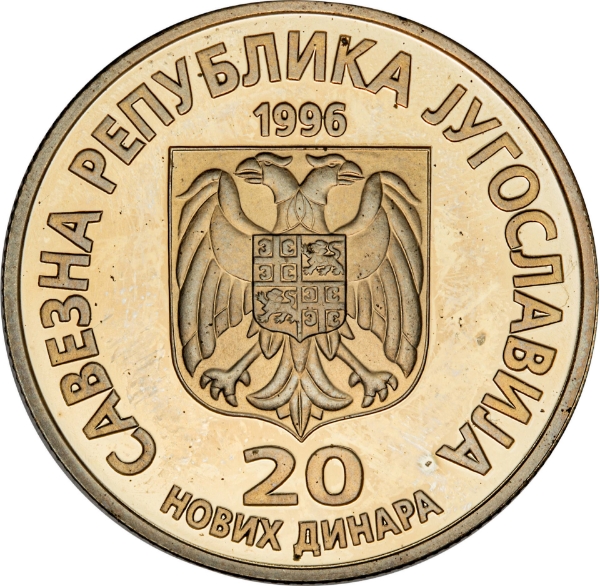
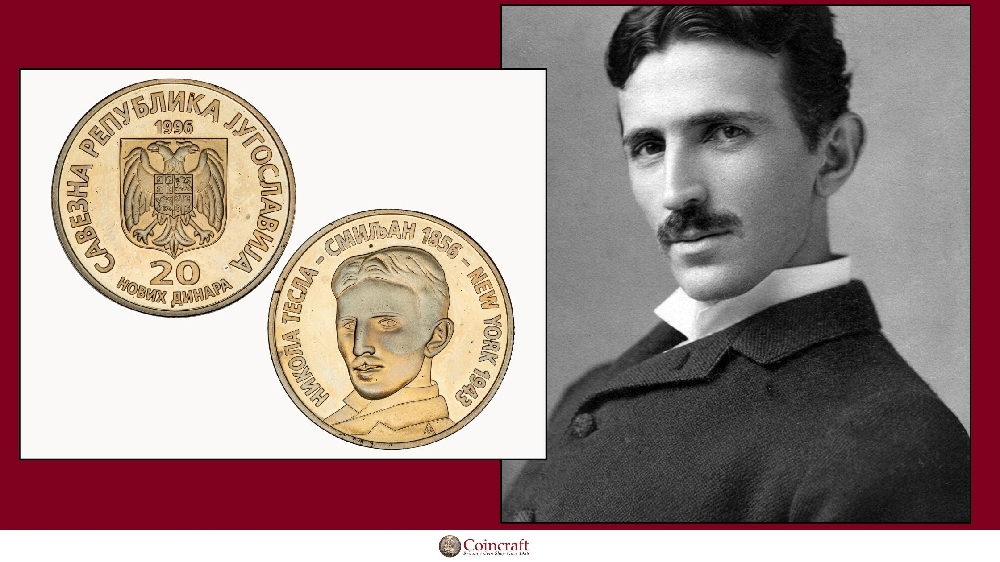
Picture Source of Nikola Tesla: Wikipedia
The Electric Dreamer: The Life, Legacy, and Lightning of Nikola Tesla
Imagine a world without Wi-Fi, without radio, without remote controls, or even the alternating current (AC) electricity that powers the device you're reading this on right now. It sounds like the Stone Age, doesn't it? Well, we have one man to thank for dragging us out of the dark and into the electric future: Nikola Tesla.
Often called the "man who invented the 20th century," Tesla wasn't just a scientist; he was a showman, a visionary, and yes, a bit of a "mad scientist" in the best possible way. From taming lightning to falling in love with a pigeon (we’ll get to that!), his life was anything but ordinary. So, grab a coffee, sit back, and let’s dive into the electrifying life of the genius who lit up the world.
Key Takeaways
The Father of AC: Tesla’s Alternating Current (AC) system defeated Edison’s Direct Current (DC) to become the global standard for power transmission.
A Futurist: He predicted smartphones, Wi-Fi, and wireless energy transfer nearly a century before they became reality.
The War of Currents: His rivalry with Thomas Edison is one of the most famous feuds in scientific history.
Tragic Ending: Despite his genius, Tesla died penniless and alone, a victim of his own lack of business acumen.
Prolific Inventor: He held around 300 patents, covering everything from radio to X-ray technology.
The Spark of Genius: Early Years
Nikola Tesla was born during a fierce lightning storm on July 10, 1856, in Smiljan, in what is now Croatia (then part of the Austrian Empire). Legend has it that the midwife looked at the lightning and called him a "child of the storm," to which his mother replied, "No, of light." Talk about foreshadowing!^1^
Tesla credits his inventive streak to his mother, Djuka Mandic, who invented household appliances in her spare time. His father, a priest, wanted Nikola to join the clergy. But young Nikola had other plans. He possessed an eidetic memory and could visualize complex machinery in his head with perfect precision, a skill that would later baffle his engineers.^2^
After surviving a near-fatal bout of cholera (during which he leveraged his recovery to get his father’s permission to study engineering), Tesla studied at the Technical University of Graz and later in Prague. It was here that he first saw a direct current (DC) dynamo and famously suggested that it could run better on alternating current (AC)—a suggestion his professor scoffed at, calling it a "perpetual motion scheme."^3^ Spoiler alert: The professor was wrong.
The American Dream (and Nightmare)
In 1884, Tesla arrived in New York City with four cents in his pocket, a book of poetry, and a letter of recommendation for Thomas Edison. The letter, written by Charles Batchelor, allegedly read: "I know two great men and you are one of them; the other is this young man."^4^
Tesla started working for Edison, but the two were like oil and water. Edison was a trial-and-error tinkerer; Tesla was a theoretical mastermind. The relationship imploded when Tesla claimed Edison promised him $50,000 to improve his DC generators. When Tesla finished the job and asked for the money, Edison reportedly laughed and said, "Tesla, you don't understand our American humor."^5^
Tesla quit immediately. For a while, the genius inventor found himself digging ditches for $2 a day just to survive. It was a humble start for the man who would soon change the world.
The War of Currents: AC vs. DC
This is the part of the story that feels like a movie script. On one side, you have Edison and his Direct Current (DC) empire. On the other, Tesla and his new business partner, George Westinghouse, backing Alternating Current (AC).
The problem with DC was that it couldn't travel long distances without expensive power stations every mile. Tesla's AC, however, could travel hundreds of miles over thin wires. It was clearly superior, but Edison didn't play nice. He launched a smear campaign, publicly electrocuting animals to prove AC was "dangerous."^6^
Despite the dirty tactics, Tesla won the "War of Currents" with two major victories:
The 1893 World's Columbian Exposition: Tesla and Westinghouse lit up the Chicago World's Fair, dazzling the public with the safety and beauty of AC power.
Niagara Falls: In 1895, Tesla designed the first hydroelectric power plant at Niagara Falls. The massive generators carried electricity all the way to Buffalo, New York, proving AC was the future.^7^
The Mad Scientist: Inventions & Visions
With the War of Currents won, Tesla unleashed his imagination. He set up a laboratory in Colorado Springs in 1899 to study high-voltage electricity. Here, he created artificial lightning and claimed to receive signals from Mars (which were likely radio waves from cosmic sources).^8^
Some of his most notable inventions and concepts included:
The Tesla Coil: Invented in 1891, this circuit produces high-voltage, low-current electricity. It's still used today in radios and televisions—and in science museums to make cool purple lightning.^2^
Radio: While Guglielmo Marconi is often credited with inventing the radio, he used 17 of Tesla’s patents. The U.S. Supreme Court eventually restored Tesla’s status as the true inventor of the radio in 1943, shortly after his death.^9^
Remote Control: In 1898, Tesla drove a radio-controlled boat around a pool in Madison Square Garden. People were so confused they thought it was magic or telepathy!^10^
His most ambitious project was the Wardenclyffe Tower. Backed by J.P. Morgan, Tesla wanted to build a massive tower on Long Island to transmit wireless messages and free energy across the Atlantic. Unfortunately, when Marconi sent a radio signal across the ocean for cheap, Morgan cut Tesla's funding. The tower was eventually scrapped for parts.
Pigeons, Patterns, and Pearls: The Eccentric Side
As Tesla grew older, his brilliance was often overshadowed by his eccentricities. He suffered from severe obsessive-compulsive disorder (OCD).
He was obsessed with the number 3. He would walk around a block three times before entering a building and demanded 18 napkins (a multiple of 3) to polish his silverware.^11^
He despised pearls. He reportedly refused to speak to women who wore them.^12^
He had a germ phobia and avoided shaking hands.
But the most famous story involves his love for pigeons. In his later years, he spent hours feeding them in New York City parks. He claimed a special bond with one specific white pigeon, stating, "I loved that pigeon as a man loves a woman, and she loved me. As long as I had her, there was a purpose to my life."^13^
A Quiet End to a Loud Life
Sadly, the man who electrified the world died alone and impoverished. On January 7, 1943, Nikola Tesla passed away in Room 3327 of the Hotel New Yorker (notice the room number is divisible by 3!).^14^
Immediately after his death, the U.S. Office of Alien Property seized his papers, sparking decades of conspiracy theories about "Death Rays" and secret weapons. While most of these files have since been declassified, the mystery adds to his allure.
Today, his legacy is everywhere. From the Tesla car company named in his honor to the AC current in our walls, the "Electric Dreamer" finally got the recognition he deserved.
Frequently Asked Questions (FAQs)
Q: Did Nikola Tesla really invent X-rays? A: Sort of! Tesla experimented with what he called "shadowgraphs" and captured X-ray images before Wilhelm Röntgen officially discovered them. However, Tesla lost much of his work in a lab fire in 1895, so Röntgen gets the credit.^9^
Q: Was Tesla really a "mad scientist"? A: In the pop-culture sense, yes. His claims of death rays, talking to Martians, and his eccentric habits fueled this reputation. However, scientifically, he was a disciplined and rigorous engineer who simply saw further into the future than anyone else.^15^
Q: Why did Tesla die poor if he was so successful? A: Tesla was a terrible businessman. He famously tore up a royalty contract with Westinghouse that would have made him the world's first billionaire, just to save the company from bankruptcy. He cared more about the progress of humanity than his own bank account.^16^
References
Biography.com Editors (2023) Nikola Tesla Biography. Biography.com. Available at: https://www.biography.com/inventors/nikola-tesla (Accessed: 2 December 2025).
Tesla Science Center (2024) Nikola Tesla Inventions. Tesla Science Center at Wardenclyffe. Available at: https://teslasciencecenter.org/nikola-tesla-inventions/ (Accessed: 2 December 2025).
PBS (2024) Master of Lightning: Tesla's Early Years. PBS.org. Available at: https://www.pbs.org/tesla/ll/ll_early.html (Accessed: 2 December 2025).
Department of Energy (2023) Top 11 Things You Didn't Know About Nikola Tesla. Energy.gov. Available at: https://www.energy.gov/articles/top-11-things-you-didnt-know-about-nikola-tesla (Accessed: 2 December 2025).
History.com Editors (2023) Nikola Tesla. History.com. Available at: https://www.history.com/topics/inventions/nikola-tesla (Accessed: 2 December 2025).
Scribd (2024) The War of Currents. Scribd. Available at: https://fr.scribd.com/document/265537880/The-War-of-Currents (Accessed: 2 December 2025).
Britannica, T. Editors of Encyclopaedia (2025) Nikola Tesla. Encyclopedia Britannica. Available at: https://www.britannica.com/biography/Nikola-Tesla (Accessed: 2 December 2025).
Lemelson-MIT (2024) Nikola Tesla. Lemelson-MIT Program. Available at: https://lemelson.mit.edu/resources/nikola-tesla (Accessed: 2 December 2025).
Tesla Science Center (2024) Nikola Tesla Inventions - Radio. Tesla Science Center at Wardenclyffe. Available at: https://teslasciencecenter.org/nikola-tesla-inventions/ (Accessed: 2 December 2025).
The Franklin Institute (2024) Case Files: Nikola Tesla. fi.edu. Available at: https://fi.edu/en/science-and-education/collection/case-files/nikola-tesla (Accessed: 2 December 2025).
Alcon Lighting (2021) 10 Eccentric Facts About Nikola Tesla. Alcon Lighting Blog. Available at: https://www.alconlighting.com/blog/stories/eccentric-facts-about-nikola-tesla/ (Accessed: 2 December 2025).
Medium (2025) Nikola Tesla: The Mad Genius. Medium.com. Available at: https://medium.com/@tech4yuv.2025/nikola-tesla-the-mad-genius-his-life-obsessions-inventions-and-eccentricities-7cc7b8aa6de0 (Accessed: 2 December 2025).
All That's Interesting (2023) Inside Nikola Tesla's Death. Allthatsinteresting.com. Available at: https://allthatsinteresting.com/nikola-tesla-death (Accessed: 2 December 2025).
Simple English Wikipedia (2025) Nikola Tesla. Simple.wikipedia.org. Available at: https://simple.wikipedia.org/wiki/Nikola_Tesla (Accessed: 2 December 2025).
Psychology Writing (2024) Analysis of Nikola Tesla's Personality. Psychologywriting.com. Available at: https://psychologywriting.com/analysis-of-nikola-teslas-personality/ (Accessed: 2 December 2025).
Mobile Relay Associates (2024) Nikola Tesla Myths. Mra-raycom.com. Available at: https://mra-raycom.com/nikola-tesla-myths/ (Accessed: 2 December 2025).