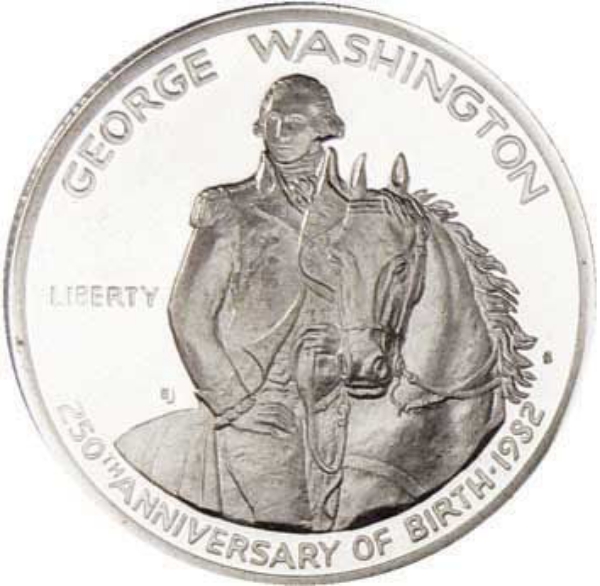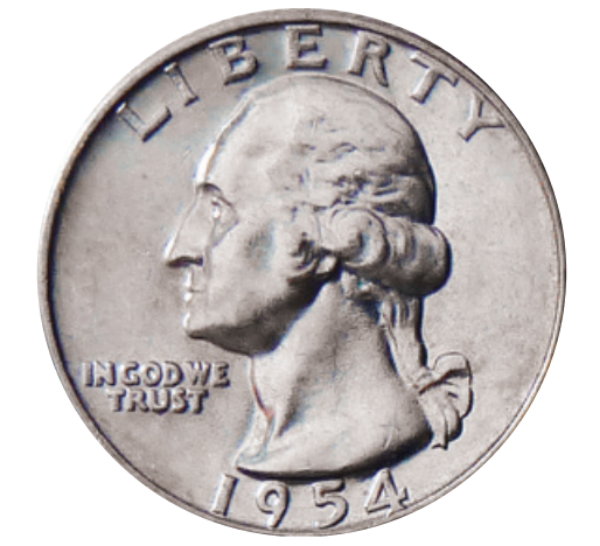
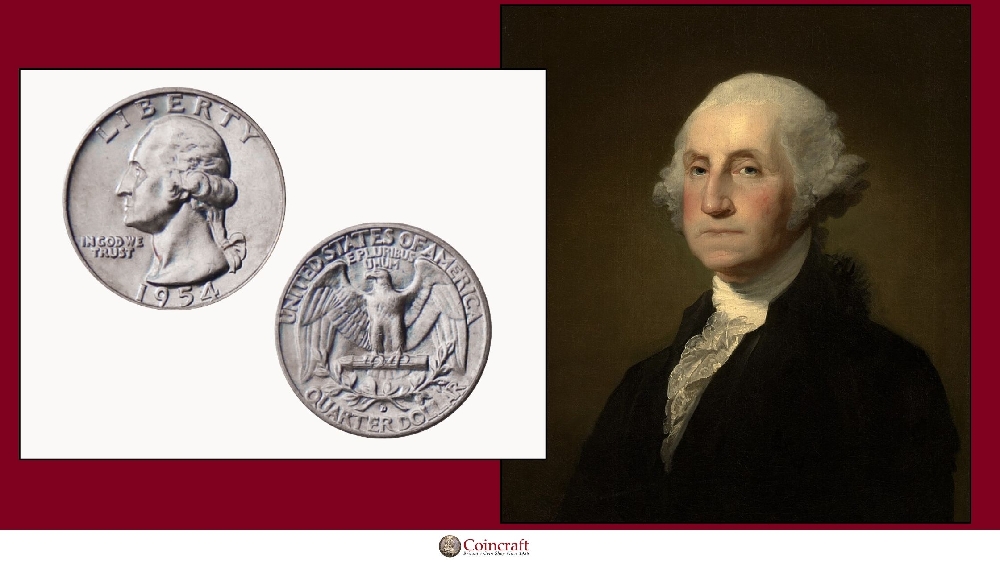
Picture Source of George Washington: Wikipedia
George Washington: The Architect of a Nation
George Washington is often remembered as a figure carved in marble: stern, distant, and unapproachable. As the face on the quarter and the name upon the monument, he serves as the symbolic patriarch of the United States. However, behind the stoic imagery lies a man of profound complexity—a leader who enjoyed dancing, struggled to control a fiery temper, and arguably made the most significant decision in American history not by seizing power, but by relinquishing it.
To truly understand the foundation of the United States, one must look past the mythology and examine the flesh-and-blood man who set the nation’s course.
Key Takeaways
The Reluctant Leader: Washington frequently preferred the quiet life of his Mount Vernon estate to the battlefield or the presidency, yet he served repeatedly out of a deep sense of civic duty.
The Surrender of Power: His most revolutionary act was voluntarily resigning his commission as General and later stepping down as President, establishing the principle of civilian control and peaceful transition.
Establishing Precedent: Entering the presidency with no roadmap, he established essential traditions, including the two-term limit and the modest title of "Mr. President."
A Complex Legacy: While he was the only Founding Father to provision the emancipation of his enslaved people in his will, his participation in the institution of slavery remains a critical and painful aspect of his history.
From Surveyor to Soldier
Born in 1732 in Westmoreland County, Virginia, Washington was not born into the highest echelon of the British aristocracy, though his family was comfortable. Unlike contemporaries such as Thomas Jefferson or John Adams, Washington did not receive a formal collegiate education. Instead, his classroom was the American frontier.
By the age of 16, he was working as a professional surveyor in the wilderness. These early years, spent mapping the rugged terrain and sleeping under the stars, instilled in him a physical resilience that would serve him well in later years.
His military career began with significant challenges. In his early twenties, serving during the prelude to the French and Indian War, Washington was involved in a skirmish that helped ignite the global Seven Years' War. He was not an innate military genius; rather, he was a leader who learned from failure.^1 During the disastrous Battle of the Monongahela, he had two horses shot from under him and four bullets pierce his coat, yet he emerged physically unscathed. This seemingly miraculous survival granted him an early reputation for invincibility.
The Commander in Chief
By 1775, political tensions in the colonies had reached a breaking point. When the Continental Congress convened to select a leader for the rebellion, Washington arrived in his military uniform—a silent but clear indication of his readiness to serve.^2
Congress did not select him for his tactical brilliance, as he would go on to lose more battles than he won. Instead, he was chosen for his character. He possessed an integrity that could unify the disparate colonial forces.
This leadership was tested most severely during the winter at Valley Forge. Despite his troops facing starvation and a lack of basic supplies, Washington remained with them, quelling potential mutinies and keeping the "Glorious Cause" alive until French intervention helped secure victory at Yorktown in 1781.
The American Cincinnatus
Perhaps the most defining moment of Washington's life occurred after the war was won. With a loyal army at his back and a grateful nation awaiting his command, historical precedent suggested he might declare himself King or dictator.
Washington chose a different path. He appeared before Congress, resigned his commission, and returned to his farm. Upon hearing that Washington intended to return to private life rather than seize power, King George III of England reportedly remarked, "If he does that, he will be the greatest man in the world."^3
Defining the Presidency
Washington’s retirement at Mount Vernon was short-lived. As the young nation fractured under the Articles of Confederation, he was recalled to preside over the Constitutional Convention in 1787. His presence alone lent legitimacy to the proceedings.
Following the ratification of the Constitution, his election as President in 1789 was unanimous—a feat never repeated. He entered the office with no job description and the heavy burden of knowing that his every action would set a precedent for future generations:
The Title: He rejected regal styles such as "His Highness," insisting on the modest "Mr. President."
The Cabinet: He assembled a cabinet of rival brilliance, including Alexander Hamilton and Thomas Jefferson, understanding that diverse viewpoints were essential for governance.^4
Neutrality: He strove to keep the United States out of European conflicts, recognizing that the fragile new nation could not withstand another war.
The Man Behind the Myth
Washington was a man of distinct human interests and flaws. He was an avid theatergoer and an innovative agriculturalist who introduced mules and crop rotation to American farming.
However, his legacy is complicated by his status as a slave owner. At the time of his death, over 300 enslaved individuals lived at Mount Vernon. Over his lifetime, Washington grew increasingly conflicted regarding the morality of slavery, privately expressing a desire for a plan of abolition. In his will, he ordered that the enslaved people he owned be freed following the death of his wife, Martha—he was the only Founding Father to make such a provision.^5
The Final Goodbye
After two terms, Washington declined a third, citing exhaustion and the rise of political factionalism. In 1796, he published his Farewell Address, a prescient document warning the nation against permanent foreign alliances and the dangers of political parties.
He passed away at Mount Vernon in 1799 following a sudden throat infection. The nation mourned him not merely as a political leader, but as the father of the country.
Washington was not perfect. He could be aloof, he battled a fierce temper, and he participated in the institution of slavery. Yet, his willingness to relinquish power to ensure the survival of a republic defines him as the essential figure in American history.
Frequently Asked Questions (FAQs)
1. Did George Washington possess wooden teeth? No, this is a persistent myth. His dentures were constructed from a combination of materials including hippopotamus ivory, gold, lead, and human teeth. Historical records suggest some of the human teeth may have been purchased from enslaved individuals.^6
2. Is the story of the cherry tree historically accurate? There is no historical evidence to support this story. It was invented by an early biographer, Parson Weems, to illustrate Washington's honesty to young readers. While a compelling fable, it is not fact.^1
3. Why did Washington not sign the Declaration of Independence? Washington did not sign the Declaration because he was not present in Philadelphia at the time. He was in New York, serving as Commander in Chief of the Continental Army, preparing defenses against the British forces.^2
References
Mount Vernon Ladies' Association (2023). The Cherry Tree Myth. [online] George Washington's Mount Vernon. Available at: https://www.mountvernon.org [Accessed 19 Nov. 2025].
Library of Congress (n.d.). George Washington: A Resource Guide. [online] Loc.gov. Available at: https://www.loc.gov [Accessed 19 Nov. 2025].
Chernow, R. (2010). Washington: A Life. New York: Penguin Press.
Ellis, J.J. (2002). Founding Brothers: The Revolutionary Generation. New York: Vintage Books.
National Archives (2022). George Washington's Will. [online] Archives.gov. Available at: https://www.archives.gov [Accessed 19 Nov. 2025].
Smithsonian Magazine (2014). George Washington's False Teeth. [online] Smithsonian Magazine. Available at: https://www.smithsonianmag.com [Accessed 19 Nov. 2025].