More Than Just Ink: The Deep Meanings Behind Unalom and Kranok
If you’ve ever scrolled through travel photos of Thailand or admired the intricate ink on a backpacker’s shoulder, you’ve likely seen them. They are the swirling spirals that straighten into jagged lines and the flame-like patterns that seem to dance across temple walls. These aren't just cool designs; they are Unalom (or Unalome) and Kranok.
While they have exploded in popularity in the West as minimalist tattoos and boho aesthetic decor, their roots go much deeper. They are the visual language of Theravada Buddhism and traditional Thai art—symbols that tell the story of the human soul and the vibrancy of nature. Today, we’re going to peel back the layers of these ancient motifs to understand what they really mean.
Key Takeaways
The Path to Enlightenment: The Unalome represents the journey of the soul from the chaos of the human experience (the spiral) to the clarity of enlightenment (the straight line).
Nature as Art: The Kranok is the "master pattern" of Thai art, derived from the shapes of flames, lotus buds, and rice, symbolizing the harmony between nature and spirit.
Sak Yant Connection: Both symbols are foundational elements of Sak Yant (traditional Thai tattoos), believed to offer magical protection and blessings.
Respect Matters: These are sacred religious symbols. Placing them on the feet or using them disrespectfully is a major cultural taboo in Thailand.
The Unalome: From Chaos to Clarity
Let's start with the symbol you’ve probably seen the most: the Unalome. At first glance, it looks like a simple doodle—a spiral at the bottom, a few zig-zags, and a straight line shooting upward. But this simplicity hides a profound metaphysical map of the human condition.
The Anatomy of the Soul
The Unalome is essentially a graph of our spiritual life. It is generally broken down into three distinct parts:
The Spiral (The Watsong): This represents the beginning of the path. It signifies our birth and the confusion, fear, and struggles we face in our daily lives. It’s the "wandering" phase where we are lost in our emotions and thoughts.¹
The Zig-Zag Line: As the spiral loosens, it turns into a zig-zag. This represents the struggle to find balance. We are starting to wake up, but we still encounter challenges and setbacks. The path isn't straight yet, but we are moving forward.
The Straight Line & Dot: Finally, the chaos straightens out. This line represents the moment of clarity—the path to Nirvana (enlightenment). The dot often found at the very top symbolizes the dissolution of the self, or the goal of absolute freedom.²
Interestingly, while many associate the Unalome strictly with Buddhism, it shares DNA with the Hindu symbol for Shiva’s third eye, representing wisdom and the destruction of evil. In Thai tradition, it is often seen as the "Crown of the Arahants" (enlightened saints).³
The Kranok: The Flame of Thai Art
While the Unalome is spiritual and singular, the Kranok (or Kanok) is the artistic heartbeat of Thailand. If you walk into a temple in Bangkok, you will see gold, flame-like patterns creeping up the pillars and framing the doors. That is the Kranok.
The Master Pattern
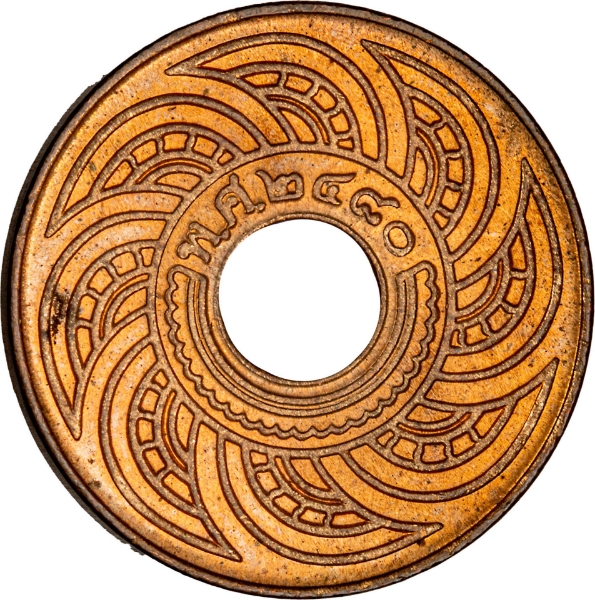
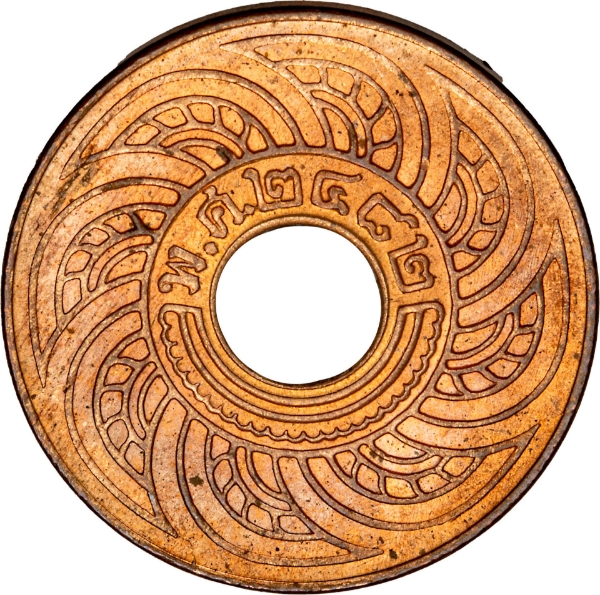
The word Kanok essentially means "gold," but in the context of art (Lai Thai), it refers to a specific recurring motif. The most basic form is the Kanok Sam Tua (Three-Part Kranok), which is triangular and looks remarkably like a flickering flame.⁴
However, Thai artisans didn't just copy fire. They looked at the world around them. The curves of the Kranok are inspired by:
The Lotus: The bud of the sacred flower.
Rice: The shape of rice sheaves, vital to Thai life.
Vegetation: Creeping vines and leaves.
The Kranok is considered the "mother pattern." Once an artist masters this, they can draw almost anything in the traditional Thai style. It transforms the mundane (plants) into the divine (gold and fire), symbolizing how nature and spirituality are intertwined in Thai culture.
Where They Meet: The Magic of Sak Yant
So, how do these two come together? The answer lies in Sak Yant (Sacred Yantra tattoos). This is an ancient practice where Buddhist monks or Ajarns (masters) use a long metal or bamboo rod to tap geometric designs into the skin.
In a Sak Yant, the Unalome isn't just a pretty topper; it acts as an antenna. It is often placed at the top of a complex design to "broadcast" the magical blessings of the tattoo out to the universe, or to direct the prayer toward enlightenment.⁵ You might see a fierce tiger (representing power) framed by delicate Kranok patterns (representing beauty and nature), all topped with a soaring Unalome (representing spiritual direction).
A Note on Etiquette
Because these symbols are sacred, context is everything. In Thailand, the head is considered the highest and most holy part of the body, while the feet are the lowest and "dirtiest."
Crucial tip: Never get an Unalome or a Buddha image tattooed on your feet or ankles. It is considered deeply disrespectful to the culture and the religion.⁶ These symbols belong above the waist, reflecting their high spiritual status.
FAQs
Q: Can I get an Unalome tattoo if I am not Buddhist? A: Generally, yes. It is viewed as a universal symbol of personal growth. However, it is important to treat it with respect. Avoid getting it in disrespectful places (like the feet) or treating it purely as a fashion trend without understanding its origin.
Q: Is the Unalome the same as the "Om" symbol? A: No, but they are cousins. "Om" is a sacred sound and symbol in Hinduism (and some schools of Buddhism) representing the universe. The Unalome is a visual representation of the path to enlightenment. They are often combined in artwork, but they are distinct symbols.³
Q: What does the Kranok pattern symbolize? A: While it doesn't have a single "meaning" like a hieroglyph, the Kranok represents the beauty of nature and the brilliance of the divine. Its flame-like appearance symbolizes glory, luminosity, and the burning away of ignorance.
References
A Beautiful Story. (n.d.). The meaning behind the Unalome. [online] Available at: https://www.abeautifulstory.eu/blogs/stories/the-meaning-behind-the-unalome [Accessed 28 Nov. 2025].
Bamboo Tattoo. (2023). The Unalome: Origins, History and its relationship to Sak Yants. [online] Available at: https://www.bambootattoo.co.uk/the-unalome-origins-history-and-its-relationship-to-sak-yants/ [Accessed 28 Nov. 2025].
Tatteco. (2022). Understanding the Shared Symbolism of Om and Unalome Tattoos. [online] Available at: https://www.tatteco.com/blogs/blog/understanding-the-shared-symbolism-of-om-and-unalome-tattoos [Accessed 28 Nov. 2025].
Scientific.Net. (2014). The Identity and Design of Thai Tradition Paintings. [online] Available at: https://www.scientific.net/AMR.1028.327.pdf [Accessed 28 Nov. 2025].
Mandira Antar. (2020). Tattoo symbols / The unalome. [online] Available at: https://www.mandira-antar.com/post/tattoo-symbols-the-unalome [Accessed 28 Nov. 2025].
Tattoodo. (2021). 18 Enlightened Unalome Tattoos with Meaning. [online] Available at: https://www.tattoodo.com/articles/18-enlightened-unalome-tattoos-6011 [Accessed 28 Nov. 2025].