.jpg)
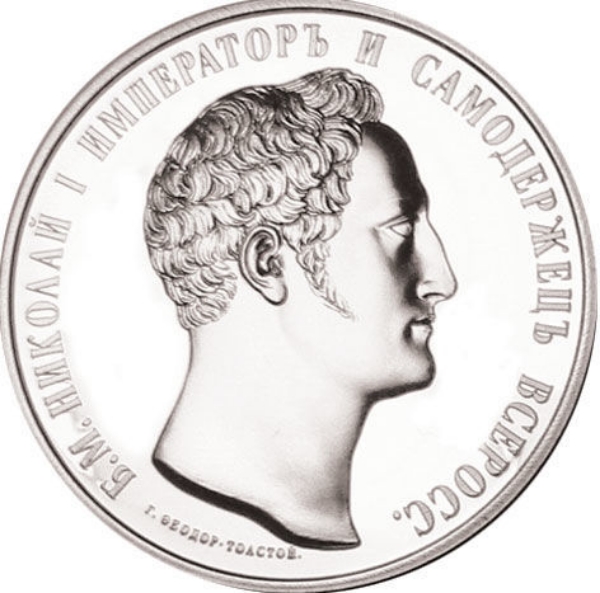
Picture Source of Tsar Nicholas I: Wikipedia
Introduction to Tsar Nicholas I
Tsar Nicholas I, who ascended to the Russian throne in 1825, is often remembered for his autocratic governance and significant reforms. His reign, lasting until 1855, was marked by both strict control and attempts to modernise the Russian Empire. As the third son of Tsar Paul I, Nicholas was not initially expected to rule. However, circumstances placed him in a position of power, where he sought to solidify his authority and expand his empire.
Nicholas I's rule came at a time when Europe was experiencing significant political and social changes. The aftermath of the Napoleonic Wars had left Europe in a state of flux, and Nicholas was determined to maintain Russia's status as a formidable force. His reign was characterised by a strong emphasis on military might and a centralised government, which he believed were essential for maintaining order and stability within the empire.
Despite his autocratic tendencies, Nicholas I also recognised the need for reform. He introduced several measures aimed at modernising Russia's infrastructure, economy, and military. These efforts were driven by a desire to enhance Russia's global standing and ensure its competitiveness on the international stage. However, his reforms often faced resistance and were implemented with caution, reflecting the complex balance between progress and tradition that defined his rule.
The Historical Context of Nicholas I's Reign
Nicholas I's reign began during a pivotal period in European history. The early 19th century was characterised by the aftermath of the French Revolution and the Napoleonic Wars, which had reshaped the political landscape of Europe. These events had a profound impact on Nicholas's approach to governance, as he was determined to prevent similar upheavals in Russia.
The Congress of Vienna in 1815 had sought to restore balance and order in Europe, but the continent remained a hotbed of revolutionary ideas and nationalist movements. Nicholas was acutely aware of these threats and believed that a strong, centralised authority was necessary to counteract them. His reign was marked by a commitment to upholding the principles of autocracy and suppressing any potential dissent within the empire.
Internally, Russia was grappling with its own challenges. The empire was vast and diverse, encompassing numerous ethnic groups and cultures. Managing such a sprawling territory required a delicate balance between central control and local governance. Nicholas I faced the task of addressing these complexities while maintaining the integrity and unity of the Russian state. His policies were shaped by a combination of traditional Russian values and the need to adapt to a rapidly changing world.
Autocratic Rule: The Characteristics of Nicholas I's Governance
Nicholas I's governance was defined by its autocratic nature, with a strong emphasis on maintaining absolute control over the state. He believed that a centralised authority was essential for preserving order and stability in a vast and diverse empire like Russia. To achieve this, Nicholas implemented a series of measures aimed at consolidating his power and suppressing dissent.
One of the key characteristics of Nicholas I's rule was the establishment of a robust bureaucratic system. He reorganised the government to ensure that all decisions were channelled through a centralised hierarchy, with loyal officials appointed to key positions. This system allowed Nicholas to exert tight control over all aspects of governance, from local administration to national policy-making.
Another defining feature of Nicholas's autocratic rule was his use of censorship and surveillance to maintain control over public opinion. The press was heavily monitored, and any form of criticism against the government was swiftly suppressed. Nicholas also established a secret police force known as the Third Section, which was tasked with monitoring potential threats to the state. These measures were instrumental in maintaining a climate of fear and ensuring loyalty to the regime.
Reforms Implemented During Nicholas I's Reign
Despite his autocratic tendencies, Nicholas I recognised the need for reform to modernise the Russian Empire and enhance its global standing. His reign saw several initiatives aimed at improving the infrastructure, economy, and military capabilities of the state. These efforts were driven by a desire to ensure Russia's competitiveness on the international stage and address internal challenges.
One of Nicholas's key reforms was the modernisation of the Russian military. Recognising the importance of a strong defence, he undertook efforts to improve the organisation, training, and equipment of the armed forces. This included the introduction of new military technologies and the establishment of military schools to train officers. These measures were intended to bolster Russia's military prowess and deter potential adversaries.
In addition to military reforms, Nicholas I also focused on infrastructure development. He invested in the construction of roads, railways, and telegraph lines, which facilitated communication and trade across the vast empire. These improvements were crucial for enhancing the efficiency of governance and promoting economic growth. Nicholas also introduced measures to modernise the education system, recognising that an educated populace was essential for the empire's progress.
The Impact of the Decembrist Revolt on Nicholas I's Policies
The Decembrist Revolt of 1825, which occurred shortly before Nicholas I ascended the throne, had a profound impact on his policies and approach to governance. The revolt, led by a group of military officers and nobles, was a reaction against the autocratic rule of the Russian monarchy and sought to establish a constitutional government. Although the uprising was swiftly suppressed, it left a lasting impression on Nicholas and influenced his subsequent actions.
In response to the Decembrist Revolt, Nicholas I adopted a more stringent approach to maintaining control over the state. He viewed the revolt as a direct challenge to his authority and a warning of the potential for unrest within the empire. As a result, he intensified efforts to suppress dissent and prevent similar uprisings in the future. This included the expansion of the secret police force and the implementation of stricter censorship measures.
The revolt also reinforced Nicholas's commitment to upholding the principles of autocracy. He was determined to prevent the spread of revolutionary ideas and protect the stability of the Russian state. This led to a greater emphasis on maintaining a strong centralised authority and resisting any calls for political reform. While Nicholas did implement some reforms during his reign, they were often cautious and carefully controlled to avoid undermining his power.
Nicholas I and the Expansion of the Russian Empire
Under Tsar Nicholas I, the Russian Empire saw significant territorial expansion, further solidifying its position as a major global power. Nicholas pursued a policy of expansionism, driven by a desire to enhance Russia's influence and secure its borders. His efforts were characterised by both military conquests and diplomatic manoeuvres, which contributed to the empire's growth.
One of the key areas of expansion during Nicholas's reign was the Caucasus region. The Russian Empire sought to assert its dominance over this strategically important area, which was seen as a buffer against potential threats from neighbouring powers. Nicholas's campaigns in the Caucasus were marked by a series of military engagements and the establishment of Russian control over key territories.
In addition to the Caucasus, Nicholas I also focused on expanding Russia's influence in Central Asia. The empire sought to extend its reach into the region through a combination of military expeditions and diplomatic efforts. This expansion was driven in part by the need to counter British influence in the area and secure Russia's position as a dominant power in Asia. Nicholas's policies laid the groundwork for further expansion in subsequent decades, shaping the geopolitical landscape of the region.
Cultural Developments Under Tsar Nicholas I
Despite his autocratic rule, Tsar Nicholas I's reign saw notable cultural developments that contributed to the rich tapestry of Russian arts and literature. Nicholas was a patron of the arts and sought to promote Russian culture both at home and abroad. His reign is often associated with a flourishing of creativity, as artists, writers, and musicians found new opportunities for expression.
One of the most significant cultural achievements of Nicholas's reign was the establishment of the Imperial Academy of Arts in St. Petersburg. This institution became a hub for artistic talent, nurturing the skills of painters, sculptors, and architects. Nicholas's support for the arts was also evident in his patronage of renowned figures such as Alexander Pushkin and Mikhail Glinka, whose works continue to be celebrated as masterpieces of Russian culture.
Literature also thrived during Nicholas's reign, with authors exploring themes of social change, identity, and national pride. The period saw the emergence of the Russian novel as a distinct literary form, with writers such as Nikolai Gogol and Ivan Turgenev gaining prominence. These cultural developments were not only a testament to the creativity of the Russian people but also reflected Nicholas's desire to project a sophisticated and cultured image of Russia to the world.
The Role of the Orthodox Church in Nicholas I's Reign
The Orthodox Church played a central role in the governance of Russia during the reign of Tsar Nicholas I. The church was a key pillar of Nicholas's autocratic regime, providing both spiritual guidance and political support. Nicholas saw the church as an essential instrument for maintaining social order and reinforcing the legitimacy of his rule.
One of the ways in which Nicholas strengthened the church's influence was by fostering a close relationship between the state and the clergy. He appointed loyal bishops and church officials to key positions, ensuring that the church aligned with his policies and supported his authority. This partnership allowed Nicholas to utilise the moral authority of the church to bolster his rule and promote obedience among the populace.
Nicholas also sought to use the church as a tool for promoting national unity and identity. He encouraged the church to emphasise traditional Russian values and the importance of loyalty to the state. This approach was intended to counteract the influence of foreign ideas and reinforce a sense of Russian exceptionalism. The church's role in Nicholas's reign was not only a reflection of his personal beliefs but also a strategic move to strengthen his control over the empire.
The Legacy of Tsar Nicholas I: Perceptions Then and Now
The legacy of Tsar Nicholas I is a complex and multifaceted one, with varying perceptions both during his lifetime and in the years since his reign. At the time of his rule, Nicholas was viewed by many as a strong and decisive leader who was committed to preserving the stability of the Russian Empire. His autocratic governance and expansionist policies were seen as necessary for maintaining Russia's status as a great power.
However, Nicholas's legacy is also marked by criticism and controversy. His repressive measures, including censorship and the suppression of dissent, have been viewed as stifling potential progress and limiting personal freedoms. Critics argue that his focus on maintaining control came at the expense of meaningful reform, leaving Russia ill-prepared for the challenges it would face in the years following his reign.
In modern times, assessments of Nicholas I's legacy continue to be debated by historians and scholars. Some view him as a resolute leader who navigated a challenging period in Russian history, while others see him as an impediment to progress and modernisation. Regardless of these differing perspectives, Nicholas's reign remains a significant chapter in Russian history, with lasting implications for the country's development.
Evaluating Nicholas I's Impact on Russia
Tsar Nicholas I's reign was a period of significant change and continuity for the Russian Empire. His autocratic governance and commitment to maintaining control defined his approach to leadership, while his reforms and expansionist policies sought to enhance Russia's standing on the world stage. Despite his efforts, Nicholas's reign was also marked by challenges and controversies that have shaped his legacy.
In evaluating Nicholas I's impact on Russia, it is important to consider both the achievements and limitations of his rule. His military and infrastructure reforms contributed to the modernisation of the empire, while his cultural patronage supported a flourishing of Russian arts and literature. However, his repressive measures and reluctance to embrace broader political reform limited the potential for progress and left Russia facing significant challenges in the years to come.
As we reflect on the reign of Tsar Nicholas I, it is clear that his legacy is a complex one, shaped by both autocracy and reform. His impact on Russia continues to be felt today, offering valuable insights into the challenges of leadership and governance in a rapidly changing world.