 - ACG0015.jpg)
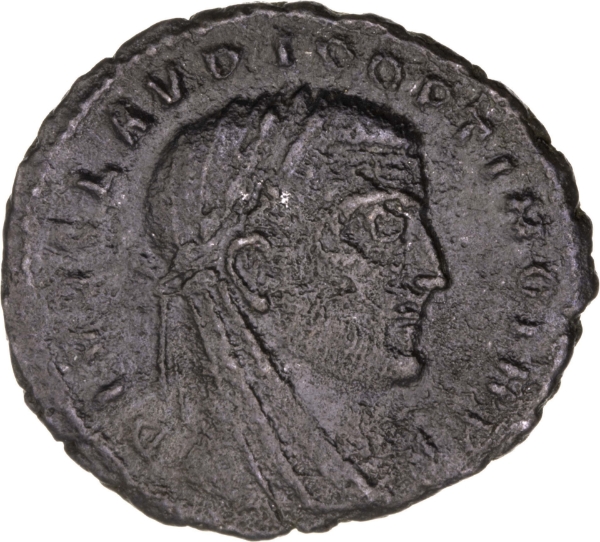
Picture Source of Constantine I "the Great" (A.D. 324-337): Wikipedia
Meet Constantine the Great: The Emperor Who Changed History
Let’s talk about a man who literally redrew the map of the ancient world and reshaped its spiritual landscape. Constantine I, better known as Constantine the Great (27 February 272 – 22 May 337), wasn't just another guy in a toga. Born into a divided and chaotic Roman Empire, he rose through the brutal ranks of the military to become its sole ruler. By the time of his death, he had legalized a heavily persecuted religion, moved the capital hundreds of miles away, and fundamentally altered the course of Western civilization(1).
Key Takeaways
The First Christian Emperor: He was the first Roman Emperor to embrace Christianity, forever changing the relationship between the church and the state.
Champion of Tolerance: He co-issued the Edict of Milan (313 CE), which legally ended the state-sanctioned persecution of Christians and allowed freedom of worship.
A New Center of Power: He founded Constantinople (modern-day Istanbul), shifting the empire's political and economic center of gravity from the West to the East.
The Climb to the Top
Born in Naissus (modern-day Serbia), Constantine was the son of Flavius Valerius Constantius, an army officer who eventually became one of the four co-rulers of the Roman Empire—a system known as the Tetrarchy(2).
When his father died in York, England, in 306 CE, Constantine’s loyal troops bypassed the complex political rules of the day and immediately declared him emperor. But Roman politics was a messy, violent business. It took nearly two decades of civil war, broken treaties, and strategic alliances for Constantine to eliminate his rivals and finally claim sole, undisputed control over the entire Roman world.
A Vision at the Milvian Bridge
The year 312 CE is where Constantine's story takes a legendary turn. While marching on Rome to face his bitter rival, Maxentius, Constantine supposedly had a profound religious experience.
According to historical accounts, Constantine looked up at the sun and saw a cross of light emblazoned with the Greek words En touto nika—"In this sign, conquer."(3). Following a subsequent dream, he ordered his soldiers to paint the Christian monogram (the Chi-Rho) on their shields. They decisively won the Battle of the Milvian Bridge the next day. Constantine attributed his massive victory directly to the Christian God, marking the beginning of his lifelong, albeit complex, relationship with the faith.
Legalizing Faith: The Edict of Milan & Nicaea
Once in power, Constantine didn't just tolerate Christianity; he actively protected it. In 313 CE, Constantine and his eastern co-emperor, Licinius, issued the Edict of Milan. This was a massive game-changer. It didn't make Christianity the official state religion—that would happen decades later—but it legally ended centuries of horrific persecution and granted religious freedom across the empire(1).
Constantine realized that religious unity was crucial for political stability. In 325 CE, he took things a step further by convening the Council of Nicaea. He gathered bishops from across the empire to settle deep theological disputes, effectively tying the administrative power of the Roman state to the Christian church for the very first time(2).
Moving the Center of the World
Rome was a magnificent city, but by the early 4th century, it was becoming strategically obsolete, politically exhausting, and too far from the empire's wealthiest frontiers.
In 330 CE, Constantine made his boldest geopolitical move yet. He relocated the capital of the empire east to the ancient Greek city of Byzantium. He completely rebuilt the city, packed it with magnificent architecture, and modestly renamed it Nova Roma (New Rome). Naturally, the public ignored that and simply called it Constantinople—the City of Constantine(4).
This incredible shift ensured the survival of the Roman Empire in the East (which we now call the Byzantine Empire) for another thousand years, long after the Western half of the empire collapsed.
FAQs
Did Constantine really become a Christian? Yes, though his conversion was a gradual process. While he championed Christianity and raised his children in the faith, he continued to use pagan symbolism on his coins for years to maintain political harmony. He wasn't officially baptized until he was on his deathbed in 337 CE.
Why did he move the capital from Rome to Constantinople? Constantinople offered incredible strategic advantages. It was easier to defend, situated perfectly for lucrative trade routes between Europe and Asia, and closer to the empire's most vital frontiers and wealthiest provinces. It also allowed Constantine to build a new Christian capital free from Rome's deeply entrenched pagan traditions.
References
Britannica, T. Editors of Encyclopaedia. (2024) 'Constantine I'. Encyclopedia Britannica.
Wasson, D. L. (2013) 'Constantine I'. World History Encyclopedia.
National Geographic Society. (2022) 'Constantine the Great'. National Geographic.
Department of Medieval Art and The Cloisters. (2001) 'Byzantium (ca. 330–1453)'. The Metropolitan Museum of Art.