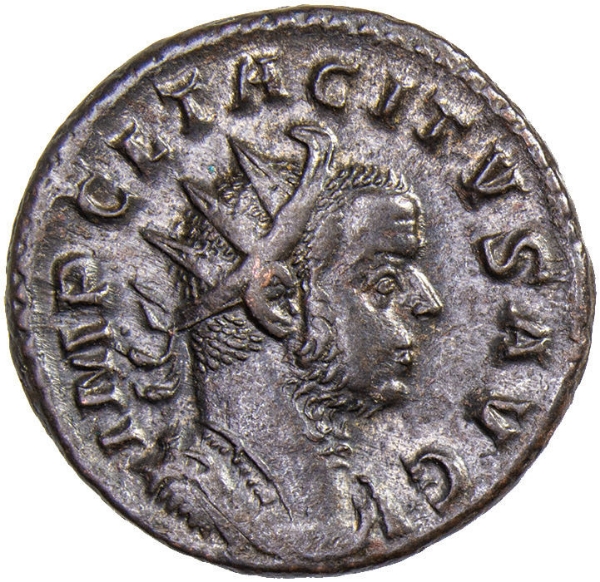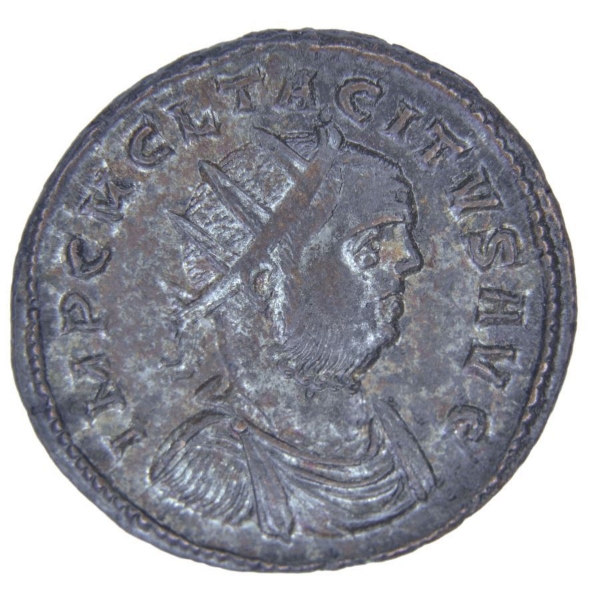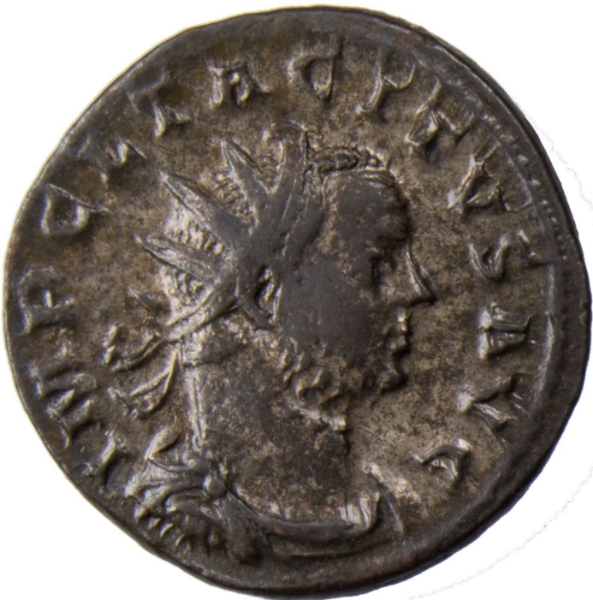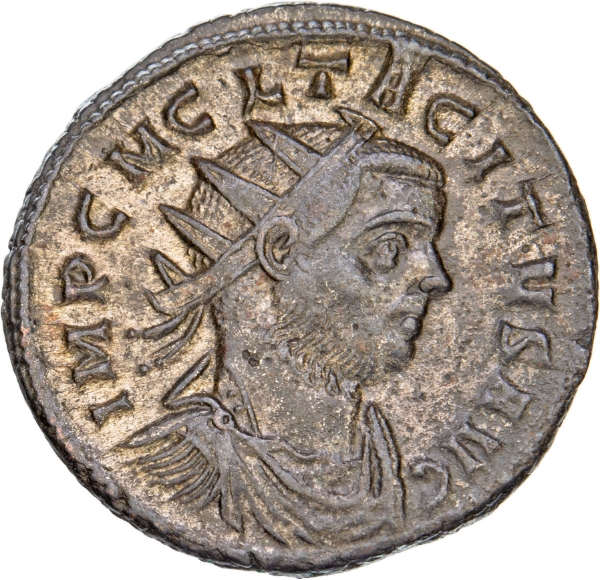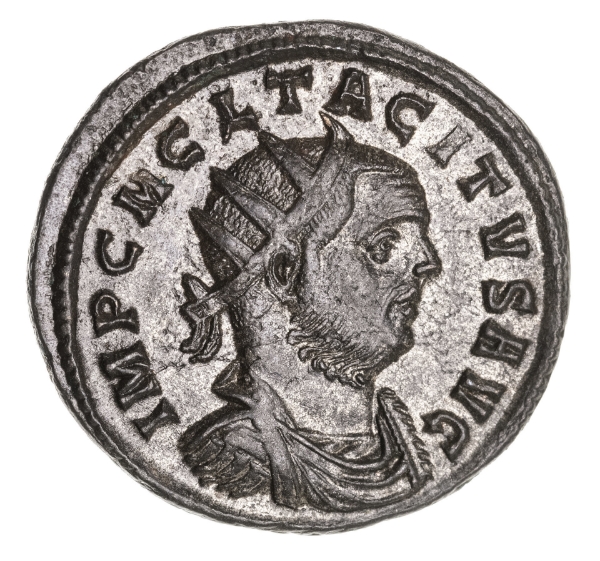
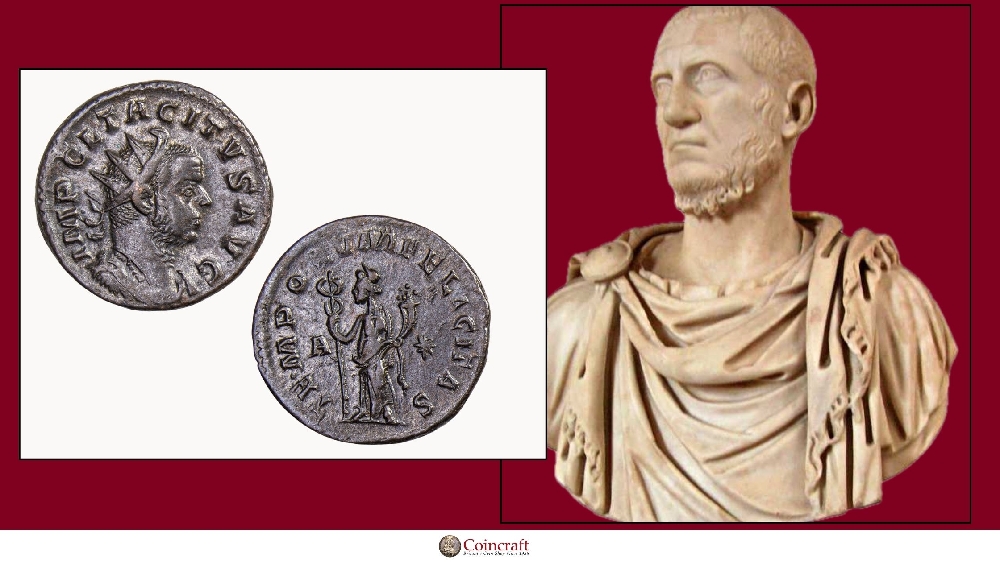
Picture Source of Marcus Claudius Tacitus: Wikipedia
Marcus Claudius Tacitus: The Emperor Who (Maybe) Loved History
Today, we are dusting off the scrolls to look at one of the Roman Empire's blink-and-you’ll-miss-him rulers: Marcus Claudius Tacitus.
If you haven't heard of him, don't worry—you aren't alone. Ruling for just about six months in the late 3rd century, Tacitus is often overshadowed by the flashy emperors who built massive walls or fiddled while Rome burned. But his story is actually quite unique. He was an elderly senator who claimed to be related to one of Rome's greatest historians, and he stepped up to the plate when the Empire was in a total panic.
So, grab a coffee (or a goblet of wine), and let's dive into the life of the man who tried to bring power back to the Senate.
Key Takeaways
The Senate’s Last Hurrah: Tacitus is often cited as the last Roman Emperor to be genuinely elected by the Senate rather than just the army.
A Literary Claim: He famously claimed to be a descendant of the great historian Publius Cornelius Tacitus and ordered libraries to copy his works.^1^
Short but Sharp: Despite his old age (rumoured to be 75!), he personally led armies to victory against Gothic invaders.^2^
Mysterious End: Like many emperors of his time, his death is a toss-up between a nasty fever and a nastier assassination plot.
The "Historian" Connection
One of the most charming anecdotes about Marcus Claudius Tacitus is his obsession with his namesake, the famous historian Publius Cornelius Tacitus (the guy who wrote the Annals and Histories).
When Marcus became Emperor, he reportedly claimed the historian was his ancestor. He was so proud of this connection that he ordered every library in the Empire to have copies of the historian's works, and he even arranged for new copies to be made every year.^3^
Now, I have to break it to you gently: modern historians think this was likely a total fabrication invented later to make him sound more prestigious. But even if it wasn't true, his "fanboy" status might be the only reason the historian Tacitus's works survived the Dark Ages! So, we owe him a thank you regardless.
A bust often identified as Emperor Tacitus, showing the weary look of a man governing a chaotic empire.
The Interregnum: Rome on Pause
The year was 275 AD. The formidable Emperor Aurelian (the "Restorer of the World") had just been murdered. Usually, in these situations, the army would immediately shout the name of the toughest general nearby and declare him Emperor.
But this time, something weird happened. The army felt guilty about killing Aurelian and asked the Senate to pick the next boss. The Senate, probably shocked that anyone was asking their opinion, dithered for months. This period is known as the "Interregnum."^4^
Finally, they settled on Tacitus. He was a wealthy, elderly senator—some sources say he was 75 years old, though modern estimates suggest he was likely in his 50s.^5^ He was reportedly living quietly in Campania and wasn't exactly thrilled to be dragged back into the snake pit of Roman politics.
The Reign: Old Man on a Mission
You might expect a wealthy, elderly senator to sit back and enjoy the palace luxuries. Not Tacitus. He got straight to work.
1. Empowering the Senate
He tried to turn back the clock. For a brief shining moment, he restored the Senate's right to appoint governors and control finances. It was a nostalgic attempt to return to the days of the Republic, but unfortunately, the Empire was too far gone for it to last.
2. Fighting the Goths
Just as he was settling in, crisis struck. Mercenaries from the Maeotian Lake (modern-day Sea of Azov) and bands of Goths invaded Asia Minor (Turkey).
Despite his age, Tacitus didn't hide. He marched straight to the front lines with his half-brother, Florian. Surprisingly, the old senator was a capable general! He defeated the invaders and earned the title Gothicus Maximus ("Greatest Victor over the Goths").^6^
A Sudden End
In June 276 AD, after ruling for only about six months, Tacitus died in Tyana (modern-day Turkey).
As with any good Roman mystery, there are two versions of the story:
The Sickness Theory: He fell ill with a fever, overwhelmed by the stress of campaigning at his age.^7^
The Murder Theory: He was assassinated by his own troops or corrupt officials who were angry about his appointments.^8^
Given the track record of 3rd-century emperors, murder is never a bad guess. He was succeeded by his half-brother Florian, who lasted an even shorter time (about 88 days) before the next strongman, Probus, took over.
FAQs
1. Was Marcus Claudius Tacitus actually related to the historian Tacitus? Most likely not. Modern historians believe this was a legend created by the Historia Augusta, a notoriously unreliable ancient text. However, the Emperor's promotion of the historian's books likely helped save them from being lost to time.
2. How long was Tacitus Emperor? He ruled for a very short time, roughly from late 275 AD to June 276 AD—about six to nine months depending on the exact dates of his election.
3. Did he die of natural causes? It is unclear. Ancient sources like the Historia Augusta claim he died of fever, while the historian Zosimus claims he was murdered by men loyal to the governor of Syria.
References
Grant, M. (1985). The Roman Emperors: A Biographical Guide to the Rulers of Imperial Rome 31 BC - AD 476. New York: Charles Scribner's Sons.
Southern, P. (2001). The Roman Empire from Severus to Constantine. London: Routledge.
Historia Augusta, Life of Tacitus, 10.3. Available at: https://penelope.uchicago.edu/Thayer/E/Roman/Texts/Historia_Augusta/Tacitus*.html
Watson, A. (1999). Aurelian and the Third Century. London: Routledge.
Jones, A.H.M., Martindale, J.R. and Morris, J. (1971). The Prosopography of the Later Roman Empire, Vol. I: AD 260–395. Cambridge: Cambridge University Press.
McMahon, R. (2000). Tacitus (275-276 A.D.). De Imperatoribus Romanis. Available at: http://www.roman-emperors.org/tacitus.htm
Aurelius Victor, De Caesaribus, 36.1.
Zosimus, New History, 1.63. Available at: https://www.livius.org/sources/content/zosimus/zosimus-new-history-1/