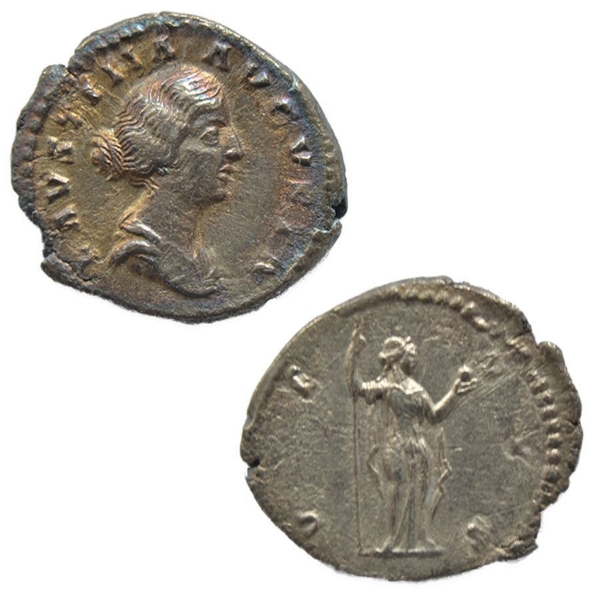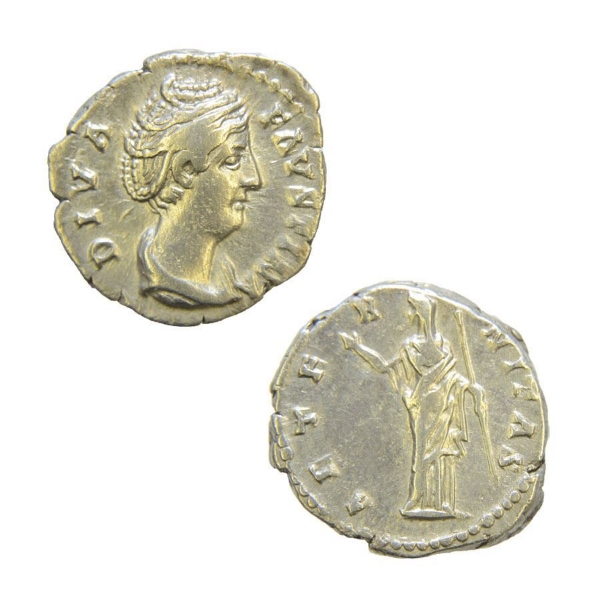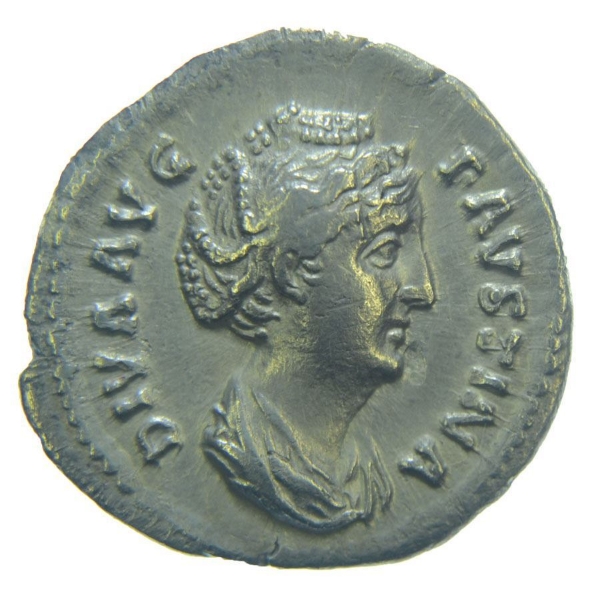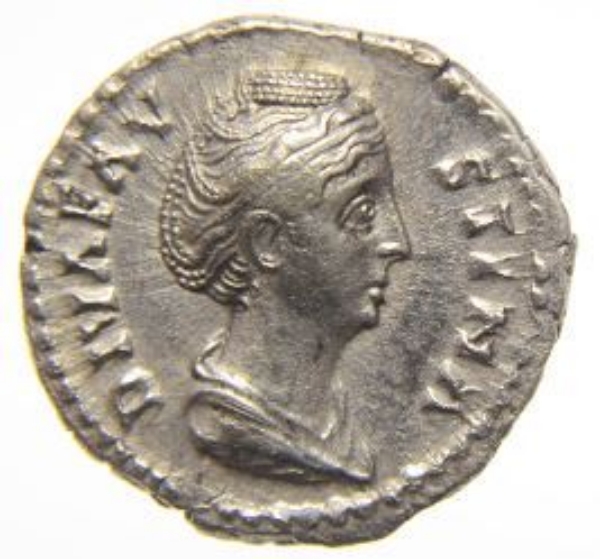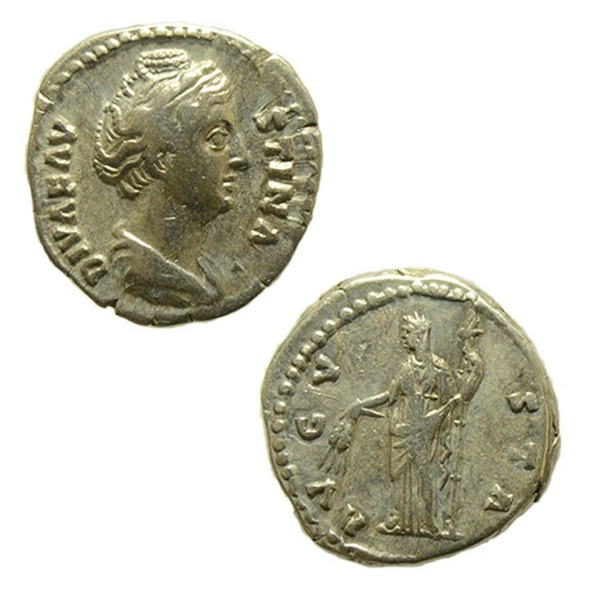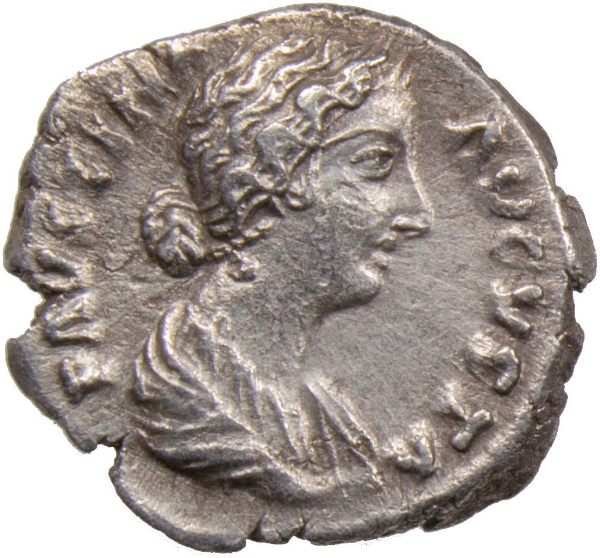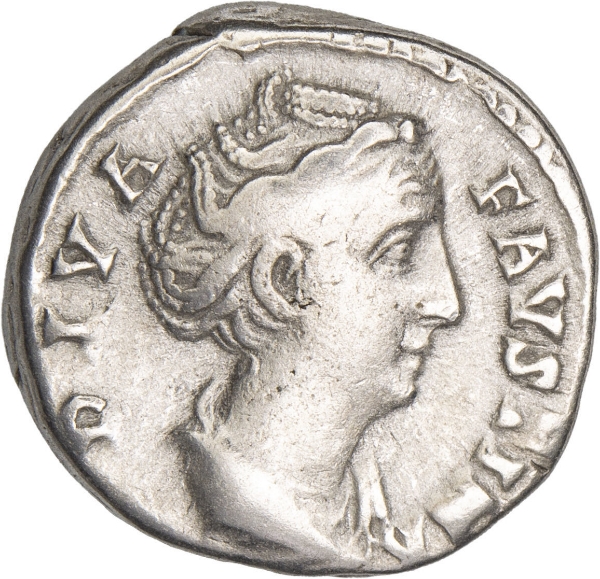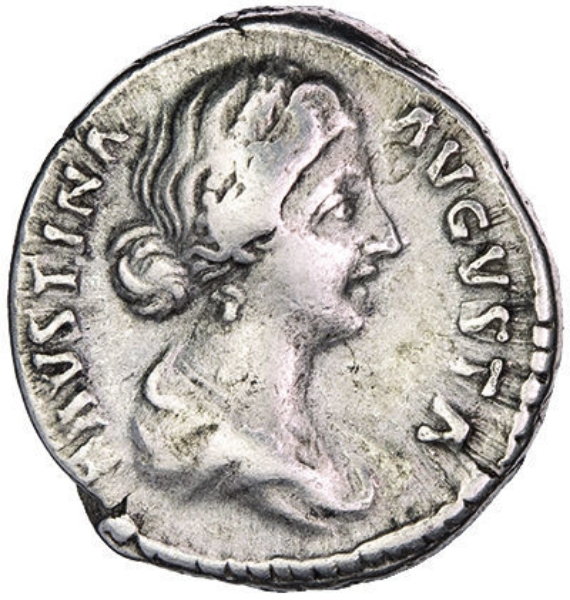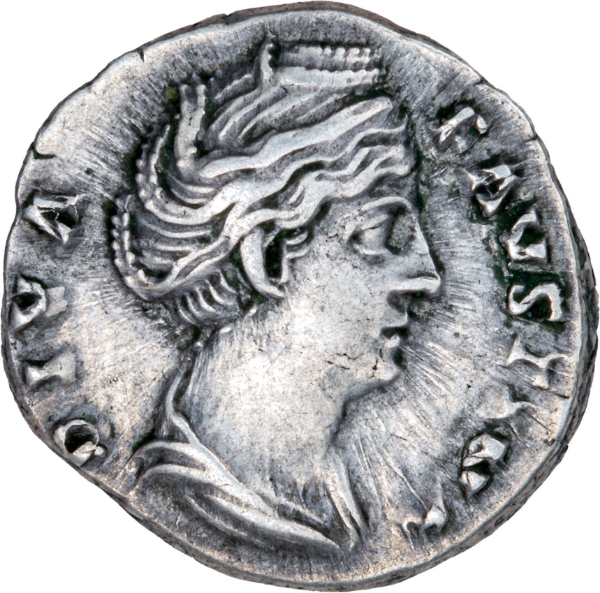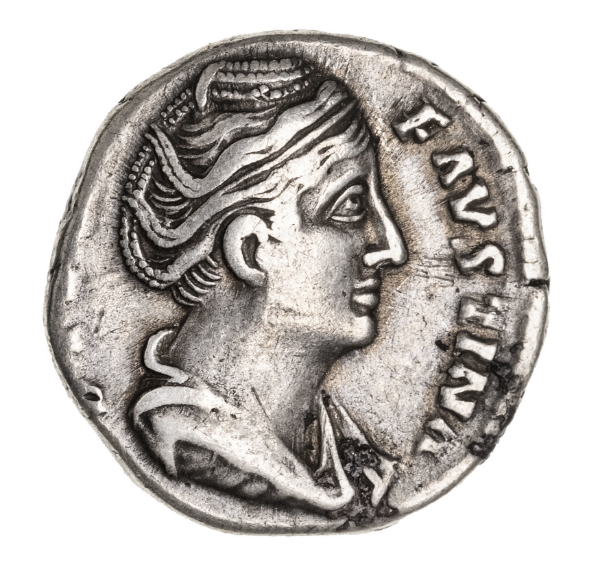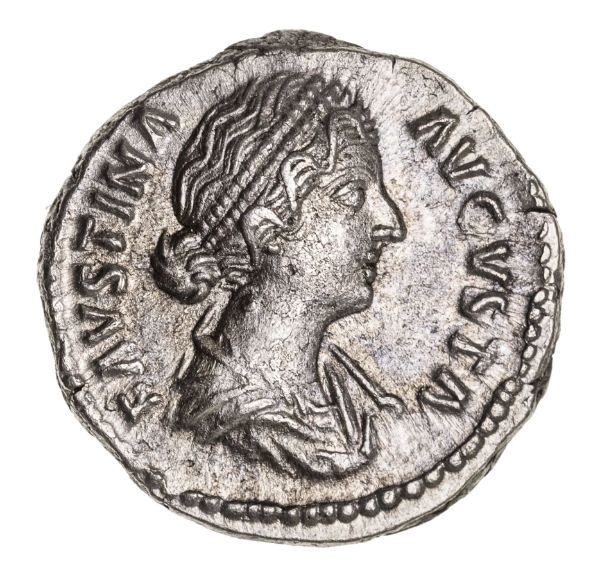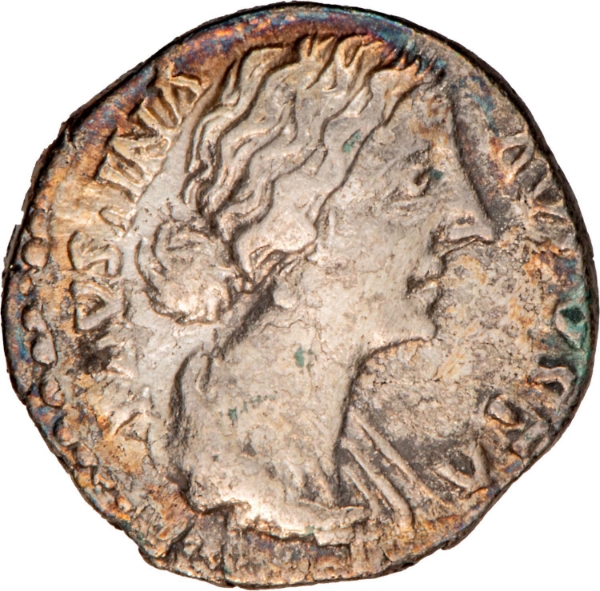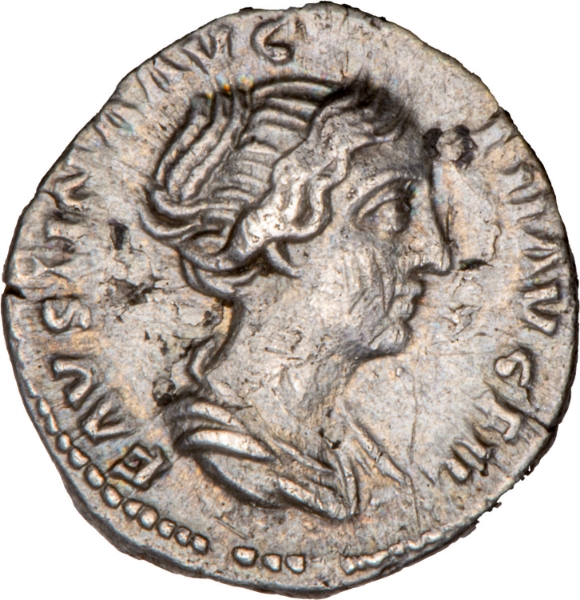
Picture Source of Faustina Junior wife of M. Aurelius. A.D. 161-175: Wikipedia
The Empress Behind the Silver: Unraveling the Life of Faustina Junior
Have you ever held a Roman Denarius in your hand? It’s a strange feeling. You aren't just holding a lump of silver; you are holding a frozen moment of economic and political history. Specifically, when collectors come across the inscription "FAVSTINA AVGVSTA" on a silver coin minted between 161 and 175 AD, they are looking at the profile of a woman who lived at the very apex of the Roman Empire.
Annia Galeria Faustina Minor (the Younger) wasn't just a wife or a mother; she was a political dynamo, a "Mother of the Camps," and the subject of some of antiquity's juiciest—and likely falsest—gossip. If you are looking at her silver Denarius, you are looking at the face of the Antonine Dynasty.
Key Takeaways
Born into the Purple: Faustina was the daughter of Emperor Antoninus Pius and wife of Emperor Marcus Aurelius, placing her at the heart of Rome's "Golden Age."
Mother of the Camps: Unlike many empresses who stayed in Rome, Faustina traveled with the army, earning the devoted title Mater Castrorum.
A Numismatic Icon: Her coins, particularly the AR Denarius from 161-175 AD, often feature themes of fertility (Fecunditas) to celebrate her many children.
The Scandal Paradox: Ancient historians accused her of adultery with sailors and gladiators, while her husband’s writings reveal deep love and respect.
Deified Status: Upon her death, she was instantly deified, with temples and cities renamed in her honor.
Born to Rule: The Early Years
To understand the woman on the coin, you have to understand her start. Faustina didn't marry into royalty; she was the royalty. Born around 130 AD, she was the daughter of Emperor Antoninus Pius and Faustina the Elder. In the game of Roman thrones, she was the ultimate chess piece.
She was originally betrothed to Lucius Verus, but politics shifted. Her father broke that engagement and betrothed her instead to her first cousin, the serious and stoic Marcus Aurelius. They were married in 145 AD. While that sounds a bit close for comfort by modern standards, in Rome, this was the glue holding the empire together⁵.
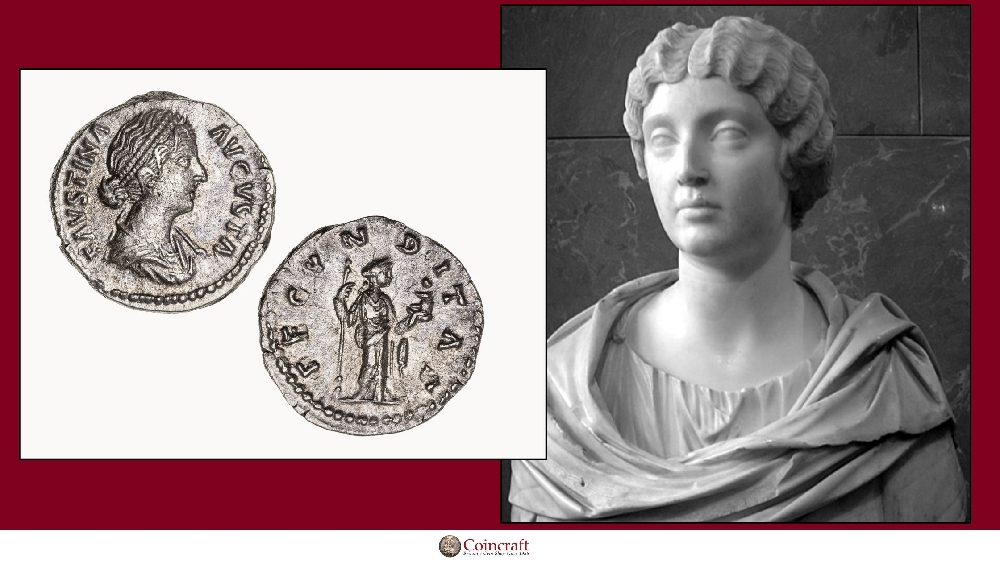
Figure 1: Portrait bust of Faustina the Younger, showing her characteristic hairstyle. (Louvre Museum)
The Stoic and The Empress
Marriage to Marcus Aurelius wasn't just a political arrangement; it became a partnership that lasted thirty years. Marcus Aurelius is famous today for his Meditations and his stoic philosophy—preaching emotional control and logic. Faustina, by contrast, was often depicted as lively and passionate.
Together, they had at least 13 (possibly 14) children¹. This was incredibly rare in antiquity, where infant mortality was high. This fertility is exactly why the reverse (the back side) of your AR Denarius is so important.
If you flip a Faustina coin from this period (161-175 AD), you will often see the figure of Fecunditas (Fertility) or Juno Lucina (goddess of childbirth). These weren't just religious symbols; they were public relations campaigns boasting that the succession was secure. Ironically, only one son, Commodus, survived to rule—and he turned out to be a bit of a disaster (gladiator cosplay, anyone?)².
Mater Castrorum: Mother of the Camps
Most Empresses were expected to stay in Rome, weave wool, and look virtuous. Faustina? Not so much.
When the Germanic tribes attacked the northern borders, Marcus Aurelius went to war. Surprisingly, Faustina went with him. She lived in the military camps near the Danube, surrounded by legions, mud, and danger.
The soldiers adored her for this. In 174 AD, she was granted the title Mater Castrorum ("Mother of the Camps")³. This was a massive honor. It signaled that she was not just the Emperor's wife, but the mother of the army itself. It explains why her portrait on coins from this era looks so dignified and mature—she was the matriarch of the Roman war machine.
The Gossip Column: Gladiators and Sailors?
Here is where history gets "spicy." If you read the ancient sources like Cassius Dio or the Historia Augusta, you’d think Faustina was the desperate housewife of Rome.
The rumors were wild⁴:
She allegedly had affairs with sailors at the seaside resort of Caieta.
The most famous rumor is that she fell in love with a gladiator. Legend says that when she confessed this to Marcus, the soothsayers told him to execute the gladiator and have Faustina bathe in his blood before sleeping with her husband. (Yes, really).
Some claimed her son Commodus was actually the son of that gladiator because he loved fighting in the arena so much.
But here is the truth: Most modern historians think this is pure slander. Romans loved to drag powerful women through the mud. In his private journals, Marcus Aurelius wrote: *"To the gods I am indebted for having such a good wife, so obedient, so affectionate, and so simple."*² That doesn't sound like a man whose wife is running off with the navy!
The Coin: AR Denarius (161-175 AD)
Now, let's look at the specific artifact requested. The AR Denarius minted in Rome during this period is a silver coin roughly 18-19mm in diameter.
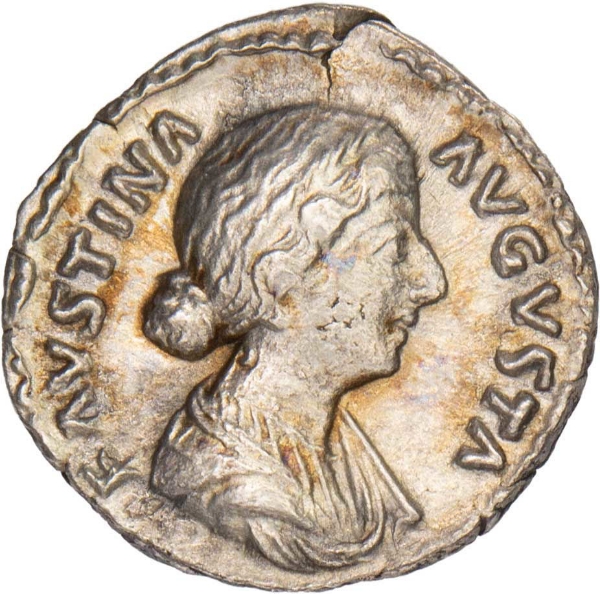
Obverse (Front): You will see the draped bust of Faustina facing right. Pay attention to the hair. Faustina was a fashion icon; her hair is usually styled in waves, pulled back into a bun at the nape of the neck or on top of the head. The inscription usually reads FAVSTINA AVGVSTA.
Reverse (Back): Common designs include FECUNDITAS (holding a scepter and infant), HILARITAS (holding a long palm), or LAETITIA (Joy).
Significance: These coins were the mass media of the day. They traveled to every corner of the empire, telling millions of subjects: " The Empress is fertile, the dynasty is strong, and the gods are with us."
Figure 2: A typical Silver Denarius of Faustina Junior. Note the "bun" hairstyle.
The End of an Era
Faustina died in the winter of 175 AD at a military camp in Halala (modern-day Turkey). She was still on the road with her husband. Marcus was devastated. He didn't just mourn her; he deified her.
He renamed the city where she died Faustinopolis, built a temple in her honor, and established a charity for orphan girls called the Puellae Faustinianae ("Girls of Faustina")⁵.
So, the next time you see that silver Denarius, remember: you aren't just looking at "M. Aurelius's wife." You are looking at a traveler, a mother of armies, and a woman who survived the viper pit of Roman politics with her head (and her bun) held high.
Frequently Asked Questions (FAQs)
Q: Did Faustina really cheat on Marcus Aurelius? A: It is highly unlikely. While ancient tabloids (like the Historia Augusta) claimed she slept with sailors and gladiators, modern historians view these as political smears. Marcus Aurelius explicitly praised her loyalty and simplicity in his private writings¹.
Q: What is the "AR" in AR Denarius? A: "AR" stands for Argentum, the Latin word for silver. The Denarius was the standard silver coin of the Roman Empire, roughly equivalent to a day's wages for a laborer or soldier at the time.
Q: Why is she called "Junior" or "The Younger"? A: To distinguish her from her mother, Annia Galeria Faustina the Elder. Both were Empresses, both were named Faustina, and both had very similar hairstyles on their coins, which can confuse new collectors!
References
Grant, M. (1994). The Antonines: The Roman Empire in Transition. London: Routledge.
Aurelius, M. (c. 170-180 AD). Meditations. Book I, Verse 17.
Levick, B. (2014). Faustina I and II: Imperial Women of the Golden Age. Oxford: Oxford University Press.
Birley, A.R. (1987). Marcus Aurelius: A Biography. New Haven: Yale University Press.
Historia Augusta. (c. 4th Century AD). Life of Marcus Aurelius. [Online] Available at: https://penelope.uchicago.edu/Thayer/E/Roman/Texts/Historia_Augusta/Marcus_Aurelius/1*.html [Accessed 26 Oct. 2025].