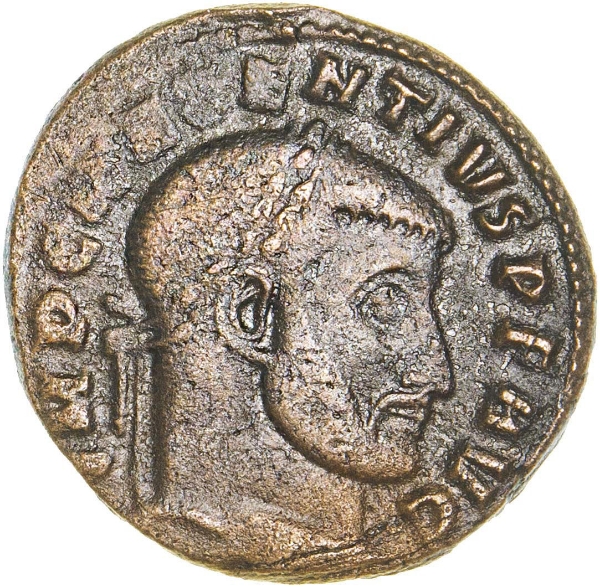
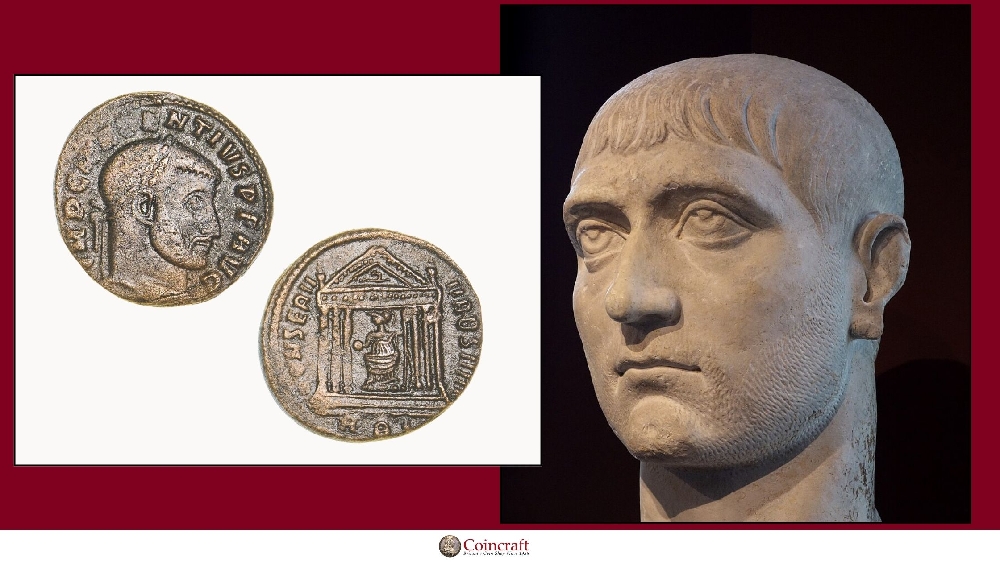
Picture Source Maxentius: Wikipedia
Maxentius: The Emperor History Tried to Erase
We’ve all heard the saying, "history is written by the victors." Well, if there’s one guy in ancient history who truly felt the sting of that reality, it’s Marcus Aurelius Valerius Maxentius. For centuries, he’s been painted as a tyrannical, power-hungry villain who was rightfully struck down by the heroic Constantine the Great. But what if I told you that the real story is a lot more complicated—and a lot more interesting?
Maxentius wasn't just a hurdle for Constantine to jump over on his way to Christianizing the Roman Empire. He was a capable leader, a massive patron of the arts and architecture, and a man who desperately tried to restore the city of Rome to its former glory. Let’s peel back the layers of ancient propaganda and look at the real Maxentius.
Key Takeaways
Passed Over for Power: Despite being the son of an emperor, Maxentius was snubbed for succession, leading him to seize power in Rome with the backing of the people and the Praetorian Guard.
The Ultimate Builder: He was responsible for some of Rome's most iconic late-antique architecture, including the massive Basilica of Maxentius.
Victim of Propaganda: Much of what we "know" about his cruelty and Christian persecution is actually smear campaign material created by his rival, Constantine.
The Final Showdown: His reign ended dramatically at the Battle of the Milvian Bridge in 312 AD, a defining moment in Western history.
Snubbed! The Making of a Rebel
Imagine being the CEO's son, training your whole life to take over the family business, only to have the board of directors hand the keys to two random middle managers instead. That is essentially what happened to Maxentius in 305 AD.
His father, Emperor Maximian, stepped down alongside his co-emperor Diocletian in a planned retirement. Everyone assumed Maxentius and Constantine (another emperor's son) would be promoted. Instead, the Tetrarchy (the four-man ruling system of Rome) completely ignored them(1).
Maxentius didn't just sit around and sulk. The city of Rome was actually feeling pretty ignored at the time. The emperors had moved their capitals closer to the empire's borders to deal with military threats, leaving the original "Eternal City" feeling like a neglected backwater. Sensing an opportunity, Maxentius teamed up with the Praetorian Guard and the disgruntled citizens of Rome. On October 28, 306 AD, they declared him Emperor.
The People's Emperor: Making Rome Great Again
Once he had the throne, Maxentius knew he had to keep the people on his side. He didn't embark on massive, costly foreign wars. Instead, he poured his resources into reviving Rome. He wanted to remind everyone why Rome was the center of the world.
He launched an incredible building program. If you visit the Roman Forum today, the largest and most impressive ruin you'll see is the Basilica of Maxentius. It was a marvel of ancient engineering, featuring massive vaulted ceilings that would later inspire Renaissance architects(2). He also built a massive circus (chariot racing track) and a villa complex on the Appian Way, dedicating a beautiful circular temple to his young son, Romulus, who died tragically early.
Interestingly, while later historians accused him of brutally persecuting Christians, modern evidence suggests he actually practiced religious tolerance. He even ended the active persecution of Christians in his territories, allowing them to rebuild their congregations(3).
The Walls Close In
For a few years, Maxentius successfully defended his territory. He held off two separate invasions by legitimate, recognized Roman emperors (Severus and Galerius), proving he was no military slouch.
However, running a renegade empire isn't cheap. When the province of Africa—Rome's main grain supplier—revolted against him, Maxentius had to squeeze Italy with heavy taxes to survive. The once-adoring public started to grumble. Meanwhile, Constantine, who had also successfully seized power in the West, was looking at Italy with hungry eyes.
Showdown at the Milvian Bridge
The tension finally boiled over in the autumn of 312 AD. Constantine marched an army over the Alps and straight down the Italian peninsula. Maxentius could have stayed safely behind the massive Aurelian Walls of Rome to wait out a siege, but instead, he made a fateful decision to march out and meet Constantine in open battle.
On October 28, 312 AD—exactly six years to the day after he seized power—Maxentius faced Constantine at the Battle of the Milvian Bridge. History tells us Constantine painted Christian symbols on his soldiers' shields after seeing a vision in the sky. Whether that's true or not, Constantine's forces crushed Maxentius's army.
During the chaotic retreat across a pontoon bridge over the River Tiber, the bridge collapsed. Maxentius, weighed down by his heavy armor, fell into the river and drowned(4).
A Legacy Rewritten
After fishing Maxentius's body out of the Tiber and parading his head through Rome on a spike, Constantine got to work erasing his rival's legacy. This ancient practice is called damnatio memoriae (condemnation of memory).
Constantine took credit for Maxentius's grand building projects. He had historians paint Maxentius as an incompetent, cruel, and pagan tyrant to make his own rule look like a divine liberation. For nearly two millennia, that's the story that stuck. But today, looking past the spin, we can finally appreciate Maxentius for what he was: a fierce defender of Rome, a master builder, and a leader who just happened to lose to the wrong guy.
FAQs
Why did Constantine fight Maxentius? Constantine and Maxentius were essentially rival warlords who both wanted ultimate control over the Western Roman Empire. Constantine framed the war as a liberation of Rome from a "tyrant," but in reality, it was a brutal power struggle for supremacy.
Did Maxentius really persecute Christians? No, this is largely a myth created by Constantinian propaganda. Historical evidence shows that Maxentius actually tolerated Christianity, restored church property that had been confiscated by previous emperors, and allowed the election of new Popes in Rome.
What did Maxentius build in Rome? His most famous building is the Basilica of Maxentius in the Roman Forum (which Constantine later finished and claimed as his own). He also built the Circus of Maxentius, a massive palace complex on the Appian Way, and the Temple of Divus Romulus.
References
Lenski, N. (2006) The Cambridge Companion to the Age of Constantine. Cambridge: Cambridge University Press. Available at: https://doi.org/10.1017/CCOL0521818389
Claridge, A. (2010) Rome: An Oxford Archaeological Guide. 2nd edn. Oxford: Oxford University Press. Available at: https://global.oup.com/academic/product/rome-9780199546831
Barnes, T.D. (1981) Constantine and Eusebius. Cambridge, MA: Harvard University Press. Available at: https://www.hup.harvard.edu/books/9780674165311
Stephenson, P. (2009) Constantine: Unconquered Emperor, Christian Victor. London: Quercus. Available at: https://www.routledge.com/Constantine-Unconquered-Emperor-Christian-Victor/Stephenson/p/book/9781849160025