Picture Source Marcus Aurelius Marius: Wikipedia
The Blacksmith Emperor: The Short, Strange Reign of Marcus Aurelius Marius
Introduction: Forged in the Crisis of the Third Century
In the turbulent political landscape of the 3rd Century AD, the Roman world was fractured by constant warfare, economic collapse, and rapid turnovers in leadership. It was an era where traditional paths to power were completely upended, allowing a common blacksmith to ascend to the imperial throne. Welcome to the brief, highly debated, and utterly fascinating life of Marcus Aurelius Marius, a man who traded his anvil for the purple robes of a Roman emperor.
During a period known as the "Crisis of the Third Century," the Roman Empire was fracturing. A massive chunk of the western provinces—including Britain, Gaul, and Spain—broke away to form the independent Gallic Empire. When the founder of this breakaway state, Postumus, was murdered by his own troops in 269 AD, the power vacuum needed filling. Enter Marius: a humble blacksmith who had climbed the ranks of the Roman military to become the literal ruler of the western world(1).
Let's dive into the story of a man whose reign was as hard and sharp as the iron he used to forge.
Key Takeaways
Humble Beginnings: Marius is one of the few Roman emperors who famously started out as a blue-collar worker—a blacksmith and metalworker.
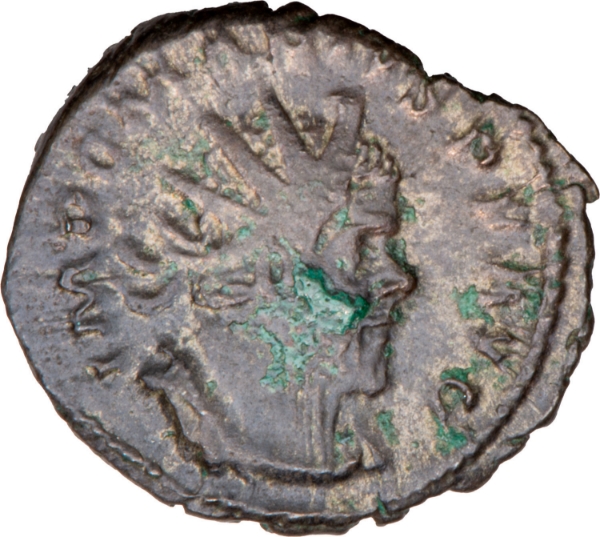
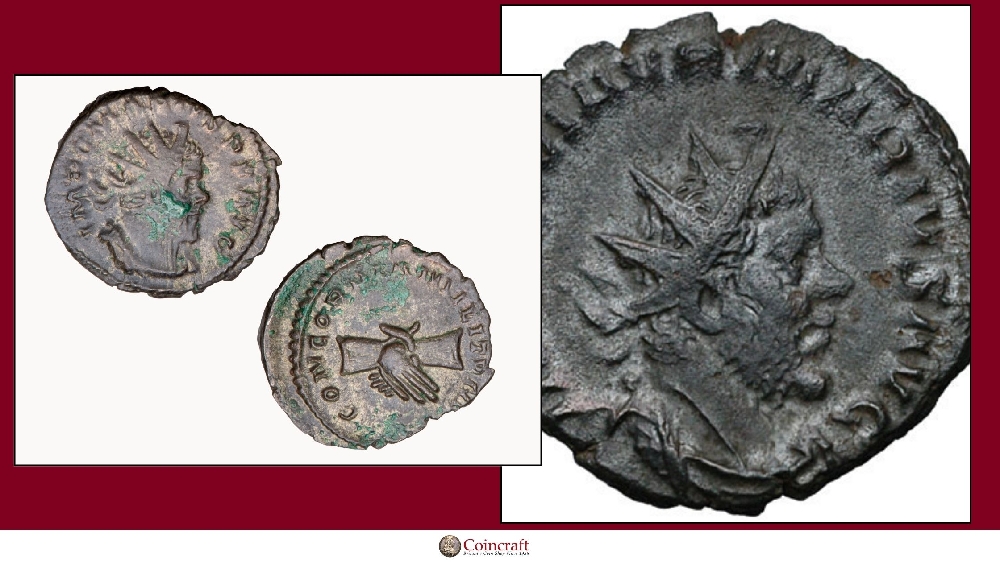
The Numismatic Truth: Ancient historians claimed he ruled for only two or three days. However, the sheer volume of coins minted in his name proves he actually reigned for a few months.
An Ironic End: Legend has it that he was assassinated by a disgruntled former co-worker using a sword that Marius himself had forged.
From Anvil to Armor
We don’t know much about Marius’s childhood, but we do know he wasn't born into a patrician family with silver spoons and marble villas. He was a working-class guy, a blacksmith by trade, who eventually traded his hammer for a gladius and joined the Roman army(2).
In the Roman military, merit and sheer physical strength could carry you far. Marius, likely built like a tank from years of working hot iron, rose through the ranks as a foot soldier and eventually became an officer. By the time the Gallic Emperor Postumus was dealing with rebellions in 269 AD, Marius was a trusted, high-ranking commander.
Seizing the Gallic Throne
The political climate of 269 AD was an absolute powder keg. Emperor Postumus had just put down a rebellion in the city of Moguntiacum (modern-day Mainz, Germany). When Postumus refused to let his troops loot the city as a reward, the soldiers mutinied and killed him.
Suddenly, the Gallic Empire was without a leader. The troops, still buzzing with adrenaline and mutinous energy, proclaimed Marcus Aurelius Marius as the new emperor(1). Why him? He was likely a popular, down-to-earth commander who understood the rank-and-file soldiers because he used to be one of them.
The "Three-Day" Myth vs. Hard Metal Facts
Now, here is where history gets a bit murky and where ancient historians loved to embellish. According to the Historia Augusta—a notorious ancient Roman text known for being half history, half ancient tabloid gossip—Marius ruled for exactly two or three days before being murdered(3).
But as any good historian (or coin collector!) will tell you, the truth is often found in the metal.
The Gallic Empire produced a vast number of coins featuring Marius’s face and name. These coins weren't just struck in one place; they were minted in both the principal mint at Trier and a secondary mint at Cologne. It is logistically impossible to design, engrave, distribute, and strike that volume of coinage across multiple cities in just 72 hours (4). Modern historians and numismatists agree that Marius must have ruled for at least two to three months—likely from the summer to the early autumn of 269 AD.
A Tragic (and Ironic) End
Even though he ruled for months rather than days, Marius’s time on the throne was incredibly short-lived. He couldn't shake the instability that had killed his predecessor.
The story of his death is one of history's great, dark ironies. According to tradition, a disgruntled soldier—allegedly someone who used to work alongside Marius in the blacksmith's shop—confronted the new emperor. The soldier assassinated Marius, supposedly shouting that the blade he was using was one that Marius himself had crafted years earlier at the anvil (3).
Whether the story of the sword is true or just a poetic flourish added by ancient writers, the outcome was the same. Marius was dead, and the Gallic Empire was handed off to Victorinus, another military commander, continuing the chaotic merry-go-round of 3rd-century politics.
Marius's legacy is a testament to the incredible social mobility of the Roman army and a prime example of how physical artifacts—like coins—can correct the historical record when ancient authors decide to stretch the truth.
Frequently Asked Questions (FAQs)
Q: How long did Marcus Aurelius Marius actually rule? A: While ancient texts claim he only ruled for 2 to 3 days, the large number of coins minted with his likeness proves he reigned for about 2 to 3 months, likely in the summer of 269 AD.
Q: What was the Gallic Empire? A: The Gallic Empire was a breakaway state from the Roman Empire that existed from 260 to 274 AD. It consisted primarily of the Roman provinces of Gaul, Britannia, and Hispania, functioning independently during the chaotic Crisis of the Third Century.
Q: Did Marius really die by a sword he made? A: It is highly unlikely. While it makes for a fantastic and ironic story, the claim comes from the Historia Augusta, a source notorious for inventing dramatic and fictional details about Roman emperors.
References
Potter, D. S., 2004. The Roman Empire at Bay, AD 180–395. London: Routledge. Available at: Routledge
Southern, P., 2015. The Roman Empire from Severus to Constantine. 2nd ed. London: Routledge.
Magie, D. (trans.), 1932. Historia Augusta: The Lives of the Thirty Pretenders. Loeb Classical Library. Cambridge, MA: Harvard University Press. Available at: LacusCurtius
Sear, D. R., 2005. Roman Coins and Their Values, Volume III: The Accession of Maximinus I to the Death of Carinus AD 235 - 285. London: Spink & Son Ltd.