 - AWB1003.jpg)
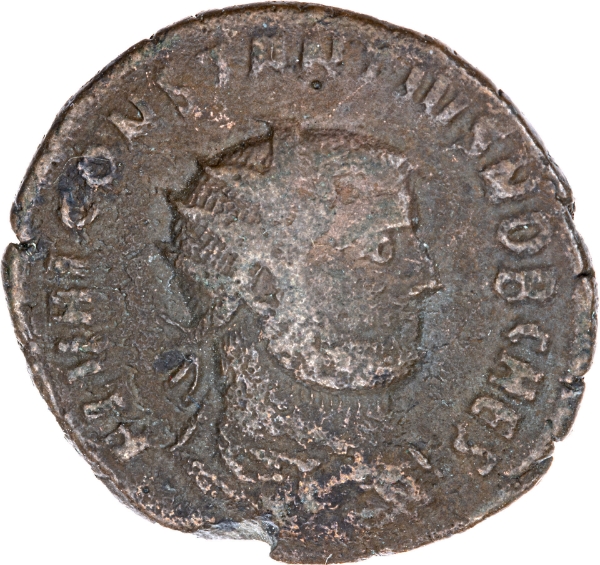
Picture Source of Constantius I (Flavius Valerius Constantius (c. 250 – 306): Wikipedia
Beyond Constantine: The Fascinating Life of Constantius I
The annals of the Roman Empire are dominated by legendary figures, and among them, Constantine the Great casts a long, enduring shadow. Yet, the foundation of his monumental reign was laid by a formidable predecessor—his father, Flavius Valerius Constantius, celebrated in the chronicles of history as Constantius I.
Far from just being a footnote in his son's legendary life, Constantius was a brilliant military commander, an essential pillar of a revolutionary Roman political system, and the man who brought a rebellious Britain back into the imperial fold. Let’s dive into the life of the soldier-emperor who laid the foundation for one of history’s greatest dynasties!
Key Takeaways
The Tetrarch: Constantius was a founding junior emperor (Caesar) in Diocletian's Tetrarchy, a system that divided the massive Roman Empire into four manageable zones.
The "Pale" Emperor: Later Byzantine historians gave him the famous nickname "Chlorus," which translates to "the Pale."
Liberator of Britain: He successfully defeated a rogue, breakaway empire in Britain, famously sailing up the Thames to reclaim London for Rome.
A Dynasty Born in York: His sudden death in Eboracum (modern-day York) in 306 AD led his troops to immediately declare his son, Constantine, emperor—changing the course of Western history.
The Soldier from Illyricum
Constantius was born around 250 AD in Illyricum (modern-day the Balkans), a region famous for producing tough, pragmatic soldiers. He didn't grow up wearing purple silk; he was a working-class military man who climbed the ranks of the Roman army through sheer grit and tactical brilliance(1).
During his early military career, he fell in love with a woman of humble origins named Helena (who would later be venerated as Saint Helena). Together, they had a son named Constantine. However, the higher Constantius climbed in the Roman political machine, the more his personal life became subject to the ruthless demands of imperial politics.
Entering the Rule of Four
By the late 3rd century, the Roman Empire was essentially too big to succeed under a single ruler. Facing constant invasions and internal rebellions, Emperor Diocletian devised a radical new system called the Tetrarchy, or "rule of four." The empire was split into Eastern and Western halves, each governed by a senior emperor (Augustus) and a junior emperor (Caesar)(2).
In 293 AD, Diocletian recognized Constantius’s outstanding military record and elevated him to the role of Caesar of the West. But this massive promotion came with a heart-wrenching condition: Constantius had to divorce his beloved Helena and marry Theodora, the stepdaughter of his new boss, the Western Augustus Maximian(3). It was a brutal political compromise, but it firmly cemented Constantius as one of the four most powerful men in the world.
The Campaign for Britain and the London Medallion
Constantius’s new job wasn't exactly a desk gig. His primary mission was to crush the "Carausian Revolt." Years earlier, a rogue Roman naval commander named Carausius had seized control of Britain and northern Gaul, setting himself up as an independent emperor and even minting his own coins!
Constantius was methodical. First, he spent years securing the coastal regions of Gaul. Then, in 296 AD, he launched a daring naval invasion across the English Channel. By the time Constantius landed, Carausius had been murdered by his own finance minister, Allectus. Constantius’s forces crushed Allectus’s army, and Constantius himself sailed up the River Thames to relieve London from fleeing mercenaries(3).
For numismatists, this is a legendary moment! To celebrate his victory, a spectacular gold medallion was minted, showing Constantius riding a horse into London with the inscription REDDITOR LVCIS AETERNAE—"Restorer of the Eternal Light"(4).
The Final March to York
The Tetrarchy system was designed to have peaceful transitions of power. In 305 AD, the two senior emperors retired, and Constantius was officially promoted from Caesar to Augustus of the West (2).
Wasting no time, he requested that his son, Constantine, join him for a major military campaign in Britain to subdue the Picts in what is now Scotland. It was a successful campaign that allowed father and son to finally bond on the battlefield.
Tragically, Constantius's time at the top was cut short. In July 306 AD, he fell gravely ill and passed away in the city of Eboracum (modern-day York, England)(1). Rather than waiting for the other Tetrarchs to appoint a successor, Constantius’s fiercely loyal legions immediately raised Constantine on their shields and declared him the new emperor. Constantius’s death in York ultimately sparked the collapse of the Tetrarchy and birthed the Constantinian dynasty that would forever reshape the world.
FAQs
Why is he called Constantius Chlorus? "Chlorus" is a nickname meaning "the Pale." Interestingly, it wasn't used during his lifetime! It was applied to him by Byzantine historians centuries later, likely referring to his pale complexion or a lingering illness.
What is the Tetrarchy? The Tetrarchy was a system created by Emperor Diocletian in 293 AD that divided the Roman Empire into four zones. It was ruled by two senior emperors (Augusti) and two junior emperors (Caesares) to make defending and governing the vast territories easier.
What impact did Constantius I have on British history? He had a massive impact. By defeating the breakaway empire of Carausius and Allectus, Constantius reintegrated Britain into the Roman Empire. Furthermore, his death in York led directly to his son Constantine being declared emperor there, cementing Britain's place in the origin story of the empire's first Christian ruler.
References
Lenski, N. (2006) The Cambridge Companion to the Age of Constantine. Cambridge: Cambridge University Press. Available at: Cambridge Core
DiMaio, M. (1996) 'Constantius I Chlorus (305-306 A.D.)', De Imperatoribus Romanis. Available at: roman-emperors.org
Southern, P. (2015) The Roman Empire from Severus to Constantine. London: Routledge.
Sear, D.R. (2011) Roman Coins and Their Values. London: Spink & Son.