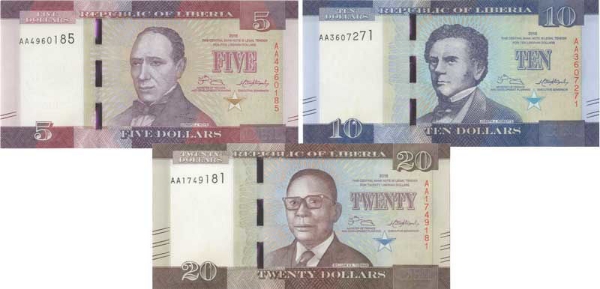
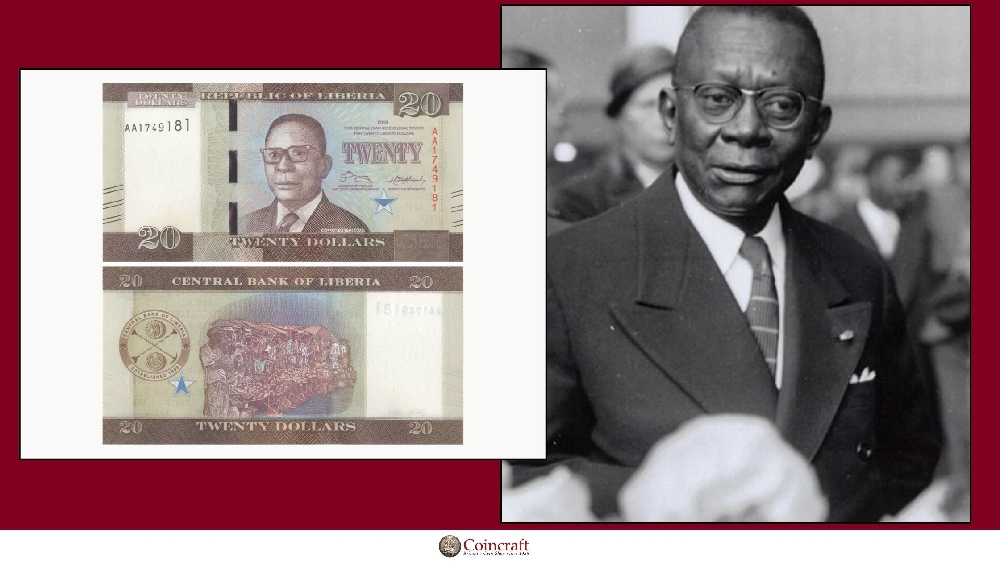
Picture Source of William VS Tubman: Wikipedia
Introduction: The Colossus of the Pepper Coast
If you were to walk down the streets of Monrovia in the humid, salt-tinged air of the 1950s, you would eventually encounter a presence that seemed as permanent as the tides and as inevitable as the tropical rain. He might be found waving from a convertible, holding court at his farm in Totota, or staring down from a portrait in a government office, invariably dressed in a tailcoat and Homburg hat, a cigar often clamped firmly between his teeth. This was William Vacanarat Shadrach Tubman—"Uncle Shad" to the masses, "The Old Man" to his inner circle, and the undisputed President of Liberia for twenty-seven years.1
To tell the story of Tubman is to tell the story of a nation in transition. He was not merely a politician; he was an epoch. When he took office in 1944, Liberia was an isolated republic, financially dependent on a single rubber company and socially fractured by a century-old divide between the settler elite and the indigenous majority. By the time he died in a London clinic in 1971, he left behind a nation that was a major player on the African stage, boasting the world’s largest mercantile fleet and a booming iron ore industry.1
But the story is not just one of gleaming skyscrapers and paved roads. It is a complex, often shadowy narrative of charm and coercion, of "Open Doors" and closed political circles. It is the story of a man who could charm Queen Elizabeth II and John F. Kennedy in the morning and allegedly orchestrate the destruction of his political rivals by the afternoon.4 It is the story of the "PRO" network—a vast web of informants that turned neighbors into spies—and of the "National Unification Policy" that promised equality but often delivered patronage.6
In this exhaustive biography, we will peel back the layers of the legend. We will look beyond the official accolades of the "Father of Modern Liberia" to find the astute, sometimes ruthless, and undeniably charismatic human being underneath. We will explore how a "poor man's lawyer" from Harper became the longest-serving president in the republic's history, and we will ask the hard questions about the legacy he left behind—a legacy of "growth without development" that some scholars argue planted the seeds for the chaos that followed his death.7
So, grab a coffee (or perhaps a stiff drink, as Uncle Shad might have preferred), and let’s journey back to the "Pepper Coast" to understand the man who shaped 20th-century Liberia.
Key Takeaways
The Longest Reign: William V. S. Tubman served as the 19th President of Liberia from 1944 until his death in 1971, marking the longest tenure in the country's history and fundamentally transforming the nation's infrastructure and economy.1
The "Open Door" Policy: Tubman revolutionized the economy by inviting foreign investment, breaking the Firestone monopoly, and exploiting iron ore reserves, though critics labeled the result "growth without development" due to the lack of trickling-down benefits.7
National Unification: He is credited with bridging the divide between the Americo-Liberian elite and the indigenous majority, extending suffrage and representation, although this was often achieved through patronage and co-optation rather than genuine power-sharing.3
"Uncle Shad" and the Cult of Personality: Tubman maintained power through a mix of genuine charisma, approachability (such as his open courts at Totota), and a pervasive network of "Public Relations Officers" (PROs) who acted as domestic spies.6
Authoritarian Stability: While he brought stability to Liberia during a turbulent era of African decolonization, his administration suppressed political opposition, most notably after the assassination attempt of 1955, effectively turning Liberia into a one-party state.3
Global Statesman: Tubman was a skilled diplomat who navigated the Cold War by aligning with the West (particularly the US) while championing African independence movements, hosting pivotal conferences that led to the OAU.3
Chapter 1: From Georgia to Cape Palmas — The Origins of a Statesman
To understand William Tubman, you have to understand where he came from. He wasn't just born into the Liberian elite; he was born into a narrative of liberation and struggle that spanned across the Atlantic Ocean. His story doesn't begin in Africa, but in the American South—specifically, Georgia.
The Ancestral Journey
William's grandparents, Sylvia and William Shadrach Tubman, were enslaved people living in Augusta, Georgia. Their lives were defined by the brutal realities of the antebellum South, but their fate took a dramatic turn due to the conscience of their owner, Emily Harvie Thomas Tubman. Emily was a wealthy widow and philanthropist who, influenced by Quaker principles and the rhetoric of the American Colonization Society, grappled with the morality of slavery.1
In the 1840s, Emily Tubman faced a dilemma. The Georgia state legislature had severely restricted manumissions (the freeing of slaves) following Nat Turner’s rebellion. Freeing her slaves and allowing them to remain in Georgia was legally nearly impossible. The American Colonization Society offered a solution: "repatriation" to the colony of Liberia. In 1844, Emily Tubman paid for the transportation of 69 of her enslaved people to Liberia. This was a complex, morally heavy transaction—a mix of benevolence and displacement. These 69 individuals, including William’s grandparents, took her surname, "Tubman," and boarded a ship for a continent they had never seen.3
Upon arriving, they did not settle in the capital, Monrovia, which was dominated by earlier settlers from Virginia. Instead, they went to the rocky, rugged coast of Maryland County in the southeast, establishing a community they named Tubman Hill. This act of migration is the foundational myth of the Tubman family—a story of deliverance that William V. S. Tubman would carry with him as a badge of destiny. He was not just a politician; he was the descendant of a biblical-style exodus.3
A Spartan Childhood in Harper
William Vacanarat Shadrach Tubman was born on November 29, 1895, in Harper, Maryland County.1 Harper was a world away from the relative sophistication of Monrovia. It was a place of crashing surf, Grebo villages, and a settler community that prided itself on fierce independence and religious piety.
His father, Alexander Tubman, was a formidable figure in his own right—a stonemason, a Methodist preacher, a general in the Liberian army, and eventually the Speaker of the House of Representatives. Alexander was a man of the 19th century: strict, pious, and unyielding. The stories of Tubman's childhood read like a Victorian novel set in the tropics. Alexander believed that luxury corrupted character. Consequently, he forced his children to sleep on the floor, arguing that beds were "too soft" and "degrading to character development." Prayer was mandatory and daily. It was a household where discipline was the currency and expectation was the atmosphere.1
This upbringing forged a duality in young William. On one hand, he absorbed the rigid discipline and religious fervor of his father—traits that would surface in his later dealings with political opponents. He learned the Bible verse by verse, a skill that would later pepper his political speeches with thunderous moral authority. On the other hand, perhaps in rebellion against those hard floors and the severe austerity of his father, he developed a taste for the finer things in life—cigars, yachts, and convivial parties—that would define his presidency. He was a man who knew the hard ground but aspired to the soft velvet of power.13
The Making of the "Poor Man's Lawyer"
Tubman’s education was entirely local, a fact that distinguished him from many of the Monrovia elite who sent their sons to England or the United States. He attended the Cape Palmas Seminary and the Harper County High School, later teaching at the seminary himself. He did not go abroad for university; instead, he read law under private tutors, passing the bar in 1917 at the age of 22.1
It was here, in the courtrooms of Maryland County, that the Tubman legend began to take shape. He didn't just practice law; he practiced populism. He became known as the "poor man's lawyer," often taking cases for indigenous clients who could not afford to pay, or representing low-level soldiers and workers against the establishment. This earned him a nickname and a reputation that would serve as his political bedrock: he was a man of the people, despite his settler pedigree.16
One anecdote from this period highlights his savvy. He represented clients in the "Monthly and Probate Court," often facing off against more established, expensive lawyers from Monrovia. Tubman used his local knowledge and his command of the Grebo language (which he learned growing up) to connect with juries and witnesses in a way his opponents could not. He was bridging the gap between the settler courtroom and the indigenous reality long before he formulated a national policy to do so.17
But he was also a man of the system. While defending the poor, he joined the militia, rising from private to colonel, and participated in military actions to suppress indigenous uprisings.1 This is the central paradox of Tubman's early life: he was the "poor man's lawyer" who was also a colonel in the army that enforced the state's will upon those very same poor men.
Chapter 2: The Young Senator & The Crisis (1923–1937)
Ambition in Liberia in the early 20th century meant one thing: The True Whig Party (TWP). The TWP had held power since 1878, operating a de facto one-party state that controlled every patronage job from the cabinet down to the village tax collector. Tubman joined the party and ascended rapidly.
The Youngest Senator
In 1923, at the tender age of 28, Tubman was elected to the Liberian Senate representing Maryland County. He was the youngest senator in the nation's history.1 His youth was an asset; he brought energy and a fresh perspective to a body often dominated by elderly grandees of the Monrovia elite.
His time in the Senate was marked by a savvy understanding of patronage and loyalty. He worked to get constitutional rights for some native tribal groups, foreshadowing his later Unification Policy, but he always operated within the strict hierarchy of the TWP. He was a reformer, but a cautious one—a man who sought to fix the machine, not break it.1
The League of Nations Crisis
The defining moment of this era came in 1930. The League of Nations released a damning report accusing the Liberian government—specifically President Charles D. B. King and Vice President Allen Yancy—of complicity in forced labor practices that were "indistinguishable from slavery." The allegations centered on the shipment of indigenous laborers to the cocoa plantations of Fernando Po (modern-day Bioko, Equatorial Guinea).16
The scandal forced President King and Vice President Yancy to resign. The British and French governments even discussed establishing a mandate over Liberia, threatening the country's sovereignty. In this moment of national peril, Tubman made a controversial move. He resigned from the Senate to serve as the defense lawyer for Vice President Yancy, a fellow Marylander who was deeply implicated in the scandal.1
To modern eyes, defending a man accused of slave trading seems contradictory for a "poor man's lawyer." However, in the context of Liberian politics, it was a display of supreme loyalty to his "clan" and his region. It also gave him intimate knowledge of the inner workings of the elite's darkest secrets. He defended the system when it was under attack from the outside world. Although Yancy fell, Tubman’s loyalty was noted by the new power structure. He had proven he was a man who would stand by the party, even in the fire.16
"Kicked Upstairs" to the Supreme Court
Following the crisis, Edwin Barclay became President. Barclay was a brilliant but austere intellectual who stabilized the country. He recognized Tubman's talent—and his threat. Tubman was charismatic, popular in the southeast, and ambitious.
In 1937, Barclay appointed Tubman as an Associate Justice of the Supreme Court. Political historians often view this as a classic maneuver to "kick him upstairs." By burying the charismatic senator in judicial robes and removing him from the active political hustings, Barclay likely hoped to neutralize a potential rival.3
Tubman accepted the appointment, but he did not disappear. From the bench, he continued to build his network, traveling the country and maintaining his contacts. He was biding his time, waiting for the moment when the "Old Guard" would need a successor.
Chapter 3: The Open Door Era — Economics of a Boom
When Tubman finally assumed the presidency in 1944, having won the election with the backing of the outgoing Barclay (who believed he could control the "country lawyer"), he inherited a country that was economically stifled. For decades, Liberia had been sarcastically referred to as the "Firestone Colony." The Firestone Tire & Rubber Company, which had signed a massive concession agreement in 1926, effectively controlled the nation's economy. The Liberian government was often so broke it had to borrow money from the company to pay its civil servants.7
Tubman knew that for Liberia to be sovereign in more than just name, it needed economic diversity. He needed to break the monopoly. His solution was the "Open Door Policy."
The Philosophy of the Open Door
The "Open Door" wasn't a new concept—it was borrowed from US diplomatic policy regarding China in the 19th century—but Tubman adapted it to the African context. The premise was simple: Liberia lacked the capital and technical expertise to exploit its own resources. Therefore, it would open its doors wide to foreign investment, offering generous tax breaks, freedom from currency exchange restrictions, and long-term lease agreements.8
Tubman explicitly stated his goal: "We must encourage foreign capital and technical know-how to come into the country." He wanted to invite the world in, gambling that the influx of revenue would modernize the nation.1
Iron Ore: The New Gold
The gamble paid off—at least on paper. Geologists had discovered massive deposits of high-grade iron ore in the Bomi Hills, the Bong Range, and Mount Nimba. Under the Open Door policy, concessions were granted to American, Swedish, and German companies (like LAMCO and the Liberia Mining Company).
The result was an economic explosion. In the 1950s and 60s, Liberia had the second-highest rate of economic growth in the world, surpassed only by Japan.1 The landscape of the country changed physically. Railways were carved through the jungle to transport ore to the coast. The Port of Monrovia was expanded into a free port to facilitate trade.1
Table 1: Economic Indicators During the Tubman Era (Approximate)
| Indicator | 1944 (Start of Term) | 1970 (End of Term) | Change |
| Primary Export | Rubber | Iron Ore & Rubber | Diversification |
| GDP Growth Rate | < 1% | ~6-10% (Avg 1960s) | Massive Increase |
| Govt Revenue | < $1 Million | ~$60-70 Million | 60x Increase |
| Roads | ~20 miles paved | Hundreds of miles | Infrastructure Boom |
| Foreign Investment | Minimal (Firestone) | > $500 Million | Multi-national |
1
The Flag of Convenience
Tubman also looked to the sea. He established Liberia as a maritime haven, creating the "flag of convenience" registry. By offering low registration fees and lax regulations, shipowners from around the world flocked to fly the Liberian flag. By the time of his death, Liberia possessed the largest mercantile fleet in the world—a massive source of revenue for the government that required almost no domestic infrastructure to maintain.1
This move was pure genius in terms of revenue generation. It allowed Liberia to tax global commerce without having to build factories or train a workforce. It was "mailbox money" on a national scale, funding the lavish state dinners and the expanding bureaucracy.
Chapter 4: Growth Without Development — The Clower Critique
However, the gleaming statistics hid a darker reality. In the mid-1960s, a team of economists led by Robert Clower conducted a comprehensive survey of the Liberian economy. Their resulting book, Growth Without Development, became a seminal text in development economics and a damning indictment of the Tubman miracle.7
The Dual Economy
Clower and his team found that while GDP was soaring, the wealth remained concentrated in a tiny sliver of the population—the foreign concessionaires and the Americo-Liberian elite. The economy was essentially split in two:
The Concession Sector: High-tech, capital-intensive enclaves (mines, rubber plantations) run by foreigners.
The Subsistence Sector: The vast majority of the population living in traditional villages, engaging in subsistence farming, largely untouched by the boom.7
The "Open Door" let money in, but the house was designed so that the money stayed in the parlor and never reached the kitchen. The elite received "rent" in the form of legal retainers from the mining companies, board positions, and contracts to supply rubber. The average indigenous Liberian saw little benefit. Literacy rates remained abysmal (below 10% in the 1960s), and the new roads often served to transport ore out rather than to connect communities together.7
The Displacement of Rice
One of the most perverse effects of the boom was on agriculture. As roads were built to the mines, the elite moved in to claim land along the routes for rubber farming. This displaced smallholder rice farmers, pushing them further into the bush. The result was that a country with fertile soil began to import its staple food, rice—a dependency that would trigger the famous "Rice Riots" in 1979, years after Tubman’s death.7
Tubman dismissed these critiques. To him, the visible signs of modernity—the Executive Mansion, the paved streets of Monrovia, the shiny cars—were proof enough of success. He was building a nationstate, and if the wealth hadn't trickled down yet, he believed it was only a matter of time. History would prove him wrong.
Chapter 5: The National Unification Policy — A Social Contract?
If the Open Door was the economic engine of the Tubman era, the National Unification Policy was its attempted social soul.
The Great Divide
For a century, Liberia had operated as a caste system. The "Americo-Liberians" (or "Congo people") lived along the coast, practiced Christianity, spoke English, and held all political power. The indigenous majority (the Kru, Grebo, Kpelle, Vai, etc.) lived in the hinterland, governed by "indirect rule" through chiefs, and were effectively subjects rather than citizens. They were taxed but could not vote.21
Tubman, with his background in Maryland County and his experience as a lawyer for the poor, recognized that this system was unsustainable. He famously declared, "We are all Liberians," banning the official use of the term "Americo-Liberian".2
Suffrage and Integration (1946–1951)
In 1946, Tubman pushed through a constitutional amendment to extend suffrage to the indigenous population. However, there was a catch—a property requirement. Voters had to own real estate or a hut on which they paid taxes. While this enfranchised the chiefs and the wealthier rural inhabitants, it still left the vast majority of the rural poor without a vote.3
Nevertheless, the psychological shift was immense. For the first time, a President traveled extensively into the hinterland. Tubman didn't just send emissaries; he went himself. He held "Executive Councils" under palaver huts, sitting for days listening to grievances from tribal elders and adjudicating disputes on the spot.17 He was the first President to sleep in the interior, breaking a taboo of the settler elite who viewed the "bush" as dangerous and uncivilized.
The Mechanics of Co-optation
Critics argue that Unification was less about equality and more about co-optation. Tubman brought the indigenous chiefs into the fold of the True Whig Party. He gave them salaries, invited them to official state functions in Monrovia, and gave their sons scholarships to study abroad.3
By integrating the elite of the indigenous tribes into the patronage network, Tubman neutralized the threat of rebellion. He created a system where the path to advancement for a tribal youth was not to fight the system, but to join the TWP, get a western education, and pledge loyalty to "The Old Man".7
The result was a period of remarkable stability. While neighboring colonies were fighting bloody wars of independence or suffering coups, Liberia remained calm. Tubman was the "bridge" between the tribes and the settlers—a bridge built on charisma, money, and mutual benefit, even if the foundations were unequal.1
Chapter 6: The Cult of "Uncle Shad" — Personality as Policy
Tubman’s power wasn't just structural; it was deeply personal. He cultivated a persona that was equal parts benevolent patriarch and sophisticated bon vivant. He understood the theater of politics better than anyone in West Africa.
The Style of a President
Tubman loved the trappings of power. He was rarely seen without a cigar (a habit that became iconic). He dressed in formal morning coats and striped trousers even in the tropical heat, projecting an image of Victorian dignity that appealed to the conservative Americo-Liberian sensibility.2
He owned a yacht, the President Edward J. Roye, which he used for state visits and leisure.14 He was known for his love of a good party, often playing the snare drum at functions or dancing the quadrille (a formal square dance) with gusto. This approachability—the ability to switch from stern statesman to the "life of the party"—endeared him to many. He was "Uncle Shad," the man you could talk to.2
The Totota Farm: The Court of the King
Perhaps the most important physical symbol of his rule was his farm in Totota, Bong County. This wasn't just a retreat; it was an alternative seat of government. Tubman established a private zoo there (the "Coo-Coo's Nest") and a guest house where he hosted foreign dignitaries and local chiefs alike.28
It was at Totota that the "common touch" was most visible. Stories abound of Tubman sitting on his porch, waving to passersby, or stopping his motorcade to hand out money to villagers. He positioned himself as the provider, the "Great Tree" under which all Liberians could find shade.2 He held court there, resolving family disputes, granting scholarships, and handing out envelopes of cash. It was a feudal style of leadership, personal and direct.
The "PRO" Network: The Eyes and Ears
However, beneath the benevolent smile of Uncle Shad lay a surveillance state. Tubman formalized a network of "Public Relations Officers" (PROs). Despite the innocuous name, these were effectively government-paid informants.6
The PROs were everywhere—in the civil service, in the schools, in the villages. Their job was to report "dissidence" or disloyalty. This created a climate of paranoia. You never knew if your neighbor, your colleague, or even your family member was a PRO. It effectively silenced casual dissent. People learned to whisper, or better yet, to praise "The Old Man" loudly. The budget for the PRO service was often hidden within other ministries, a black budget for black operations.6
One former official recalled, "The PROs were like a Gestapo. Some held the position for the salary, others for the power. They used it to intimidate others".6 It was this network that allowed Tubman to stay one step ahead of any coup plot for 27 years.
Chapter 7: Survive and Thrive — The 1955 Assassination Attempt
Tubman’s grip on power was not unchallenged. The most dramatic moment of his presidency—and the turning point towards total authoritarianism—came in 1955.
The Challenge from Within
By the mid-1950s, Tubman had alienated some of the conservative "Old Guard" of the True Whig Party, including his former mentor, Edwin Barclay. They felt he was giving too much power to the "natives" and spending too much money. They formed an opposition group, the Independent True Whig Party (ITWP), and ran Barclay against Tubman in the 1955 election. Tubman crushed them at the polls (amidst widespread allegations of rigging), but the tension remained high.19
The Incident at the Pavilion
On the night of June 22, 1955, Tubman was attending a film screening at the Executive Pavilion in Monrovia to celebrate his re-election. As the event proceeded, a gunman named Paul Dunbar, a former police officer, burst in and opened fire with a.38 caliber revolver.10
It was chaos. One shot hit a congressman; another wounded a police inspector. Tubman, displaying his characteristic stoicism, remained unhurt. The gunman was tackled, but the implications were immediate. The government accused the ITWP leaders, specifically Samuel David Coleman and former President Barclay, of orchestrating a coup.10
The Crackdown
The aftermath was brutal. Security forces tracked Samuel David Coleman to his farm. A shootout ensued, and Coleman and his son were killed. Their bodies were reportedly displayed in Monrovia as a grim warning to anyone who would challenge the President.30
Tubman used the assassination attempt to crush the opposition. The ITWP was banned. Its leaders were jailed or driven into exile. From 1955 onward, Liberia was effectively a one-party state. Tubman ran unopposed in subsequent elections, often recording victory margins that were mathematically suspect (in one famous instance, receiving more votes than there were registered voters).3
This event solidified the "security state." The PRO network was expanded, and the cult of personality went into overdrive. To oppose Tubman was now not just political failure; it was treason.6
Chapter 8: The Global Statesman — The Cold War Tightrope
While consolidating power at home, Tubman was mastering the art of international diplomacy. He understood that Liberia, as America's historical stepchild in Africa, had strategic value.
The American Connection
Tubman positioned Liberia as the United States' most reliable ally in Africa during the Cold War. He allowed the US to build the "Robert's International Airport" as a strategic hub for military transport. He permitted the construction of the "Omega" navigation tower (used for tracking submarines) and a massive "Voice of America" relay station that broadcast US propaganda across the continent.31
In return, Liberia received massive amounts of aid—$280 million between 1962 and 1980, the highest per capita in Africa.31 Tubman was the first African head of state to be received at the White House by FDR, and he famously met with John F. Kennedy in 1961.3 The photo of Tubman and JFK—the old, cigar-chomping patriarch and the young, charismatic president—symbolized the strategic partnership. Kennedy reportedly enjoyed Tubman's company, seeing in him a seasoned political operator.32
The Queen's Visit (1961)
One of the crowning moments of Tubman's diplomatic career was the visit of Queen Elizabeth II in November 1961. The Queen arrived on the Royal Yacht Britannia. Tubman, dressed in white tie and tails, greeted her at the dock. It was a spectacle that validated Liberia's sovereignty and Tubman's status as a global statesman. For a descendant of slaves to host the British monarch on equal footing was a powerful image that resonated deeply with the Americo-Liberian elite.5
African Unity
Tubman was not just a pro-Western puppet, however. He played a crucial role in the decolonization of Africa. When the continent began to split between the radical "Casablanca Group" (led by Ghana's Kwame Nkrumah, who pushed for immediate socialist federation) and the moderate "Monrovia Group," Tubman led the moderates.3
He hosted the Monrovia Conference in 1961, advocating for a gradual approach to African unity that respected the sovereignty of individual nations. Tubman's vision largely won out, forming the basis for the Organization of African Unity (OAU) in 1963.3 He was the elder statesman, the voice of caution and stability in a continent on fire with revolution.
Chapter 9: The Twilight Years (1968–1971)
As the 1960s turned into the 1970s, "The Old Man" began to slow down. The economic boom of the 50s had cooled. The price of rubber and iron ore fluctuated, and the government's spending—on lavish projects, foreign embassies, and the patronage network—began to strain the budget.7
A President for Life?
Despite his age and failing health, Tubman refused to step down. He was elected for a seventh term in 1971. The "Open Door" had brought modernization, but the inequality was glaring. The indigenous youth, now educated thanks to Tubman's own schools, were beginning to ask uncomfortable questions about why the top jobs were still held by the TWP elite. The "PRO" network kept a lid on dissent, but the pressure was building.7
Tubman became increasingly isolated, surrounded by sycophants who shielded him from the reality of the country's economic stagnation. The "Uncle Shad" who sat on the porch was replaced by a frailer figure, often traveling abroad for health reasons.
Chapter 10: Death and Legacy
In July 1971, Tubman traveled to London for medical treatment at the London Clinic. It was supposed to be a routine trip, but complications arose following prostate surgery. On July 23, 1971, William V. S. Tubman died at the age of 75.1
His death sent a shockwave through Liberia. A generation had grown up knowing no other president. The news was met with a mix of grief and trepidation. His Vice President, William R. Tolbert, succeeded him immediately.
The Seeds of Chaos
Tubman left behind a transformed nation, but one with deep structural flaws. He had built the state but failed to build a nation inclusive enough to survive without him. The "Growth Without Development" had created a powder keg of resentment. The "Unification Policy" had raised expectations that the TWP was unwilling to fully meet.
Nine years after Tubman's death, the combustion occurred. In 1980, indigenous soldiers led by Samuel Doe stormed the Executive Mansion, assassinated Tolbert, and ended 133 years of Americo-Liberian rule. Many historians trace the roots of this violent coup back to the contradictions of the Tubman era—the suppression of genuine opposition and the failure to truly integrate the society beyond the level of patronage.7
Tubman remains a figure of immense controversy. To some, he is the "Maker of Modern Liberia," the benevolent father who built the roads and schools. To others, he is the architect of the inequality that destroyed the country. But no one denies that for 27 years, he was Liberia.
FAQ: Understanding Tubman
Q1: Was William Tubman a dictator?
Answer: Most political scientists classify Tubman as an autocrat or a "benevolent dictator." While he maintained the forms of democracy (elections, a constitution), he effectively operated a one-party state, suppressed opposition through the PRO network, and persecuted political rivals like Didwho Twe and the Coleman family. However, his rule was also characterized by stability and significant infrastructural development, distinguishing him from more predatory dictators.6
Q2: What was the "Open Door Policy" and did it work?
Answer: The Open Door Policy was an economic strategy designed to attract foreign investment by offering tax breaks and minimal regulations. It successfully broke the Firestone monopoly and led to a massive boom in iron ore mining, giving Liberia one of the highest growth rates in the world in the 1950s. However, it was criticized for creating "growth without development," as the wealth generated was mostly repatriated by foreign firms or absorbed by the local elite, with little benefit reaching the average citizen.7
Q3: Did Tubman really unite the Americo-Liberians and the Indigenous people?
Answer: His "National Unification Policy" was a major step forward compared to the segregation of the past. He extended the vote (with restrictions) and integrated indigenous chiefs into the government. However, critics argue this was mostly symbolic and transactional. Real power remained with the Americo-Liberian elite within the True Whig Party. The unification was more about co-opting tribal leaders into the existing system rather than fundamentally changing the power structure.3
References
1
Kiddle Encyclopedia (n.d.) William Tubman Facts for Kids. Available at: https://kids.kiddle.co/William_Tubman.
17
Liberia Info (n.d.) William V. S. Tubman Biography. Available at: https://liberiainfo.dukaw.com/william-v-s-tubman/.
3
Wikipedia (2025) William Tubman. Available at: https://en.wikipedia.org/wiki/William_Tubman.
16
EBSCO Research Starters (n.d.) William V. S. Tubman. Available at: https://www.ebsco.com/research-starters/biography/william-v-s-tubman.
18
Oxford Reference (n.d.) Tubman, William Vacanarat Shadrach. Available at: https://www.oxfordreference.com.
15
Britannica (2025) William V. S. Tubman. Available at: https://www.britannica.com/biography/William-V-S-Tubman.
3
Wikipedia (2025) William Tubman: Political Career. Available at: https://en.wikipedia.org/wiki/William_Tubman.
16
EBSCO Research Starters (n.d.) William V. S. Tubman. Available at: https://www.ebsco.com/research-starters/biography/william-v-s-tubman.
15
Britannica (2025) William V. S. Tubman. Available at: https://www.britannica.com/biography/William-V-S-Tubman.
20
Britannica (n.d.) True Whig Party. Available at: https://www.britannica.com/topic/True-Whig-Party.
3
Wikipedia (2025) William Tubman: Political Career. Available at: https://en.wikipedia.org/wiki/William_Tubman.
19
Kiddle Encyclopedia (n.d.) True Whig Party. Available at: https://kids.kiddle.co/True_Whig_Party.
8
Banknote Den (n.d.) Liberia Articles. Available at: https://banknoteden.com/articles/articles-l/liberia/.
21
Liberia Past and Present (n.d.) The Open Door Policy. Available at: https://liberiapastandpresent.org/OpenDoorPolicy.htm.
3
Wikipedia (2025) William Tubman: National Unification. Available at: https://en.wikipedia.org/wiki/William_Tubman.
26
The Journal of Pan African Studies (2009) National Integration in Liberia. Available at: https://www.jpanafrican.org/docs/vol3no1/3.1%20Liberia.pdf.
2
TIME Magazine (1969) Liberia: Uncle Shad's Jubilee. Available at: https://time.com/archive/6632963/liberia-uncle-shads-jubilee/.
12
AfricaBib (n.d.) William V.S. Tubman. Available at: https://www.africabib.org/rec.php?RID=189129662.
3
Wikipedia (2025) William Tubman: Controversies. Available at: https://en.wikipedia.org/wiki/William_Tubman.
31
New World Encyclopedia (n.d.) William Tubman. Available at: https://www.newworldencyclopedia.org/entry/William_Tubman.
17
Liberia Info (n.d.) William V. S. Tubman. Available at: https://liberiainfo.dukaw.com/william-v-s-tubman/.
7
Werker, E. & Beganovic, J. (2011) Deals and development in a resource-dependent Fragile State. Available at: https://www.researchgate.net/publication/327686333.
24
MCC (2017) Liberia Constraints Analysis. Available at: https://assets.mcc.gov/content/uploads/2017/05/Liberia_CA_withCover.pdf.
23
Semantic Scholar (1966) Growth without Development. Available at: https://www.semanticscholar.org.
10
TIME Magazine (1955) Liberia: Shooting at Uncle Shad. Available at: https://time.com/archive/6609590/liberia-shooting-at-uncle-shad/.
30
Modern Ghana (2025) Liberia: The Election Of 1955, A Witness To History. Available at: https://www.modernghana.com/news/1102786/liberia-the-election-of-1955-a-witness-to-histor.html.
3
Wikipedia (2025) William Tubman: Indigenous Relations. Available at: https://en.wikipedia.org/wiki/William_Tubman.
3
Wikipedia (2025) William Tubman: Suffrage. Available at: https://en.wikipedia.org/wiki/William_Tubman.
27
ICJ (n.d.) Liberia Land and Suffrage. Available at: https://icj-web.leman.un-icc.cloud/sites/default/files/case-related/47/9271.pdf.
6
The Perspective (2002) Liberia: Resuscitating Tubman's Pro Network. Available at: https://allafrica.com/stories/200201290555.html.
13
Talisman Therapeutic Riding (n.d.) Community Newsletter. Available at: https://talismantherapeuticriding.org.
9
UF Digital Collections (n.d.) Liberia and Tubman. Available at: https://ufdcimages.uflib.ufl.edu.
4
Alamy (1961) President Kennedy and William V.S. Tubman. Available at: https://www.alamy.com.
32
YouTube (n.d.) President John F. Kennedy Meets with William V. S. Tubman. Available at: https://www.youtube.com/watch?v=AWMW6JAV97Q.
16
EBSCO Research Starters (n.d.) William V. S. Tubman. Available at: https://www.ebsco.com/research-starters/biography/william-v-s-tubman.
5
Alamy (1961) Britain's Queen Elizabeth II walks with President William Tubman. Available at: https://www.alamy.com.
11
Dubawa (2025) Was Tubman the only African President to meet the Queen? Available at: https://dubawa.org/was-tubman-of-liberia-the-only-african-president-to-meet-the-queen-of-england/.
28
Endangered Archives Programme (n.d.) Tubman Farm Records. Available at: https://eap.bl.uk/collection/EAP027-1.
29
Wikipedia (2025) Totota. Available at: https://en.wikipedia.org/wiki/Totota.
22
The IGC (2011) Liberia Case Study. Available at: https://www.theigc.org/sites/default/files/2011/07/Werker-2011-Liberia-Case-Study.pdf.
25
Cooperative Individualism (1965) History Politics and Economic Development in Liberia. Available at: https://cooperative-individualism.org/dalton-george_history-politics-and-economic-development-in-liberia-1965-dec.pdf.
14
Duke University Press (n.d.) Monrovia Modern: Urban Form and Political Imagination. Available at: https://dokumen.pub/monrovia-modern-urban-form-and-political-imagination-in-liberia-9780822373087.html.