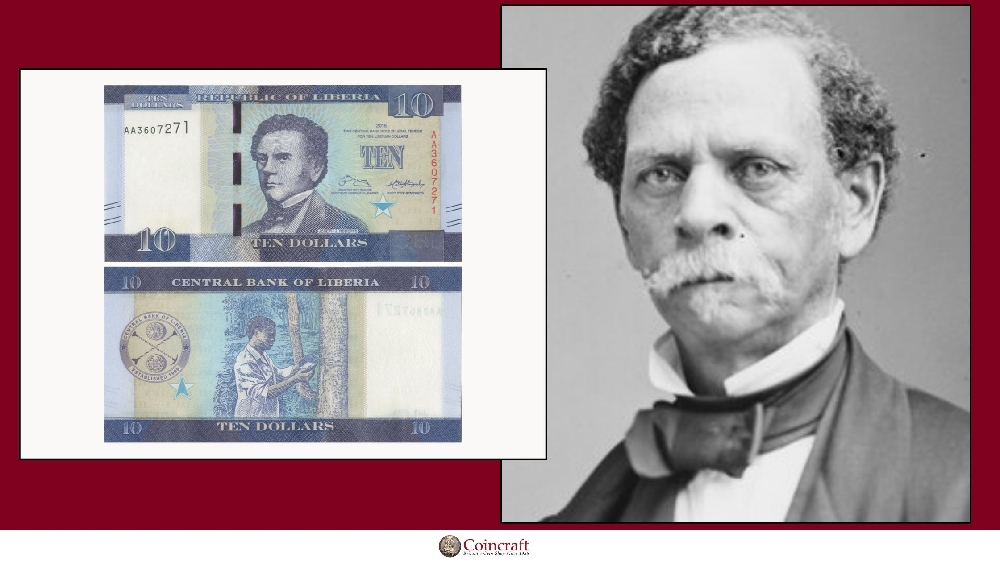
Picture Source of Joseph J Roberts: Wikipedia
Joseph Jenkins Roberts: The Architect of Liberian Sovereignty and the Paradox of the Settler Republic
It’s not every day you hear about a man who starts life as a barber’s apprentice in Virginia and ends up as the first president of an entirely new African republic. But then again, Joseph Jenkins Roberts was anything but ordinary.
If you’re a history buff, or just someone who loves a good underdog story with a twist of international diplomacy, you’re going to want to pull up a chair for this one. We’re diving into the life of the "Father of Liberia," a man who navigated the complex worlds of 19th-century America and West Africa with grace, grit, and a whole lot of ambition.
Key Takeaways
A Historic First: Joseph Jenkins Roberts was the first (and later the seventh) President of Liberia, playing a pivotal role in the nation declaring its independence in 1847.
From Virginia to West Africa: Born a free man in Norfolk, Virginia, he emigrated to Liberia at age 20, seeking greater freedom and opportunity away from the restrictions of the American South.
Diplomatic Powerhouse: Roberts was a skilled diplomat who personally traveled to Europe to secure recognition for Liberia’s sovereignty from powers like Great Britain and France.
Champion of Education: Beyond politics, he co-founded Liberia College (now the University of Liberia) and served as its first president, emphasizing the importance of education for the new nation.
The Virginia Beginnings
Joseph’s story begins on March 15, 1809, in Norfolk, Virginia. Born a "free Negro," he navigated a world that was incredibly hostile to people of color, regardless of their status. He was of mixed ancestry—described historically as an "octoroon," meaning he had seven-eighths European ancestry—which was a significant factor in his social standing at the time¹.
Growing up, Joseph didn't have access to formal schooling in the way we think of it today. Instead, he worked as an apprentice in a barbershop. But here’s the cool part: the shop owner, William Colson, was one of Virginia’s best-educated Black residents and had a private library. He let young Joseph read from his collection, giving the future president an education he couldn't get anywhere else². It’s a great reminder that libraries (and kind mentors) really can change the world!
The Big Move: Crossing the Atlantic
By 1829, the political climate in Virginia was getting tighter and more restrictive for free Black people. Seeking a life where he could truly breathe freely, a 20-year-old Joseph, along with his mother Amelia and his siblings, boarded the ship Harriet bound for Liberia³.
Now, imagine that journey. No airplanes, no Zoom calls to check on what you’re getting into—just a boat ride across the Atlantic to a colony established by the American Colonization Society. It was a leap of faith.
Tragedy struck early. Shortly after arriving, Joseph’s first wife (whom he married in Virginia) died, a heartbreaking reality for many settlers who faced harsh conditions and disease in the early colony⁴. But Joseph persevered. He threw himself into trade, starting an export business that traded palm products, camwood, and ivory with the United States. He wasn't just surviving; he was thriving, becoming a wealthy merchant and a pillar of the community⁵.
![Illustration of early Monrovia, Liberia, showing the coastal settlement where Roberts established his trade business] (Above: An artistic depiction of 19th-century Monrovia, the bustling hub where Roberts built his fortune.)
Rising Through the Ranks
You know the saying, "cream rises to the top"? That was Joseph. His business success naturally led him into public service. He became the high sheriff and later the vice governor of the colony.
When the white governor, Thomas Buchanan, died in 1841, Joseph stepped up as the first non-white governor of Liberia⁶. This was a massive deal. It signaled a shift from a colony run by white American overseers to a land governed by the very people who lived there.
Mr. President and the Fight for Independence
Here is where the story gets truly cinematic. By the mid-1840s, the colony was in a weird legal limbo. It wasn't fully a US territory, but it wasn't a sovereign nation either, which made enforcing laws on foreign traders a nightmare.
Joseph knew the only way forward was full independence. On July 26, 1847, Liberia declared itself a free and independent republic. Joseph Jenkins Roberts won the first presidential election and was sworn in on January 3, 1848⁷.
But declaring independence is one thing; getting the rest of the world to agree is another. President Roberts didn't just sit in the Executive Mansion. He hopped on a ship and sailed to Europe! He met with Queen Victoria in England and Napoleon III in France. His charm and diplomatic skills worked wonders—Great Britain was the first to recognize Liberia’s independence, followed quickly by France⁸.
Interestingly, the United States—the land of his birth—didn't officially recognize Liberia until 1862, during the presidency of Abraham Lincoln. Politics, right?⁹
The Elder Statesman
After serving four two-year terms (1848–1856), Roberts stepped down. But he didn't retire to a rocking chair. He put on a general’s uniform to lead the Liberian army and then put on a scholar’s cap to help found Liberia College in 1862, serving as its first president¹⁰. He believed that for the republic to survive, its citizens needed to be educated.
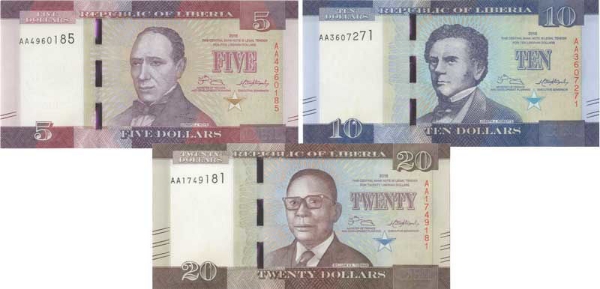
The country called on him one last time during a crisis in 1871. He was elected for another term as president in 1872, serving until 1876. He died shortly after leaving office, on February 24, 1876, leaving behind a legacy that is literally printed on the money (his face is on the Liberian ten-dollar bill!)¹¹.
![Portrait of Joseph Jenkins Roberts in his later years] (Above: President Roberts in his later years, carrying the weight of a nation he helped build.)
Frequently Asked Questions (FAQs)
1. Was Joseph Jenkins Roberts born a slave? No, he was actually born free in Norfolk, Virginia. His family was part of the "free Black" population, though they still faced significant legal and social restrictions in the US¹².
2. Why did he leave the United States? Despite being free, the rights of Black people in Virginia were severely limited and getting worse in the late 1820s. Roberts and his family emigrated to find greater freedom and economic opportunity in the new colony of Liberia¹³.
3. Did the United States support his presidency? While the American Colonization Society supported the colony, the US government didn't officially recognize Liberia's independence during Roberts' first presidency. Official diplomatic recognition didn't come until 1862, largely due to the contentious issue of slavery in American politics at the time¹⁴.
References
Wikipedia (2025) Joseph Jenkins Roberts. Available at: https://en.wikipedia.org/wiki/Joseph_Jenkins_Roberts (Accessed: 12 December 2025).
More Mary Matters (2016) Joseph Jenkins Roberts, born abt 1809. Available at: https://www.moremarymatters.com/joseph_jenkins_roberts.htm (Accessed: 12 December 2025).
Library of Congress (n.d.) Joseph J. Roberts Family Papers. Available at: https://hdl.loc.gov/loc.mss/eadmss.ms010242.3 (Accessed: 12 December 2025).
BlackPast (2016) Joseph Jenkins Roberts (1809–1876). Available at: https://blackpast.org/global-african-history/roberts-joseph-jenkins-1809-1876/ (Accessed: 12 December 2025).
New World Encyclopedia (n.d.) Joseph Jenkins Roberts. Available at: https://www.newworldencyclopedia.org/entry/Joseph_Jenkins_Roberts (Accessed: 12 December 2025).
Britannica, T. Editors of Encyclopaedia (2025) Joseph Jenkins Roberts. Available at: https://www.britannica.com/biography/Joseph-Jenkins-Roberts (Accessed: 12 December 2025).
Wikipedia (2025) Joseph Jenkins Roberts.
BlackPast (2016) Joseph Jenkins Roberts (1809–1876).
Britannica (2025) Joseph Jenkins Roberts.
Library of Virginia (n.d.) Joseph Jenkins Roberts featured. Available at: https://www.lva.virginia.gov/services/education/online-classroom/stc/people/joseph-jenkins-roberts-(1809-1876 (Accessed: 12 December 2025).
WikiTree (2023) Joseph Jenkins Roberts (1809-1876). Available at: https://www.wikitree.com/wiki/Roberts-11835 (Accessed: 12 December 2025).
More Mary Matters (2016) Joseph Jenkins Roberts, born abt 1809.
New World Encyclopedia (n.d.) Joseph Jenkins Roberts.
Wikipedia (2025) Joseph Jenkins Roberts.