..png)
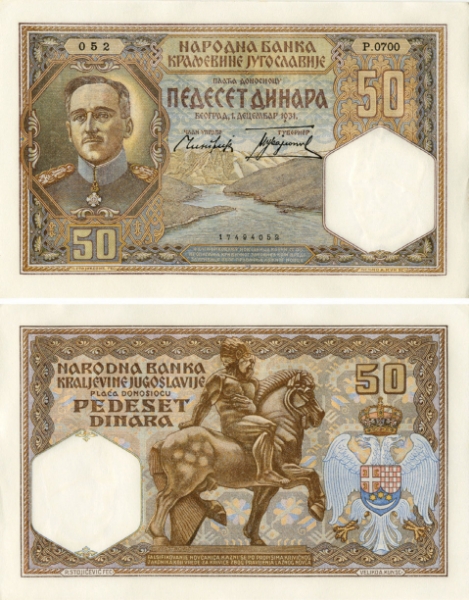
Picture Source of King Alexander I: Wikipedia
Introduction to King Alexander I of Yugoslavia
King Alexander I of Yugoslavia remains a pivotal figure in the history of the Balkans. Born into the House of Karađorđević, his life was intertwined with the turbulent politics of early 20th-century Europe. As a monarch, he navigated his nation through a period marked by significant changes and challenges, leaving an indelible mark on its socio-political landscape.
Alexander's reign was characterised by his efforts to unify a diverse ethnic and religious populace under one national identity. This ambition mirrored the broader European context, where nationalism was a powerful force reshaping borders and allegiances. His vision for Yugoslavia, however, was met with both support and opposition, reflecting the complexities of governing a newly-formed state.
In exploring King Alexander I's legacy, it is essential to understand not only his achievements but also the obstacles he encountered. His leadership style, decisions, and ultimate assassination have been subjects of extensive historical debate, influencing perceptions of his contributions to Yugoslav history.
Early Life and Ascension to the Throne
Alexander was born on 16 December 1888 in the Principality of Montenegro. His early years were marked by exile, as his family was forced to flee Serbia due to political upheavals. These formative experiences instilled in him a sense of resilience and a commitment to reclaiming his family's position within the Balkans. His education in various European cities exposed him to diverse political ideas, shaping his future leadership style.
In 1918, following the end of World War I and the dissolution of the Austro-Hungarian Empire, the Kingdom of Serbs, Croats, and Slovenes was established. Alexander ascended to the throne in 1921 after the death of his father, King Peter I. His coronation marked the beginning of a reign that sought to unify the disparate regions and peoples of the new kingdom, a task fraught with inherent difficulties.
Alexander's early reign was characterised by political manoeuvring and the consolidation of power. He faced the challenge of integrating multiple ethnic groups with distinct identities and historical grievances. Through a combination of diplomatic efforts and strategic alliances, he attempted to create a cohesive national identity, albeit with varying degrees of success.
Key Achievements and Reforms
King Alexander I implemented several key reforms aimed at stabilising and modernising the kingdom. His efforts were focused on fostering a sense of unity and national pride among the diverse ethnic groups within Yugoslavia. This was particularly important given the historical animosities that existed between these communities.
One of his notable achievements was the introduction of a centralised government system designed to streamline administration and reduce regional disparities. This reform was intended to enhance efficiency and ensure equal representation at the national level. Although it faced resistance from regional leaders, it laid the groundwork for a more integrated state apparatus.
In addition to administrative reforms, Alexander sought to modernise the economy by promoting industrialisation and infrastructure development. By investing in transportation networks and industrial projects, he aimed to stimulate economic growth and reduce the kingdom's reliance on agriculture. These initiatives reflected his vision for a prosperous and unified Yugoslavia, capable of standing on equal footing with other European powers.
King Alexander I's Foreign Policy
King Alexander I's foreign policy was shaped by the volatile international environment of the interwar period. He was acutely aware of the geopolitical dynamics and sought to position Yugoslavia as a stable and influential player on the European stage. His diplomatic efforts were aimed at securing the kingdom's sovereignty while fostering alliances that would ensure its security.
One of his primary foreign policy objectives was to strengthen ties with France, a key ally in the region. This relationship was formalised through the signing of the Little Entente, a coalition that included Czechoslovakia and Romania. The alliance was intended to counterbalance the influence of neighbouring powers, particularly Italy and Hungary, which harboured territorial ambitions in the Balkans.
Additionally, Alexander's foreign policy included efforts to improve relations with neighbouring states. He pursued diplomatic engagements with Italy and Greece, recognising the importance of regional stability for Yugoslavia's security. Despite these endeavours, tensions remained, highlighting the challenges of maintaining peaceful coexistence in a region marked by historical rivalries and shifting alliances.
The Impact of King Alexander I on Yugoslav Unity
King Alexander I's vision for a unified Yugoslavia was both ambitious and contentious. His efforts to forge a cohesive national identity were met with mixed reactions, reflecting the complexity of uniting diverse ethnic and religious groups under a single banner. Nevertheless, his influence on Yugoslav unity remains a significant aspect of his legacy.
Alexander's policies were aimed at promoting a sense of national solidarity among Serbs, Croats, and Slovenes, who comprised the kingdom's major ethnic groups. He advocated for the use of a common language and sought to reduce regional disparities through centralised governance. These initiatives were designed to foster a sense of shared identity, although they often faced resistance from those who valued their distinct cultural heritages.
Despite the challenges, Alexander's efforts contributed to the development of a Yugoslav identity, albeit one that was not without its tensions. His vision laid the foundation for future attempts at integration, even as subsequent leaders grappled with the enduring complexities of ethnic and regional differences. His legacy in this regard is a testament to the enduring quest for unity in a diverse and dynamic region.
Challenges Faced During His Reign
King Alexander I's reign was marked by numerous challenges that tested his leadership and vision for Yugoslavia. The task of unifying a newly-formed state composed of diverse ethnic groups was inherently complex, and he faced significant obstacles both domestically and internationally.
One of the primary challenges was managing the political tensions that arose from the centralisation of power. Regional leaders and ethnic groups often resisted his efforts, fearing the erosion of their autonomy and cultural identity. This resistance manifested in political unrest and opposition, highlighting the difficulties of implementing reforms in a fragmented society.
In addition to internal challenges, Alexander had to navigate a precarious international landscape. The interwar period was characterised by shifting alliances and territorial disputes, which added to the complexity of his foreign policy. Balancing relations with neighbouring powers while safeguarding Yugoslavia's sovereignty was a delicate endeavour, requiring astute diplomacy and strategic foresight.
Assassination and Its Aftermath
The assassination of King Alexander I on 9 October 1934 marked a turning point in Yugoslav history. His death was a shock to the nation, plunging it into a period of uncertainty and mourning. The assassination, carried out by a Bulgarian nationalist, underscored the persistent tensions and political volatility that characterised his reign.
The immediate aftermath of Alexander's assassination saw a power vacuum that threatened the stability of the kingdom. His successor, Prince Paul, assumed the regency on behalf of Alexander's young son, Peter II. The transition of power was fraught with challenges, as political factions vied for influence and the kingdom grappled with the loss of its unifying figure.
Alexander's assassination had far-reaching implications for Yugoslavia's future. It highlighted the fragility of the nascent state's unity and the enduring ethnic tensions that would continue to shape its trajectory. The subsequent period was marked by political instability and external pressures, culminating in the kingdom's eventual dissolution during World War II.
The Legacy of King Alexander I in Modern Yugoslavia
The legacy of King Alexander I in modern Yugoslavia is a subject of considerable debate and reflection. His reign, marked by both achievements and challenges, continues to influence contemporary discussions about national identity and unity in the Balkans. Understanding his impact requires a nuanced examination of his contributions and the enduring implications of his policies.
Alexander's vision for a unified Yugoslavia set the stage for subsequent efforts at integration and reconciliation. His centralised governance model and emphasis on national identity laid the groundwork for future attempts to bridge ethnic divides. However, the tensions that persisted during his reign foreshadowed the difficulties that would later culminate in the dissolution of Yugoslavia in the 1990s.
In modern times, King Alexander I's legacy is viewed through various lenses, reflecting the diverse perspectives of the region's inhabitants. While some regard him as a visionary leader who sought to unify a fragmented state, others critique his centralising policies as contributing to long-standing ethnic tensions. His legacy serves as a reminder of the complexities inherent in nation-building and the enduring quest for unity in a diverse society.
Historical Perspectives on His Rule
Historical perspectives on King Alexander I's rule are as varied as the individuals who study them. Scholars and historians have examined his reign through multiple frameworks, offering insights into his leadership style, policy decisions, and their impact on Yugoslavia's development. These perspectives contribute to a richer understanding of his legacy and the historical context in which he governed.
One view posits that Alexander was a pragmatic leader who sought to navigate the complex political landscape of his time. His centralising policies and diplomatic efforts were seen as necessary measures to stabilise a volatile region. This perspective emphasises his achievements in fostering a sense of Yugoslav identity and promoting economic modernisation.
Conversely, some historians critique Alexander's approach as overly authoritarian, arguing that his centralisation efforts exacerbated ethnic tensions and undermined regional autonomy. This view suggests that his policies contributed to the eventual fragmentation of Yugoslavia, highlighting the challenges of governing a diverse and divided society. These differing interpretations reflect the complexity of his rule and the varied legacies he left behind.
Reflecting on King Alexander I's Influence
Reflecting on the influence of King Alexander I of Yugoslavia provides a window into the intricate dynamics of the Balkans during a transformative period in European history. His reign was marked by both aspirations for unity and the realities of governing a newly-formed state with deep-seated divisions. Understanding his contributions requires a balanced consideration of his achievements, challenges, and the lasting impact of his policies.
King Alexander I's efforts to unify Yugoslavia were ambitious, reflecting a vision for a cohesive national identity that transcended ethnic and regional differences. While his centralising policies were met with resistance, they laid the foundation for subsequent attempts at integration and reconciliation. His legacy continues to inform contemporary discussions about national identity and unity in the Balkans.
As we reflect on King Alexander I's influence, it is essential to consider the broader historical context and the enduring quest for unity in a diverse and dynamic region. His life and reign offer valuable insights into the complexities of nation-building and the challenges of fostering a cohesive society. For those interested in exploring this fascinating period, delving deeper into King Alexander I's legacy provides a rich and rewarding exploration of history.