.jpg)
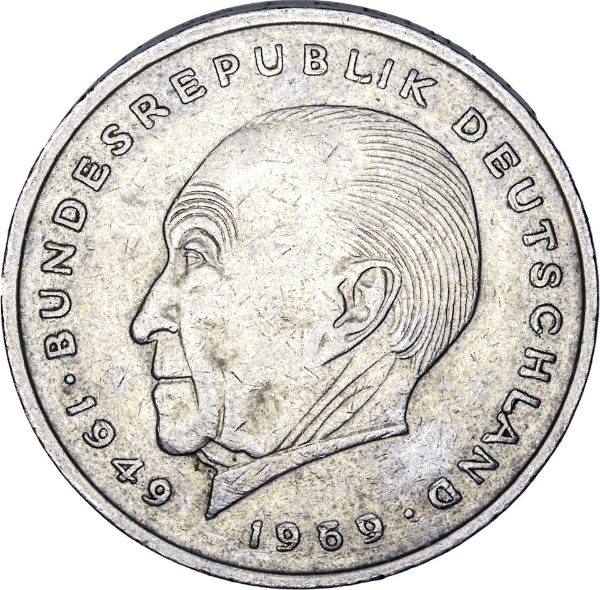
Picture Source of Konrad Adenauer: Wikipedia
Introduction to Konrad Adenauer and His Significance
When discussing influential figures in modern European history, Konrad Adenauer undoubtedly stands out as a pivotal character. His tenure as Chancellor of West Germany from 1949 to 1963 marked a period of profound transformation and recovery for a nation ravaged by war. Adenauer's political acumen and foresight laid the groundwork for what we now recognise as modern Germany. Understanding his contributions provides invaluable insights into the post-war era and the evolution of European politics.
Adenauer's significance is further underscored by the tumultuous times in which he led. With Germany split into East and West and Europe in the throes of rebuilding, his strategies and policies were not merely about recovery but also about redefining Germany's place on the world stage. His leadership style and decisions have been studied extensively, offering lessons in political resilience and diplomacy.
Moreover, Adenauer's legacy extends beyond national borders, influencing the trajectory of European integration. His vision of a united Europe, rooted in cooperation and mutual respect, was instrumental in the formation of key institutions that continue to shape the continent today. As we delve into his life and achievements, it becomes clear why Adenauer is often referred to as the "Father of Modern Germany."
Early Life and Political Beginnings of Konrad Adenauer
Konrad Adenauer was born on 5th January 1876, in Cologne, Germany, a city that would remain central to his personal and political life. Growing up in the Rhineland, he was exposed early on to the complexities of regional politics and the cultural diversity that characterised this part of Germany. These formative experiences undoubtedly shaped his pragmatic approach to governance and his appreciation for a unified, yet diverse, Europe.
Adenauer's political career began in earnest after the First World War when he became the Mayor of Cologne in 1917. His tenure as mayor was marked by efforts to modernise the city, a task he approached with characteristic diligence and insight. Under his leadership, Cologne saw significant infrastructural developments, including improvements in transport and housing. This period was indicative of his capability to effect change, even amidst economic challenges.
The interwar years were a time of political turbulence, yet Adenauer navigated these challenges with remarkable foresight. His ability to maintain political stability in Cologne during the Weimar Republic's chaotic years showcased his adeptness as a leader. It was during these years that Adenauer's vision for a peaceful and cooperative Europe began to crystallise, setting the stage for his future endeavours on a larger scale.
Adenauer's Role in Post-War Germany
The end of the Second World War left Germany in ruins, both physically and morally. It was into this fractured landscape that Konrad Adenauer stepped when he became Chancellor in 1949. His role in post-war Germany was nothing short of transformative, as he sought to rebuild the nation and restore its standing in the international community. His tenure marked a departure from the past, focusing on reconciliation and reconstruction.
One of Adenauer's foremost challenges was dealing with the consequences of Germany's division. The country was split into East and West, with the latter under his leadership. Adenauer championed policies that prioritised economic recovery, resulting in what is now known as the "Wirtschaftswunder" or economic miracle. This remarkable turnaround was facilitated by his adept negotiation skills, which secured vital foreign aid and investments.
Adenauer also set about restoring Germany's diplomatic relationships, particularly with Western powers. By aligning West Germany with the West, he aimed to secure the nation’s sovereignty and ensure its inclusion in the burgeoning political landscape of post-war Europe. His efforts culminated in West Germany's admission to NATO in 1955, a testament to his successful diplomatic endeavours and a significant step in the country’s rehabilitation.
Key Policies and Achievements of Konrad Adenauer
Adenauer's tenure was characterised by several key policies and achievements that not only revitalised Germany but also positioned it as a leading European power. Among his most notable accomplishments was the introduction of the social market economy, a concept that balanced free-market capitalism with social welfare. This approach not only spurred economic growth but also ensured a more equitable distribution of wealth, earning widespread support across the social spectrum.
Another significant aspect of Adenauer's leadership was his commitment to reconciliation with France. Recognising the futility of past conflicts, he worked tirelessly to establish a Franco-German partnership, which became a cornerstone of European integration. The Élysée Treaty of 1963, signed with French President Charles de Gaulle, symbolised this newfound alliance and laid the groundwork for future cooperation within the European Economic Community (EEC).
Adenauer's domestic policies were equally impactful. He was instrumental in establishing a stable democratic framework in West Germany, characterised by strong institutions and the rule of law. His efforts to denazify the government and society, while controversial, were crucial in distancing the new Germany from its past. These reforms not only stabilised the nation but also ensured a democratic legacy that endures to this day.
The Formation of the Federal Republic of Germany
The formation of the Federal Republic of Germany (FRG) in 1949 marked a significant milestone in the country's post-war recovery, with Adenauer playing a pivotal role in its establishment. The FRG was designed to operate as a democratic and federal state, emphasising the importance of regional autonomy within a united national framework. Adenauer's leadership during this formative period was crucial in shaping the political landscape of the new republic.
Adenauer's vision for the FRG was rooted in democratic principles and a robust legal system. He collaborated with other political leaders to draft the Basic Law, which served as the FRG's provisional constitution. This document was instrumental in establishing the legal and institutional foundations of the new state, ensuring the protection of fundamental rights and the separation of powers.
The early years of the FRG were marked by efforts to integrate the nation into the international community. Adenauer's foreign policy initiatives, aimed at aligning West Germany with the Western bloc, were critical in securing the country's sovereignty and legitimacy. By fostering relationships with other Western nations, Adenauer ensured that the FRG was not only a political entity but also an integral part of the post-war European order.
Adenauer’s Foreign Policy: Integration with the West
Adenauer's foreign policy was characterised by a strategic alignment with Western powers, a decision that had far-reaching implications for Germany and Europe. By prioritising integration with the West, Adenauer sought to secure Germany's position as a stable and democratic state. His policies were instrumental in overcoming the isolation that Germany faced following the war and in fostering a new era of cooperation and collaboration.
Central to Adenauer's foreign policy was the establishment of strong ties with the United States. Recognising the importance of American support, he worked diligently to cultivate a partnership that would provide economic and military backing for West Germany. This relationship was formalised through various agreements, including the Marshall Plan, which provided essential financial aid for the country's reconstruction.
Adenauer also played a key role in advancing European integration. His commitment to a unified Europe was evident in his support for the creation of the European Coal and Steel Community (ECSC) and the European Economic Community (EEC). These initiatives not only facilitated economic cooperation but also laid the groundwork for the European Union. By championing these efforts, Adenauer helped to transform Europe into a continent of peace and prosperity.
Challenges Faced by Adenauer During His Tenure
Despite his numerous achievements, Adenauer's tenure was not without its challenges. One of the most pressing issues he faced was the German reunification question. The division of Germany into East and West was a constant source of tension, both domestically and internationally. Adenauer's commitment to Western alignment was criticised by some as neglecting the possibility of reunification, a sentiment that fuelled political debates throughout his leadership.
Adenauer also grappled with internal political challenges. The process of denazification and the integration of former Nazi officials into the new government were contentious issues. Balancing the need for experienced administrators with the moral imperative of distancing the new republic from its past was a delicate task, one that required careful consideration and diplomacy.
Moreover, Adenauer's foreign policy decisions occasionally faced opposition from within. His steadfast commitment to Western alliances sometimes led to friction with other political leaders and segments of the German population who favoured a more neutral stance. These challenges, while significant, ultimately underscored Adenauer's resilience and his unwavering dedication to his vision for Germany.
The Legacy of Konrad Adenauer in Modern Germany
Konrad Adenauer's legacy in modern Germany is profound and multifaceted. His leadership during the formative years of the Federal Republic laid the foundations for the stable and prosperous Germany we see today. His policies and vision not only rebuilt a nation but also restored its dignity and respect on the global stage. Adenauer's contributions continue to influence German politics and society, a testament to his enduring impact.
Adenauer's commitment to democracy and the rule of law has left a lasting imprint on Germany's political landscape. The institutions and legal frameworks established under his leadership have been instrumental in ensuring political stability and economic prosperity. His vision for a Germany integrated into a peaceful and cooperative Europe has shaped the country's foreign policy and its role as a leader within the European Union.
Moreover, Adenauer's emphasis on reconciliation and cooperation has fostered a culture of diplomacy and dialogue in German politics. His efforts to mend relations with former adversaries, particularly France, have been pivotal in building trust and fostering collaboration in Europe. This legacy of reconciliation and partnership remains a cornerstone of Germany's international relations and its commitment to European unity.
How Adenauer Shaped European Integration
Adenauer's contributions to European integration were instrumental in shaping the continent's post-war trajectory. His vision for a united Europe, driven by cooperation and mutual respect, was a guiding principle throughout his tenure. By championing initiatives that promoted economic and political integration, Adenauer laid the groundwork for the European Union and its commitment to peace and prosperity.
One of Adenauer's key achievements was his role in the creation of the European Coal and Steel Community (ECSC), the precursor to the European Economic Community (EEC) and ultimately the European Union. By facilitating collaboration in critical industries, the ECSC fostered economic interdependence and reduced the likelihood of conflict, aligning with Adenauer's vision of a peaceful Europe.
Adenauer's efforts to strengthen the Franco-German partnership were also pivotal in advancing European integration. His collaboration with French leaders helped to overcome historical animosities and establish a foundation for future cooperation. This partnership was instrumental in the formation of key European institutions and continues to be a driving force behind the European Union's success.
The Enduring Influence of Konrad Adenauer
The enduring influence of Konrad Adenauer on modern Germany and Europe cannot be overstated. His vision and leadership during a critical period of reconstruction and renewal have left an indelible mark on the continent's political and economic landscape. Adenauer's legacy is evident in the stability and prosperity of Germany today and in the continued progress of European integration.
As we reflect on Adenauer's contributions, it is clear that his commitment to democracy, reconciliation, and cooperation has shaped the values and principles that underpin modern Europe. His efforts to rebuild Germany and foster a united Europe have set a precedent for future generations of leaders, inspiring a commitment to peace, prosperity, and partnership.
In honouring Adenauer's legacy, we are reminded of the importance of visionary leadership and the power of collaboration in overcoming challenges. Let us continue to uphold the values he championed and work towards a future that reflects his ideals of unity and cooperation.