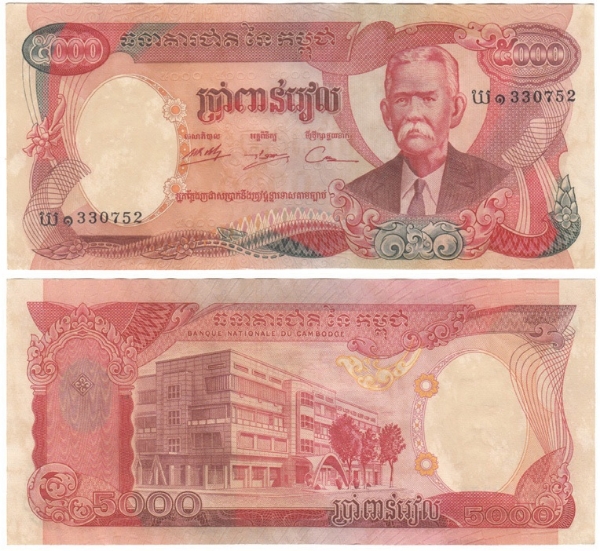
 - WCA0235.jpg)
Phirum Ngoy: The Life, Art, and Legacy of Krom Ngoy (Ouk Ou)
Known affectionately across Cambodia as the undisputed "Father of Khmer Poetry," Krom Ngoy (born Ouk Ou; 1865–1936) was a revolutionary poet, master musician, and social philosopher [1]. Operating during the heights of the French Protectorate, Ngoy served as a traveling bard who gave voice to the struggles, hopes, and moral dilemmas of the everyday Khmer peasant [2].
Using his musical instruments as a vehicle for his rhyming sermons, Ngoy warned his countrymen about the loss of their heritage, the dangers of illiteracy, and the creeping influence of foreign powers. His oral compositions were so culturally profound that the newly established Buddhist Institute of Phnom Penh took the unprecedented step of transcribing and publishing them, transforming an illiterate society's oral performance art into the foundation of modern written Cambodian literature [3].
Key Takeaways
The Traveling Bard of Kandal: Born in rural Kandal Province, Ngoy initially lived as a farmer and Buddhist monk, using his deep understanding of scripture and local folkways to craft poignant, rhyming moral lessons [2].
Master of the Kse Diev: He performed his poetry to the enchanting, minimalist melodies of the kse diev (a traditional monochord stringed bow) and the chapei dong veng (a long-necked lute) [1, 3].
The Royal and International Spotlight: His mesmerizing performances earned him a coveted court title under King Sisowath of Cambodia and enchanted foreign visitors, including Siamese Prince Damrong Rajanubhab and French archaeologist George Cœdès [3].
Literary Preservation Pioneer: Though Ngoy performed entirely from memory, his masterworks were permanently recorded in the 1920s and 1930s by linguist Suzanne Karpelès and the Buddhist Institute in Phnom Penh [2, 3].
A Modern Gender Dilemma: While celebrated as a national hero, his didactic poem Chbap Srey ("Code of Conduct for Women") remains a lightning rod for controversy, sparking major human rights debates that led to its reduction in the Cambodian national curriculum in 2007 [4].
Key Facts
Category | Details |
|---|---|
Birth Name | Ouk Ou (known popularly as Phirum Ngoy or Kram Ngoy) [2, 3] |
Birth Date & Place | 1865 in Andong Svay village, Kombol commune, Kandal Province [2] |
Death Date & Place | 1936 (aged 71) in Phnom Penh, Cambodia [1, 2] |
Royal Title | Oknha Phirumya Bhasa (granted by King Sisowath) [3] |
Instruments Played | Kse Diev (monochord bow), Chapei Dong Veng (long-necked lute) [1, 3] |
Literary Patron | Suzanne Karpelès (Director of the Royal Library of Phnom Penh) [3] |
Key Published Works | Chbap Lbeuk Thmei (1922), Chbap Ke-Kal Thmei (1922), The Advice on Life (1931), Chbap Srey / Chbap Proas [2] |
The Biography of Krom Ngoy
1. Early Life, Monastic Education, and Local Roots (1865–1890s)
Ouk Ou was born in 1865 during the early years of the French protectorate in Kandal Province [1]. He was born into an influential local family; his father, Ouk, was the chief of Kombol commune and held the minor royal administrative title of Chao Ponhea Dharma Thearea [2]. His mother, Ieng, was also the daughter of a local commune chief [2].
As a child, Ou was sent to study arithmetic and Khmer literature at the Boeng Chork Temple in Baek Skor village [2]. Showing an early aptitude for language and deep spiritual interest, he was ordained as a Buddhist novice (Samanera). At the age of 21, he took full vows as a monk (Bhikkhu) [2]. Under the tutelage of prominent abbot Achar Tith Kong, Ou dedicated himself to mastering the Tripitaka (Buddhist scriptures), learning Pali, Sanskrit, and ancient meditation techniques [2].
After five years in the monkhood, Ou disrobed to return to secular life. He married a local woman named Mrs. In, with whom he would raise six sons [2]. He temporarily worked as a legal advisor and secretary for his father's commune office before resigning due to local political and economic turmoil [3]. He chose instead to lead a simple, self-sufficient life as an ordinary rice farmer in Kandal [2].
2. The Traveling Farmer and His Unique Instrument
Despite returning to the soil, Ou’s spiritual and linguistic genius could not be hidden. He possessed an extraordinary memory, a deep repository of historical folklore, and an innate talent for spontaneous, rhyming rhetoric [3].
During the winter months following the annual rice harvest, Ou would embark on journeys across Kandal and neighboring provinces [2]. Traveling from village to village, he would perform at local festivals, marriages, and religious ceremonies [3]. His performances were entirely oral, combining moral preaching with traditional music.
Ou was particularly famous for playing the kse diev (a rustic monochord bow instrument consisting of a single copper string stretched over a long wooden stick, with half a dried gourd acting as a resonator held against the chest) [1]. Legend says that whenever Ou traveled, he would unscrew the gourd resonator and tuck it into his shoulder bag while using the long wooden neck of his instrument as a walking stick [3]. When he arrived at a village, he would reassemble the instrument, sit cross-legged on a mat, and cast a hypnotic spell over his audience with his gravelly voice and delicate string plucking [3].
Because he was a "poet of the people," he refused to charge money for his performances [2, 3]. Instead, grateful villagers gathered rice, dried fish, and small change to support his family [3]. As his fame expanded, locals began referring to him respectfully as Phirum Ngoy (or "Ngoy the Language Master"), adding "Krom" (denoting a group or council of advisors) to honor his wisdom [2, 3].
3. Royal Recognition and Siamese Intrigue
By the early 20th century, rumors of this brilliant, traveling peasant-poet reached the royal court in Phnom Penh. King Sisowath ordered his court officials to bring Krom Ngoy to the Royal Palace to perform [2, 3].
His performance was a historic success. The King was so moved by Ngoy's witty, educational, and melodic poetry that he designated him a royal court poet, bestowing upon him the prestigious title of Oknha Phirumya Bhasa (meaning "the master of sweet-sounding language") [3]. Since the court already featured a musician named Ou, the King decreed that he should officially go by "Ngoy" to avoid confusion [3].
Ngoy's fame quickly bypassed Cambodia's borders. During a state visit by the prominent Siamese Prince Damrong Rajanubhab and the French epigraphist George Cœdès, Ngoy was selected to perform [2, 3]. Prince Damrong was so captivated by Ngoy’s unmatched improvisational rhyming and mastery of the kse diev that he invited the poet to Bangkok to perform for the Thai royal family, solidifying his regional legendary status [3].
4. Preservation: The Buddhist Institute and Suzanne Karpelès
Despite his massive popularity, Krom Ngoy’s works faced a major existential threat: they only existed in his mind. In an era when oral traditions were beginning to fade under French modernization, his poems risked being lost forever upon his death [3].
This caught the attention of Suzanne Karpelès, a French linguist, Indologist, and the pioneer behind the preservation of Khmer culture [3]. Karpelès, who went on to become the founding director of the Buddhist Institute of Phnom Penh in 1930, recognized that Ngoy was a living library of national cultural values [3].
Karpelès invited Krom Ngoy to Phnom Penh to systematically preserve his repertoire [3]. Over several months, scholars at the Buddhist Institute painstakingly transcribed Ngoy's oral recitations, translating his complex, localized rhyming patterns into physical, written texts [2, 3]. For his time and efforts, Karpelès paid Ngoy a modest stipend of 1 Piastre/Riel per session [2]. While a small amount, this transaction marked a massive milestone: it birthed the first mass-printed books of vernacular Khmer moral poetry [2].
Between 1922 and 1935, the Buddhist Institute published several small, cheap booklets containing Ngoy’s works, including Chbap Lbeuk Thmei ("The Law of the New Prose") and Chbap Ke-Kal Thmei ("The Law of the New Inheritance") [2, 3]. These books became instant bestsellers and were quickly distributed to temple schools across Cambodia [3].
             ┌────────────────────────────────────────┐
             │       KROM NGOY'S PRESERVATION         │
             └───────────────────┬────────────────────┘
                                 ▼
                     Oral Rhyming Performances
                    (Accompanied by Kse Diev)
                                 │
                                 ▼
                    George Cœdès / King Sisowath
                      (Discovered the Genius)
                                 │
                                 ▼
                     Suzanne Karpelès & EFEO
                (Invited Ngoy to the Royal Library)
                                 │
                                 ▼
                     The Buddhist Institute
                (Transcribed oral poetry into print)
                                 │
                                 ▼
                     Modern National Curriculum
                    (Bedrock of Khmer Literature)
5. Moral Themes and Socio-Political Critiques
Krom Ngoy's poetry is deeply didactic, combining Buddhist theology with practical, everyday survival tactics for rural Cambodians. His poetry focused heavily on the following themes:
The Evils of Laziness and Vice: He regularly targeted gambling, opium, and alcohol, warning that they would destroy family lineage and plunge farmers into generational debt [2].
The Tragedy of Illiteracy: Ngoy strongly admonished Cambodian parents for not sending their children to school. He argued that their lack of literacy and basic math skills left them vulnerable to exploitation by French colonial tax collectors and foreign merchants (particularly Vietnamese and Chinese middlemen) [2, 3].
Rural Solidarity: He preached community cohesion, urging neighbors to cooperate during harvest seasons rather than engaging in petty legal disputes and community divisions [2].
National Sovereignty and Pride: Living under French rule, Ngoy wrote of his profound grief over the loss of Cambodian independence, calling on his fellow citizens to maintain their cultural identity, language, and spiritual traditions [3].
Krom Ngoy passed away on Friday, December 4, 1936, at the age of 71, due to a severe case of constipation [2]. His death was widely mourned as a national tragedy.
The Legacy and the Contemporary Gender Debate
For nearly a century after his passing, Krom Ngoy's verses remained deeply embedded in the national consciousness. Until the late 2000s, memorize-and-recite drills of his works—specifically Chbap Srey ("Code of Conduct for Women") and Chbap Proas ("Code of Conduct for Men")—were mandatory in secondary schools across Cambodia [4].
While Chbap Proas advised boys on etiquette, respect for elders, and occupational diligence, Chbap Srey laid out highly restrictive rules for women [4]. The poem instructs recently married women to stay near the home stove, talk and walk softly, obey their husbands without question, and avoid discussing domestic disputes or domestic abuse with neighbors [4].
In 2007, under intense pressure from the United Nations and local women’s rights organizations (who argued that Chbap Srey normalized domestic violence, silenced abuse survivors, and directly obstructed gender equality), the Cambodian Ministry of Education, Youth and Sport (MoEYS) officially removed the most subservient lines of the poem from the national school curriculum [4]. Today, only selected, highly generalized moral verses regarding mutual respect and community harmony are taught, reflecting the delicate balance Cambodia must strike between preserving historical heritage and advancing human rights [4].
Frequently Asked Questions (FAQs)
What is a "Chbap" in Cambodian literature?
A Chbap (also written Chbab) is a traditional genre of didactic or moral poetry in Cambodian literature. These poems serve as codes of conduct, offering advice on family values, societal hierarchies, Buddhist ethics, and interpersonal relationships. Krom Ngoy's Chbap works are the most famous in Cambodian history.
What is the kse diev and why is it associated with Krom Ngoy?
The kse diev (sometimes called sadieu) is an ancient, traditional Cambodian stringed instrument. It features a single metal string attached to a long wooden rod with a halved gourd acting as a resonator held against the player's chest. Krom Ngoy was a master of this highly minimalist, expressive instrument, utilizing its deep, haunting resonance to accompany his poetic chants.
How did a French woman help save Krom Ngoy's poems?
Suzanne Karpelès, a French scholar and Director of the Royal Library of Phnom Penh, realized that Krom Ngoy's immense library of poetry was strictly oral. Fearing it would die with him, she invited him to her office in the 1920s to perform his verses, which were transcribed by scribes and published by the newly formed Buddhist Institute, ensuring their permanent preservation.
Why is the Chbap Srey controversial today?
While historically revered as a cultural masterpiece, Chbap Srey ("Code of Conduct for Women") has drawn sharp modern criticism. It teaches women to be completely subservient to their husbands, to keep quiet about domestic problems, and to accept an inferior societal role. Human rights groups and the UN argued that these guidelines institutionalized domestic abuse and gender inequality, leading the Cambodian government to officially alter its school curriculum in 2007.
What is "Krom Ngoy's Will" (Bandam Kram Ngoy)?
Bandam Kram Ngoy (also known as Krom Ngoy's Will or Testament) was his final literary work published in 1935. It acts as his ultimate warning to the Khmer people, urging them to shake off laziness and ignorance, to prioritize education, and to defend their cultural independence in the face of rapid foreign colonization and modernization.
Bibliography
Wikipedia. (2026). Krom Ngoy. Wikimedia Foundation.
Ly, T. T. (1966). Biography of Phirumya Bhasa Ou (Krom Ngoy). Phnom Penh: Association of Khmer Writers / Royal University of Phnom Penh.
French School of the Far East (EFEO). (2006). Bulletin of the Center for Khmer Studies (CEK). Paris: École française d'Extrême-Orient.
ResearchGate. (2019). From Schoolgirls to “Virtuous” Khmer Women: Interrogating Chbab Srey and Gender in Cambodian Education Policy. Berlin: Gender and Education Research Network.
The Borgen Project. (2020). 7 Things to Know about Women's Rights in Cambodia. Seattle: The Borgen Project Foundation.