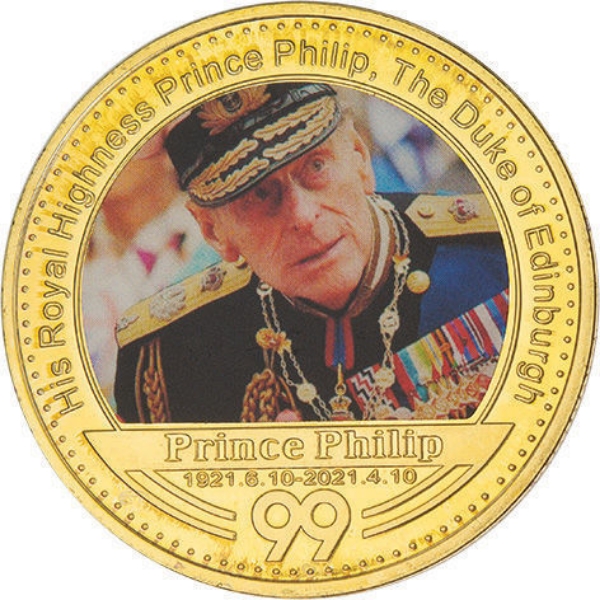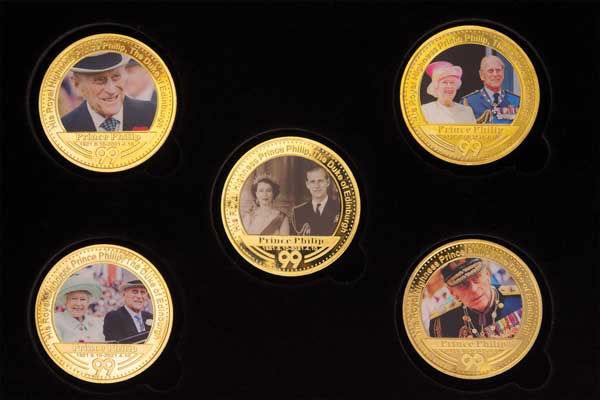
Picture Source of Prince Philip: Wikipedia
 - .jpg)
Introduction
When we think of the British Royal Family, the image that often comes to mind is one of stoic tradition and unshakeable continuity. Yet, standing just a step behind the late Queen Elizabeth II for over seven decades was a man whose life was anything but predictable. Prince Philip, the Duke of Edinburgh, was a figure of immense complexity—a dashing naval officer, a devoted consort, a moderniser, and a man known as much for his sharp wit as for his unwavering dedication to duty.
Born into the chaos of a fragmented Europe and rising to become the patriarch of one of the world's most famous families, Philip's story is a fascinating tapestry of resilience and service. He was the Queen’s "strength and stay," a constant presence who navigated the shifting tides of the 20th and 21st centuries with a distinct blend of toughness and charm. In this post, we’re going to peel back the layers of formal titles to look at the man who lived a life of extraordinary adventure and profound influence.
Key Takeaways
A Survivor from the Start: Born into the Greek and Danish royal families, Philip’s early life was marked by exile and instability, fleeing Greece in an orange crate as an infant.
Naval Heroism: Before becoming a full-time royal, Philip had a distinguished career in the Royal Navy, seeing active combat during World War II.
A Lifetime of Service: He was the longest-serving royal consort in British history, supporting Queen Elizabeth II for 73 years.
Champion of Youth: He founded the Duke of Edinburgh’s Award in 1956, a program that has empowered millions of young people across the globe.
A Man of Many Talents: Beyond his duties, he was an avid sportsman, an accomplished pilot, a carriage driver, and a passionate environmentalist.
A Turbulent Beginning
It is easy to assume that all royals are born into a life of secure luxury, but Prince Philip’s start was dramatically different. Born on June 10, 1921, on the dining room table of a villa in Corfu, Greece, he was a Prince of Greece and Denmark¹⁵. However, his world was turned upside down almost immediately. When he was just 18 months old, political turmoil forced his family to flee Greece. In a detail that sounds like it belongs in a movie script, the infant prince was smuggled to safety in a cot improvised from an orange box¹⁵.
His childhood was nomadic, spent moving between relatives in France, Germany, and Britain. His mother, Princess Alice, faced severe mental health struggles, and his father, Prince Andrew, lived apart from the family. Despite this fragmentation, Philip found stability in education. He attended Cheam School in England and later the rugged Gordonstoun in Scotland, founded by Kurt Hahn¹⁴. It was at Gordonstoun that Philip developed the resilience and self-reliance that would define his character, enduring cold showers and early morning runs that would later inspire the physical rigor of his famous award scheme.
A Life at Sea
Long before he was walking the corridors of Buckingham Palace, Philip was at home on the bridge of a warship. He joined the Royal Navy as a cadet in 1939 at the age of 18, a pivotal year that would also see his first significant meeting with the 13-year-old Princess Elizabeth¹².
Philip was a natural sailor. During World War II, he served with distinction, seeing action in the Indian Ocean and the Mediterranean. His bravery was noted during the Battle of Cape Matapan, where he controlled the searchlights of HMS Valiant to pinpoint enemy Italian vessels in the dark, an action for which he was mentioned in dispatches¹². He was also present in Tokyo Bay in 1945 to witness the Japanese surrender, placing him at the very center of history’s turning points¹². His naval career was promising, and many believe he could have risen to the very top, perhaps becoming First Sea Lord, had his destiny not taken a royal turn.
A Royal Romance
The love story between Philip and Elizabeth is one for the ages. They corresponded throughout the war, with the young princess keeping his photograph on her mantelpiece. When they married in Westminster Abbey on November 20, 1947, it brought a splash of colour to a post-war Britain still grappling with rationing and austerity¹¹.
To marry the future Queen, Philip made significant sacrifices. He renounced his Greek and Danish titles, became a naturalised British subject, and adopted the surname Mountbatten, from his mother's side of the family¹¹. When King George VI’s health failed and Elizabeth ascended the throne in 1952, Philip’s active naval career came to an abrupt end. He had to redefine his life, stepping back to let his wife shine—a transition that was undoubtedly difficult for an alpha male of his era, but one he managed with characteristic discipline.
The Consort’s Duty
For the next several decades, Prince Philip defined the role of the modern consort. He was never crowned at the coronation in 1953, but he was the first layman to pay homage to the new Queen, swearing to be her "liege man of life and limb"¹⁴.
He took this vow seriously, accompanying the Queen on countless tours and state visits. He was known for his "walkabouts," where his quick wit—and occasionally his infamous gaffes—became legendary. While the press sometimes jumped on his blunt comments, many saw them as an attempt to put people at ease and break the stiff formality of royal engagements. Behind the scenes, he was a moderniser, introducing efficiencies to the running of the royal estates and reportedly being the first royal to have a computer⁴.
Legacy of Service and The Duke of Edinburgh's Award
Perhaps Philip’s most enduring legacy is the Duke of Edinburgh’s Award (DofE), which he founded in 1956. Inspired by his time at Gordonstoun, the program was designed to challenge young people to develop skills, physical fitness, and community spirit⁸.
Today, the award operates in more than 140 countries and has helped transform millions of lives⁸. It wasn't just a name on a certificate; Philip remained deeply involved, attending Gold Award presentations well into his 90s. Additionally, he was a pioneer in environmental conservation. He served as the first President of the World Wildlife Fund (WWF) UK and later as International President, using his platform to warn about the dangers of poaching and habitat destruction long before it was a mainstream concern⁷.
The Man Behind the Title
Away from the public eye, Philip was a man of diverse passions. An accomplished sportsman, he played polo for many years until age began to take its toll. Not one to sit idle, he then helped codify the rules for carriage driving, a sport he competed in internationally and continued to enjoy into his late 90s⁴.
He was also a qualified pilot, racking up nearly 6,000 flight hours in 59 types of aircraft before hanging up his wings in 1997¹⁴. A lover of the arts, he was an enthusiastic oil painter and a collector of contemporary art. These hobbies painted a picture of a man who possessed a restless intellect and a boundless zest for life.
The Final Chapter
Prince Philip retired from public duties in August 2017 at the impressive age of 96, having completed 22,219 solo engagements since 1952¹¹. He spent his final years largely at Wood Farm on the Sandringham estate, enjoying the peace and quiet he had earned.
He passed away peacefully at Windsor Castle on April 9, 2021, just two months shy of his 100th birthday¹⁰. His death marked the end of an era. The image of the Queen sitting alone at his funeral, due to COVID-19 restrictions, was a poignant reminder of the personal loss behind the public figure. He was interred in the Royal Vault at St George’s Chapel, leaving behind a legacy of duty, innovation, and a family that had been guided by his firm but loving hand.
FAQs
Q: Is it true that Prince Philip was worshipped as a god?
A: Surprisingly, yes. The Kastom people of the village of Yaohnanen on the southern island of Tanna in Vanuatu worship Prince Philip as a divine being. The "Prince Philip Movement" believes he is the pale-skinned son of a mountain spirit who traveled across the seas to marry a powerful woman¹³.
Q: Did Prince Philip really renounce his titles to marry the Queen?
A: Yes. Before his marriage in 1947, he renounced his Greek and Danish royal titles. He became a naturalised British subject and adopted the surname Mountbatten. He was created Duke of Edinburgh, Earl of Merioneth, and Baron Greenwich by King George VI just before the wedding¹¹.
Q: What was Prince Philip’s nickname for the Queen?
A: In a touching display of normalcy within their extraordinary lives, Prince Philip reportedly had a very affectionate, if slightly unusual, nickname for Her Majesty: "Cabbage"¹³.
References
Britannica (2025). Prince Philip: A Life in Pictures. [Online] Available at: https://www.britannica.com/list/prince-philip-a-life-in-pictures [Accessed 25 Nov. 2025].
Royal Navy (2021). The Naval Career of HRH Prince Philip The Duke of Edinburgh. [Online] Available at: https://www.royalnavy.mod.uk/news/2021/april/12/20210412-dofe-career [Accessed 25 Nov. 2025].
British Heritage (2025). Prince Philip, Duke of Edinburgh, and Queen Elizabeth II. [Online] Available at: https://britishheritage.com/royals/prince-phillip-biography [Accessed 25 Nov. 2025].
The Guardian (2017). Prince Philip to retire from public duties at age of 96. [Online] Available at: https://www.theguardian.com/uk-news/2017/may/04/prince-philip-to-retire-from-public-engagements-says-palace [Accessed 25 Nov. 2025].
Wikipedia (2025). Prince Philip, Duke of Edinburgh. [Online] Available at: https://en.wikipedia.org/wiki/Prince_Philip,_Duke_of_Edinburgh [Accessed 25 Nov. 2025].
The Royal Family (2025). The Duke's Charities and Patronages. [Online] Available at: https://www.royal.uk/dukes-charities-and-patronages [Accessed 25 Nov. 2025].
Rayo (2021). Looking back at Prince Philip's incredible charity work. [Online] Available at: https://hellorayo.co.uk/mfr/uk/news/prince-philip-charity-work [Accessed 25 Nov. 2025].
The Royal Family (2025). The Duke of Edinburgh's Award. [Online] Available at: https://www.royal.uk/duke-edinburghs-award [Accessed 25 Nov. 2025].
PPS Outdoor (2025). Duke Of Edinburgh's Award (DofE) Info For Parents And Participants. [Online] Available at: https://ppsoutdoor.com/dofe-award-info/ [Accessed 25 Nov. 2025].
The Guardian (2021). Duke of Edinburgh, Prince Philip, dies aged 99. [Online] Available at: https://www.theguardian.com/uk-news/2021/apr/09/prince-philip-duke-of-edinburgh-dies [Accessed 25 Nov. 2025].
Wikipedia (2025). Death and funeral of Prince Philip, Duke of Edinburgh. [Online] Available at: https://en.wikipedia.org/wiki/Death_and_funeral_of_Prince_Philip,_Duke_of_Edinburgh [Accessed 25 Nov. 2025].
The Independent (2021). 10 surprising facts about Prince Philip. [Online] Available at: https://www.independent.co.uk/life-style/royal-family/prince-philip-death-facts-family-b1829585.html [Accessed 25 Nov. 2025].
Belfast Live (2022). Prince Philip: 50 lesser-known facts about the Duke of Edinburgh's life. [Online] Available at: https://www.belfastlive.co.uk/news/uk-world-news/prince-philip-50-lesser-known-23519762 [Accessed 25 Nov. 2025].
The Royal Family (2002). 50 facts about The Duke of Edinburgh. [Online] Available at: https://www.royal.uk/50-facts-about-duke-edinburgh [Accessed 25 Nov. 2025].
Royal.uk (2025). Early life and education. [Online] Available at: https://www.royal.uk/early-life-and-education [Accessed 25 Nov. 2025].