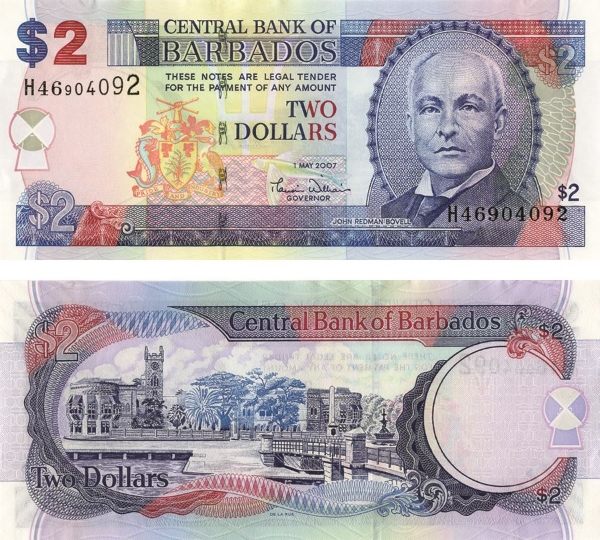
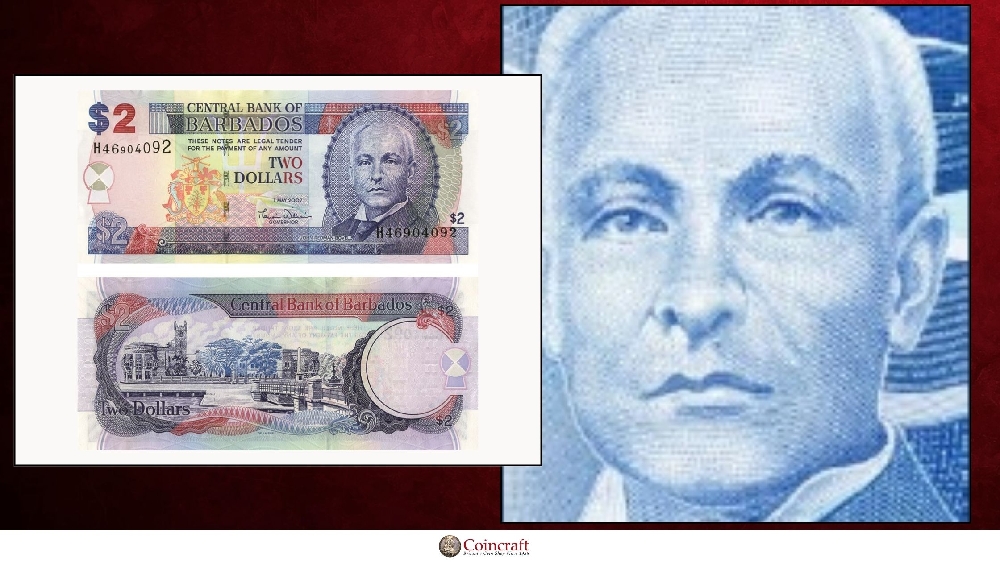
Picture Source of John Redman Bovell: Wikipedia
John Redman Bovell: The Agronomist Who Saved the Caribbean Sugar Industry
In the late 19th century, the Caribbean economy was teetering on the edge of collapse. Its foundational industry—sugar cane—was facing an existential threat from devastating crop diseases, severe droughts, and fierce overseas competition. The region needed a miracle. What it got was the tireless dedication of an agricultural scientist named John Redman Bovell.
Bovell’s pioneering work in genetics and cross-breeding not only rescued the Barbadian economy but revolutionized tropical agriculture across the globe [2][4]. Today, his legacy is immortalized on the currency of his home country, but his impact stretches far beyond the shores of Barbados [1].
Key Facts
Full Name: John Redman Bovell
Lifespan: 1855 – 1928
Nationality: Barbadian
Profession: Scientist, Agronomist, and Superintendent of Agriculture.
Major Discovery: Successfully proved and commercialized the practice of growing sugar cane from fertile seeds rather than cuttings, allowing for genetic cross-breeding [2].
Awards: Awarded the Imperial Service Order in 1908 [4].
Cultural Impact: His portrait is featured as a watermark and primary image on the Barbados $2 polymer and paper banknotes [1][3].
Key Takeaways
Biodiversity is essential: The near-collapse of the Bourbon cane variety highlights the extreme dangers of monoculture and a lack of genetic diversity in agriculture [2].
Observation leads to innovation: Bovell's willingness to investigate the "strange grass" observed by local farmworkers overturned decades of established scientific consensus about sugar cane sterility.
Economic resilience requires adaptation: Bovell didn't just solve the immediate sugar crisis; he looked to the future by breeding higher-yield crops and introducing Sea Island Cotton to diversify the economy [2].
The Sugar Crisis of the Late 19th Century
By the 1880s, the West Indian sugar industry was in a dire state. For decades, the region had relied almost exclusively on a single variety of sugar cane, known as the Bourbon variety. Because sugar cane was traditionally propagated through cuttings (vegetative propagation) rather than seeds, the crops were genetically identical clones [2].
This lack of genetic diversity left the plants highly vulnerable. When a severe fungal disease known as "red rot" swept through the Caribbean, it decimated the Bourbon cane fields. Compounding this agricultural disaster was a severe economic one: heavily subsidized sugar beet production in Europe was flooding the global market, driving sugar prices down to unsustainable levels [2]. Without a hardier, higher-yielding variety of cane, the Caribbean sugar industry was doomed.
A Groundbreaking Discovery: Sugar Cane from Seed
Until the late 19th century, the established scientific consensus was that sugar cane was sterile and could only be grown from cuttings. However, local farm workers and overseers in Barbados had occasionally noticed strange, grass-like seedlings growing in the cane fields.
Working closely with Professor J.B. Harrison (a professor of chemistry and agricultural science), Bovell began to investigate these anomalies. An overseer named J.B. Pilgrim brought them seedlings that had sprouted naturally. Bovell and Harrison confirmed an industry-shattering fact: sugar cane could indeed produce viable, fertile seeds [2][4].
While they were not the first humans to notice this, they were the first scientists to harness its potential. By growing cane from seed, rather than clones, genetic variation was introduced. This meant scientists could finally cross-breed different strains of sugar cane.
Systematizing Success: The Barbados Cane-Breeding Program
Working entirely at his own expense in the early days, Bovell abandoned the dying Bourbon variety and began experimenting with the "White Transparent" variety [2]. Through meticulous, systematic cross-breeding, Bovell developed new varieties of sugar cane that were:
Highly resistant to the diseases wiping out the old crops.
Capable of surviving severe drought conditions.
Packed with a higher sucrose content, making them more profitable.
Under Bovell’s guidance, the West Indies Sugarcane Breeding Station was established in Barbados. His genetic experiments were so successful that Barbados quickly became the premier cane-breeding station in the entire Caribbean, exporting his newly developed, resilient sugar cane varieties to other islands and saving the regional economy [2].
Beyond Sugar: Other Agricultural Contributions
While Bovell is most famous for his work with sugar cane, his contributions to tropical agriculture did not stop there. Recognizing the danger of relying on a single cash crop, he advocated for agricultural diversification. He successfully developed and cultivated several high-quality strains of Sea Island Cotton, providing the region with an alternative and lucrative agricultural export [2].
Legacy and Honors
John Redman Bovell’s contributions to science and industry earned him high accolades during his lifetime and long after his death. In 1908, he was awarded the prestigious Imperial Service Order (often referred to in historical texts as the Imperial Service Star) by the British Crown for his invaluable contributions to tropical agriculture [4].
Today, his face looks out from the left side of the Barbados $2 banknote, serving as an everyday reminder of the scientist whose brilliant mind and stubborn perseverance saved a nation from economic ruin [1][3].
Frequently Asked Questions (FAQs)
Q: Why was the Caribbean sugar industry failing in the 1880s? A: The industry was heavily reliant on a single type of sugar cane (the Bourbon variety) which was wiped out by a fungal disease and severe droughts. Simultaneously, European countries were producing subsidized sugar beet, which drove down global sugar prices [2].
Q: What did people believe about sugar cane before Bovell's experiments? A: For centuries, it was believed that sugar cane was sterile and could only be reproduced by taking cuttings from a mature plant and putting them in the ground. Because of this, cross-breeding was thought to be impossible.
Q: How did Bovell's discovery change agriculture? A: By proving that sugar cane produced viable seeds, Bovell was able to cross-breed different types of sugar cane. This allowed him to intentionally design new, "hybrid" plants that were immune to disease, resistant to drought, and yielded more sugar [2][4].
Q: Is John Redman Bovell on any money? A: Yes! John Redman Bovell's portrait is prominently featured on the $2 banknote issued by the Central Bank of Barbados [1][3].
Q: Did Bovell only work with sugar cane? A: No. He was a major proponent of agricultural diversification and successfully developed several high-quality strains of Sea Island Cotton to help bolster the local economy [2].
References
Central Bank of Barbados. (n.d.). Banknotes: $2 Polymer Note & $2 Note (John Redman Bovell).
Galloway, J. H. (1996). Botany in the Service of Empire: The Barbados Cane‐Breeding Program and the Revival of the Caribbean Sugar Industry, 1880s–1930s. Annals of the Association of American Geographers, 86(4), 682-706.
Miller Publishing Company. (2020). Both Sides of The Coin: The Story of The Central Bank of Barbados 1972-2017.
Uncut Stories by Maison Ferrand. (n.d.). Harper Sugar Cane Mill: the legacy of a forgotten pioneer.