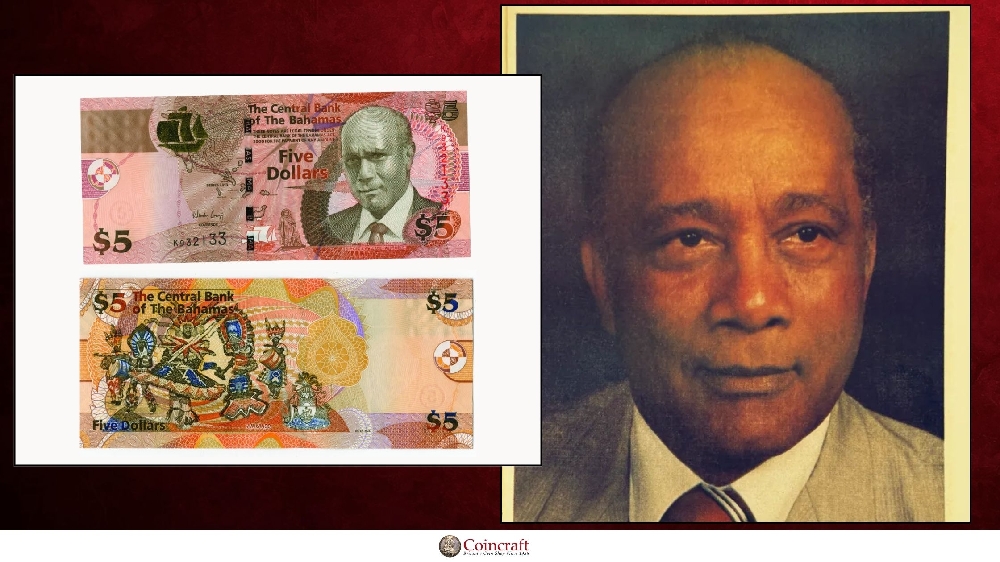
Picture of Sir Cecil Wallace Whitfield: Bahamanianology
Sir Cecil Wallace-Whitfield: The Architect of Modern Bahamian Democracy
When chronicling the history of the modern Bahamas, certain figures emerge as titans who reshaped the political landscape. Sir Cecil Vincent Wallace-Whitfield is unequivocally one of these figures. A man of fierce conviction, profound intellect, and unwavering dedication to democratic principles, Wallace-Whitfield was an instrumental force in achieving Majority Rule and later became the founding father of the Free National Movement (FNM) [2].
While others are often remembered for bringing the nation to independence, Sir Cecil is remembered for something equally vital: ensuring that the Bahamas remained a thriving, accountable, two-party democracy. His willingness to sacrifice his own political comfort to challenge authoritarianism left an indelible mark on Bahamian history [3].
Here is an in-depth look at the life, career, and enduring legacy of Sir Cecil Wallace-Whitfield.
Key Takeaways
Champion of Infrastructure & Education: As a cabinet minister in the first Majority Rule government, Wallace-Whitfield fundamentally improved the standard of living for Black Bahamians by prioritizing education, building schools, and bringing streetlights and paved roads to neglected "Over-the-hill" communities [4].
Principles Over Party: His departure from the ruling PLP in 1970 proved that he valued democratic accountability and transparency over his own political safety and cabinet-level power [3].
Savior of the Two-Party System: By rallying the "Dissident Eight" and founding the Free National Movement (FNM) in 1971, he ensured that the newly independent Bahamas remained a robust, competitive democracy rather than an unchallenged, one-party state [2][4].
Posthumous Victory: Though he spent his later career fighting in the political wilderness and died in 1990, the foundation he laid allowed the FNM to form the government in 1992, forever changing Bahamian politics [2].
Key Facts
Full Name: Sir Cecil Vincent Wallace-Whitfield
Born: March 20, 1930 (Nassau, Bahamas)
Died: May 9, 1990 (Miami, Florida)
Education: Government High School (Bahamas); University of Hull (England) [4]
Political Affiliations: Progressive Liberal Party (PLP) [1950s–1970]; Free National Movement (FNM) [1971–1990]
Key Government Roles: Minister of Works; Minister of Education and Culture; Leader of the Official Opposition [4].
Major Honours: Knighted by Queen Elizabeth II (1987); Posthumously awarded the Order of the National Hero (2018).
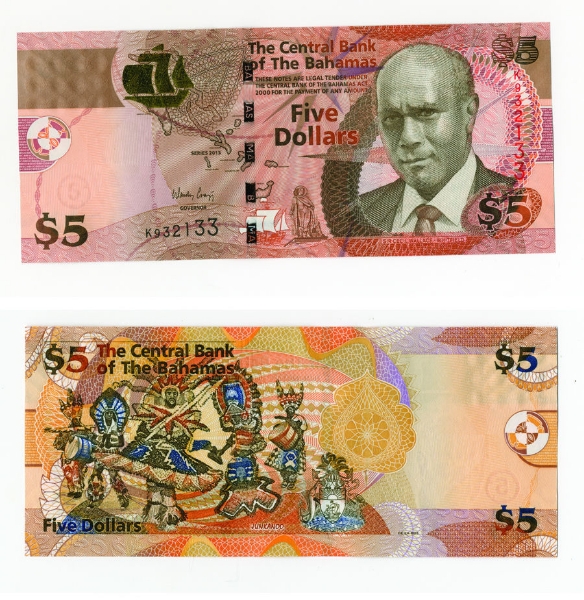
National Recognition: Featured on the Bahamian $5 banknote; namesake of the Cecil Wallace-Whitfield Centre (housing the Office of the Prime Minister and Ministry of Finance) [1].
Early Life and Education
Cecil Vincent Wallace-Whitfield was born on March 20, 1930, in Nassau, Bahamas, to parents Kenneth Whitfield and Dorothy Wallace [4]. Growing up during the colonial era, young Cecil witnessed firsthand the deep socio-economic and racial divides that characterized the Bahamas at the time. The government and the economy were largely controlled by a white mercantile elite known as the "Bay Street Boys," while the Black majority faced systemic disenfranchisement and limited opportunities.
Despite these barriers, Wallace-Whitfield was a driven and intelligent youth. He attended the prestigious Government High School in Nassau, an institution that produced many of the nation’s future leaders. Following his graduation, he entered the workforce as a customs officer [4]. However, his ambitions extended far beyond the civil service. Seeking to equip himself for the political and legal battles he knew lay ahead, he traveled to England to study law at the University of Hull [4]. Upon completing his studies and being called to the bar, he returned home, ready to fight for a more equitable Bahamas.
The Progressive Liberal Party and Majority Rule
Upon his return to the Bahamas in the 1950s, Wallace-Whitfield immediately gravitated toward the burgeoning Progressive Liberal Party (PLP). The PLP was the first national political party in the Bahamas, formed to represent the interests of the Black majority and agitate for universal suffrage and equal rights.
Wallace-Whitfield’s legal acumen and fiery oratory skills made him a rising star within the movement. By 1967, he had risen to the position of Chairman of the PLP and ran successfully for the House of Assembly as the Member of Parliament (MP) for the St. Agnes constituency [4].
That same year marked the historic "Majority Rule" election. The PLP, led by Lynden Pindling, successfully ousted the ruling United Bahamian Party (UBP), ending centuries of white minority rule. Wallace-Whitfield was immediately selected to join Pindling’s first cabinet as the Minister of Works [4].
In this role, he enacted policies that had an immediate, tangible impact on the lives of everyday Bahamians. He championed the installation of vital infrastructure, most notably bringing streetlights and paved roads to the "Over-the-hill" communities in New Providence—neighborhoods that had been historically neglected by the colonial government [4]. Later, as Minister of Education and Culture, he initiated a massive school construction program across the archipelago and spearheaded the establishment of a teacher’s college in San Salvador, recognizing that education was the true great equalizer.
The Dissident Eight and the Birth of the FNM
While the PLP had achieved its primary goal of Majority Rule, ideological fissures soon began to appear within the party. By 1970, Wallace-Whitfield had grown deeply concerned by what he perceived as Prime Minister Lynden Pindling’s increasingly autocratic leadership style and a lack of accountability within the government [3].
For Wallace-Whitfield, achieving Black political power was not the finish line; democratic accountability was the ultimate goal. He firmly believed that a liberation movement must remain answerable to its supporters. Refusing to compromise his principles, Wallace-Whitfield delivered a stunning resignation from Pindling’s cabinet in 1970 [4]. In a dramatic show of defiance at the party convention, he famously declared his refusal to be pushed aside, stating that nobody was going to tell him "to get the hell out of the boat" [3].
His resignation triggered a political earthquake. He was soon joined by seven other disillusioned PLP Members of Parliament—including Arthur Foulkes—who collectively became known as the "Dissident Eight" [4]. They argued that the Bahamian people deserved effective, transparent governance, rather than blindly loyal partisan rule.
In October 1971, meeting at Spring Hills Farms in Fox Hill, Nassau, the Dissident Eight joined forces with other opposition factions to form a new center-right political party: the Free National Movement (FNM) [4]. Wallace-Whitfield was unanimously chosen as the party's first leader. By creating the FNM, he effectively single-handedly preserved the two-party system in the Bahamas, preventing the nation from sliding into a de facto one-party state [2].
Years in Opposition and Enduring Legacy
Leading a new opposition party against the immensely popular "Black Moses" (Pindling) was a Herculean task. Throughout the 1970s and 1980s, Wallace-Whitfield and the FNM faced immense political struggles, ostracization, and a string of electoral defeats. Yet, "Sir Cec" (as he was affectionately known) persisted with his trademark rallying cry of "All the way!"
He served as the Leader of the Official Opposition in the House of Assembly, holding the government's feet to the fire, demanding transparency, and continuing to advocate for the rights of the Bahamian worker. His commitment to the nation was recognized by the Crown in 1987 when he was knighted by Queen Elizabeth II for his services to the Bahamas.
Tragically, Sir Cecil Wallace-Whitfield did not live to see the ultimate triumph of the party he built. On May 9, 1990, he passed away from cancer in a Miami hospital at the age of 60 [4]. Just two years later, in August 1992, the FNM, led by his successor Hubert Ingraham, won a historic landslide victory, finally unseating the PLP and validating decades of Wallace-Whitfield’s tireless work [2].
Today, his legacy is visible everywhere in the Bahamas. He gazes out from the distinctive orange and brown five-dollar banknote. The central nervous system of the Bahamian government—the building housing the Ministry of Finance and the Office of the Prime Minister—bears the name the Cecil Wallace-Whitfield Centre [1]. In 2018, he was posthumously awarded the Order of the National Hero, cementing his status not just as a politician, but as a founding father of the modern Bahamian state.
Frequently Asked Questions (FAQs)
Q: Who were the "Dissident Eight"? A: The "Dissident Eight" were a group of eight Members of Parliament, led by Sir Cecil Wallace-Whitfield, who left the ruling Progressive Liberal Party (PLP) in 1970. They split from the party due to concerns over Prime Minister Lynden Pindling's consolidation of power and a perceived lack of democratic accountability. This group went on to form the foundation of the Free National Movement (FNM) [4].
Q: What is Sir Cecil Wallace-Whitfield’s connection to the Bahamian currency? A: To honor his monumental contributions to the nation’s political and social development, Sir Cecil Wallace-Whitfield’s portrait is featured on the front of the Bahamian five-dollar ($5) banknote.
Q: Did Sir Cecil ever become Prime Minister of the Bahamas? A: No. Although he was a highly influential cabinet minister and later the Leader of the Official Opposition for many years, he passed away in 1990, two years before his party, the FNM, finally won control of the government in the 1992 general election [2].
Q: What is the Cecil Wallace-Whitfield Centre? A: The Cecil Wallace-Whitfield Centre is a major government corporate complex located on West Bay Street in Nassau, Bahamas. It is a highly significant building because it houses the Office of the Prime Minister and the Ministry of Finance [1]. Naming the nation's executive hub after him is a testament to his role in building modern Bahamian democracy.
Q: What was his famous political slogan? A: Sir Cecil was famous for his fiery, energetic political rallies where he popularized the rallying cry, "All the way!" This phrase became synonymous with his unyielding determination and became a staple chant for the Free National Movement.
References
Government of The Bahamas. "Office of the Prime Minister." Bahamas.gov.bs, www.bahamas.gov.bs/agencies/prime-minister. Accessed June 1, 2026.
U.S. Department of State Archive. "Background Note: The Bahamas." State.gov, 2009-2017.state.gov/outofdate/bgn/bahamas. Accessed June 1, 2026.
Bahamianology. "Democratising the Majority Rule Story: Cecil Wallace-Whitfield's Forgotten Place In Bahamian History." Bahamianology.com, bahamianology.com/democratising-the-majority-rule-story. Accessed June 1, 2026.
Wikipedia, The Free Encyclopedia. "Cecil Wallace-Whitfield." Wikipedia.org, en.wikipedia.org/wiki/Cecil_Wallace-Whitfield. Accessed June 1, 2026.