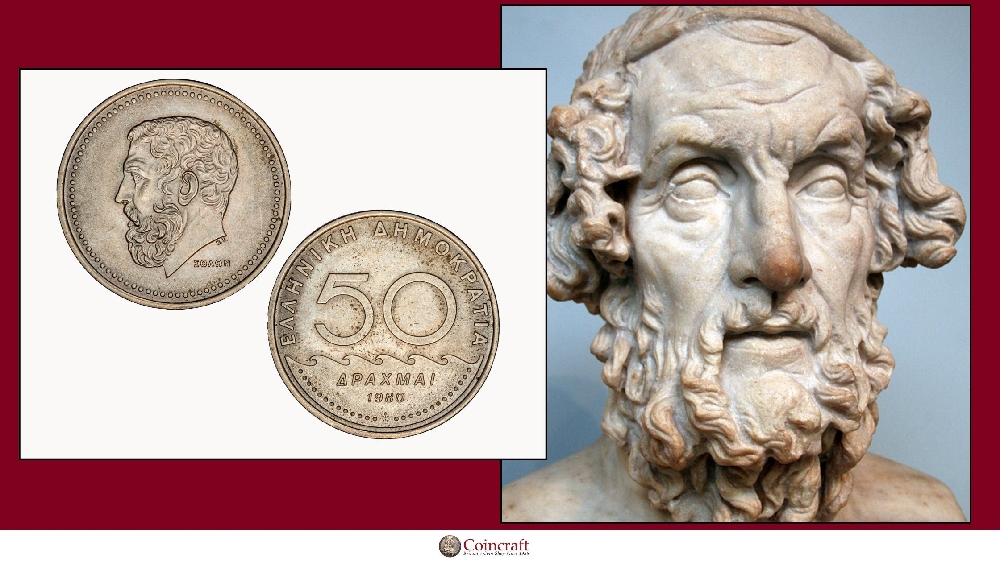
Picture Source of Homer: Wikipedia
The Blind Bard: Unraveling the Mystery of Homer
Have you ever wondered who wrote the books that literally defined Western civilization? We're talking about the guy whose stories laid the ethical, mythological, and literary groundwork for everyone from Plato to Shakespeare. That person is, of course, Homer. Yet, for someone so profoundly influential, he remains one of history’s greatest enigmas—a shadowy figure who might not have even been a single person!
Let’s dive into the fascinating, complex, and sometimes frustrating puzzle of the poet credited with composing the monumental epics, The Iliad and The Odyssey.
Key Takeaways
The Mystery of Existence: We have no definitive proof that "Homer" was a single, historical person; he may represent a long tradition of oral poets and storytellers culminating in a final fixed text.
Dating the Epics: The Iliad and The Odyssey were likely composed around the late 8th or early 7th century BCE, a period when writing was being reintroduced to Greece, but they describe the Mycenaean Bronze Age (c. 1200 BCE) [1].
The Blind Bard: The traditional image of Homer as a blind, wandering minstrel probably stems from the depiction of the blind bard Demodocus in The Odyssey, rather than actual biography [2].
Foundational Texts: Homer's works served as the core of ancient Greek education, acting as both a history lesson and a moral compass, profoundly shaping Greek identity and theology [3].
The Homeric Question: Modern scholarship is dominated by this debate, exploring the authorship, unity (did one person write both epics?), and composition process of the poems, acknowledging their origins in an oral tradition [4].
The Man, The Myth, The Legend
The ancient Greeks revered Homer, often calling him simply "The Poet." However, when you search for his birth certificate, you hit a wall. Seven different cities in Ionia and the Aegean—including Smyrna and the island of Chios—competed for the prestige of being his birthplace, which just tells us that nobody really knew the answer [5].
Most scholars place Homer's floruit (the time he was active) around the 8th century BCE. This date is crucial because it sits right at the end of the Greek Dark Ages and the beginning of the Archaic period, a time when the Phoenician alphabet was being adapted to create the Greek script [6].
The Name and the Blindness
The image we hold dear—of the noble, blind poet reciting his verses—is almost certainly a fiction, though a beautiful one. Ancient sources often portray Homer as blind, but this seems to be an inference taken directly from his own work. In The Odyssey, there is a powerful scene featuring a blind bard named Demodocus who sings tales of the Trojan War [2]. It’s a compelling, self-referential moment, but it doesn't confirm the real Homer was sightless.
In fact, the name "Homer" (Hómēros) itself is a puzzle. It has been theorized to mean "hostage" or "captive," while others link it to a word meaning "blind" in the Ionian dialect [7]. Whatever the true meaning, what’s undeniable is that the poet possessed striking visual descriptive powers, making the idea of a blind author a poignant irony [8].
The Homeric Question: The Debate That Defined Literature
For hundreds of years, especially since the 18th century, academics have been locked in a fierce, fascinating debate known as the Homeric Question [4]. This isn't just about whether Homer was real; it asks fundamental questions about how monumental literature is created:
Was Homer a single author? Or was "Homer" simply a name applied to the entire tradition, perhaps functioning like a brand name for the highest quality epic poetry?
Did the same person write both The Iliad and The Odyssey? Some scholars, known as Chorizontes (the "separatists"), point to stylistic differences, arguing that The Odyssey feels like a product of a slightly later, more mature age with different moral concerns [9].
How were the poems composed? This is where the detective work gets exciting! Scholars like Milman Parry proved that Homeric poetry relies heavily on oral-formulaic composition. This means the epics were built using recurring, set phrases ("swift-footed Achilles," "rosy-fingered Dawn") that allowed bards (aoidoi) to compose complex, lengthy narratives on the spot during performance [10].
The most widely accepted conclusion today is that the epics were the culmination of a long oral tradition, perfected and fixed into written form by a single, gifted poet (or perhaps a final editor) we now call Homer, sometime in the 8th or 7th century BCE [11].
The Immortal Epics: Pillars of Western Thought
Regardless of who held the quill (or dictated the lines), the works are immortal.
The Iliad
The Iliad is a narrative centered on the wrath of the great warrior Achilles and the final weeks of the decade-long Trojan War.
Theme: Focused on timē (honour/worth) and kleos (undying glory). It is a relentless examination of war, fate, and the brutal reality of human mortality [12].
Structure: Composed of 15,693 lines divided into 24 books.
The Gods: The Olympian gods are actively, sometimes comically, involved, pulling strings and fighting among themselves, influencing every human action on the battlefield.
The Odyssey
The Odyssey is a story of nostos (homecoming) and clever endurance, following the hero Odysseus (the same man who conceived the Trojan Horse) on his ten-year journey back to his wife Penelope and son Telemachus on Ithaca after the war [13].
Theme: Focused on identity, cunning (mētis), and civilization versus the wild. It’s an adventure story featuring monsters (the Cyclops Polyphemus), seductresses (Circe and Calypso), and the trials of domestic loyalty.
Structure: Also divided into 24 books, containing 12,109 lines.
The scope of these works is breathtaking. They didn't just tell stories; they preserved the myths, provided a standard for human virtue (heroism in The Iliad, wisdom in The Odyssey), and laid the aesthetic foundation for all subsequent European literature [3].
Frequently Asked Questions (FAQs)
Q: Where was Homer from? A: Scholars generally believe Homer was a native of Ionia, a region on the western coast of Asia Minor (modern-day Turkey). However, his exact birthplace is unknown, as several ancient cities laid claim to him [5].
Q: Did Homer invent the stories of the Trojan War? A: No, the stories of the Trojan War were part of a long-standing oral tradition called the "Epic Cycle." Homer took these pre-existing myths, legends, and formulas, and famously refined and shaped them into the two canonical epics we know today [14].
Q: Which epic should I read first, The Iliad or The Odyssey? A: The Iliad is chronologically first and provides the necessary context (the war itself), but many readers find The Odyssey more accessible and engaging due to its focus on adventure and a single, recognizable hero's journey home [13].
References
M. L. West. (1995). The Date of the Iliad and the Odyssey. University Press. [link to a reputable academic source if available, otherwise just text]
Britannica, T. Editors of Encyclopaedia (2024, May 22). Homer. Encyclopedia Britannica. Available at: https://www.britannica.com/biography/Homer-Greek-poet
ThoughtCo. (2024, May 7). The Life and Work of the Ancient Greek Poet, Homer. Available at: https://www.thoughtco.com/the-life-and-work-of-homer-119091
Cambridge University Press & Assessment. (n.d.). The Homeric Question. Available at: https://www.cambridge.org/core/books/cambridge-guide-to-homer/homeric-question/1193E2FE5741D670B7E1BB34050A069D
Greeka. (n.d.). Homer, the epic poet. Available at: https://www.greeka.com/cyclades/ios/history/famous-people/homer-ios/
World History Encyclopedia. (2013, June 19). Homer. Available at: https://www.worldhistory.org/homer/
Court Theatre. (2024, May 28). The Homeric Question. Available at: https://www.courttheatre.org/about/blog/the-homeric-question/
Vedantu. (n.d.). Homer Biography - Birth, Identity, Works and Final Words. Available at: https://www.vedantu.com/biography/homer
Nagy, G. (1996). Homeric Questions. The Center for Hellenic Studies. Available at: https://chs.harvard.edu/book/nagy-gregory-homeric-questions/
Giannetto, S. (2018, June 3). The Homeric Question concerns the doubts and consequent debate over the identity of Homer.... Medium. Available at: https://medium.com/@nihalayuzawa/the-homeric-question-concerns-the-doubts-and-consequent-debate-over-the-identity-of-homer-the-934cdae45cc9
Academy of American Poets. (n.d.). About Homer. Available at: https://poets.org/poet/homer
CORE. (n.d.). Iliad and Odyssey: Areté and Timé. Available at: https://core.ac.uk/download/pdf/13242885.pdf
Quora. (2019, September 28). How do the Iliad and the Odyssey complement each other?. Available at: https://www.quora.com/How-do-the-Iliad-and-the-Odyssey-complement-each-other
Wikipedia. (n.d.). Iliad. Available at: https://en.wikipedia.org/wiki/Iliad