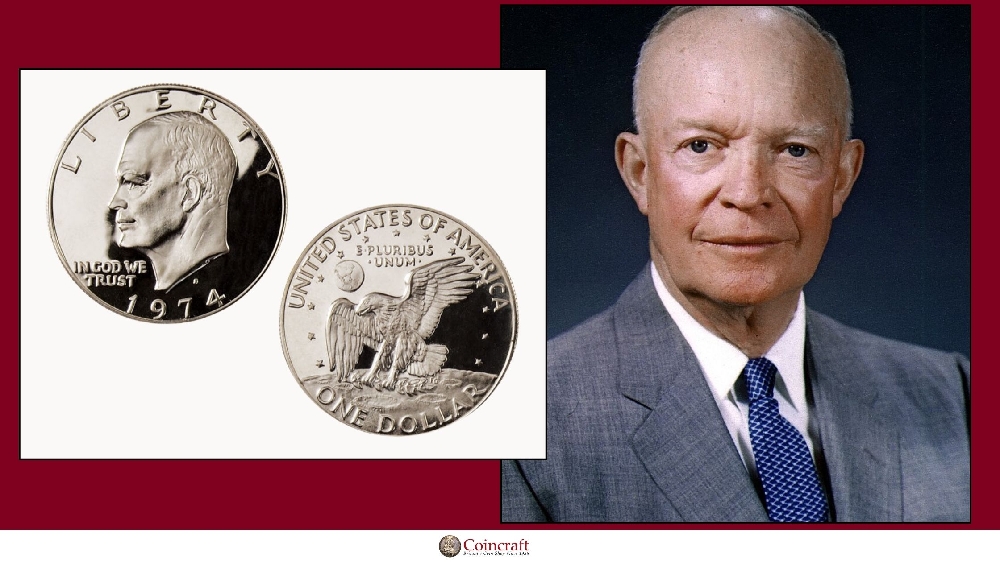
Picture Source of Dwight Eisenhower: Wikipedia
From Kansas to the White House: The Story of "Ike"
When you think of the 20th century, a few names just seem to dominate the history books. One of those is, without a doubt, Dwight D. Eisenhower.
You probably know him as "Ike," the man who led the Allies to victory in Europe during World War II, or maybe as the smiling, grandfatherly president from the 1950s who everyone, well, liked. But the journey from a small town in Kansas to becoming the most powerful man in the world is one heck of a story.
He wasn't just a soldier or just a politician; he was a leader who managed to shape the very world we live in today. Let's dive into the life of the man who commanded armies and led a nation through the dawn of the Atomic Age.
Key Takeaways
Right off the bat, here's what made Ike so significant:
The Supreme Commander: Eisenhower was the strategic architect of the D-Day invasion on June 6, 1944. He led the Allied Expeditionary Force to victory in Europe, managing a massive, complex coalition of armies (and egos!).
America on the Move: As president, he championed and signed the Federal-Aid Highway Act of 1956. This created the 41,000-mile Interstate Highway System, fundamentally changing American travel, commerce, and culture.⁴
Calm in the Cold War: Ike navigated the tense early years of the Cold War. He successfully ended the Korean War, managed the Suez Crisis, and responded to the Sputnik launch by creating NASA, officially starting the Space Race.³
The Famous Warning: In his 1961 farewell address, he famously warned the nation to be on guard against the growing, "unwarranted influence... by the military-industrial complex."⁶ It remains one of the most powerful farewell speeches in presidential history.
The Kansas Kid Who Climbed the Ranks
Dwight D. Eisenhower wasn't born into power or wealth. He came into the world in Denison, Texas, in 1890, but he always called Abilene, Kansas, his true hometown.¹ Life on the prairie was modest, and "Ike" (a nickname he'd had since childhood) was an athletic and energetic kid.
He wanted to go to college, but his family couldn't afford it. His solution? He applied to the U.S. Military Academy at West Point—not necessarily for a burning desire to be a soldier, but because it offered a free, high-quality education.
He graduated in 1915 as part of the "class the stars fell on" (so many of his classmates later became generals). When World War I broke out, Ike was desperate to see combat in France. Instead, he was stuck stateside, becoming a brilliant organizer and trainer for the new tank crews. It was a huge disappointment for him at the time, but it taught him everything about logistics, planning, and management—skills that would define his future.
Between the wars, he slowly climbed the ranks, impressing superiors with his sharp mind and, just as importantly, his ability to make complex plans understandable and get difficult personalities to work together.
Mr. Supreme Commander
When World War II exploded, Eisenhower wasn't a household name. But in Washington, the right people knew who he was. General George C. Marshall, the Army Chief of Staff, saw Ike's genius for strategy and organization.
After Eisenhower led the successful Allied invasions of North Africa and Italy, President Franklin D. Roosevelt made a monumental decision: he picked Ike to be the Supreme Allied Commander for the invasion of Europe.¹
This put him in charge of everything. The job was as much political as it was military. He had to manage the clashing egos of superstars like Britain's General Montgomery and America's own fiery General Patton, all while planning the single most complex military operation in human history: D-Day.²
On June 6, 1944, the invasion of Normandy began. The pressure on him was immense. Ike had famously pre-written a short note taking full responsibility in case the invasion failed. It read, "Our landings... have failed... If any blame or fault attaches to the attempt it is mine alone."
But it didn't fail. The invasion was a bloody, hard-fought success, and it marked the beginning of the end for Hitler's Germany. Eisenhower became the hero who had led the "crusade in Europe."
"I Like Ike": The General in the White House
After the war, Ike was arguably the most famous and beloved man in the world. He served as Army Chief of Staff, president of Columbia University, and the first supreme commander of NATO.³
Both political parties wanted him to run for president. In 1952, he finally agreed, running as a Republican with the irresistible slogan, "I Like Ike." He won in a landslide.
As president (1953-1961), he brought a sense of calm and stability to the 1950s. His leadership style wasn't flashy; it was steady. He ended the Korean War as promised and focused on "Modern Republicanism"—he didn't try to dismantle the New Deal programs of his predecessors, but instead focused on balancing the budget and building infrastructure.
And build, he did. His crowning domestic achievement was the Interstate Highway System.⁴ Inspired by seeing the German Autobahn during the war, he envisioned a network of superhighways to move troops in case of emergency and, more importantly, to connect the country for commerce and travel. It completely changed the face of America.
He also faced major Cold War crises. And in a defining moment for civil rights, he sent the 101st Airborne Division to Little Rock, Arkansas, to ensure nine Black students (the "Little Rock Nine") could safely integrate Central High School.⁵ He wasn't a vocal crusader for civil rights, but he believed in the rule of law and enforced the Constitution.
Frequently Asked Questions (FAQs)
1. Why was he nicknamed "Ike"?
It was a family nickname! He and his five brothers were all nicknamed "Ike" at various times as a shortened version of Eisenhower. It just stuck to Dwight the most and became how the world knew him.
2. What was his relationship with General Patton?
It was famously complicated! He respected Patton as a brilliant and aggressive combat commander but was constantly frustrated by his recklessness and inability to keep quiet. Ike's job was to manage Patton, which he did with a masterful mix of admiration and exasperation.
3. What is his presidency most known for?
While the Interstate Highway System is the most tangible legacy, his presidency is best remembered for bringing a sense of peace and prosperity to the 1950s. He ended the Korean War, kept the Cold War from turning into a hot war, and established NASA.
References
Eisenhower Presidential Library. (n.d.). Dwight D. Eisenhower. [Online] Available at: https://www.google.com/search?q=https://www.eisenhowerlibrary.gov/eisenhowers/dwight-d-eisenhower (Accessed: 17 November 2025).
History.com Editors. (2023). D-Day. [Online] A&E Television Networks. Available at: https://www.history.com/topics/world-war-ii/d-day (Accessed: 17 November 2025).
Miller Center, University of Virginia. (n.d.). Dwight D. Eisenhower. [Online] Available at: https://millercenter.org/president/dwight-d-eisenhower (Accessed: 17 November 2025).
U.S. Department of Transportation. (2022). The Interstate Highway System. [Online] Federal Highway Administration. Available at: https://www.fhwa.dot.gov/interstate/ (Accessed: 17 November 2025).
National Park Service. (2024). Little Rock Central High School National Historic Site. [Online] Available at: https://www.nps.gov/chsc/index.htm (Accessed: 17 November 2025).
National Archives. (n.d.). Eisenhower's Farewell Address (1961). [Online] Available at: https://www.ourdocuments.gov/doc.php?doc=90 (Accessed: 17 November 2025).


