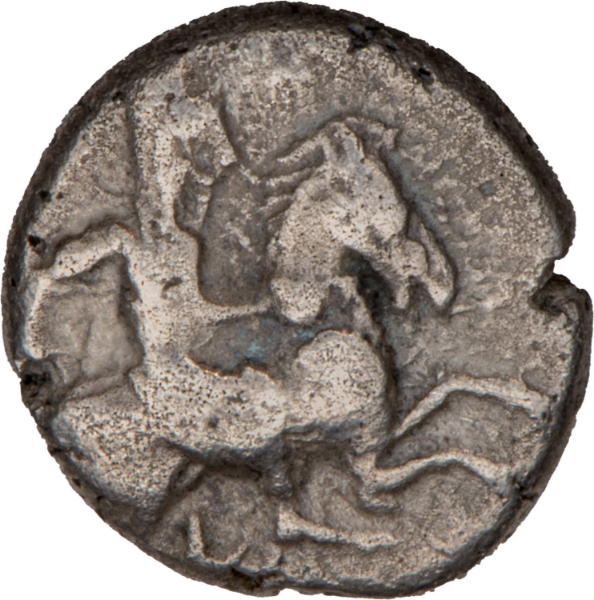
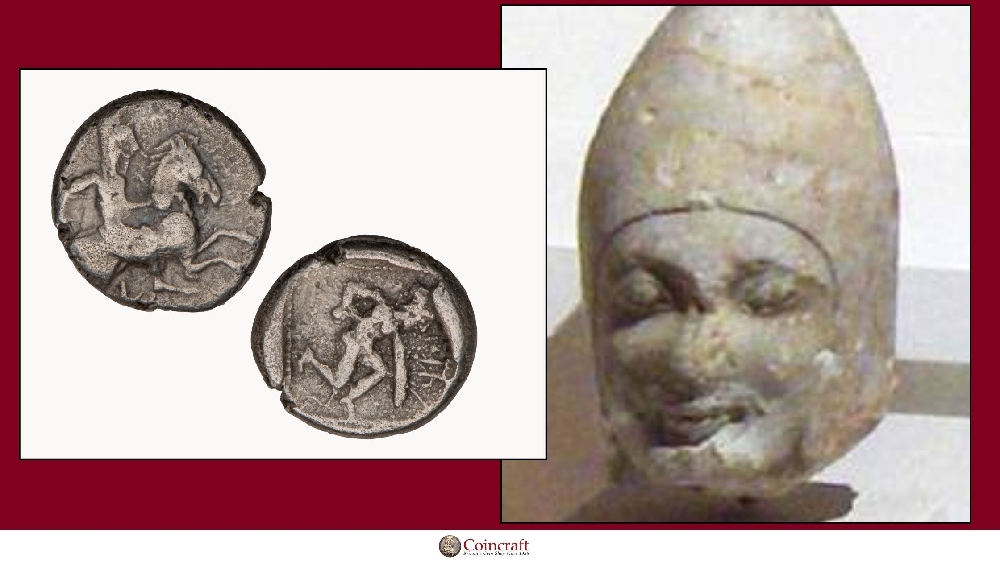
Picture Source of Satrap: Wikipedia
The Satrap: Ancient Persia’s Ultimate Power Broker
If you think modern middle management is tough, spare a thought for the Satrap.
While the term might conjure images of a specific villain from a fantasy novel, "Satrap" was actually a job title—one of the most powerful and dangerous roles in the ancient world. Imagine being the governor of a territory the size of Texas, with your own private army and the power of a king, but with one catch: if you messed up, the actual "King of Kings" (the Persian Emperor) might just cut off your nose or worse.
The Satrap was the glue that held together the massive Achaemenid Empire (c. 550–330 BCE), which stretched from the Indus Valley in India all the way to Egypt and Greece¹⁵. They were the original regional managers, balancing immense luxury with the constant threat of assassination.
Let’s take a walk through the life and times of history’s high-stakes governors.
Key Takeaways
A "Mini-King": A Satrap was a provincial governor in ancient Persia who ruled with near-absolute authority in their region, often maintaining their own court and army.
Ancient Origins: The system was fully formalized by Darius I (the Great), who divided the empire into roughly 20 distinct provinces or "satrapies" to ensure order and tax collection².
The "King's Eye": To prevent these powerful governors from revolting, the Emperor employed spies known as the "King's Eye" to watch them and report back directly¹.
Lasting Legacy: The system was so effective that Alexander the Great kept it after conquering Persia, and the word "satrap" is still used today to describe a petty, self-important official.
The Job Description: Protector of the Kingdom
The word Satrap comes from the Old Persian xšaçapāvan, which literally translates to "protector of the kingdom" or "protector of the province"³. It sounds noble, but in practice, it was a high-wire act of administration and warfare.
When Cyrus the Great founded the Persian Empire, he realized he couldn't be everywhere at once. His solution? Delegate. But it was Darius the Great who really standardized the role. He created a map of about 20 provinces (satrapies) and assigned a Satrap to each.
What Did They Actually Do?
Think of a Satrap as a Viceroy. Their daily to-do list was intense:
Tax Collector: They were responsible for sending a fixed amount of silver and horses back to the capital every year. If the books didn't balance, they were in trouble⁴.
Supreme Judge: They settled local legal disputes. For the average citizen, the Satrap was the law¹.
Warlord: They maintained their own troops to put down local rebellions or bandits. This was a double-edged sword; gave them power, but also the means to overthrow the King.
The Perks and The Perils
Living Large
Being a Satrap was good work if you could get it. They didn't just live in government offices; they lived in palaces. They had their own "mini-courts" that mimicked the Great King's court in Susa or Persepolis. They maintained vast parks and hunting gardens called paradeisos (the origin of our word "paradise")⁵.
The "King's Eye"
However, the Great King wasn't stupid. He knew that giving a guy his own army and a mountain of cash was a recipe for rebellion. To counter this, the King installed a separate military commander in each satrapy who reported only to him, not the Satrap. Furthermore, royal inspectors known as the "King's Eye" or "King's Ear" would show up unannounced to audit the province. If a Satrap was found plotting treason, the punishment was swift and often brutal¹.
Hall of Fame: Famous Satraps
Since "Satrap" is a title, let's look at a few specific men who made the role legendary (or infamous).
1. Tissaphernes (The Schemer)
If you were a Greek living in the 400s BCE, you hated this guy. Tissaphernes was the Satrap of Lydia (modern Turkey). He was a master diplomat who famously played the Greek city-states of Sparta and Athens against each other during the Peloponnesian War. He would fund one side just enough to keep the war going, ensuring neither became strong enough to threaten Persia⁶. A brilliant, if slippery, politician.
2. Pharnabazus (The Soldier)
A contemporary of Tissaphernes, Pharnabazus was the Satrap of Phrygia. Unlike the diplomatic Tissaphernes, Pharnabazus was a military man who often led fleets and armies personally. He is one of the few Satraps who managed to hold onto his power for decades without getting executed or assassinated—a rare feat in those volatile times⁹.
3. Bessus (The Traitor)
Bessus is the villain of the Satrap story. He was the Satrap of Bactria (modern Afghanistan). When Alexander the Great crushed the Persian army, the Persian King Darius III fled to Bessus for safety. Instead of protecting his king, Bessus murdered him and declared himself the new King (calling himself Artaxerxes V). It didn't end well—Alexander hunted him down and executed him for regicide⁷.
The Legacy
When Alexander the Great conquered Persia, he didn't tear down the Satrap system—he moved right into it. He realized it was the most efficient way to run a massive empire. He even kept many Persian Satraps in their old jobs, provided they swore loyalty to him.
Today, the word lives on in English. If someone calls a politician a "satrap," they usually mean they are a subordinate official who acts like a petty tyrant in their own little domain.
Frequently Asked Questions (FAQs)
Q: Is "Satrap" a specific person or just a title? A: It is strictly a title, like "Governor" or "General." However, because they held their posts for life and often passed them to their sons, they became famous individuals in their own right.
Q: Is the author Marjane Satrapi related to these ancient governors? A: In a way! The famous graphic novelist Marjane Satrapi (author of Persepolis) is of Iranian descent. Her last name, "Satrapi," is derived from this ancient title, and her family is historically descended from the Qajar dynasty of monarchs¹². It’s a name that carries deep historical weight.
Q: Did Satraps ever successfully rebel? A: Yes, quite often. The "Great Satraps' Revolt" in the 360s BCE saw several powerful governors band together to fight the King. While the rebellion was eventually crushed, it showed just how independent these provincial rulers could become¹.
References
Study.com. (n.d.). Satrap Definition, History & Importance. [online] Available at: https://study.com/academy/lesson/satrap-overview-history-origin.html [Accessed 23 Jan. 2026].
Britannica, T. Editors of Encyclopaedia (2025). Satrap | Achaemenid Empire, Autonomous Rule, Taxation. [online] Encyclopedia Britannica. Available at: https://www.britannica.com/topic/satrap [Accessed 23 Jan. 2026].
Collins English Dictionary. (2025). Satrap definition and meaning. [online] Available at: https://www.collinsdictionary.com/dictionary/english/satrap [Accessed 23 Jan. 2026].
ThoughtCo. (2025). A List of the Satrapies of the Achaemenid Persians. [online] Available at: https://www.thoughtco.com/satrapies-of-the-achaemenid-persians-120229 [Accessed 23 Jan. 2026].
Muhammad Encyclopedia. (n.d.). Lifestyle of Ancient Persia – Daily Life, Food & Society. [online] Available at: https://muhammadencyclopedia.com/article/lifestyle-of-ancient-persia [Accessed 23 Jan. 2026].
Livius.org. (2019). Tissaphernes. [online] Available at: https://www.livius.org/articles/person/tissaphernes/ [Accessed 23 Jan. 2026].
Kiddle.co. (2025). Bessus Facts for Kids. [online] Available at: https://kids.kiddle.co/Bessus [Accessed 23 Jan. 2026].
Heritage History. (n.d.). Tissaphernes. [online] Available at: https://www.heritage-history.com/index.php?c=resources&s=char-dir&f=tissaphernes [Accessed 23 Jan. 2026].
FactMonster. (n.d.). Pharnabazus. [online] Available at: https://www.factmonster.com/encyclopedia/history/bios/ancient-middle-east/pharnabazus [Accessed 23 Jan. 2026].
Oxford Classical Dictionary. (2016). Pharnabazus. [online] Available at: https://oxfordre.com/classics/documentId/acrefore-9780199381135-e-4936 [Accessed 23 Jan. 2026].
Satrapi, M. (2003). Persepolis: The Story of a Childhood. New York: Pantheon Books.
Wikipedia. (2025). Marjane Satrapi. [online] Available at: https://en.wikipedia.org/wiki/Marjane_Satrapi [Accessed 23 Jan. 2026].
Poetry International. (n.d.). THE SATRAPY - Constantine Cavafy. [online] Available at: https://www.poetryinternational.com/en/poets-poems/poems/poem/103-2522_The-satrapy [Accessed 23 Jan. 2026].
Oreate AI Blog. (2025). Understanding the Role of Satraps in Ancient Persia. [online] Available at: https://www.google.com/search?q=https://www.oreateai.com/blog/understanding-the-role-of-satraps-in-ancient-persia/ [Accessed 23 Jan. 2026].
Encyclopaedia Iranica. (2018). ACHAEMENID SATRAPIES. [online] Available at: https://www.iranicaonline.org/articles/achaemenid-satrapies/ [Accessed 23 Jan. 2026].