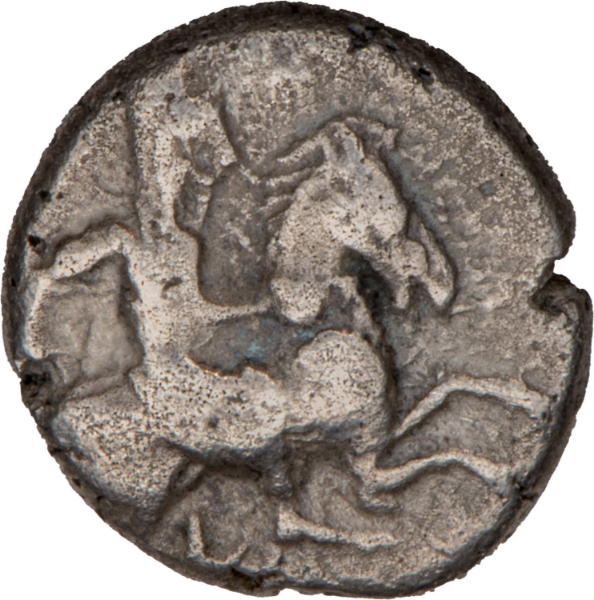
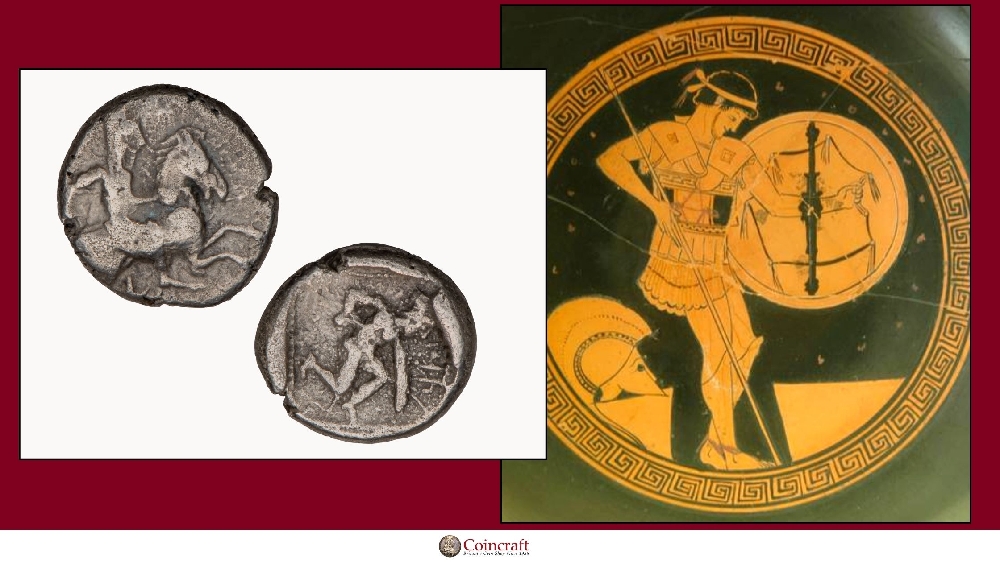
Picture Source of Hoplite: Wikipedia
The Bronze Wall: Inside the Life of the Ancient Greek Hoplite
Picture this: It’s 480 BC. You are standing on a dusty plain in Greece. The summer sun is beating down on you, but you can’t feel the breeze because you are encased in nearly 20 kilograms of bronze and leather. You can barely hear your commander over the deafening sound of thousands of men chanting the paean—a war hymn to Apollo.
You aren't a superhero. You’re a farmer, or maybe a potter. But today, you are a Hoplite, a living brick in a wall of bronze that is about to smash into another wall just like it.
In this post, we are going to look past the Hollywood movies and museum statues to meet the real people behind the armor. Who were these men who defined Western warfare for centuries? Let’s dive in.
Key Takeaways
The Shield Defined the Soldier: The hoplite was named after his shield, the hoplon (or aspis). It was revolutionary because it protected the soldier's left side and his neighbor's right side, enforcing unity.^1^
The Citizen-Soldier Ideal: Unlike modern professional armies, hoplites were regular citizens—farmers and craftsmen—who bought their own gear and fought to defend their own voting rights and land.^2^
The Phalanx was a Scrum: Battle wasn't usually a series of fancy duels; it was a brutal shoving match called othismos, where weight and cohesion mattered more than individual skill.^3^
Heavy Lifting: A full set of hoplite armor (the panoply) could weigh between 13kg and 20kg, making heat and exhaustion the invisible enemies on the battlefield.^4^
Who Was the Hoplite?
First off, we need to bust a myth. When we say "Hoplite," we often think of the Spartans from the movie 300. But the reality is that the vast majority of hoplites were not full-time warriors. They were the "middle class" of Ancient Greece—men who had enough money to afford a set of armor but still had to work for a living.^2^
In cities like Athens, these men were the Zeugitai. They were the backbone of the democracy. The logic was simple: if you fight for the city, you get a vote in the city. This connection between military service and citizenship is one of the most enduring legacies of the hoplite era.
The Panoply: Gear That Could crush You
A hoplite was only as good as his gear. This equipment was known as the panoply, and owning it was a status symbol.
The Shield (Aspis)
The most critical piece of kit was the shield. It was a large, deeply dish-shaped wooden bowl covered in bronze. It featured a double-grip system: your arm slid through a central band (porpax) and your hand grabbed a handle near the rim (antilabe). This allowed the shield to be heavy yet maneuverable.^1^
Fun Fact: If a hoplite fled battle, he often tossed his shield first because it was heavy and useless for running away. To come home "with your shield or on it" wasn't just a catchy slogan; losing your shield was a sign you had abandoned your friends.
The Spear (Dory) and Sword (Xiphos)
The primary weapon was the dory, a spear about 2 to 2.5 meters long. It had a leaf-shaped iron head at the front and a bronze spike (the sauroter or "lizard killer") at the back. If the front broke—which happened a lot—you flipped it around and kept fighting.^1^
If the spear was lost entirely, they switched to the xiphos (a short straight sword) or the kopis (a terrifying curved slashing blade) for close-quarters grim work.
The Phalanx: The Human Tank
Hoplites didn't fight as individuals; they fought as a Phalanx.
Imagine a rugby scrum, but everyone has spears. The phalanx was a tight formation, usually eight ranks deep. Because the shield covered your left side and your neighbor's right, the formation naturally drifted to the right during battle as men subconsciously huddled behind their neighbor's shield for protection.^5^
The Push (Othismos)
When two phalanxes smashed into each other, it resulted in the othismos—the shove. Men in the rear ranks would literally push their shields into the backs of the men in front of them, driving the mass forward. It wasn't about fencing skills; it was about sheer physical pressure, terror, and holding your ground until the enemy line shattered.^3^
The Decline of the Bronze Wall
For nearly three centuries, the hoplite was the king of the battlefield. But all reigns must end.
By the 4th century BC, warfare was changing. Generals like Iphicrates began introducing lighter troops (peltasts) who could outmaneuver the slow, heavy hoplites. Then came Philip II of Macedon (Alexander the Great's dad). He armed his men with the sarissa—a massive 6-meter long pike.^4^
The traditional hoplite couldn't get close enough to strike. The era of the citizen-soldier scrum faded, replaced by professional standing armies and combined arms tactics.
Frequently Asked Questions (FAQs)
Q: Why were they called "Hoplites"? A: They were named after their gear. The word comes from hopla (equipment/weapons) or specifically the hoplon (shield). Essentially, they were "the armored men."^1^
Q: Did Hoplites get paid? A: Initially, no. They were citizens defending their homes. However, during long conflicts like the Peloponnesian War, cities began providing a daily allowance for food and maintenance, effectively a wage.^2^
Q: How hot was it inside the armor? A: Unbearably hot. The bronze cuirass and helmet trapped body heat. Modern reenactments suggest that heatstroke was a genuine risk before the battle even started.^4^
References
Steel Mastery. (2020). Hoplite soldier’s armor and weapon. [Online] Available at: https://steel-mastery.com [Accessed 26 Jan. 2026].
Hafez, M. (2015). The Social Position of the Hoplites in Classical Athens. Athens Journal of History, 1(2). [Online] Available at: https://www.athensjournals.gr [Accessed 26 Jan. 2026].
Tastes of History. (2026). Othismos and the ancient Greek phalanx. [Online] Available at: https://www.tastesofhistory.co.uk [Accessed 26 Jan. 2026].
Book and Sword. (2019). The Myth of the Heavily Burdened Hoplite. [Online] Available at: https://www.bookandsword.com [Accessed 26 Jan. 2026].
Wikipedia. (2025). Hoplite Tactics and Phalanx Drift. [Online] Available at: https://en.wikipedia.org/wiki/Hoplite [Accessed 26 Jan. 2026].