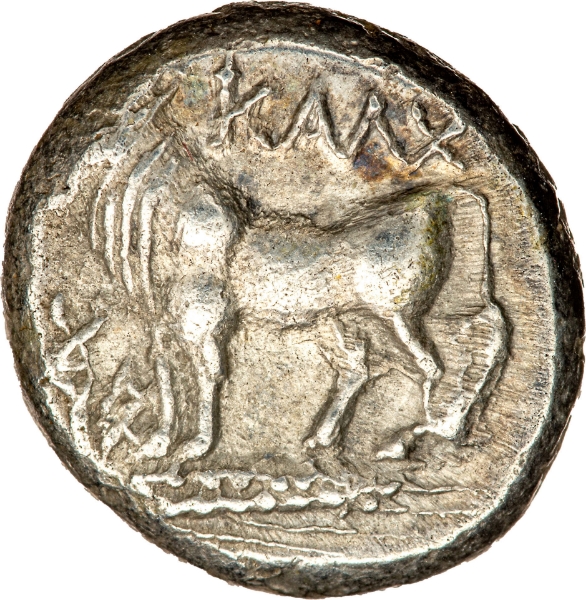
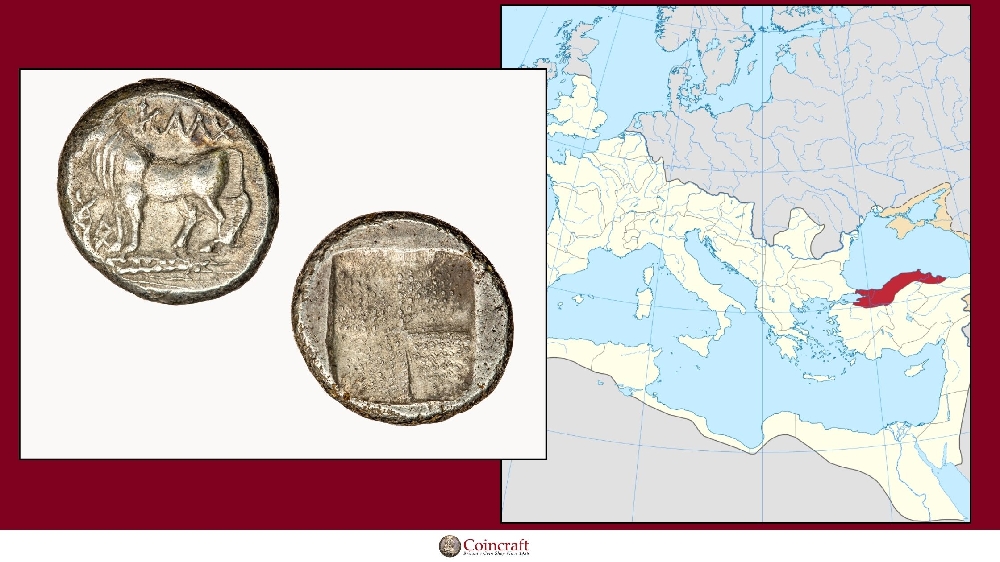
Picture Source of Chalcedon (Kalchedon): Wikipedia
Chalcedon: The Ancient "City of the Blind" That Saw Empires Rise and Fall
Before Istanbul was even a twinkle in an emperor's eye, there was Chalcedon. Today, the district of Kadıköy is where modern locals go to sip third-wave coffee and hunt for vintage records. But scrape away the pavement of this fiercely trendy Asian-side neighborhood, and you’ll find the bones of the ancient maritime powerhouse of Kalchedon—a city that beat its world-famous neighbor to the map by nearly two decades, only to spend the next few centuries dealing with snarky oracles, clashing empires, and history-altering religious brawls.
Forget the glittering palaces of Istanbul for a moment. It's time to uncover the wild, underdog history of the city that started it all—and proved you don't need the best real estate to change the world.
Key Takeaways
The Original Settlers: Founded around 685 BC, Chalcedon actually predates the legendary city of Byzantium (modern Istanbul) by about 17 years.
The "City of the Blind": It earned this hilarious historical nickname because its founders allegedly ignored the vastly superior land across the water when choosing where to build.
A Hub of Christian History: In 451 AD, the city hosted the Council of Chalcedon, a massive event that fundamentally shaped modern Christian theology.
Modern-Day Marvel: Today, the ancient footprint of Chalcedon survives as Kadıköy, one of Istanbul's most culturally rich and lively districts.
The "City of the Blind" (Founding & Early Years)
Let's rewind to around 685 BC. A group of Greek colonists from Megara set sail to find a new home and decided to settle on the eastern shore of the Bosphorus in the region of Bithynia, Asia Minor. They named their new home Chalcedon.
About 17 years later, another group of Megarian colonists consulted the famous Oracle of Delphi about where to build their own city. The Oracle cryptically told them to settle "opposite the blind." When these colonists arrived at the Bosphorus, they looked at the magnificent, highly defensible, and strategically perfect peninsula on the European side (the Golden Horn) and realized what the Oracle meant. The founders of Chalcedon must have been "blind" to miss such a prime piece of real estate right across the water! And so, Byzantium was founded, and Chalcedon was forever branded with the historical burn: "The City of the Blind."(1)
Despite the joke, Chalcedon was no slouch. It grew into a wealthy, flourishing maritime town, minted its own beautiful coins, and enjoyed a thriving trade network.
Caught in the Crossfire (Hellenistic & Roman Eras)
If you live in a nice house right in the middle of a busy highway, you're going to get some unwanted visitors. That was Chalcedon's geographical curse. Because it sat at the maritime crossroads between Europe and Asia, everyone wanted a piece of it.
Over the centuries, the city was conquered, liberated, and conquered again. It was captured by the Persian Empire, freed by the Greeks, and then bounced between the control of Athens and Sparta during the Peloponnesian War.(2) Later, it fell under the sway of the Kingdom of Bithynia.
Finally, in 74 BC, King Nicomedes IV of Bithynia did something rather drastic: he died and bequeathed his entire kingdom—Chalcedon included—to the Roman Republic. Under Roman rule, the city saw a period of intense development, though it was occasionally sacked by invading forces like the Goths. Yet, it always bounced back, proving that the "blind" city was remarkably resilient.
A Center of Faith: The Council of Chalcedon
Fast forward to the twilight of the Roman Empire. Chalcedon’s most famous moment in the global spotlight came in 451 AD. The Christian church was experiencing massive, kingdom-shaking debates over the exact nature of Jesus Christ. Was he fully divine? Fully human? A mix of both?
To settle the matter, the Roman Emperor Marcian called for a massive gathering of bishops. They met right in Chalcedon at the Church of St. Euphemia. This event, known as the Council of Chalcedon, resulted in the "Chalcedonian Definition," which declared that Christ had two distinct natures (divine and human) perfectly united in one person.(3)
Whether you're a theology buff or not, this was a massive deal. The decisions made in this maritime town split the early church but also laid the foundational beliefs for Eastern Orthodox, Catholic, and many Protestant churches that survive today. Not bad for a city that started off as the butt of an ancient Greek joke!
Chalcedon Today: The Spirit of Kadıköy
So, what happened to Chalcedon? It didn't disappear into the dust of history. As the centuries rolled on, it was absorbed by the Ottoman Empire and eventually transformed into the modern Turkish district of Kadıköy.
Today, if you walk the streets where ancient Megarians once traded and Roman bishops once argued, you won't find many towering ancient ruins. Instead, you'll find a buzzing, youthful neighborhood famous for its incredible street food, vibrant fish markets, independent bookshops, and stunning waterfront promenades. The physical stones of Chalcedon might be mostly gone, but the bustling, maritime soul of the city is more alive than ever.
Next time you find yourself on a ferry crossing the Bosphorus toward the Asian side of Istanbul, tip your hat to the "City of the Blind." They may not have picked the most obvious spot, but they certainly picked a beautiful one.
Frequently Asked Questions (FAQs)
Why was Chalcedon called the "City of the Blind"? Ancient historians, including Herodotus, report that the Oracle of Delphi called its founders "blind" because they settled on the eastern shore of the Bosphorus, completely ignoring the much better, easily defensible land right across the strait where Byzantium (Istanbul) was later built.
What was the Council of Chalcedon? It was a major religious council held in 451 AD. Over 500 bishops gathered to debate the nature of Jesus Christ. They issued the Chalcedonian Definition, establishing the doctrine that Christ is both fully divine and fully human—a belief central to many major Christian denominations today.
Can I visit Chalcedon today? Yes, but you will know it by its modern name: Kadıköy! It is a massive, lively district on the Asian side of Istanbul, Turkey. While ancient ruins are scarce, the geographical layout and vibrant maritime culture remain.
References
Herodotus, 1920. The Histories, Book 4, Chapter 144. Translated by A. D. Godley. Cambridge: Harvard University Press. Available at: Perseus Digital Library
Foss, C., 1991. 'Chalcedon', in Kazhdan, A. P. (ed.) The Oxford Dictionary of Byzantium. Oxford: Oxford University Press. Available at: Oxford Reference
Price, R. and Gaddis, M., 2005. The Acts of the Council of Chalcedon. Liverpool: Liverpool University Press. Available at: Liverpool University Press