 - RS0600.jpg)
Picture Source of Julia Avita Mamae: Wikipedia
The Power Behind the Throne: The Fascinating Life of Julia Avita Mamaea
In the volatile political climate of the 3rd century AD, the Roman Empire was navigating a period of intense instability and dangerous military power. Survival within the imperial court demanded extraordinary cunning and absolute ruthlessness. Enter Julia Avita Mamaea, a brilliant and fiercely ambitious Syrian noblewoman who stepped into this precarious arena. Rather than shrinking from the chaos, she decisively took the reins of the greatest empire on earth to secure her family's legacy.
Born somewhere between 180 and 192 AD, Julia Mamaea didn't just sit on the sidelines of history; she actively shaped it. As a pivotal figure of the Severan dynasty, she effectively ruled Rome during the reign of her son, Emperor Severus Alexander(1). Welcome to the story of the ultimate Roman "momager"—a tale of power, survival, beautifully minted coins, and a rather tragic, bloody end.
Key Takeaways
The Real Ruler of Rome: Though her son Alexander Severus wore the crown, Julia Mamaea was the true architect of Roman policy from 222 to 235 AD, acting as regent and his most trusted advisor.
A Master of PR and Propaganda: She used Roman coinage extensively to cement her authority, associating herself with goddesses like Venus and Juno to project an image of stability and divine favor.
The Fixer: Mamaea brought respectability back to the Roman court after the disastrous and scandalous reign of her nephew, the notorious Emperor Elagabalus.
A Tragic Downfall: Her reign came to a brutal end when mutinous Roman soldiers, angered by her cost-cutting military decisions, assassinated both her and her son on the Germanic frontier.
Syrian Roots and a Royal Bloodline
To understand Julia Mamaea, we have to look at her incredible family tree. She was born in Emesa (modern-day Homs, Syria) to a deeply powerful family. Her mother was Julia Maesa, a sharp political operator, and her aunt was Julia Domna, the wife of Emperor Septimius Severus(2).
Growing up in the East, Mamaea was surrounded by powerful women who didn't just quietly weave tunics; they influenced emperors, managed vast wealth, and understood the brutal game of Roman politics. While her sister, Julia Soaemias, was known for her wild and somewhat scandalous lifestyle, Mamaea was famously reported to be virtuous, highly educated, and incredibly disciplined. She married a fellow Syrian, Gessius Marcianus, and together they had a son named Marcus Julius Gessius Bassianus Alexianus—who we know much better by his imperial name: Severus Alexander.
The Ultimate Roman "Momager"
Mamaea's rise to absolute power began with a family crisis of epic proportions. Her nephew, Emperor Elagabalus (the son of her sister Soaemias), was a complete disaster for Rome. He was wildly unpopular, ignored Roman traditions, and alienated the powerful Praetorian Guard.
Seeing the writing on the wall, Mamaea and her mother, Julia Maesa, realized that if Elagabalus went down, their entire family would go down with him. They needed a backup plan, and that plan was Mamaea's young, impressionable son, Alexander.
With incredible political cunning, Mamaea convinced Elagabalus to adopt Alexander as his heir. Once the papers were signed, she carefully guarded her son, ensuring he was given a traditional Roman education and kept far away from his cousin's scandalous parties. When the Praetorian Guard inevitably assassinated Elagabalus in 222 AD, the young Alexander, just 13 years old, was hailed as Emperor. But let's be real—everyone knew who was actually in charge(3).
Ruling the Roman World
Because Alexander was practically a child, Mamaea stepped up as regent. She was granted the prestigious title of Augusta (Empress) and effectively ran the empire.
Her first order of business? Cleaning house. Mamaea reversed all the bizarre religious edicts of Elagabalus, sending his foreign holy relics back to Syria and restoring the traditional Roman pantheon. She also formed a council of sixteen respected senators to help advise her son, a move that made the Roman elite breathe a massive sigh of relief.
During her tenure, the empire actually saw a period of relative peace and legal reform. She heavily influenced her son to be a just, mild-mannered ruler. However, being the woman behind the curtain wasn't always easy. Roman men, particularly the soldiers, deeply resented taking orders from a woman. Mamaea was often criticized for being overly controlling of her son—even allegedly forcing him to divorce a wife she felt was becoming too powerful!
The Mamaea Coinage: A Numismatic Legacy
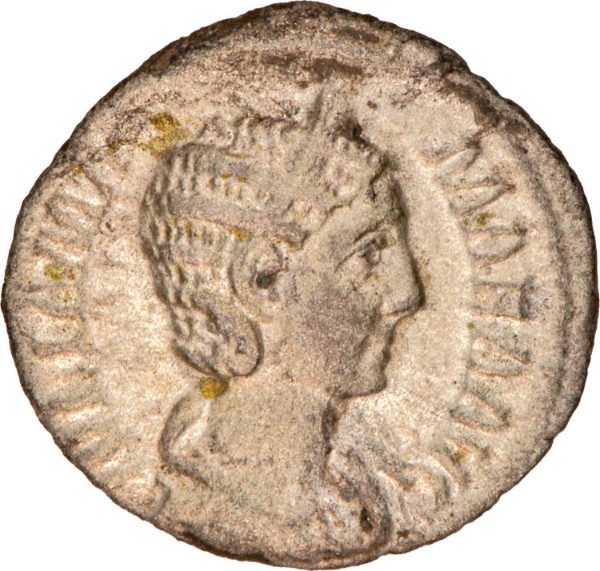
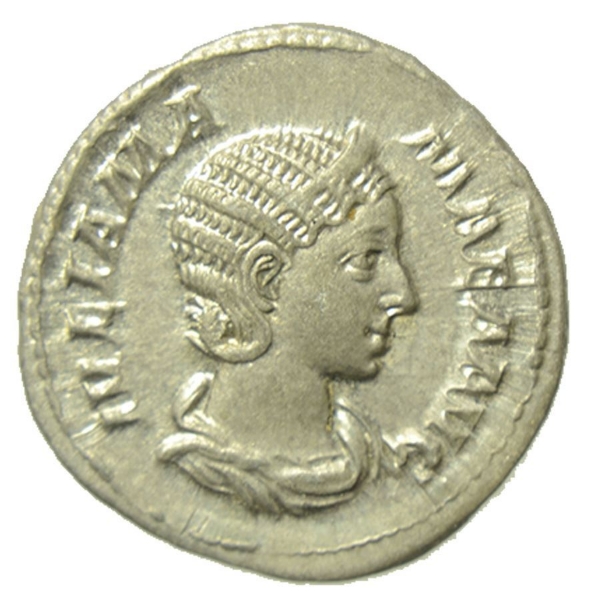
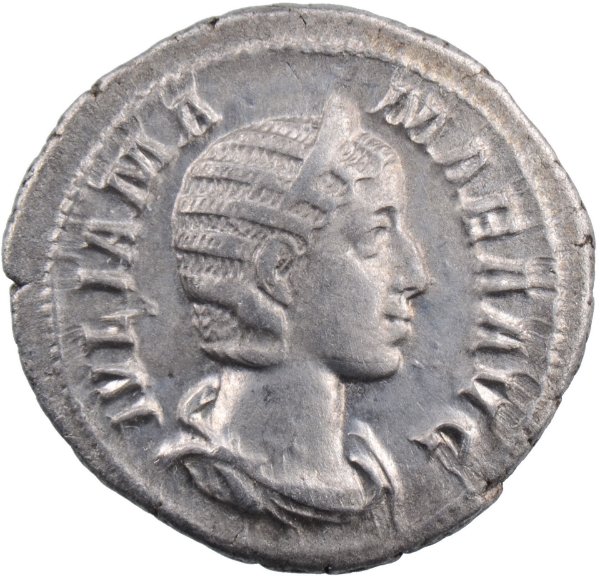
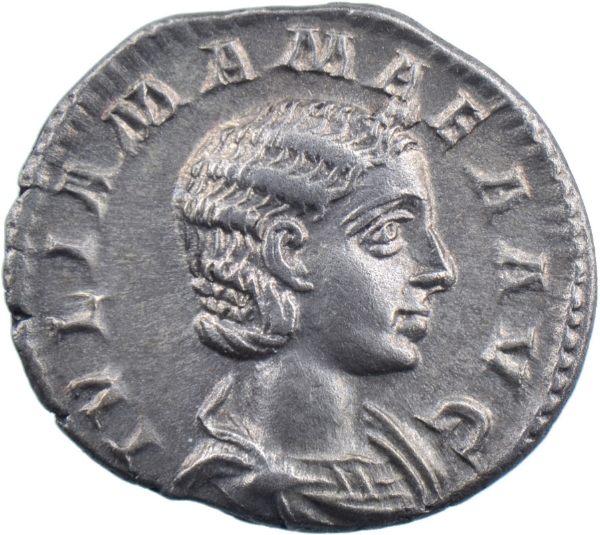
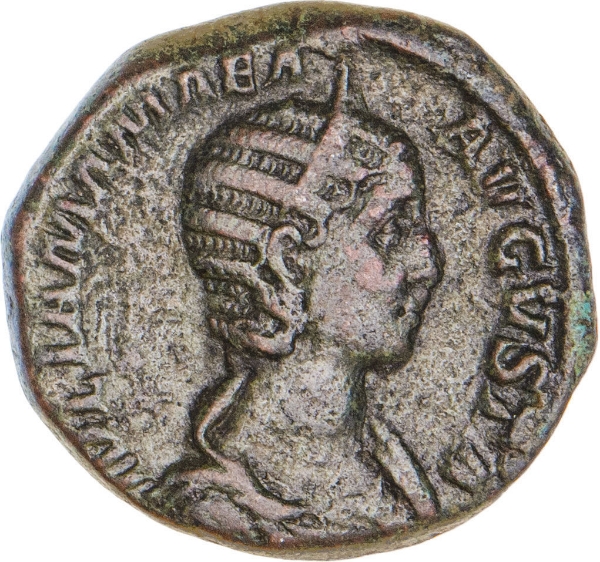
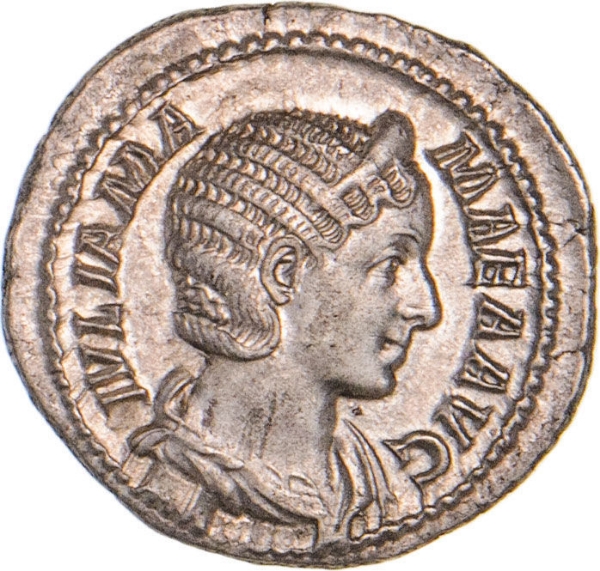
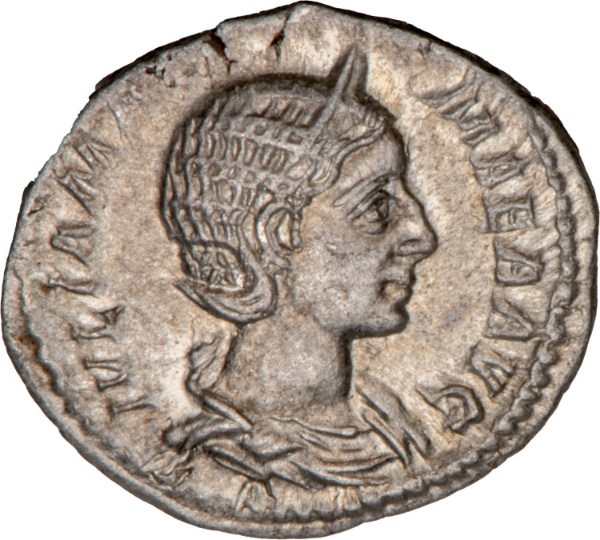
If you are a coin collector, Julia Mamaea is an absolute superstar. Because she was the de facto ruler, her portrait is heavily featured on Roman coinage of the era, including silver denarii, copper asses, and hefty sestertii (4).
Mamaea understood that coins were the mass media of the ancient world. She used them as brilliant propaganda tools. On the obverse (the front), you'll often see her dignified portrait surrounded by the legend IVLIA MAMAEA AVG (Julia Mamaea Augusta). She is usually depicted wearing a stephane (a royal diadem), radiating quiet authority.
On the reverse, she aligned herself with powerful goddesses. You'll find coins showing Juno Conservatrix (Juno the Protector), Venus Victrix (Victorious Venus), and Felicitas Publica (Public Happiness). She even had coins minted with the title Mater Castrorum (Mother of the Camps) to try and win over the deeply skeptical Roman military(4). Today, finding a well-preserved silver denarius of Julia Mamaea is a thrilling piece of history you can actually hold in your hand!
A Tragic End on the Frontier
Unfortunately, Mamaea's story doesn't end with a peaceful retirement in a seaside villa. Her ultimate downfall came from the one group she could never quite control: the Roman army.
In the early 230s AD, the empire faced threats on two fronts. First, the Sassanid Persians attacked in the East. Mamaea bravely accompanied her son on the military campaign. While they managed to hold the line, the campaign was costly and bruised the army's morale.
Shortly after, Germanic tribes began causing trouble along the Rhine frontier. Mamaea and Alexander traveled north to modern-day Mainz (Moguntiacum) in Germany to handle it. However, rather than fighting, Mamaea advised her son to buy off the Germanic tribes with gold to secure peace.
To the battle-hardened Roman legions, this was an unforgivable insult. They felt humiliated by their Emperor and furious at the "penny-pinching" Empress mother. In March 235 AD, the troops mutinied. Led by a massive, gruff soldier named Maximinus Thrax, the soldiers stormed the imperial tent and assassinated both Severus Alexander and Julia Mamaea(5).
Their deaths didn't just end two lives; it ended the entire Severan Dynasty and plunged the Roman Empire into the chaotic "Crisis of the Third Century."
While her end was incredibly brutal, Julia Avita Mamaea's legacy remains awe-inspiring. For thirteen years, an intelligent woman from Syria held the immense weight of the Roman Empire on her shoulders, leaving a mark on history—and on our coin collections—that will never be erased.
FAQs
Was Julia Mamaea actually the Roman Emperor? Technically, no. Rome legally forbade women from holding the title of Emperor. However, because her son became Emperor at age 13, she acted as regent. She held the title Augusta and exercised the actual power of the throne for his entire 13-year reign.
How did Julia Mamaea die? She was assassinated in 235 AD alongside her son near modern-day Mainz, Germany. Mutinous Roman soldiers were enraged by her decision to bribe Germanic tribes for peace rather than fight them, leading to a brutal military coup.
Are coins featuring Julia Mamaea rare? While not the rarest ancient coins, they are incredibly popular among collectors. Because her son's reign lasted over a decade, many silver denarii and bronze sestertii were minted featuring her portrait. They are celebrated for their sharp details and the fascinating history attached to them.
References
Google Arts & Culture (n.d.) Julia Avita Mamaea. Available at: https://artsandculture.google.com/entity/julia-avita-mamaea/m02158x (Accessed: 10 March 2026).
Wikipedia (2026) Severan dynasty. Available at: https://en.wikipedia.org/wiki/Severan_dynasty (Accessed: 10 March 2026).
EBSCO Research Starters (n.d.) Julia Mamaea | Biography. Available at: https://www.ebsco.com/research-starters/biography/julia-mamaea (Accessed: 10 March 2026).
WildWinds (n.d.) Julia Mamaea, Roman Imperial Coins Reference. Available at: https://www.wildwinds.com/coins/ric/julia_mamaea/i.html (Accessed: 10 March 2026).
Grokipedia (n.d.) Julia Avita Mamaea. Available at: https://grokipedia.com/page/Julia_Avita_Mamaea (Accessed: 10 March 2026).