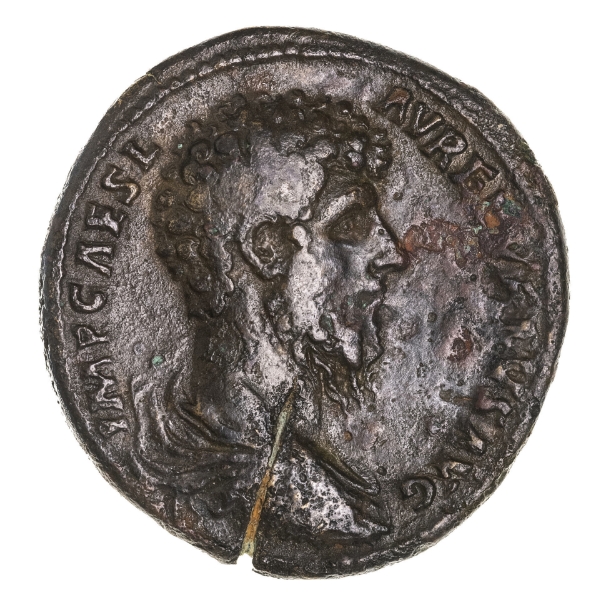
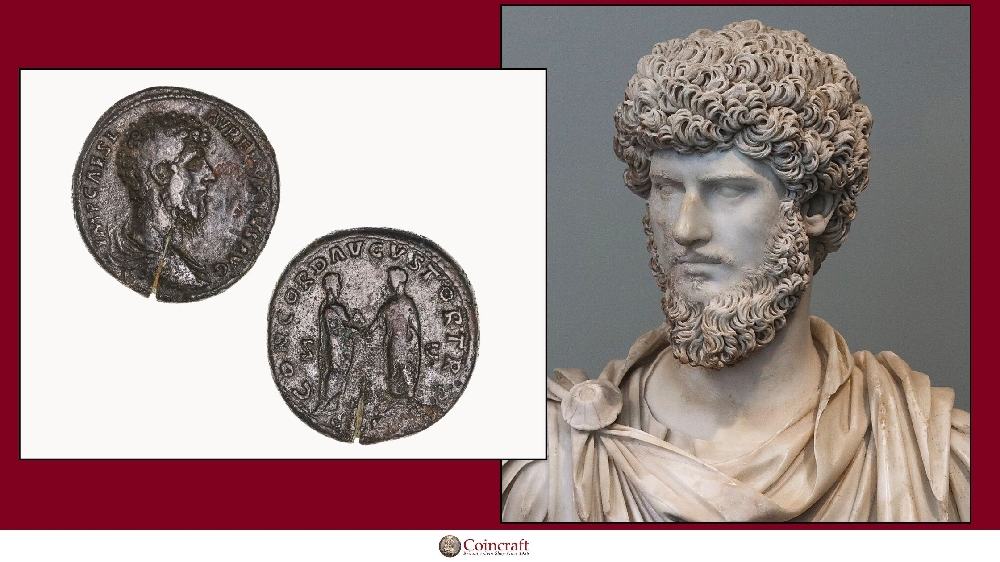
Picture Source of Lucius Verus: Wikipedia
The Forgotten Emperor: The Life and Times of Lucius Verus
When we think of the "Golden Age" of the Roman Empire, the name Marcus Aurelius usually takes center stage. But did you know that for nearly a decade, the Roman world was actually ruled by two men? Enter Lucius Verus, the charismatic, often misunderstood, and definitely more "fun" half of Rome’s first imperial duo. While history tends to remember Marcus for his Stoic philosophy and somber duty, Lucius was the one known for his golden hair, his love of the games, and a lifestyle that would make a modern rock star blush. But there was much more to him than just banquets and chariot races. He was a man who shared the weight of an empire during a time of plague and war.
Key Takeaways
Rome's First Co-Emperor: Lucius Verus made history in 161 AD by becoming the first person to share the title of Augustus with a co-ruler, Marcus Aurelius.
A Life of Luxury: He was famous for his extravagant lifestyle, reportedly spending fortunes on lavish banquets and showing a deep passion for chariot racing.
The Parthian War: Lucius successfully oversaw the Roman campaign against the Parthian Empire (162–166 AD), though much of the tactical work was done by his generals.
The Antonine Plague: His reign was tragically marked by a devastating pandemic that decimated the Roman population and likely led to his own early death.
Early Life and the Big Swap
Lucius was born in 130 AD as Lucius Ceionius Commodus. His life was destined for greatness from the start, but not in the way he expected. His biological father was the hand-picked heir of Emperor Hadrian, but when his father died prematurely, Hadrian had to pivot. In a grand dynastic shuffle, Hadrian adopted Antoninus Pius on the condition that Antoninus, in turn, adopt both the young Marcus Aurelius and the seven-year-old Lucius¹.
Growing up in the shadow of the serious and studious Marcus, Lucius was the more athletic and social of the two. He loved poetry and public speaking, and he had a flair for the dramatic. While Marcus was reading philosophy, Lucius was likely keeping a close eye on the latest standings at the Circus Maximus².
Two Heads Are Better Than One
When Antoninus Pius died in 161 AD, the Senate initially wanted Marcus Aurelius to rule alone. In a surprising move that showed his immense respect for Lucius, Marcus refused the honor unless Lucius was made his equal co-ruler. This was a radical experiment in Roman governance. For the first time, Rome had two emperors with equal power, though Marcus was always the "senior" partner in terms of influence and gravitas³.
To solidify their bond, Lucius married Marcus's daughter, Lucilla, in 164 AD. Their relationship, by all accounts, was one of mutual respect. Marcus handled the administration in Rome, while Lucius was sent East to handle a brewing crisis with the Parthian Empire⁴.
War in the East and the "Party" Prince
The Parthian War was the defining military event of Lucius's reign. While he spent much of the campaign in the luxury of Antioch—leading to rumors that he was more interested in the city's nightlife than the battlefield—his presence in the East provided the necessary imperial authority. His brilliant generals, like Avidius Cassius, successfully sacked the Parthian capital of Ctesiphon⁵.
Lucius returned to Rome in 166 AD to celebrate a magnificent triumph. However, the soldiers returning from the East brought back more than just spoils of war; they brought a deadly disease that would become known as the Antonine Plague. It was a catastrophe that changed the course of Roman history⁶.
The Final Years and Legacy
The latter years of Lucius's life were spent dealing with the fallout of the plague and the beginning of the Marcomannic Wars on the Danube frontier. In 169 AD, while returning to Rome from the front lines, Lucius fell ill and died suddenly at the age of 38, possibly a victim of the very plague his troops had brought home⁷.
History hasn't always been kind to Lucius Verus. The Historia Augusta, a famously gossipy Roman source, paints him as a lazy debauchee who dyed his hair with gold dust. However, modern historians see a more nuanced figure: a loyal brother and a capable co-emperor who played his part in maintaining the stability of the empire during a period of intense crisis⁸.
FAQs
Was Lucius Verus a "bad" emperor? Not necessarily. While he lacked the intellectual depth of Marcus Aurelius and enjoyed a lavish lifestyle, he was a loyal partner to Marcus and never attempted to seize power for himself. He fulfilled his duties, especially during the Parthian War.
Did Lucius Verus really have gold hair? Ancient sources claim he was very proud of his blonde hair and would sprinkle gold dust in it to make it shine even brighter in the sun. Whether this is literal truth or a metaphor for his vanity is still debated.
How did he die? Most historians believe he died of the Antonine Plague (possibly smallpox), though some ancient rumors (unproven) suggested he might have been poisoned or suffered a stroke.
References
Grant, M. (1994). The Roman Emperors: A Biographical Guide to the Rulers of Imperial Rome. https://www.google.com/search?q=The+Roman+Emperors+Michael+Grant
Birley, A. R. (2000). Marcus Aurelius: A Biography. Routledge. https://www.routledge.com/Marcus-Aurelius-A-Biography/Birley/p/book/9780415171250
McLynn, F. (2009). Marcus Aurelius: A Life. Da Capo Press.
Houghton, P. (2019). "Lucius Verus: The Other Emperor". World History Encyclopedia. https://www.worldhistory.org/Lucius_Verus/
Goldsworthy, A. (2016). Pax Romana: War, Peace and Conquest in the Roman World. Yale University Press.
Littman, R. J., & Littman, M. L. (1973). "Galen and the Antonine Plague". The American Journal of Philology.
Dio Cassius. Roman History, Book LXXI. https://penelope.uchicago.edu/Thayer/E/Roman/Texts/Cassius_Dio/71*.html
The Historia Augusta. Life of Lucius Verus. https://penelope.uchicago.edu/Thayer/E/Roman/Texts/Historia_Augusta/Lucius_Verus*.html