 - SGM327-4898.jpg)
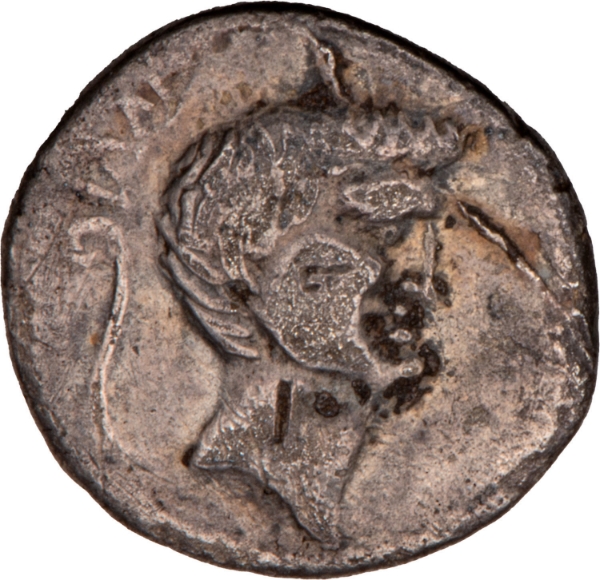
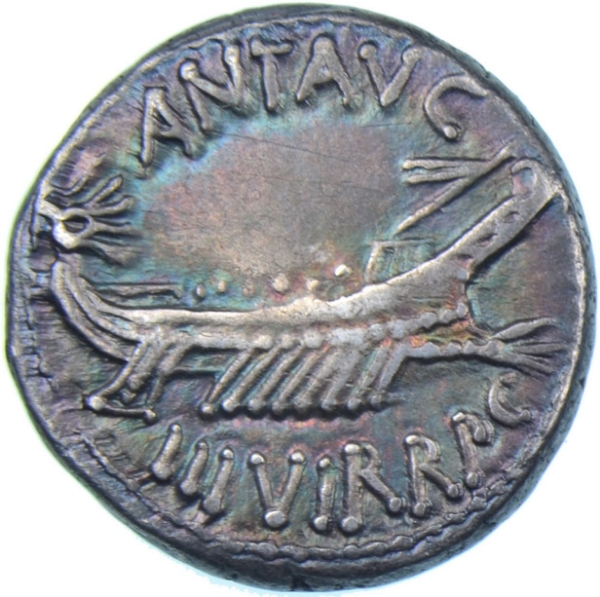
Picture Source of Mark Antony: Wikipedia
The Life, Loves, and Legacy of Mark Antony
Mark Antony (83 BC – 30 BC) is one of history’s most captivating figures—a man whose life reads less like a dry history book and more like a Hollywood epic. He was Julius Caesar’s right-hand man, a brilliant general, and a charismatic politician who helped tear down the Roman Republic to build an Empire. Yet, for all his military might and political maneuvering, he is perhaps best remembered for his passionate, doom-laden romance with Cleopatra, the Queen of Egypt. Let's dive into the fascinating, turbulent life of Marcus Antonius.
Key Takeaways
Caesar's Right-Hand Man: Antony was instrumental in Julius Caesar's rise to power and famously turned the Roman public against Caesar's assassins with a brilliant funeral oration.
The Second Triumvirate: He co-ruled the Roman world alongside Octavian (the future Emperor Augustus) and Lepidus, before the alliance spectacularly collapsed.
A Fatal Romance: His political and romantic alliance with Cleopatra VII of Egypt ultimately led to his downfall.
The End of the Republic: Antony's defeat at the Battle of Actium in 31 BC paved the way for Octavian to become Rome's first emperor, officially ending the Roman Republic.
Early Life: A Rebellious Roman Youth
Marcus Antonius was born in Rome in 83 BC into a well-connected, albeit troubled, family. His mother, Julia, was a distant cousin of Julius Caesar, which gave him excellent political pedigree (1). His father, however, died while failing to clear the Mediterranean of pirates, leaving young Antony to run wild.
By all accounts, teenage Antony was the ultimate bad boy of ancient Rome. He roamed the streets with his friends, racking up massive gambling debts, drinking heavily, and getting tangled in scandalous love affairs (2). To escape his mountain of debt, a twenty-something Antony fled to Greece. There, he actually put his head down, studying philosophy and rhetoric, and beginning his military training (4).
Rising Through the Ranks with Caesar
Antony found his true calling in the military. In 54 BC, his family connections landed him a spot on the military staff of Julius Caesar, who was busy conquering Gaul (modern-day France)(4). Antony quickly proved himself to be a fearless and capable cavalry commander. Caesar loved his raw energy and fierce loyalty, and the two formed a tight bond.
When civil war broke out between Caesar and his rival Pompey, Antony stood firmly by Caesar’s side. He governed Italy while Caesar was fighting overseas and commanded the left wing of Caesar’s army at the decisive Battle of Pharsalus (1).
The Ides of March and a Brilliant Speech
Everything changed on the Ides of March, 44 BC, when a group of senators assassinated Julius Caesar. Suddenly, Rome was thrown into complete chaos.
This is where Antony truly shined. At Caesar’s funeral, Antony delivered a masterful eulogy. He famously held up Caesar’s blood-stained, dagger-torn toga to the crowd and read Caesar's will, which generously left money and public parks to the citizens of Rome (2) This genius piece of political theater completely turned the Roman mob against the assassins (like Brutus and Cassius), forcing them to flee the city.
The Second Triumvirate and the Division of the World
With Caesar gone, a massive power vacuum opened up. Antony eventually formed an uneasy alliance with Caesar’s 19-year-old adopted heir, Octavian, and a general named Lepidus. Known as the Second Triumvirate, this trio ruthlessly hunted down Caesar’s killers and divided the Roman world among themselves.
Antony took control of the wealthy, exotic Eastern provinces (1). It was here that he would meet his destiny—and his doom.
Enter Cleopatra
In 41 BC, Antony summoned Cleopatra, the Queen of Egypt, to Tarsus to question her political loyalty. Cleopatra, knowing exactly how to make an entrance, sailed up the river on a magnificent barge dressed as the goddess Isis. Antony, who fancied himself a living incarnation of Dionysus, was instantly captivated (4).
The two began a passionate love affair and a powerful political partnership. Antony relocated to Alexandria, embracing Egyptian culture and essentially turning his back on Rome. Together, they had three children and dreamed of a massive eastern empire.
The Battle of Actium and a Tragic End
Back in Rome, Octavian was furious. He launched a massive propaganda campaign, painting Antony as a brainwashed traitor who had surrendered his Roman identity to a foreign queen (3). The tension finally boiled over into a full-blown civil war.
The climax came on September 2, 31 BC, at the Battle of Actium, a massive naval clash off the coast of Greece. Octavian’s brilliant admiral, Agrippa, completely outmaneuvered Antony’s heavier, slower ships (3). Realizing the battle was lost, Cleopatra fled with her ships, and Antony abandoned his men to chase after her (3).
Their forces decimated, the lovers retreated to Egypt. A year later, with Octavian's forces closing in on Alexandria, Antony received a false rumor that Cleopatra was dead. Heartbroken, he fell on his sword. He was 53 years old (1). Cleopatra took her own life shortly after, rather than be paraded through Rome in chains.
FAQs
Why did Mark Antony and Octavian fight? Despite initially forming an alliance (the Second Triumvirate) to avenge Julius Caesar, both men ultimately wanted total, singular control of Rome. Octavian also used Antony's deep ties to Cleopatra and Egypt to convince the Roman Senate that Antony had gone native and was a legitimate threat to the Republic.
Did Mark Antony really give the speech from Shakespeare's play? "Friends, Romans, countrymen, lend me your ears" is pure William Shakespeare! However, historical accounts do confirm that Antony did give a highly emotional, manipulative, and incredibly effective funeral oration that successfully riled up the Roman citizens against Caesar's assassins.
What happened to Mark Antony's children with Cleopatra? After Antony and Cleopatra died, Octavian annexed Egypt. He executed Cleopatra's eldest son (Caesarion, fathered by Julius Caesar) and Antony's eldest son from a previous marriage. However, Octavian spared Antony and Cleopatra's three young children, taking them to Rome to be raised by his own sister, Octavia (who happened to be Antony's former wife!).
References
Britannica (2024) Mark Antony | Biography, Cleopatra, Death, & Facts. Available at: https://www.britannica.com/biography/Mark-Antony-Roman-triumvir (Accessed: 11 March 2026).
Spartacus Educational (n.d.) Mark Antony. Available at: https://spartacus-educational.com/ROMmarkantony.htm (Accessed: 11 March 2026).
Horodyski, J., Warfare History Network (n.d.) Mark Antony's Roman Navy: Clash at Actium & the Ionian Sea. Available at: https://warfarehistorynetwork.com/article/mark-antonys-roman-navy-clash-at-actium-the-ionian-sea/ (Accessed: 11 March 2026).
Study.com (n.d.) Mark Antony of Rome | Overview, Biography & Death. Available at: https://study.com/learn/lesson/mark-antony-biography-facts-cleopatra.html (Accessed: 11 March 2026).