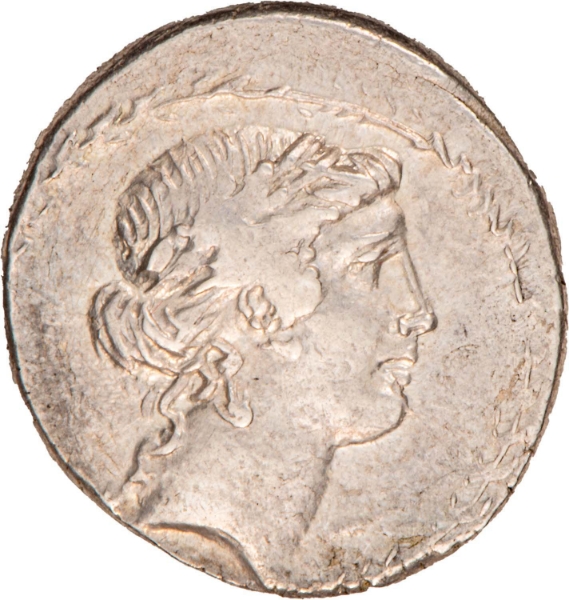
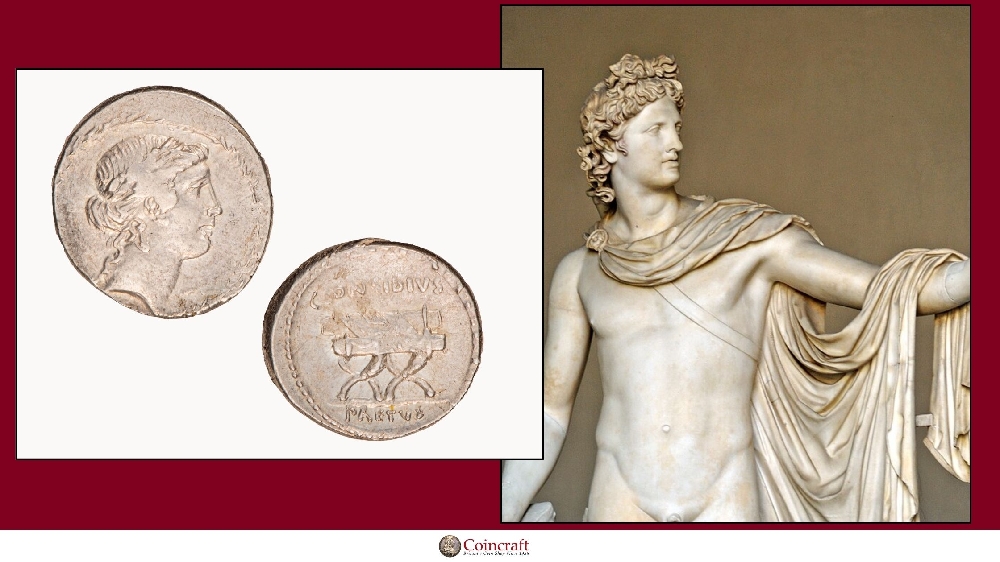
Picture Source of Apollo: Wikipedia
Chasing the Sun: The Radiant Life and Myths of Apollo
Hey there, history buffs and myth enthusiasts! Let's talk about the original jack-of-all-trades of the ancient world. We are looking at a god who could shoot a bullseye, compose a symphony, and cure a plague all before lunch. That's right, we're talking about Apollo, the dazzling and dramatic golden child of Mount Olympus.
Often pictured as a strikingly handsome, beardless youth radiating an effortless glow, Apollo was the god of the sun, light, music, poetry, healing, plagues, prophecy, and archery. Yes, you read that correctly—his divine resume was staggering(1). Unlike some gods who stuck to one specific niche, Apollo was the ancient world’s ultimate Renaissance man. But behind the golden chariot and the beautiful music lies a story filled with monster-slaying, fierce sibling loyalty, and a fair share of tragic romance.
Grab a cup of coffee, settle in, and let's dive into the fascinating life of the god who kept the ancient world turning!
Key Takeaways
Master of Many Trades: Apollo wasn't just the sun god; his vast domains included music, poetry, archery, healing, and the pursuit of knowledge.
The Twin Connection: Born alongside his twin sister Artemis (goddess of the hunt), the two shared a fierce loyalty to their mother and incredible skill with a bow and arrow.
The Voice of Fate: Apollo established the Oracle of Delphi, making him the most important source of divine prophecy in the ancient Mediterranean world.
A God of Duality: While he was the patron of medicine and healing, he was also deeply feared as a bringer of plagues and sudden death.
A Rocky Start: The Birth of a Golden God
Picture this: you are the king of the gods, you've had an affair, and your famously jealous wife is out for revenge. This was the exact situation Zeus found himself in when his lover, the Titaness Leto, fell pregnant.
Hera, Zeus's wife, was absolutely furious. She decreed that Leto would not be allowed to give birth anywhere on solid earth. Hunted and exhausted, Leto wandered the world looking for a safe haven. Finally, she discovered Delos, a tiny, floating island that wasn't technically anchored to the ocean floor, thus providing a clever loophole to Hera's curse(2).
Here, Leto first gave birth to Artemis, the goddess of the wild and the hunt. Showing the immediate competence that would define her, the newborn Artemis famously turned right around and helped her mother deliver her twin brother, Apollo(1). From the moment he took his first breath and tasted divine ambrosia, Apollo bypassed infancy entirely, springing up as a fully grown, powerful god declaring his dominion over the lyre and the bow.
The Monster Slayer: Claiming the Oracle of Delphi
If you think your early twenties were stressful, try being Apollo. Just four days after his birth, the young god set out on his very first quest. He traveled to Mount Parnassus seeking revenge against Python, a massive, terrifying serpent-dragon that Hera had sent to torment his mother during her pregnancy(3).
Armed with a silver bow forged by Hephaestus, the blacksmith of the gods, Apollo tracked the beast to a sacred chasm. With a single, perfectly aimed arrow, he slew the monster. But Apollo didn't just walk away victorious; he claimed the site for himself. This location, Delphi, became the spiritual heart of the ancient Greek world.
Apollo established his famous Oracle at Delphi, placing a high priestess known as the Pythia in charge of delivering his prophecies(2). Kings, generals, and ordinary citizens would travel for months just to ask the Oracle for guidance on wars, marriages, and colony founding. Because of this, Apollo became the ultimate bridge between the divine will of Zeus and mortal men.
Hitting the Right Notes: Apollo and His Lyre
Despite his prowess as an archer and a monster-slayer, Apollo had a famously softer, highly artistic side. He was the patron god of mousike (which encompasses music, poetry, and dance) and often functioned as the choir leader for the nine Muses on Mount Olympus(1).
Interestingly enough, Apollo didn't actually invent his signature instrument, the lyre. That honor goes to his mischievous younger half-brother, Hermes. On the very day Hermes was born, the infant god sneaked out of his crib, stole Apollo's sacred cattle, and then casually invented a stringed instrument out of a tortoise shell and sheep intestines.
When Apollo finally tracked down the little cattle thief, he was absolutely furious—until Hermes started playing the lyre. The music was so beautiful that Apollo traded his entire herd of cattle for the instrument(3). From that day forward, the lyre became Apollo's greatest symbol, and he was known to delight the Olympian gods with his golden melodies.
The Duality of the Divine: Healing and Heartbreak
What makes Apollo such a compelling character to read about is his inherent duality. As the god of medicine, he taught humanity the healing arts and could cure any ailment. Yet, his arrows were also said to carry plagues and sudden death(4). He was a god of order, reason, and civilization, but his personal life was notoriously messy.
Apollo's romantic history is practically a masterclass in tragic endings. Perhaps the most famous is his pursuit of Daphne, a beautiful water nymph. After Apollo mocked the love god Eros (Cupid) for playing with a bow and arrow, Eros shot Apollo with a golden arrow of love, and shot Daphne with a leaden arrow of repulsion(4).
Apollo chased Daphne relentlessly. Just as he was about to catch her, she cried out to her father, a river god, for salvation. In a flash, her skin turned to bark, her arms to branches, and her hair to leaves—she transformed into a laurel tree. Heartbroken, Apollo declared the laurel sacred, weaving its leaves into a crown that he wore forevermore. This is why, even today, champions and poets are crowned with laurel wreaths!
A Legacy That Never Sets
From driving the golden chariot of the sun across the sky to whispering the secrets of the future into the ears of priestesses, Apollo represented the Greek ideal of kalokagathia—the perfect harmony of physical beauty and moral virtue.
He was a protector, a creator, a destroyer, and a healer. Whether you're listening to a beautiful piece of music, admiring an athlete's focus, or simply enjoying the warmth of the sun on your face, you are experiencing a little piece of Apollo's enduring legacy.
Frequently Asked Questions (FAQs)
What is Apollo's Roman equivalent? Uniquely, Apollo is one of the only major Olympian deities who kept the exact same name in both Greek and Roman mythology! The Romans simply adopted him into their pantheon, focusing heavily on his attributes of healing and prophecy.
Who were Apollo's parents? Apollo was the son of Zeus, the king of the gods, and Leto, a Titaness. He is also the younger twin brother of Artemis, the goddess of the hunt.
Why is Apollo associated with the laurel wreath? The laurel wreath represents his tragic first love, the nymph Daphne. When she was transformed into a laurel tree to escape his pursuit, a heartbroken Apollo claimed the tree as his sacred symbol and wore its leaves as a crown.
References
Britannica, T. Editors of Encyclopaedia (2026). Apollo. Encyclopedia Britannica. Available at: https://www.britannica.com/topic/Apollo-Greek-mythology
Mythopedia (2023). Apollo. Available at: https://mythopedia.com/topics/apollo/
GreekMythology.com (n.d.). Apollo. Available at: https://www.greekmythology.com/Olympians/Apollo/apollo.html
Theoi Project (n.d.). APOLLO (Apollon) - Greek God of Music, Prophecy & Healing. Available at: https://www.theoi.com/Olympios/Apollon.html