 - AWB1036.jpg)
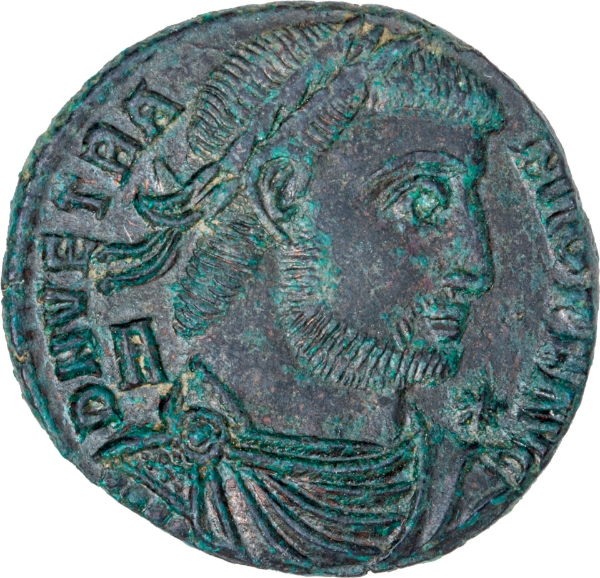
Picture Source of Vetranio: Wikipedia
The Reluctant Emperor: The Short, Strange Reign of Vetranio
History is full of ambitious conquerors and power-hungry tyrants, but then there are figures like Vetranio. He wasn’t exactly your typical Roman Emperor. In fact, depending on who you ask, he was either a master of political survival or a simple old soldier who got caught in the crosshairs of a family feud. Let’s dive into the fascinating story of the man who ruled for just ten months and managed to retire without losing his head—a rare feat in the 4th century!¹
Key Takeaways
The Accidental Emperor: Vetranio was a seasoned general who was proclaimed Emperor in 350 AD, likely to prevent a usurper from seizing the Western provinces.
Loyalty Over Ambition: Despite holding the title, he remained largely loyal to the legitimate dynasty of Constantine the Great.
A Bloodless Exit: He is famous for being one of the few Roman emperors to be peacefully deposed, retiring with a generous pension.
Strategic Buffer: His reign served as a vital "buffer" that allowed Emperor Constantius II to stabilize the empire against the usurper Magnentius.
From the Barracks to the Throne
Vetranio didn’t start his life with purple robes and gold laurel wreaths. He was born in the province of Moesia (modern-day Serbia and Bulgaria) into humble surroundings.² He was a career soldier through and through, rising through the ranks during the reign of Constantine the Great. By the time he enters the history books in a major way, he was an old man serving as the Magister Militum (Master of Soldiers) in Illyricum.³
The year 350 AD was a mess for Rome. The Emperor Constans had been murdered by a usurper named Magnentius. This left the Roman world split and vulnerable. Constantius II, the surviving brother and emperor in the East, was busy fighting the Persians and couldn't immediately march west to deal with the rebel.⁴
The Purple Robe and the Princess
This is where the story gets juicy. Legend (and some very reliable historians) suggests that Vetranio didn't just decide to become emperor on a whim. Constantina, the sister of Constantius II, reportedly reached out to him. She was terrified that Magnentius would take over Illyricum, so she urged the elderly, loyal general to take the title of Augustus himself.⁵
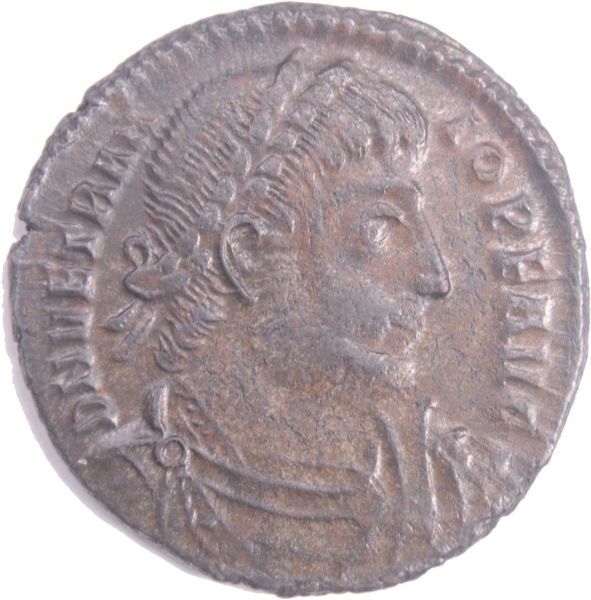
On March 1, 350 AD, the troops at Mursa hailed him as Emperor. Vetranio began minting coins—some of which famously featured the Christian Labarum and the inscription "Hoc Signo Victor Eris" (In this sign, you shall be the victor), echoing the famous vision of Constantine the Great.⁶ Even though he was technically a "usurper" because he wasn't part of the family, he sent messages to Constantius II claiming he was just holding the spot for him.
The Great Showdown at Naissus
For ten months, Vetranio played a delicate game of diplomacy, staying between the rebel Magnentius and the legitimate Constantius II. When Constantius finally arrived with his army in December 350 AD, the two leaders met at Naissus.⁷
What happened next was pure political theater. They both stood on a tribunal to address the combined armies. Constantius, a gifted orator and the son of the Great Constantine, gave a rousing speech about the rights of the imperial family. The soldiers, moved by the legacy of the Constantinian dynasty, began shouting for Constantius alone.⁸
Vetranio, seeing the writing on the wall (and perhaps being a bit tired of the whole "emperor" gig), took off his crown and knelt at Constantius’s feet.⁹
A Happy Ending?
In a world where deposed emperors were usually blinded or executed, Vetranio’s ending was surprisingly sweet. Constantius raised him up, called him "father," and invited him to a banquet. Vetranio was allowed to live out the rest of his days in Prusa, Bithynia, on a very comfortable state pension.¹⁰ He reportedly spent his final six years in peace, telling anyone who would listen that he was much happier as a private citizen than he ever was as an emperor.
FAQs
Did Vetranio actually want to be Emperor? Most historians believe he was a "reluctant" leader. He was an elderly career soldier who likely took the title at the request of the imperial family to prevent a more dangerous rebel from gaining power.¹¹
Was Vetranio illiterate? Some ancient sources claim he was virtually illiterate and only began to learn to read and write after becoming Emperor. While this might be an exaggeration by later historians to make him look simple, it highlights his background as a man of the sword rather than a man of the court.¹²
How did he die? He died of natural causes in 356 AD, roughly six years after he stepped down from the throne. He is one of the very few Roman emperors to die peacefully in retirement.¹³
References
Burgess, R. (1996). The Third Regnal Year of Theodosius I and the Civil War of 387-388. Classical Philology.
Grant, M. (1985). The Roman Emperors: A Biographical Guide to the Rulers of Imperial Rome, 31 BC-AD 476. New York: Scribner's.
Jones, A.H.M., Martindale, J.R. and Morris, J. (1971). The Prosopography of the Later Roman Empire, Vol. 1: AD 260-395. Cambridge: Cambridge University Press.
Gibbon, E. (1776). The History of the Decline and Fall of the Roman Empire. London: Strahan & Cadell.
Philostorgius. Church History. Translated by Philip R. Amidon (2007). Atlanta: Society of Biblical Literature.
Salzman, M. R. (2002). The Making of a Christian Aristocracy. Cambridge, MA: Harvard University Press.
Aurelius Victor. De Caesaribus. Translated by H.W. Bird (1994). Liverpool: Liverpool University Press.
Zosimus. New History. Translated by R.T. Ridley (1982). Canberra: Australian Association for Byzantine Studies.
Eutropius. Breviarium Historiae Romanae. Translated by H.W. Bird (1993). Liverpool: Liverpool University Press.
Lenski, N. (2002). Failure of Empire: Valens and the Roman State in the Fourth Century A.D. Berkeley: University of California Press.
Drinkwater, J.F. (1987). The Antioch Mutiny of AD 387. Phoenix.
Ammianus Marcellinus. The Later Roman Empire (AD 354–378). Translated by Walter Hamilton (1986). London: Penguin Classics.
Potter, D.S. (2004). The Roman Empire at Bay, AD 180–395. London: Routledge.