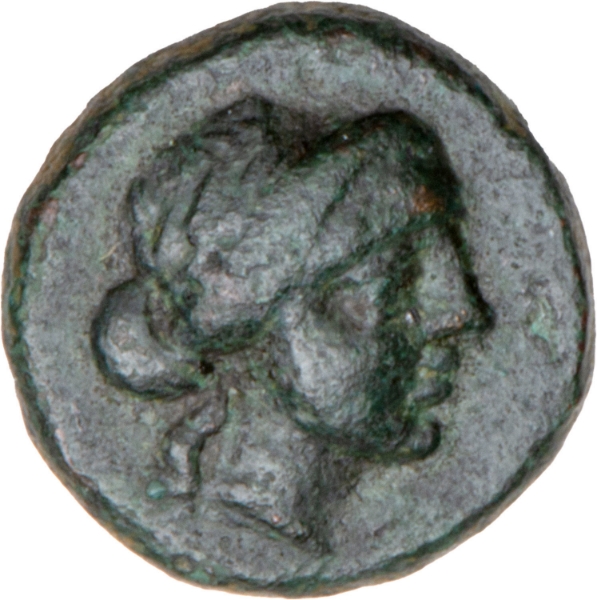
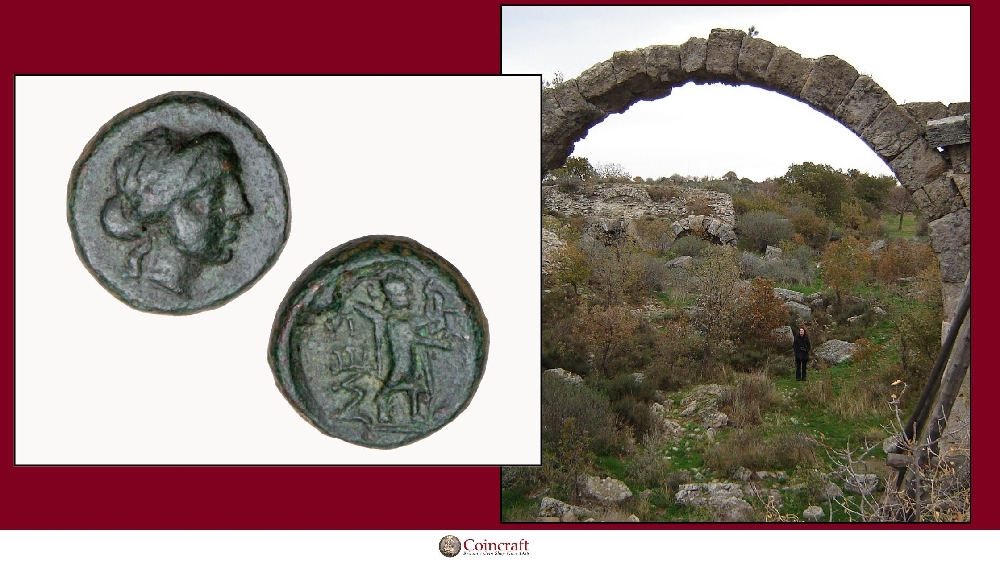
Picture Source of Alexandria Troas: Wikipedia
Unearthing Alexandria Troas: The Lost City That Almost Ruled Rome
Nestled beneath the sun-drenched olive groves of western Turkey's Troad region lie the massive, pink granite ruins of a Hellenistic powerhouse. Founded in the wake of Alexander the Great's conquests and later transformed into a prestigious Roman colony, this is no ordinary archaeological site—it is the epicenter of one of antiquity's greatest "what ifs." Welcome to Alexandria Troas, a sprawling, monumental metropolis of the ancient world that was so strategically vital and magnificent that both Julius Caesar and Constantine the Great considered making it the capital of the entire Roman Empire.
Though it is often overshadowed by its legendary neighbor, Troy, the story of Alexandria Troas is an absolute rollercoaster. From its creation by the generals of Alexander the Great to serving as the dramatic launchpad for Christianity's spread into Europe, this ancient metropolis has a biography just as thrilling as any human historical figure. So, grab your virtual hiking boots, and let's explore the lost city that almost ruled the world!
Key Takeaways
A City of Titans: Founded around 310 BC by Antigonus and later renamed by Lysimachus, the city was built to honor Alexander the Great and quickly grew into a bustling port metropolis(1).
Almost the Roman Capital: Both Julius Caesar and Constantine the Great were so enamored with Alexandria Troas's strategic location and grandeur that they strongly considered making it the new capital of the Roman Empire(4).
Christianity’s Gateway to Europe: It was a crucial stop for the Apostle Paul. It was here that he received the famous "Macedonian call" in a vision, prompting him to take the Christian message to Europe for the very first time(2).
Nature Reclaimed: Today, the once-thriving port of 100,000 people lies mostly in ruins near the modern Turkish village of Dalyan, its stones having been recycled by the Ottoman Empire to build mosques in Istanbul(5).
The Naming Drama: From Antigonia to Alexandria
Our city's story begins in the wake of Alexander the Great's death, when his surviving generals (the Diadochi) were fiercely carving up his massive empire. Around 310 BC, a particularly ambitious general named Antigonus I Monophthalmus decided he needed a magnificent city bearing his own name. He forcibly relocated the populations of several smaller surrounding towns and established "Antigonia Troas" on the Aegean coast(4).
But in the ancient world, power was fleeting. Just a few years later, Antigonus was defeated and killed. His rival, Lysimachus, took over the region and promptly decided that "Antigonia" was no longer a suitable name. In a brilliant PR move, Lysimachus renamed the bustling settlement "Alexandria Troas" (meaning Alexander's city in the Troad region) around 301 BC, dedicating it to the memory of their late, legendary king(1). The city was off to a running start.
The Metropolis: Rome’s Eastern Darling
By the time the Roman Republic rolled into town, Alexandria Troas was perfectly positioned to become an absolute powerhouse. Situated just south of the Dardanelles strait, it was the ultimate strategic pit-stop between Anatolia and Europe(3).
The Romans absolutely adored the city. It was granted the status of a "free and autonomous city" as early as 188 BC and later became a prestigious Roman colony(5). The population boomed to an estimated 100,000 people—a staggering number for the ancient world(4). The city was so rich and influential that Julius Caesar supposedly looked at it and thought, "You know, this would make a much better capital than Rome." Centuries later, Constantine the Great had the exact same thought before ultimately changing his mind and choosing Byzantium (Constantinople) instead(5).
During its golden age, emperors poured money into Alexandria Troas. In 135 AD, the ultra-wealthy Greek aristocrat Herodes Atticus funded an absolutely gargantuan bath and gymnasium complex there(4). Measuring 123 by 84 meters, it remains one of the largest bath complexes ever discovered in Anatolia(1).
A Biblical Staging Ground: St. Paul and the Window Incident
If you've ever read the New Testament, you've likely crossed paths with Alexandria Troas. The city holds an incredibly special place in the history of early Christianity.
During his second missionary journey in the 50s AD, the Apostle Paul found himself in Alexandria Troas, unsure of where to travel next. According to the Book of Acts, it was here that Paul had a nighttime vision of a man from Macedonia begging him to "come over and help us."(2) Paul hopped on a ship departing from the Troas harbor, marking the very first time the Christian gospel was brought to the European continent(3).
Paul returned to the city a few years later, which resulted in one of the most wonderfully human and slightly comical stories in the Bible. Paul was preaching to the local believers in a crowded, lamp-lit upper room. Because Paul was leaving the next day, he kept talking... and talking... all the way until midnight. A young man named Eutychus was sitting in a window and, bless his heart, fell fast asleep during the long sermon. Eutychus tumbled out of the third-story window and died. Paul rushed down, embraced the boy, miraculously brought him back to life, and then casually went right back upstairs to eat and keep talking until dawn!(2).
The Fall: From Empire to "Old Istanbul"
So, what happened to this bustling, 100,000-person metropolis? Like many great ancient cities, a mixture of shifting trade routes, natural disasters, and political changes brought about its end.
As Constantinople grew into the undisputed jewel of the East, Alexandria Troas slowly lost its importance. The massive, man-made harbor—the absolute lifeblood of the city—began to silt up, cutting off the lucrative maritime trade(3). By the Byzantine era, the population dwindled, and the city was eventually abandoned.
When the Ottoman Empire took control of the region in the 14th century, they found the sprawling ruins and called the area "Eski Stambul" (Old Istanbul)(5). The Ottomans treated the abandoned city like a giant, free hardware store. For centuries, the massive stone columns and beautifully carved marbles of Alexandria Troas were pillaged and shipped off to Istanbul to build stunning structures like the Yeni Valide Mosque(5).
Today, Alexandria Troas is a peaceful, wildly romantic archaeological site tucked away in the modern Turkish province of Çanakkale. Though excavations are ongoing and unearthing incredible new finds, much of the city still sleeps beneath olive trees and oak bushes—a quiet ghost of the metropolis that almost ruled the world.
FAQs About Alexandria Troas
Is Alexandria Troas the same thing as the famous city of Troy? Nope! While they are located very close to each other in the same region (the Troad), they are different cities. The legendary Troy of the Trojan War is much older. Alexandria Troas was founded centuries later by Alexander the Great's successors, about 30 kilometers south of Troy.
Can you visit Alexandria Troas today? Absolutely. The ruins are located near the village of Dalyan in the Ezine district of Turkey. The site is currently free to enter, but because it is heavily overgrown and excavations are actively ongoing, you'll want to bring good walking shoes to hike through the beautiful olive groves to spot the ruins!
Why didn't Constantine make it the capital? While Constantine heavily considered Alexandria Troas because of its strategic harbor, he ultimately chose Byzantium (which became Constantinople, and later Istanbul) because the Bosphorus Strait offered even better maritime control and superior natural defenses against invasions.
References
Turkish Museums. (n.d.). Çanakkale Alexandria Troas Archaeological Site. [online] Available at: https://www.turkishmuseums.com/museum/detail/2017-canakkale-alexandria-troas-archaeological-site/2017/4 [Accessed 17 Apr. 2026].
Hemer, C.J. (1975). 'Alexandria Troas', Tyndale Bulletin, 26(1), pp. 79-112. [online] Available at: https://www.tyndalebulletin.org/article/30641-alexandria-troas.pdf [Accessed 17 Apr. 2026].
Borges, J. (2023). The Harbor of Troas. Biblical Turkey. [online] Available at: https://www.biblicalturkey.org/post/the-harbor-of-troas [Accessed 17 Apr. 2026].
KÜRE Encyclopedia. (2025). Ancient City of Alexandria Troas. [online] Available at: https://kureansiklopedi.com/en/detay/ancient-city-of-alexandria-troas-45693 [Accessed 17 Apr. 2026].
Wikipedia Contributors. (2026). Alexandria Troas. Wikipedia. [online] Available at: https://en.wikipedia.org/wiki/Alexandria_Troas [Accessed 17 Apr. 2026].