
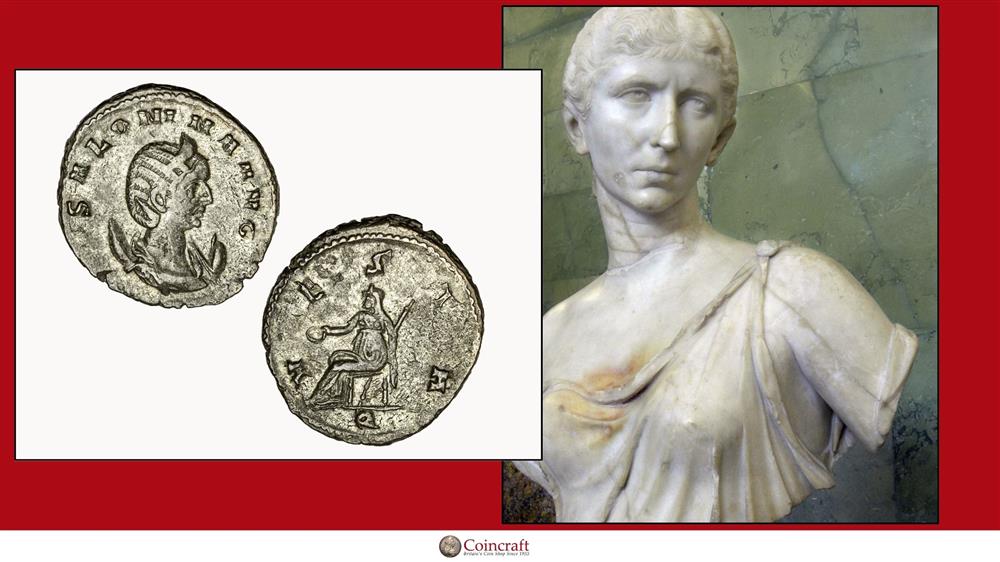
Picture Source of Publia Licinia Julia Cornelia Salonina: Wikipedia
Introduction to Cornelia Salonina
Cornelia Salonina is a figure shrouded in mystery and intrigue, often overshadowed by her illustrious husband, Emperor Gallienus. Yet, her influence on Roman history is undeniable. As an empress, Cornelia Salonina held a position of significant power and influence during a tumultuous period in the Roman Empire's history. Born into an unknown family, her rise to prominence is a testament to her intelligence and political acumen.
Although detailed accounts of her early life are scarce, it is believed that Cornelia Salonina married Gallienus before he ascended to the throne. Her role as empress was not merely ceremonial; she actively participated in the governance of the empire. Her presence in the political arena was not just symbolic; it represented the strength and resilience of women in positions of power during a time when the empire was beset by external threats and internal strife.
Cornelia Salonina's life and contributions to the Roman Empire remain a subject of fascination for historians and scholars. Her story is not just about the grandeur of the Roman court but also about the complexities of leadership, gender roles, and political manoeuvring in an ancient world that often relegated women to the sidelines.
The Historical Context of Cornelia Salonina's Reign
Cornelia Salonina's reign as empress coincided with one of the most challenging periods in Roman history, known as the Crisis of the Third Century. This era was marked by military defeats, economic instability, and rampant political upheaval. The Roman Empire was under constant threat from external forces such as the Goths and the Persians, and internally, it faced numerous challenges from rebellious provinces and usurpers.
Amidst this chaos, Cornelia Salonina emerged as a stabilising force. Her diplomatic skills were put to the test as she worked alongside Gallienus to maintain the integrity of the empire. Her influence extended beyond mere advisory roles; she was involved in strategic decisions that affected the empire's military and political directions. Her ability to navigate the complexities of Roman politics during this tumultuous period is a testament to her capabilities as a leader.
During her husband's reign, the empire saw attempts to reform and strengthen the military. Cornelia Salonina's role in these reforms, though not extensively documented, can be inferred from her involvement in state affairs. Her ability to maintain her position and influence during such a volatile time underscores her resilience and strategic acumen.
Cornelia Salonina's Influence on Roman Politics
Cornelia Salonina's influence on Roman politics was profound, yet often understated in historical texts. Her partnership with Gallienus was one of mutual respect and collaboration, which was not always common in the patriarchal society of ancient Rome. She is believed to have played a significant role in the administration of the empire, particularly in matters concerning the welfare of the citizens and the stability of the government.
One of her notable contributions was her involvement in the implementation of policies aimed at reviving the Roman economy. During a time of severe financial distress, Cornelia Salonina advocated for reforms that would stabilise the currency and boost economic activities. Her efforts in this area, though not widely acknowledged, were crucial in maintaining the economic viability of the empire during her husband's reign.
In addition to economic reforms, Cornelia Salonina was also a patron of the arts and a proponent of cultural advancements. Her support for artistic endeavours and cultural projects helped in preserving and promoting Roman culture during a time when the empire was facing existential threats. Her ability to balance political responsibilities with cultural patronage highlights her multifaceted role as an empress.
Key Events During Her Time as Empress
Several key events defined Cornelia Salonina's tenure as empress, each illustrating her ability to navigate the complexities of Roman imperial life. One such event was the Gothic invasion of the Balkans. As the empire struggled to repel the invading forces, Cornelia Salonina's diplomatic skills were put to the test. Her ability to forge alliances and negotiate with various factions within the empire was instrumental in maintaining stability.
Another significant event was the revolt of Postumus in Gaul. This rebellion posed a serious threat to the unity of the Roman Empire. Cornelia Salonina, alongside Gallienus, worked tirelessly to quell the uprising. Her involvement in strategic military decisions during this period demonstrates her active role in safeguarding the empire's territorial integrity.
Cornelia Salonina's tenure was also marked by her advocacy for religious tolerance. During a time when the empire faced internal divisions over religious beliefs, her stance on promoting religious harmony was crucial in preventing further discord. Her efforts in this area underscore her vision for a more inclusive and harmonious Roman society.
The Legacy of Cornelia Salonina in Roman History
Cornelia Salonina's legacy in Roman history is one of resilience, leadership, and diplomacy. Despite the challenges she faced, she remained a steadfast supporter of the empire and its ideals. Her contributions to the Roman political and cultural landscape were significant, and her influence continued to be felt long after her time as empress.
Her legacy is also evident in the way she is remembered as a symbol of strength and determination. Cornelia Salonina's ability to navigate the intricacies of Roman politics and her unwavering support for her husband's reign highlight her as a formidable figure in Roman history. Her efforts to promote cultural and economic advancements further cement her place as a pivotal figure in the annals of the Roman Empire.
In modern times, her story serves as an inspiration for those who study the role of women in history. Cornelia Salonina's life exemplifies the power and influence women can wield, even in societies where they are often underrepresented. Her legacy continues to inspire discussions on gender roles and leadership in ancient times.
Comparing Cornelia Salonina to Other Roman Empresses
When comparing Cornelia Salonina to other Roman empresses, several unique attributes set her apart. Unlike many of her predecessors and successors, Cornelia Salonina was actively involved in state affairs, showcasing a level of political engagement that was rare for women of her time. Her influence was not limited to the domestic sphere; she played a crucial role in military and economic matters.
In contrast to empresses like Livia Drusilla, who wielded power through their proximity to influential men, Cornelia Salonina carved out her own identity as a leader. Her ability to manoeuvre through the complexities of Roman politics without relying solely on her husband's status highlights her independence and strategic prowess.
Furthermore, Cornelia Salonina's approach to governance was marked by her emphasis on cultural patronage and religious tolerance. While other empresses might have focused more on consolidating their power and influence within the court, she extended her reach to the broader cultural and religious landscape of the empire. This holistic approach to leadership made her a distinctive figure among Roman empresses.
The Role of Women in Roman Society: Cornelia Salonina's Position
The role of women in Roman society was often limited by societal norms that relegated them to domestic duties. However, Cornelia Salonina's position as empress allowed her to transcend these limitations and exert a significant influence on the empire's affairs. Her role exemplifies the potential for women to break through the traditional confines of their gender roles, even in ancient times.
Cornelia Salonina's ability to operate within the male-dominated power structures of Rome speaks to her intelligence and diplomatic skills. Her position as empress provided her with a platform to advocate for economic and cultural reforms, showcasing her capacity to influence policy and governance effectively. Her leadership style, characterised by collaboration and inclusivity, was ahead of her time and challenged the conventional perceptions of women's roles in society.
Her life and achievements serve as a testament to the potential of women to contribute meaningfully to political and cultural spheres. Cornelia Salonina's story encourages a re-evaluation of the historical narratives that have often overlooked the contributions of women in ancient times. Her legacy is a reminder of the importance of recognising and celebrating the achievements of women throughout history.
Artistic Representations and Cultural Depictions of Cornelia Salonina
Cornelia Salonina's influence extended beyond politics into the realm of art and culture. Her patronage of the arts and her promotion of cultural projects left a lasting impact on Roman artistic expression. Numerous artistic representations of Cornelia Salonina, ranging from sculptures to coins, have been discovered, each providing insight into how she was perceived during her time.
These artistic depictions often highlight her regal bearing and her status as a powerful empress. Coins from her reign frequently feature her likeness, symbolising her importance and influence within the empire. These representations served not only as a means of reinforcing her authority but also as a way to promote the cultural values she espoused.
Cultural depictions of Cornelia Salonina also extend to literary works and historical chronicles. Although not as extensively documented as her male counterparts, her presence in these narratives underscores her significance in Roman history. The portrayal of her as a wise and capable leader reflects the respect she commanded during her lifetime and continues to inspire admiration in modern times.
Modern Interpretations of Cornelia Salonina's Life and Impact
In contemporary times, Cornelia Salonina's life and contributions have been re-evaluated by historians and scholars who seek to understand her impact on Roman history. Modern interpretations of her life focus on her role as a trailblazer for women in leadership positions and her influence on the empire's political and cultural landscape.
Recent scholarship has highlighted her diplomatic skills and her ability to navigate the complex political environment of the Roman Empire. Her efforts to promote religious tolerance and cultural advancements are seen as forward-thinking initiatives that helped stabilise the empire during a period of crisis. These modern interpretations underscore her legacy as a leader who prioritised the well-being of her people and the preservation of Roman culture.
Cornelia Salonina's story also resonates with contemporary discussions on gender equality and the role of women in leadership. Her ability to wield power and influence in a male-dominated society serves as an example of the potential for women to break through traditional barriers and contribute meaningfully to governance and culture. Her life continues to inspire and challenge perceptions of gender roles in both ancient and modern contexts.
The Enduring Enigma of Cornelia Salonina
The life and legacy of Cornelia Salonina present an enduring enigma that continues to captivate historians and scholars. Her contributions to Roman politics, culture, and society remain significant, yet much about her life remains shrouded in mystery. Her ability to navigate the complexities of Roman imperial life, while advocating for cultural and religious advancements, underscores her importance as a historical figure.
Cornelia Salonina's story is not just one of power and influence; it is also a testament to the resilience and determination of women in leadership. Her legacy serves as a reminder of the potential for women to shape history, even in times and places where their roles were limited by societal norms. Her life encourages a re-evaluation of historical narratives and highlights the importance of recognising the contributions of women throughout history.
As modern interpretations of her life continue to evolve, Cornelia Salonina's story remains a source of inspiration and intrigue. Her legacy challenges us to look beyond the traditional confines of historical narratives and to appreciate the complexities and contributions of women in shaping the course of history.