 - WPA0470.jpg)
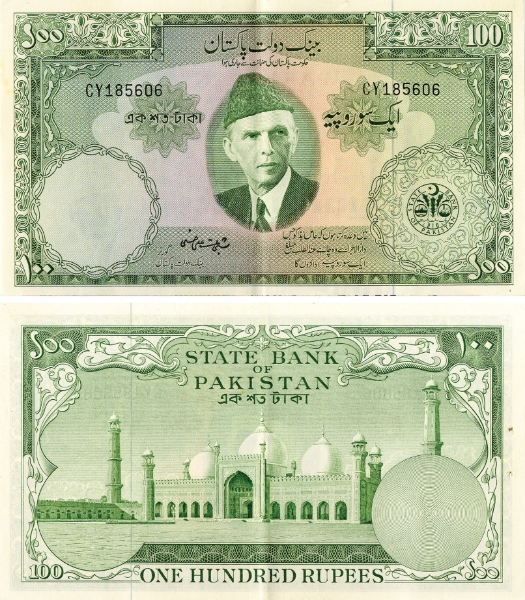
Picture Source of Mohammed Ali Jinnah: Wikipedia
Introduction to Mohammed Ali Jinnah
Mohammed Ali Jinnah, a pivotal figure in the history of the Indian subcontinent, is revered as the founding father of Pakistan. His vision, leadership, and determination were instrumental in the creation of a separate homeland for Muslims in South Asia. Jinnah's legacy remains deeply imprinted in the annals of history, where he is celebrated as a champion of justice, equality, and self-determination.
Jinnah's journey from a young lawyer to a prominent political leader is both inspiring and enlightening. His unwavering commitment to the cause of independence laid the foundation for a nation that would emerge from the throes of colonial rule. As a statesman, Jinnah's contributions extend beyond political boundaries; his ideals of unity, faith, and discipline continue to resonate with millions.
Understanding Jinnah's life and achievements requires a comprehensive exploration of his early years, political milestones, and the enduring impact he left on the world. This article delves into the remarkable life of Mohammed Ali Jinnah, examining his role in shaping modern-day Pakistan and the legacy he bestowed upon future generations.
Early Life and Education
Born on 25 December 1876, in Karachi, Jinnah was the eldest of seven siblings. His early years were marked by a fervent pursuit of education, which laid the groundwork for his illustrious career. Jinnah's father, Jinnahbhai Poonja, was a prominent merchant, and his family's emphasis on education played a crucial role in shaping his intellectual pursuits.
Jinnah's educational journey took him from Karachi to London, where he enrolled at Lincoln's Inn to study law. His time in England was transformative, exposing him to Western ideals and political philosophies that would later influence his leadership style. In 1896, he returned to India as a qualified barrister, ready to embark on a path that would redefine the subcontinent's political landscape.
His legal acumen and eloquence in argumentation soon earned him recognition in the legal community. Jinnah's early legal career was a testament to his analytical prowess and ability to navigate complex cases, skills that would serve him well in the political arena. His dedication to justice and fairness became apparent, laying the foundation for his future role as a political leader and advocate for the rights of the Indian Muslim community.
Political Journey of Mohammed Ali Jinnah
Jinnah's foray into politics began with his association with the Indian National Congress (INC) in 1906. As a member of the INC, he initially advocated for Hindu-Muslim unity, envisioning a unified struggle against British colonial rule. However, ideological differences and the growing realisation of the distinct identity of Muslims led him to join the All-India Muslim League in 1913.
His leadership within the Muslim League was marked by a strategic and pragmatic approach to politics. Jinnah's ability to balance negotiations and advocacy allowed him to rise swiftly within the party's ranks. By the 1920s, he emerged as a key figure advocating for the rights and representation of Muslims in a predominantly Hindu political landscape.
The Lahore Resolution of 1940 marked a significant turning point in Jinnah's political journey. The resolution, which called for an independent state for Muslims, underscored Jinnah's pivotal role in articulating the aspirations of his community. His unwavering commitment to the two-nation theory, which advocated for separate states for Hindus and Muslims, solidified his position as a visionary leader steering the course toward independence.
Jinnah's Role in the Formation of Pakistan
Jinnah's leadership during the tumultuous years leading up to the partition of India was characterised by tenacity and foresight. His ability to negotiate with both British authorities and Indian leaders was instrumental in securing a separate nation for Muslims. The creation of Pakistan on 14 August 1947, stands as a testament to Jinnah's relentless pursuit of a homeland where Muslims could exercise their rights and preserve their cultural identity.
As the first Governor-General of Pakistan, Jinnah faced immense challenges in laying the foundations of a new nation. From establishing a functional government to addressing the needs of millions of refugees, his leadership was pivotal in navigating the nascent state's early struggles. Jinnah's emphasis on unity and inclusivity was evident in his efforts to foster a sense of national identity among Pakistan's diverse populace.
Despite health challenges, Jinnah continued to work tirelessly for the consolidation of Pakistan. His speeches and public addresses during this period reflected his vision for a democratic and secular state, where all citizens, regardless of their religious or ethnic backgrounds, could thrive. Jinnah's role in the formation of Pakistan remains a source of inspiration, highlighting his enduring legacy as a statesman of unparalleled resolve.
Jinnah's Vision for a New Nation
Jinnah's vision for Pakistan was rooted in principles of equality, justice, and democracy. He envisaged a state where the rights of minorities were safeguarded, and every citizen enjoyed the freedom to practice their religion without fear of persecution. His inaugural address to the Constituent Assembly on 11 August 1947, encapsulated his aspirations for a nation where religion and state were distinct entities.
Central to Jinnah's vision was the idea of a modern, progressive Pakistan, capable of standing on equal footing with other nations. He championed the cause of education, recognising its pivotal role in nation-building and empowering future generations. Jinnah's commitment to social justice was evident in his policies aimed at uplifting the marginalised and promoting economic development.
Jinnah's belief in unity was not limited to religious harmony but extended to regional integration. He envisioned Pakistan as a pivotal player in South Asia, fostering cooperation and mutual respect among neighbouring countries. His vision for a new nation continues to resonate with Pakistanis, inspiring efforts to uphold his ideals of tolerance, unity, and progress.
Key Policies and Decisions
Jinnah's leadership was defined by a series of key policies and decisions that laid the groundwork for Pakistan's socio-political framework. As a proponent of constitutionalism, he emphasised the importance of legislative processes in shaping the nation's governance. His insistence on the rule of law and democratic principles was instrumental in establishing a stable political system.
One of Jinnah's significant policy decisions was the adoption of Urdu as the national language, which aimed to promote cultural cohesion and a unified national identity. This decision, while controversial, underscored Jinnah's commitment to creating a sense of belonging among Pakistan's diverse linguistic communities.
Jinnah's economic policies focused on fostering industrialisation and self-reliance. He advocated for the development of infrastructure and institutions that would support Pakistan's economic growth. His emphasis on economic independence reflected his broader vision for a nation capable of charting its own course in the global arena.
Personal Life and Legacy
Beyond his political achievements, Jinnah's personal life was marked by resilience and dedication. His marriage to Rattanbai Petit, a Parsi woman, was a testament to his progressive views on social issues. Despite facing personal tragedies, including the loss of his wife and estrangement from his daughter, Jinnah remained steadfast in his commitment to his political ideals.
Jinnah's legacy is multifaceted, encompassing his contributions as a lawyer, politician, and statesman. His life's work continues to inspire generations of Pakistanis and leaders worldwide, serving as a reminder of the power of vision and determination in achieving monumental change.
His enduring influence is evident in the reverence with which he is remembered in Pakistan and beyond. From educational institutions bearing his name to public monuments and cultural references, Jinnah's legacy is an integral part of the national narrative. His life's story is a testament to the enduring impact of leadership rooted in principles of justice, equality, and perseverance.
Jinnah in Contemporary Pakistan
In contemporary Pakistan, Jinnah's ideals and vision continue to shape the nation's identity and aspirations. His emphasis on unity and equality remains relevant as Pakistan navigates complex socio-political challenges. Jinnah's commitment to democracy and secularism serves as a guiding light for policymakers and citizens alike.
The challenges faced by modern-day Pakistan, including political instability and socio-economic disparities, underscore the need to revisit Jinnah's teachings. His vision for a cohesive and inclusive society provides a framework for addressing contemporary issues and fostering national harmony.
In the realm of education and public discourse, Jinnah's contributions are studied and celebrated, ensuring that his legacy endures. His life and achievements serve as a source of inspiration for future generations, encouraging a renewed commitment to his ideals of justice, tolerance, and progress.
Commemoration and Cultural Impact
Jinnah's legacy is immortalised through various commemorative efforts and cultural references. His mausoleum in Karachi stands as a symbol of national pride and a site of pilgrimage for those seeking to honour his contributions. Annual observances, such as Pakistan Day and Quaid-e-Azam Day, provide opportunities to reflect on his vision and achievements.
Cultural depictions of Jinnah in literature, film, and art further underscore his impact on Pakistan's national identity. His life story continues to inspire creative expressions, highlighting his role as a transformative leader whose influence transcends generations.
The cultural impact of Jinnah's legacy extends beyond national borders, as his ideals of self-determination and equality resonate with global audiences. His life's work serves as a reminder of the power of visionary leadership in shaping the course of history and inspiring movements for justice and freedom worldwide.
The Enduring Legacy of Mohammed Ali Jinnah
The legacy of Mohammed Ali Jinnah is one of unparalleled significance in the history of South Asia. His vision for a sovereign nation where Muslims could thrive remains a cornerstone of Pakistan's identity. Jinnah's unwavering commitment to justice, equality, and democracy continues to inspire leaders and citizens alike, offering a blueprint for addressing contemporary challenges.
As Pakistan navigates the complexities of the modern world, Jinnah's ideals provide a guiding framework for fostering unity, progress, and inclusivity. His life and achievements serve as a testament to the transformative power of leadership rooted in principles of integrity and perseverance.
To truly honour Jinnah's legacy, it is imperative to uphold the values he championed and strive towards a future that reflects his vision of a just, equitable, and prosperous nation. Let us continue to draw inspiration from his life and work towards realising the ideals he so passionately advocated.