Picture Source of Lao Nippon Bridge: Wikipedia
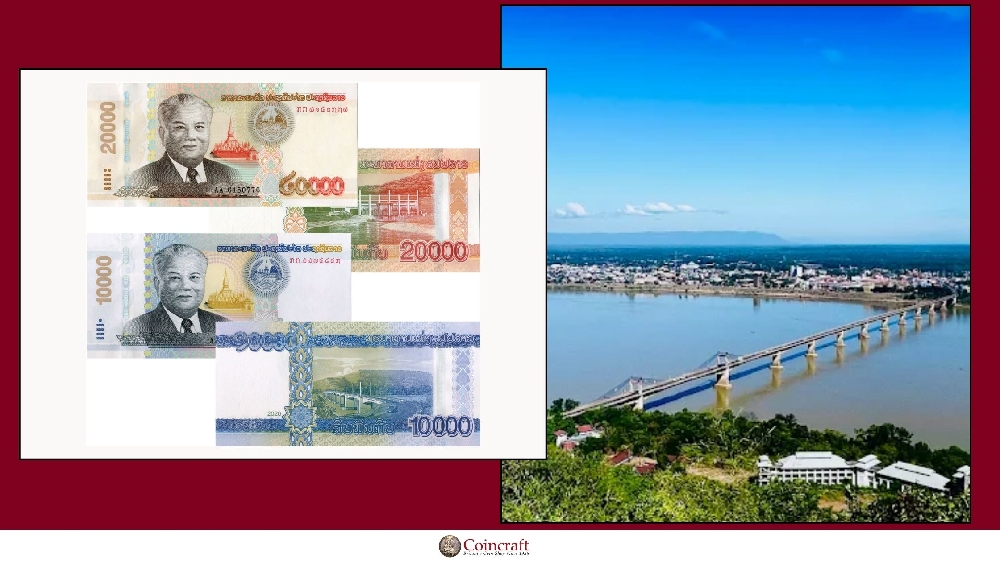
The Bridge That Connected Dreams: A Deep Dive into the Lao Nippon Bridge
Have you ever looked at a bridge and thought about the stories it tells? Not just the cars passing over it, but the hands that built it and the friendships it represents? Today, we’re taking a trip to Pakse, Laos, to talk about a true marvel of engineering and international cooperation: the Lao Nippon Bridge.
Spanning the mighty Mekong River, this bridge didn't just connect two pieces of land; it opened up a whole new world of possibilities for Southern Laos. It’s a story of vision, Japanese partnership, and a massive leap forward for the local community.
Key Takeaways
Symbol of Cooperation: The bridge is a landmark project funded by the Japanese government, symbolizing the strong ties between Laos and Japan¹.
Economic Game Changer: It replaced slow ferry crossings, drastically improving trade and travel between Pakse and the Thai border².
Engineering Marvel: At its completion, it was the first bridge across the Mekong in Laos built with Japanese Official Development Assistance (ODA)³.
Strategic Hub: The bridge serves as a critical link in the East-West Economic Corridor, connecting Vietnam, Laos, and Thailand⁴.
A Vision for the South
Before the year 2000, if you wanted to get across the Mekong in Pakse, you were at the mercy of the ferries. Imagine being a local farmer trying to get your goods to market, or a traveler heading toward the Thai border at Wang Tao. The wait times were long, and during the rainy season, the crossing could be quite a challenge.
The Lao government knew they needed a permanent solution to unlock the economic potential of Champasak Province. That’s where the partnership with Japan came in. Through the Japan International Cooperation Agency (JICA), the project was brought to life as a grant aid project, meaning it was a gift of development from the people of Japan to the people of Laos⁵.
Building the Icon
Construction wasn't just about pouring concrete; it was about precision. The bridge is an Extradosed bridge—a fancy engineering term for a structure that combines elements of both a girder bridge and a cable-stayed bridge. This design was chosen for its durability and its ability to handle the specific flow and depth of the Mekong at that point⁶.
When it finally opened in August 2000, it was a day of massive celebration. With a total length of about 1,380 meters, it stood as a testament to what happens when two nations work together toward a common goal. It wasn't just a "Lao bridge" or a "Japanese bridge"—it was the Lao Nippon Bridge.
More Than Just Concrete
Since its opening, the landscape of Pakse has changed forever. The bridge turned the city into a bustling transit hub. Suddenly, the "Coffee Capital" of Laos (the Bolaven Plateau) had a direct line to international markets. Tourism boomed because travelers could easily hop from Thailand into the heart of Southern Laos to see the Khone Phapheng Falls or the ancient Wat Phou temple ruins⁷.
Even today, as you drive across it at sunset, you’ll see locals taking walks and enjoying the breeze. It has become a part of the local identity—a literal and metaphorical bridge to a brighter future.
FAQs
Who paid for the Lao Nippon Bridge? The bridge was primarily funded through a grant from the Government of Japan as part of their Official Development Assistance (ODA) program to support Laotian infrastructure⁸.
Where exactly is the bridge located? It is located in Pakse, the capital city of Champasak Province in Southern Laos, crossing the Mekong River to connect the city with the district of Phonthong⁹.
Can pedestrians walk across the bridge? Yes! The bridge features walkways on both sides, and it is a popular spot for locals to exercise or take in the views of the Mekong River¹⁰.
References (Harvard Style)
JICA (2000) The Project for Construction of the Mekong Bridge: Project News, Japan International Cooperation Agency. Available at: https://www.jica.go.jp (Accessed: 4 February 2026).
Ministry of Public Works and Transport (2005) Infrastructure Development in Southern Laos, Vientiane: MPWT Publications.
Oriental Consultants Global (2021) Lao Nippon Bridge: A Legacy of Engineering, Tokyo: OC Global Archive. Available at: https://www.ocglobal.jp/en/ (Accessed: 4 February 2026).
Asian Development Bank (2018) Greater Mekong Subregion: East-West Economic Corridor Strategy and Action Plan, Manila: ADB.
Pholsena, V. and Banomyong, R. (2006) Laos: From Land-locked to Land-linked, Singapore: Institute of Southeast Asian Studies.
Hazama Ando Corporation (2000) Bridge Construction Projects: The Lao Nippon Bridge, Tokyo: Hazama Ando.
Champasak Provincial Tourism Department (2022) Annual Tourism Report: Impacts of Regional Connectivity, Pakse: Tourism Board.
Embassy of Japan in the Lao PDR (2023) Overview of Japan's ODA to Laos, Vientiane: Embassy of Japan.
Google Maps (2026) Lao Nippon Bridge Location and Geography Data.
Lonely Planet (2024) Laos Travel Guide: Southern Laos and Pakse, London: Lonely Planet.